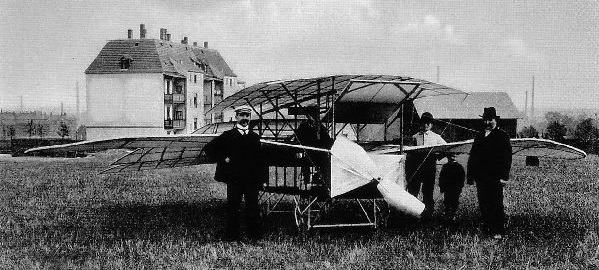
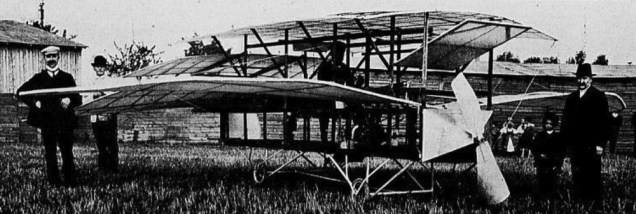
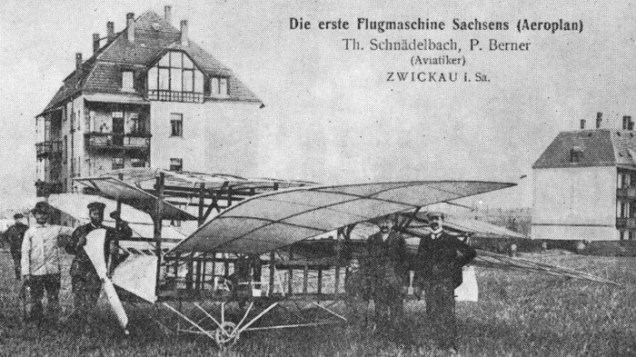
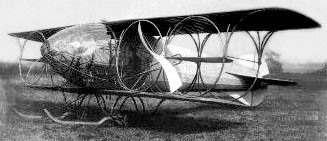
The first Flugmaschine in Sachsen, Germany, in 1909. It was a mixed version of a Schwingenflieger and a Gleitflieger, as the wings could flap but there were also two (tandem) wings fitted above the open fuselage. The elevator in the front was an ‘all-flying’ construction and the rudder is at the back. Total wing area is 40,10 square meter. The engine of 10 hp (due to be upgraded to 25 hp) drove the propeller at the front of the fuselage. Total weight (empty) of the machine is 335 kg, span is 9 meter and length 7 meter. Height is 2,20 meter.
There are contradictory accounts as to its flying success.
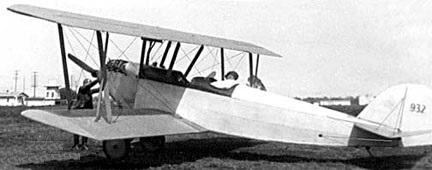
Schmuck S-1 N932 at Callies Flyers airport (L.A.) 1928
The 1927 Schmuck Bros Aircraft Co S-1 Commercial Sport, or Monarch, with its elephant-ear ailerons, was the only one built. Registered N932 c/n 1, it was first flown on 8 September 1927, it was dismantled in February 1930.
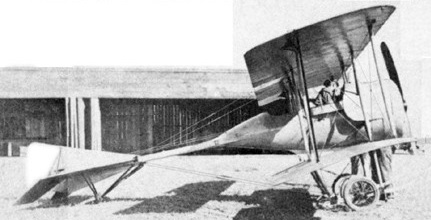
Designed by Etienne Dormoy and brought from France to the USA by Maximilian Schmid, this fully monocoque fuselage design was first of its kind in USA. Built for competitions, it won the $1,000 NY Times Race on 4 July 1914 at Governor’s Island NY (piloted by Harold Kantner), as well as several more subsequent races.
It was then converted into a biplane with a 100hp LeRhône for military trials at North Island, San Diego. It and three other entrants were rejected for not meeting certain requirements specified by the Army.
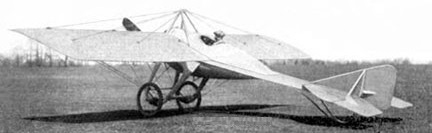
A large, rounded, startlingly modern fuselage for its day, using what appears to be almost geodesic construction, with chain-driven twin tractor propellers.
During 1910 and 1911 this aircraft was built in a shop adjacent to Mineola Field NJ. The design was basically sound and the plane performed well beyond expectations. In Jan 1912, US Patent #596448 was granted to the aeroplane per notification from Munn & Co, Patent Attorneys, NYC.
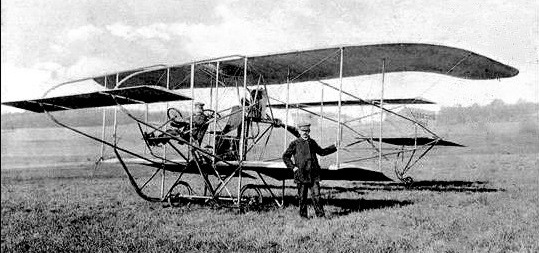
This machine was tested in spring or summer 1911 at the flying ground Plauen-Reisig in Sachsen, Germany. It had a Taube-like top wing, a forward elevator, a chain driven pusher propeller and a small stabilizing plane on top the original tail-boom construction. According to Lange it was powered by a 65hp Hilz inline-4. There are thoughts that Schmelzenbach and Hollmann wanted to open a flying school and this plane was intended as a trainer, therefore being equipped with dual controls.
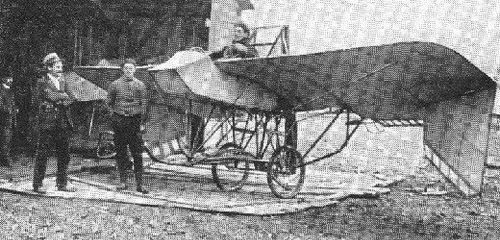
Ernst Schmalz, born 1879 in Nidau, Switzerland, in 1908 built with the help of Failloubaz, a pusher monoplane, powered by a 12 hp Anzani motor, with large ailerons he himself named “Stabiloklappen”. In flight tests at Thun he made jumps of up to a height of 6 meters. In 1909, Schmalz retired from flying. He sold his apparatus to a chauffeur, who collided with a tree top in flight tests on the Beundenfeld in Bern. Although the pilot remained intact, the aeroplane itself was a total loss.
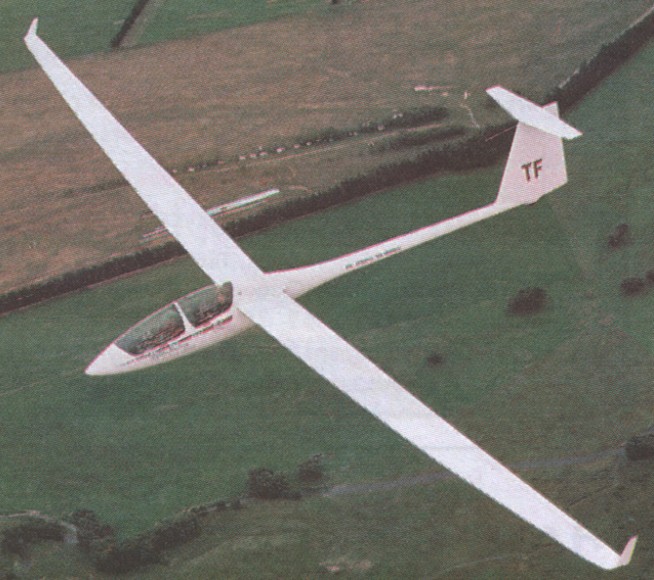
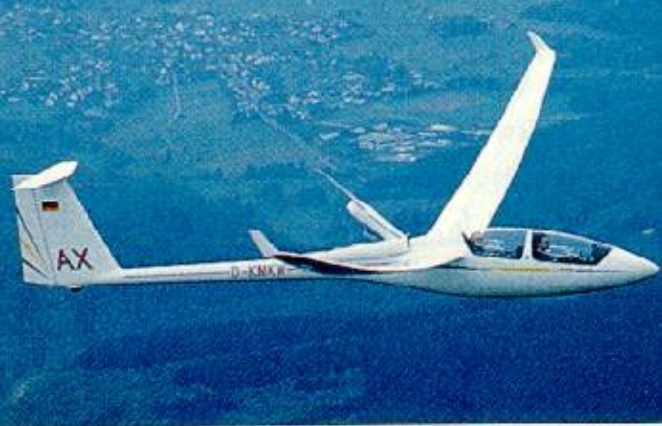
Designed by Martin Heide, the tandem two seat Schleicher ASH25 featured the longest wingspan of any production glider (25 metres). First flown in 1986, the ASH25 first went into production in that year. Construction is all carbon fibre and the sailplane can sustain a glide angle of 1:58. The design was specifically aimed at producing a two seat glider with single seat perform¬ance and utilises the wing of the ASW22B married to a new fuselage of carbon/ aramid fiber reinforced plastic.
Within a couple of years the ASH25 had set five world speed records for triangular courses varying from 330 km / 205.1 miles to 1,380 km / 857.0 miles. Hans Werner Grosse of Germany has set 12 world records in all flying an ASH-25.
The ASH-25 is the production version of the one-off two-place ASW-22-2 using a fuselage adapted from the Akaflieg Stuttgart FS-31.
The ASH-25E is powered by a retractable 19 kW/ 25 bhp Rotax 275 sustainer engine.
ASH-25E
A flight test evaluation by Dick Johnson measured a best L/D of 54.3 : 1 without turbulator tape or special sealing. An ASH-25 flown by G. Herbaud and J-N. Herbaud of France both won the world multiplace straight distance and goal distance records of 1,383 km./ 859.3 miles in the same flight in 1992.