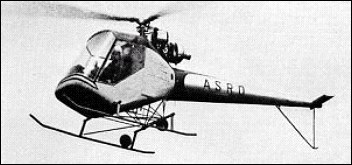
Siemetzki Asro 4

The ASRO-3 was used to develop the ultra-light side-by-side two-seater ASRO-4. Of welded steel tube construction covered with light-alloy, it had a fully enclosed fuselage pod and tapered tubular tailboom. It was fitted with an 130 shp BMW 6012 turboshaft mounted behind the rotor gearbox driving three-blade main and two-bladed tail rotors of composite construction.

The ASRO 4 was first displayed at the 1964 Hanover Air Show.

This machine flew in May 1964, and was tested for some while before being abandoned without achieving certification.
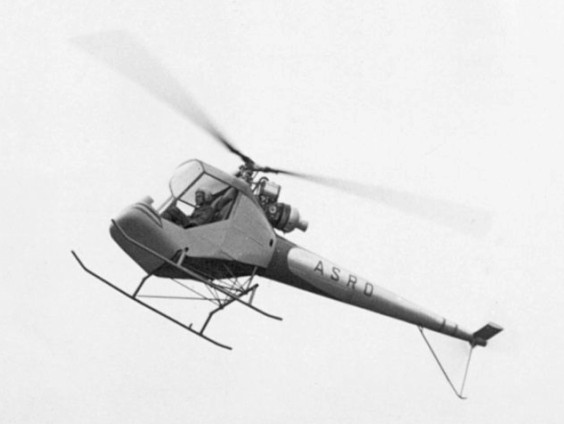
ASRO 4
Engine: BMW 6012, 100/130hp
Rotor diameter: 7.22m
Rotor disk area: 403.45 sq.ft (37.48 sq.m)
Fuselage length: 5.78m
Height: 7 ft 11 in (2.41 m)
Empty weight: 840 lb
Max takeoff weight: 1,360 lb
Max speed: 99 mph / 160km/h
Cruise speed: 90 mph (144 kmh)
Climb: 985 ft (300 m)/min
Service ceiling: 12,467 ft (3,800 m)
Endurance: 1 hr 20 min
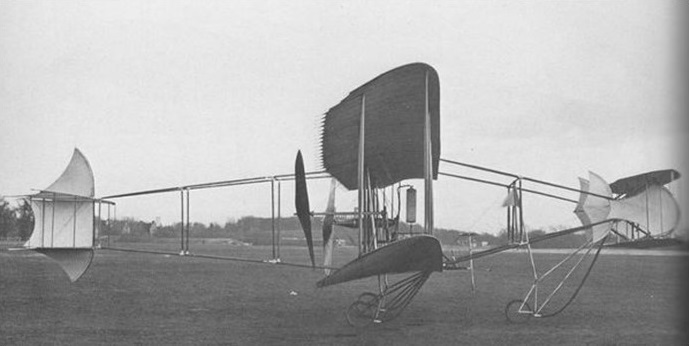
Siemetzki Asro 3

Alfons Siemetzki of Kirchdorf am Iller, privately-built the ASRO 3T ultra-light single-seater. This experimental helicopter was an open-frame steel-tube machine of conventional layout, with a rudimentary windshield to protect the pilot, a skid undercarriage and a 65 shp BMW 6002 turboshaft engine mounted amidships. A conventional rotor system, with two-blade main and tail rotors.

The single-seat ASRO 3-T was built by Alfons Siemetzki and made its first flight on 29 December 1961, piloted by USAF Captain Stanley Frick.

The ASRO-3 was used to develop the ASRO-4

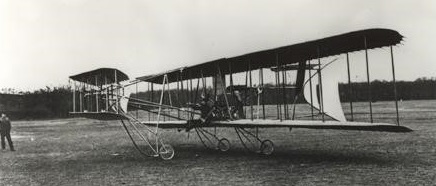
Siemen Schkukert Bourcart Biplane

A 5-seater Siemens-Schuckert Werkes biplane designed by Max Bourcart with a combination steel tubing and wood construction, powered by a 50 hp Argus engine, and chain-driven to the two propellers. First flown on 9 march 1910, a 1000 m straight-line flight piloted by Bourcart. The second, and last flight, was made on March 11, piloted by Bourcart with two passengers, ending in a crash landing. Bourcart had patented such a construction on September 9, 1902 [German Patent 145547 – Flugmaschine mit zwei Luftschrauben, deren Flügel ineinandergreifen].

Siemen Schkukert D-IV

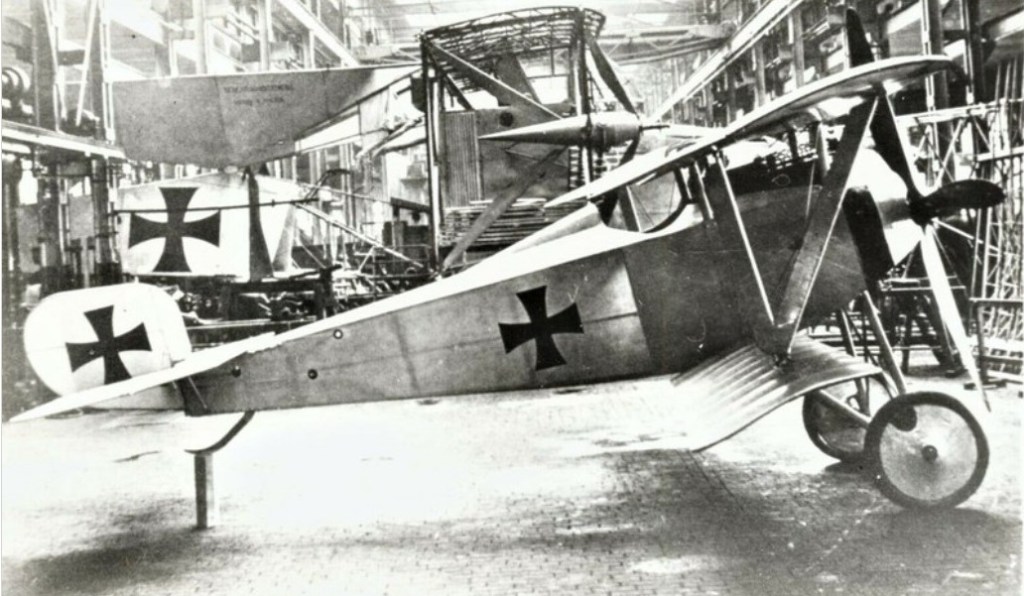
The D III was followed by the D IV, which introduced much aerodynamic refinement for slightly higher speed and still better climb rate. A total of 280 were ordered, but less than 140 D IVs were completed, most entering service after August 1918.

D IV
Engine: l x Siemens-Halske Sh.IIIa, 119kW (l60hp)
Span: 8.35m (27ft 4.75in)
Length: 5.7m (18ft 8.5 in)
Max TO weight: 735 kg (1,620 lb)
Max speed: 119 mph
Operational endurance: 2 hr
Armament: 2 x 7.92-mm (0.312-in) LMG 08/15 mg

Siemen Schkukert D-II / D-III

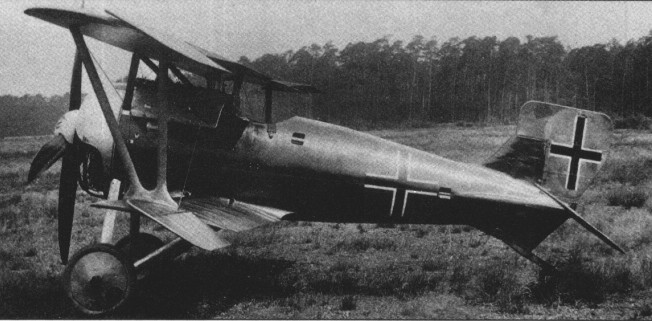
Via the D II prototype Siemens-Schuckert then moved to a completely German design, ordered late in 1917 as the D III equal-span biplane with the 119-kW (160-hp) Siemens-Halske Sh.III rotary engine whose diameter dictated the circular section of the compact fuselage that tapered sharply into the empennage with its large tailplane and angular vertical surfaces. After the teething problems of this engine had been cured, the 50 D IIIs matured as extremely fast-climbing interceptors whose other performance figures were low.

Siemens-Schuckert D-III Article

Siedek KS 3

Vienna, Austria, 1934 Frühjahrsmesse (Spring Trade Fair)

The Siedek KS 3 was built by Diplom-Ingenieur Richard Siedek in Vienna, Austria. The powerplant was an 80 hp two-stroke aircraft engine, developed by Ingenieur Kraus and Siedek.”

Span: 22 ft 11.6 in (7.00 m)
Length: 16 ft 8.8 in (5.10 m)
Height: 6 ft 6.7 in (2.00 m)
Wing area: 172 sq.ft (16.00 sq.m)
Takeoff weight: 882 lb (400 kg)
Cruise speed: 75 mph (120 kmh)

Siebel MBB-SIAT 223 Flamingo

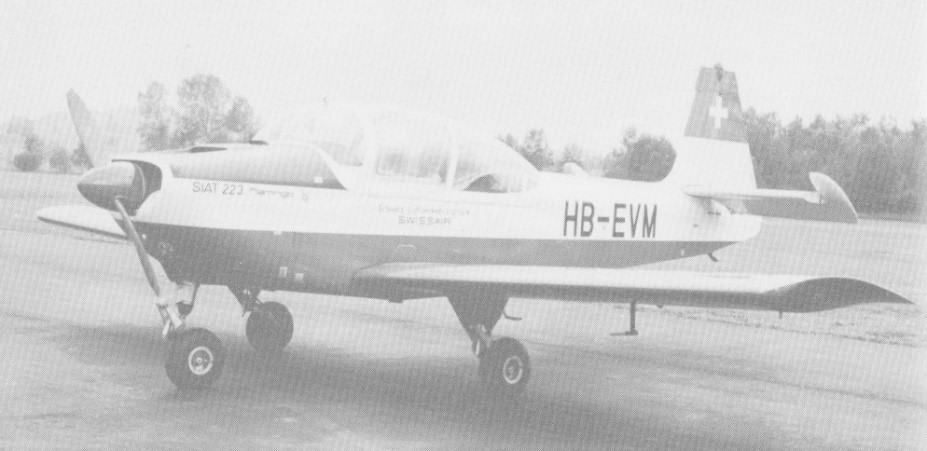
Designed by the Siebelwerke and first flying in 1967 the Flamingo was turned into an aerobatics trainer.

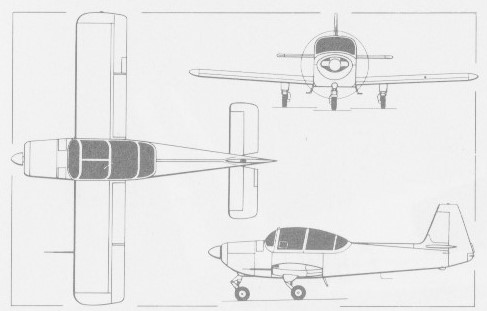
There are two seats side-by-side at the front of the cabin with provision for fitting a folding seat for one adult or two children in the baggage area. Removable dual controls are fitted.

Originally produced in Germany by SIAT, CASA produced the 223A1 basic version in the Normal Category as a there/four-seater or agricultural aircraft, or in Utility Category as a two-seater intended primarily for training airline pilots.

The 223K1 single-seat fully-aerobatic version with a specially modified IO-360-C1B engine and stressed to +6 / -4g was also originally produced in Germany by SIAT, then CASA in Spain.

Later, in 1986 the Flamingo was used as a testbed for the new developed Porsche aviation engine.

CASA 223A1
Engine: Lycoming IO-360-C1B, 200 hp
Wingspan: 27 ft 2 in / 8.28 m
Length: 24 ft 4.5 in / 7.43 m
Empty weight equipped: 1610 lb / 685 kg
MTOW Norm: 2315 lb / 1050 kg
Max cruise 76%: 116 kt / 134 mph / 216 kph
ROC SL: 846 fpm / 258 m/min
Service ceiling: 12,300 ft / 3750 m
Range 30min res: 620 nm / 715 mi / 1150 km
Seats: 3-4
Baggage capacity: 200 lb / 90 kg
Cabin length: 7 ft 2.5 in / 2.20 m
Cabin width: 3 ft 8 in / 1.12 m
Cabin height: 3 ft 11 in / 1.20 m

MBB 223 PFM Flamingo
Engine: Porsche PFM 3200, 207 hp
Wingspan: 27.231 ft / 8.3 m
Max take off weight: 2425.5 lb / 1100.0 kg
Max. speed: 124 kts / 230 km/h
Range: 756 nm / 1400 km
Crew: 3