Simplex Aircraft Corp K-2 Red Arrow

Simplex K-2-C

The 1928 Simplex K-2-C Red Arrow (ATC 44) was designed by Omer Woodson with origins in the Woodson M-6. Of wooden construction it was Side-by-side canopied cockpit and semi-cantilever wing. The first few were powered by 75hp Kinner engines and priced at $4,495.

The 1928 Simplex K-2-S Red Arrow (ATC 43) was the same as the K-2-C, but with side-by-side open cockpit and priced at $4,115.
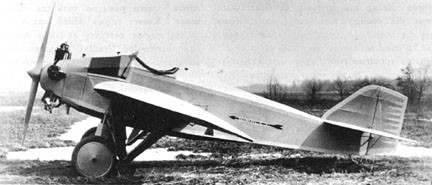
Simplex K-2-S

About 10 K-2s were built. Piloted by Dick Myhres, one, NC6504, won the 1928 California Class-A Race (Los Angeles-San Francisco) in a field of 16 aircraft in 3hr10min averaging 126mph.

Sioux Aircraft Corporation built aircraft under the name Sioux Red Arrow.

K-2-C Red Arrow
Engine: 90hp Kinner K-5
Wingspan: 34’4″
Length: 22’3″
Useful load: 570 lb
Max speed: 120 mph
Cruise: 108 mph
Stall: 37 mph
Range: 550 mi
Seats: 2

K-2-S Red Arrow
Engine: 90hp Kinner K-5
Wingspan: 34’4″
Length: 22’3″
Seats: 2
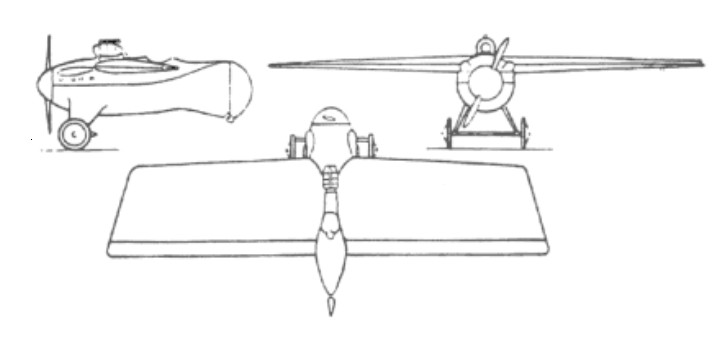
Simplex Racer

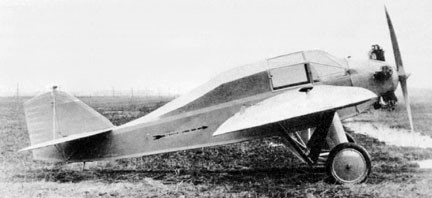
The first design of the Simplex firm was a racing monoplane with a 320 hp Hispano-Suiza engine for the Coupe-Deutsch race of 1922. The design was due to Carmier, and the plane was to be flown by a well-known fighter pilot, Georges Madon. It was a cantilever monoplane with a tractor engine and full-span controllers. The short fuselage ended in a vertical fin with a rudder. The pilot sat rather far back behind the leading edge of the wing ; in addition, a barrel radiator excluded any view forward. So it was not surprising that even a very experienced pilot like Madon could meet with an accident during a test flight prior to the race. He escaped with severe injuries, and the general impression created was rather unfortunate. Since Fétu had previously met with a grave accident with the Arnoux biplane, the fate of this interesting development was sealed. Arnoux himself seems to have been discouraged from further pursuing his line of investigation.

Simmonds Spartan Arrow

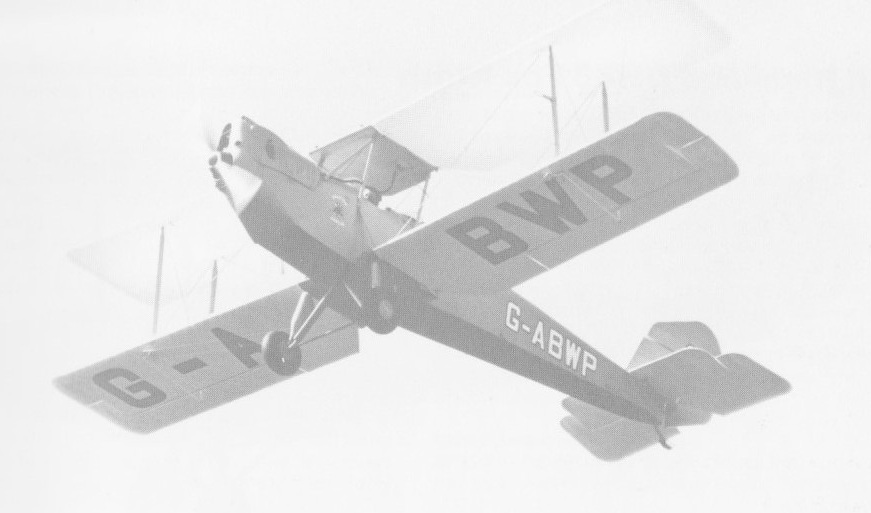
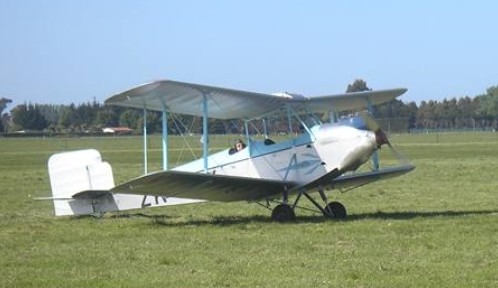
Early in 1930 Spartan Aircraft Ltd. Simmonds altered a version of the Simmonds Spartan into the Spartan Arrow. First flown in May 1930, the prototypes G-AAWY and G-AAWZ were powered by 100 hp Gipsy I engines but the production aircraft that followed had 120 hp Gipsy IIs or 105 hp Hermes II with the exception of Arrow G-ABST which was experimentally fitted with a 160 hp Napier Javelin III.

Simmonds Spartan Arrow Article

Engine: 105 hp Cirrus Hermes II
Wingspan: 30 ft 7 in
Length: 25 ft
AUW: 1850 lb
Max speed: 105 mph

Simmonds Spartan

In 1928 O. E. (later Sir Oliver) Simmonds designed and built the Spartan two-seat biplane. Outwardly conventional, but planned for “Spartan” economy (e.g. interchangeable wings and ailerons, and rudder interchangeable with elevator). At Southampton, Hampshire, produced 49 examples, mostly for export, but some for National Flying Services Ltd. One made many Arctic flights.

Simmonds Spartan Article

The first (of seven) Spartan II was completed in September 1932.

Gallery

Spartan
Engine: ADC Cirrus III, 95 hp
Seats: 2

Spartan Srs II
Engine: Cirrus Hermes IV

Silver Wing Aircraft Co 1928 monoplane

In 1928 the Silver Wing Aircraft Co built a two-place, open cockpit, high-wing monoplane, designed by H C King. It utilized a Curtiss JN-4 fuselage and gear. Spin-proof, the company claimed, with a heavy, laminated spar that would withstand dives up to 175mph. Only one was built, registered N5268 c/n SWM-100.

First flown on 15 April 1928, piloted by Edward Euler, it was powered by a 90hp Curtiss OX-5, later changed to a 50hp Wright-Hisso engine.

Press releases told of two cabin versions under construction, but were apparently unfinished.

90hp Curtiss OX-5
Wingspan: 41’3″
Length: 26’9″
Useful load: 682 lb
Max speed: 110 mph
Cruise: 90 mph
Stall: 32 mph
Seats: 2

150hp Wright-Hisso
Wingspan: 41’3″
Useful load: 968 lb
Seats: 2

Silverston Vacu-Aerial / Flying Machine No. 2 / Milwaukee Flying Machine No. 2

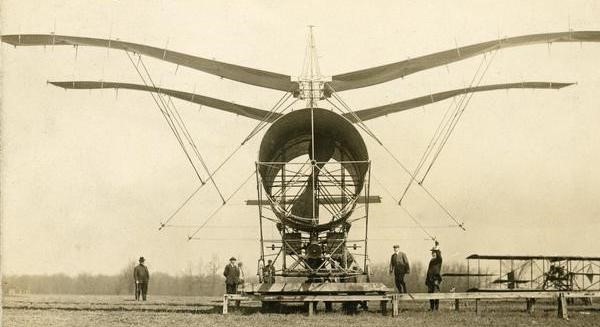
Silverston Vacu-Aerial” Flying Machine No. 2 of 1912 was also known as Dr. Rudolph Silverston’s Milwaukee Flying Machine No. 2. The photo caption reads “Pendulum system 120hp engine.”

According to historical reports, the good doctor had a school of aviation in Milwaukee, and persuaded a number of local investors to support construction of a machine of his devising, which seems to have been an early ducted fan type. The first was a failure; the second (shown) likewise refused to fly, whereupon Dr. Silverston left town with no forwarding address.