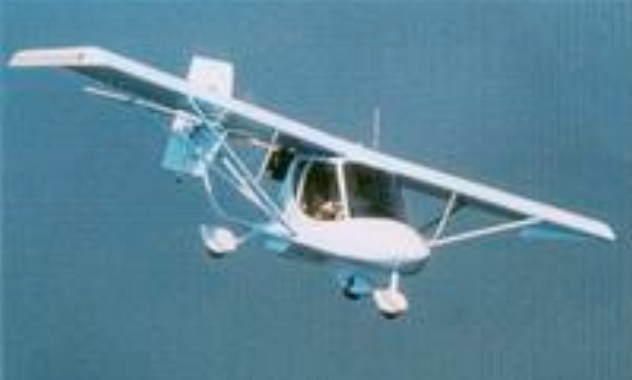
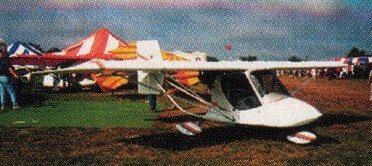
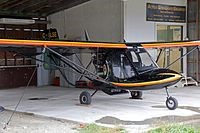
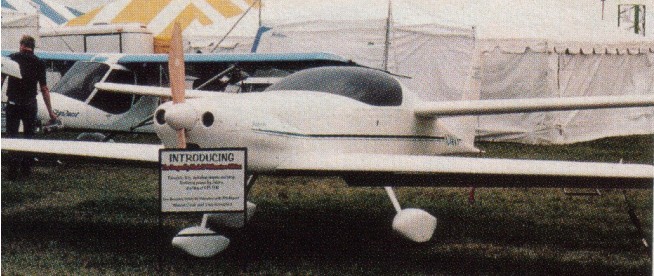
Originally designed by Chuck Hamilton and prototyped in 1992, the Genesis is a two-place, roomy, side-by-side aircraft for a 2009. Available with a choice of dual yoke controls or center stick, and equipped with the standard Rotax 582, in solo configuration take-off roll is 100 feet, with a 250 foot landing roll and a climb rate of 1,000 fpm. The Genesis base 2009 Price also included dual 10-gallon wing tanks to provide for four hours endurance.
The series were originally produced by Innovation Engineering of Davenport, Iowa and then by SlipStream International of Wautoma, Wisconsin.
Innovation Engineering Genesis
The XL version has extended wings. The kit price in 1997 was US$12,900, including engine.
Optional are “Shark Series” amphibious floats. Computer designed to reduce drag and to provide for rapid hydroplaning, the “Shark Series” floats are built to withstand impacts in excess of 3,000 lbs. per square inch and are rated for up to 1,600 lbs.
With an average empty weight of 565 lbs., the Genesis equipped with the standard Rotax 582 has a useful load of 635 lbs. With any of the larger optional powerplants, and the gross weight capability increases to 1400 lbs., providing for a larger useful load. The HD option has a “beefed up” airframe capable of safely carrying up to 1600 lbs. and a useful load envelope of over 800 lbs.
The Genesis typically will take about 400 hours to complete. All of the welding and fabrication is done before the kits leaves the factory, and the manuals are written with step by step instructions, and numerous photos, illustrations and CAD drawings.
The Genesis airframe sold for US$11,073 in 2009, and includes all of the flight surfaces, fuselage, fiberglass enclosure, landing gear, wheels and tires, control system and doors. Among the options are custom hydraulic brakes, cabin heating, floats, wheel pants, strut fairings, complete instruments packages, and finishing systems.
A complete Genesis aircraft, ready to fly, typically runs from $21,000 to $32,000, depending on your powerplant and choice of options.
In 2001 the Slipstream Industries new trigear Dragonfly Mak III Millennium kit plane was ready for flight testing. Improvements included Hammerhead landing gear, redesigned seatbacks, and a raised panel to accommodate larger pilots.
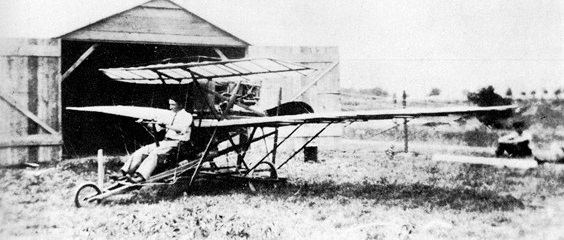
In 1911 an open-cockpit, single seat, mid-wing monoplane was built by (James B) Slinn Aeroplane Co for Eugene Brown of Peoria IL.
The only one built had an oversize elevator mounted above the wing almost making this one a biplane. It was a headless monoplane design with tricycle gear and pusher engine.
A pusher built by James B. Slinn in 1911, looking almost like a biplane as the large elevator was mounted above the wing. Slinn was an inventor who developed aeronautical devices between 1899 and 1910. His first design dates from 1899 when he designed a flying machine with wings and horizontal propellers. This ‘autogiro’ type avant la lettre failed to fly. After he moved from New Orleans to Chillicothe, Illinois he designed in 1910 this monoplane, named the Falcon, for Eugene Brown, a Peoria real estate dealer and president of the local aero club. It completed one flight that ended in a big crash and total destruction.
The Fournier company in France, manufacturer of a range of sporting aircraft, was in receivership and its RF6B, an aerobatic two-seat club trainer with fabric covered steel-tube fuselage and wood-and fabric wing designed in the early 1970s, looked promising. Slingsby bought the last of the RF6B line, numbering 10 or so aircraft in various stages of completion, along with all manufacturing rights, and called it the T67A.
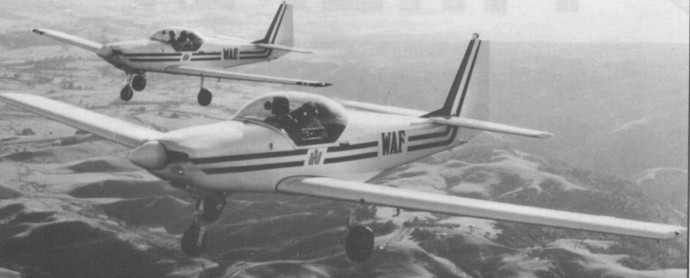
Those aircraft were leased out to various aero clubs in the United Kingdom and the clubs were asked for their full and frank comments. At the same time, the T67A was being re-engineered for production in fibreglass at Kirbymoorside, Yorkshire, but retaining the shape and all the RF6B’s good points, and incorporating suggestions filtering back from the aero clubs. The end result was the Slingsby Firefly, a range of aerobatic trainers of differing engine power in the one airframe.
The Slingsby T67 Firefly was the world’s first aerobatic GRP aircraft to receive full public transport certification, meeting both the British BCAR and American Aviation Administration FAR part 23 requirements.
First flown in May 1981, the base model is the T67B, with the 116 hp Lycoming engine. The T67C has the 160 hp Lycoming carburettor engine, still with fixed-pitch propeller, while the T67D is fuel-injected, 160 hp, and with constant-speed propeller, as well as having wing mounted 159 litre fuel tanks in place of the fuselage mounted 113 litre tank found in the B and C models. Next is the T67M (for military), still with the same engine as the D but with a few extra items of equipment that air forces can’t do without, and top of the line is the T67M200, with 200 hp fuel-injected Lycoming because the military doesn’t think of any aircraft in terms of less than 200 hp.
The most potent and best-balanced of them all is generally reckoned to be the 160 hp fuel-injected version, with full inverted everything, which will exceed all military specifications except horsepower. The M models come with inverted fuel and oil systems as standard equipment, while the lesser versions are all equipped with sump trays that retain a semblance of oil presssure under negative G, but of course run out of power upside down. First flight of the T67M200 was made on 16 May 1985 and production examples are powered by a 200 hp (149 kW) Textron Lycoming AEIO-360-A1E engine. Customers for this version to 1990 include the Turkish Aviation Institute, King Air in Holland and the Royal Hong Kong Auxiliary Air Force. Production of the earlier T67B, C and D exceeded 90 aircraft.
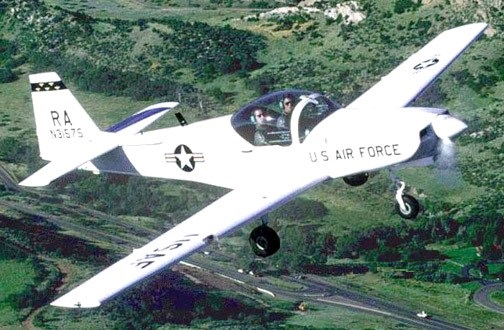
From 1992 one-hundred and thirteen T-67 Firefly were operated in USAF service as T-3A Firefly (92-0625 to 0662, 93-0555 to 0596, and 94-0001 to 0033), wearing civil registrations, at Randolph Field TX.
T67M Firefly Engine: 1 x Lycoming AEIO-320, 119 kW Span: 10.6 m Length: 7.3 m Wing area: 12.6 sq.m Empty wt: 650 kg MTOW: 907 kg Max speed: 256 kph Initial ROC: 360 m / min Ceiling: 4570 m T/O run: 190 m Ldg run: 230 m Fuel internal: 160 lt Range: 980 km
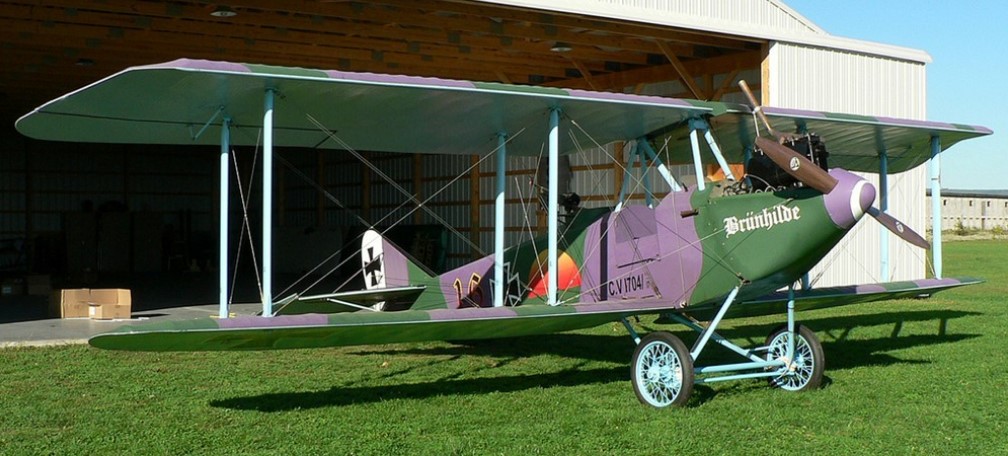
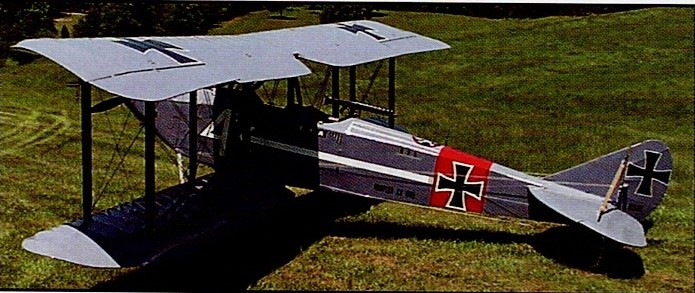
Universal Pictures contracted Slingsby Sailplanes to build rwo flying and several static replicas of the 1917 Rumpler C.IV scout aircraft. They were built at Kirkbymoorside 1968/69 using Tiger Moth airframes and Gipsy Major 10 Mk. 1-3 engines.
The Gipsy Major 10 Mk. 1-3 engine, converted to run upright by Hants & Sussex.
The Tiger basis made them 0.86 scale replicas.
First flown in March 1969 they were shipped to Tunisia for filming before being sold in Virginia.
c/n 1704 G-AXAL First flew 24 March 1969 at Rufforth Sold in USA as N1915E It was donated to the Golden Age Air Museum in Pennsylvania
c/n 1705 G-AXAM First flew 25 March 1969 at Rufforth Sold in USA as N1916E with Ron Bloomquist in Tennessee, USA, in July 2007
Engine: Gipsy Major 10 Mk. 1-3 Wingspan: 39.04 ft Length: 23.11 ft
In 1969 Slingsby built a flyable Type T.57 Sopwith Camel Replica powered by a 145hp Warner Scarab engine for use in a Biggles film that was not made. It first flew on 4 March 1969, at White Waltham.
It became N1917H in 1971 (Flying Circus, Bealeton, VA). In 1973 it was sold to Pocono Eagle Industries, but damaged in a ground loop.
In 1975 repairs were started and it was brought back to the UK by AF Carlisle and became G-AWYY. Rebuild completed by Shuttleworth Collection at Old Warden with 29 hours on the log, flown again in October 1976.
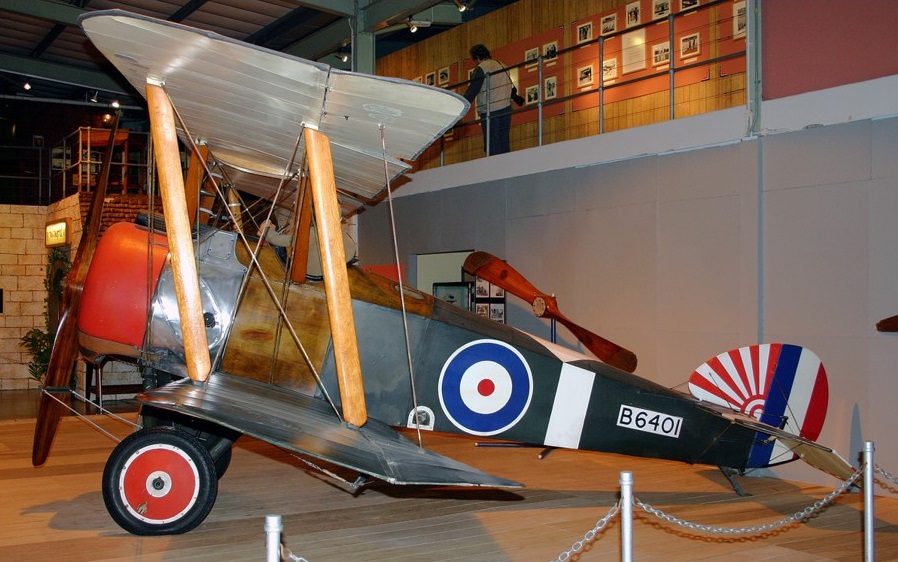
Registered G-AWYY c/n 1701, it has a Warner Scarab engine installed and is painted as B6401.
In March 1977 it went to Leisure Sport at Chertsey but in 1982 it was put up for sale and stored at Lands End, Cornwall.
In February 1984 it went to the FAAM at Yeovilton and stored in the Cobham Hall reserve collection. The Certificate of Airworthiness expired on 1 September 1985.
This aircraft is now on display at the Fleet Air Arm Museum, Yeovilton painted as B6401.
Engine: 145hp Warner Scarab Span: 28.00 ft Length: 19.04 ft
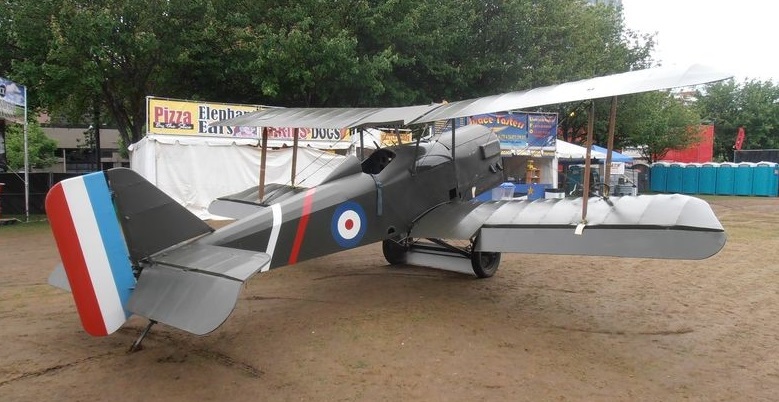
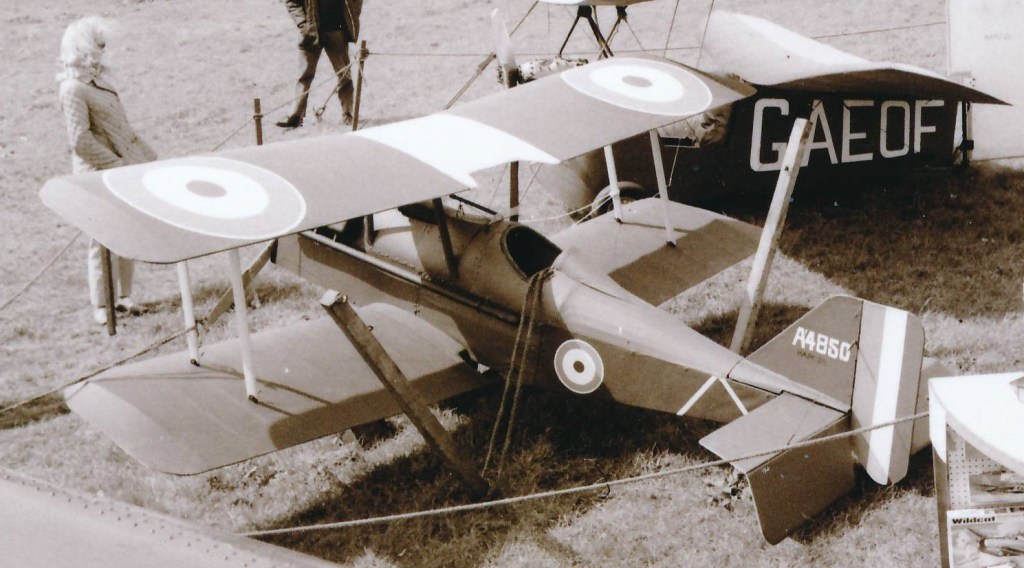
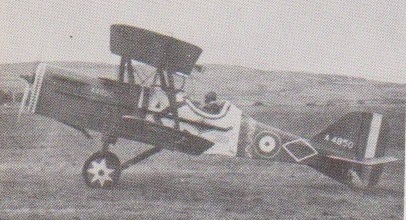
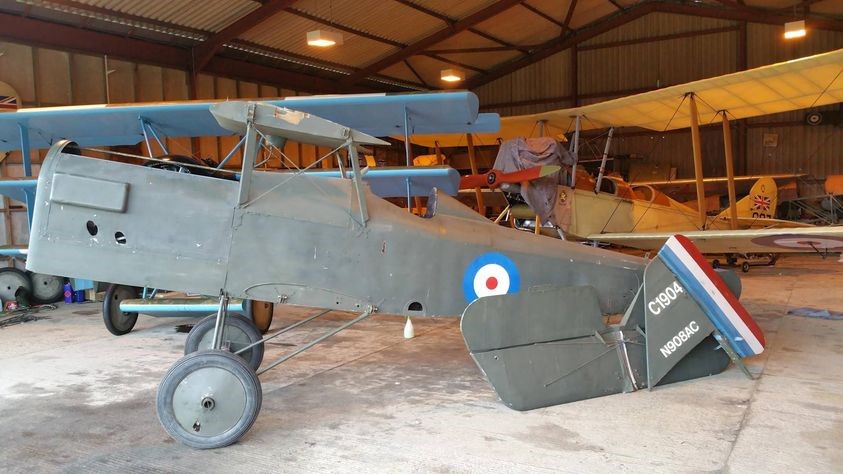
In 1967 Slingsby Sailplanes Limited built six Currie Wot based aircraft to represent the Royal Aircraft Factory S.E.5A for film work. They were powered by 115 hp Lycoming O-235 engines with dummy exhausts and other modifications as 0.83 scale replicas.
They were not modified Currie Wots but were built by Slingsby as a new type based in the Wot drawings, they differ considerably from the Wot. Gliding guru Derek Piggot oversaw the construction of the Slingsby versions, but due to a slight scaling error in design, the nose section was big and boxy. It had almost twice the frontal area, so a large part of the propellor arc was blanked and performance suffered.
They were delivered to Ireland and fitted with dummy guns for the film Darling Lili. These Slingbsy T.56 were referred to as Minis due to their not being full size reproductions. Many static mock ups were built by Slingsby at the same time for the Film Darling Lili.
Four additional SE-5s (N908AC, N909AC, N910AC & N912AC) built after The Blue Max for Darling Lili and used in You Can’t Win Them All, Von Richthofen and Brown and Zeppelin were technically Slingsby T56s, 7/8-scale replicas built on converted Currie Wot biplane kits. The latter two movies saw fatal crashes and the aircraft were soon after dispersed to private collections. They were all sold to The Fighting Air Command in Denton, Texas, in the early 1980s, by which time none of them were airworthy.
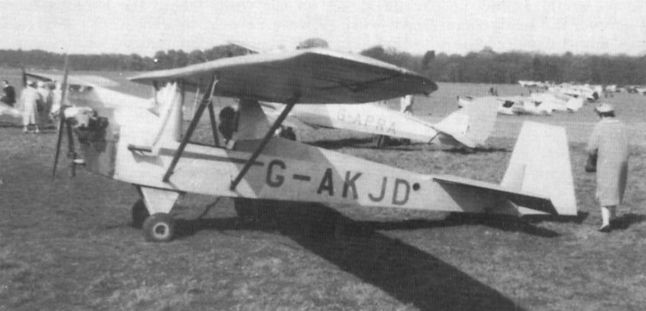
By November 1947, a powered version of the T-8 Tutor was undertaken, somewhat against his wishes, by Mr Fred Slingsby, and this, the T29 Motor Tutor, featured a new fuselage with a fixed, divided-axle type undercarriage and tailwheel married to the standard Tutor wings and tail unit. The first prototype G-AKJD was completed at Martin Hearn Ltd, Hooton Park. It first flew, as the T29A with a 25hp Scott Flying Squirrel engine, in December 1947 but this first prototype was underpowered.
Slingsby-built Type 29B Motor Tutor G-AKJD was first flown at the end of 1950. It was crashed at Dunstable Downs on June 21, 1964 and is seen here at Woburn in 1959.
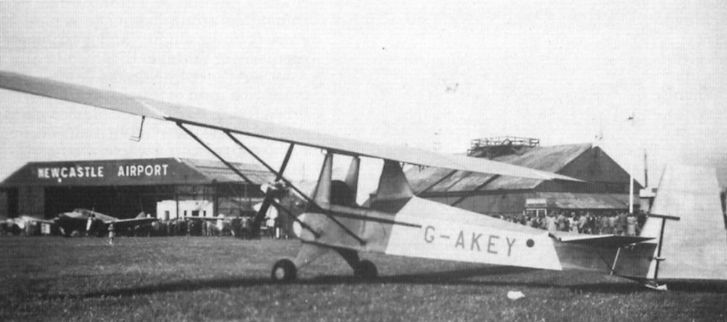
The second prototype, the T29B G-AKEY which first flew in June 1948, was being built by Slingsby Sailplanes and had a 40hp Aeronca JAP two-cylinder, horizontally-opposed air-cooled engine; a single 9.5 Imp gallon fuel tank was installed. Completition was delayed to incorporate any modifications indicated by the flight tests.
Slingsby Type 29B Motor Tutor G-AKEY, a Tutor glider airframe with an undercarriage and powered by a 40 h.p. Aeronca-JAP J-99. First flown in this form in June 1948, ’EY was sold in the Bahamas in 1963.
It was intended that the Motor Tutor should be sold in kit form for assembly by Ultra-Light Aircraft Association groups but when, after protracted deliberations, the ARB at last granted the Motor Tutor a C of A it was not for training and, since this role had been the main reason for developing the type in the first place, further work on the Motor Tutor ceased and an initial order for six was cancelled.
Five or six other conversions are known:
G-AXMB By C.W.Osborne used a Type 7 Kirby Cadet (single-seat T.31) BGA.805, probable ex-VM590. It was converted at Bedford with two 220cc Villiers motorvyvle engine mounted one on each wing strut and termed a Twin Cadet. It was converted to a Motor Cadet with a converted Triump T-100 in the nose later.
PFA.1312 T.West
PFA.1385 G-AYAN P.J.Martin and D.R.Wilkinson converted T.31B BGA.1224 (ex-RAFGSA.223) at Twinwood Farm. Powered by a VW 1600cc as ‘Thermal Hopper’ c/n 003, it was first flown in 1971.
G-AYAN at Sywell 1970
PFA.1573 G-AZSD R.G.Boyton, Epsom, used an un-completed Slingsby-airframe, probably c/n 561, starting in 1972 as constructor’s number RGB.01/72.
PFA.1586 G.Milton
A Motor Cadet was resident at Bickmarsh, UK, built on T.31B RAFGSA.297, BGA.1346.
c/n 537 / ex-RA883, BGA.535 About 1957 R.Swinn converted T.7 Cadet into a Motor Cadet using a JAP J-99 engine at Sutton Park.