Sno-Bird Adventurer

Gyrocopter. Bolted square 2×2 aluminium frame.

Adventurer 636 D-4
Max speed: 90 mph
Cruise speed: 65 mph
Range: 205 sm
ROC: 1350 fpm
Take-off dist: 150 ft
Landing dist: 20 ft
Service ceiling: 11,000 ft
Engine: CAM 100, 115 hp
Prop: 68” IvoProp or Warp Drive 3 blade
Fuel cap: 14.4 USG
Empty wt: 605 lbs
Gross wt: 1135 lbs
Height: 9 ft
Length: 14.33 ft
Disk span: 29 ft x 8 in Sky Wheels composite
Disk area: 661 sq.ft
Seats: 2 tandem

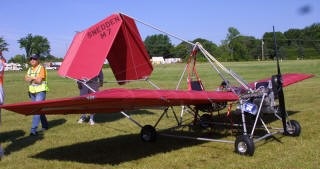
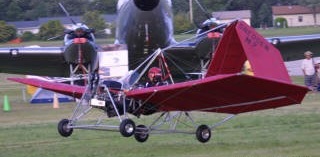
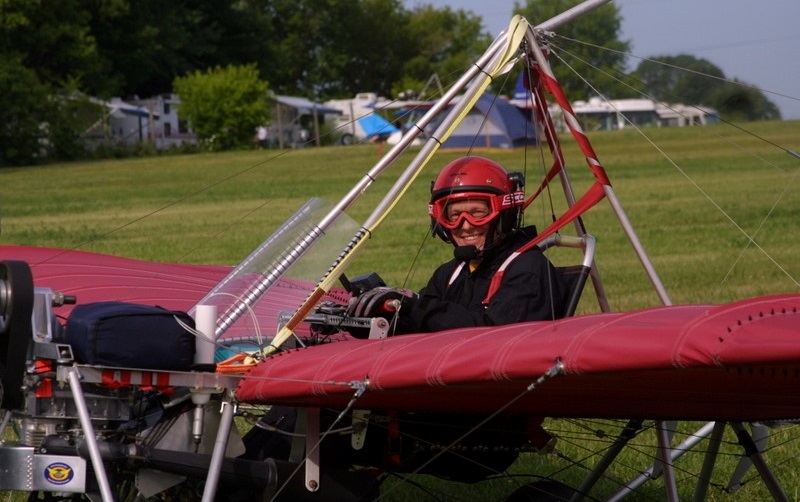
Snedden M7

The Snedden M7 is a cable braced, four-wheel, float optional, low aspect ratio mid wing, short take off ultralight design with upsweep wing tips, a large inverted V-tail equipped with anti-servo flaps, a three second ground roll and a very steep climb angle with the wing chord at 45 degrees to the horizon.

The M7 is a two blade tractor (70 inch diameter Powerfin ‘F’ type with 2.6:1 cog belt reduction) powered by the 65 HP, 6300 rpm, Hirth 3203, dual ignition, 625 cc two cylinder in line, two cycle, oil premix, air cooled engine with Al-Nikasil cylinder bores, dual carbs forward slanted and reed valves.

This machine completely conforms to FAR 103 and A/C 103-7.

Engine: Hirth 3203, 65 hp @ 6300 RPM
Reduction Type: cog belt
Reduction Ratio: 2.6:1
Wingspan: 23 ft
Wing Chord: 78 in
Weight: 277 lb
Fuel Capacity: 5 US G
Stall Speed: 26-27 mph
Top Speed: 63 mph
Cruise Speed: 35 mph
Climb Rate: 1970 fpm

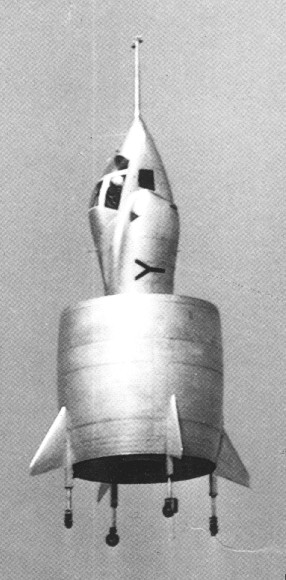
Snecma C.450 Coleoptere

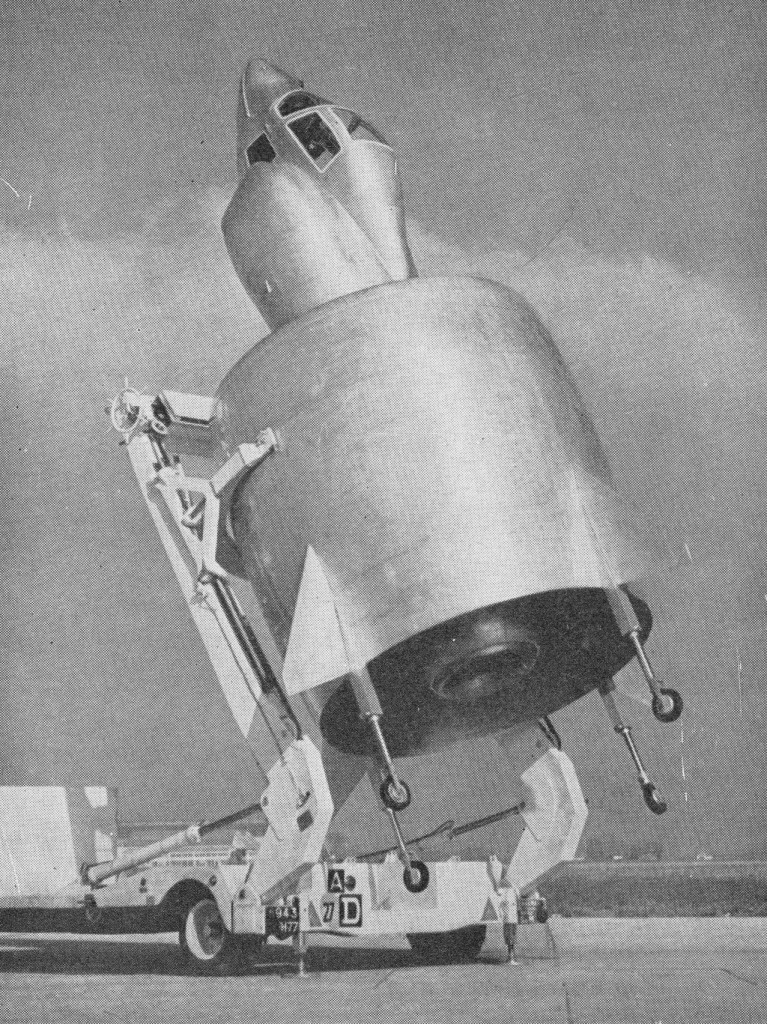
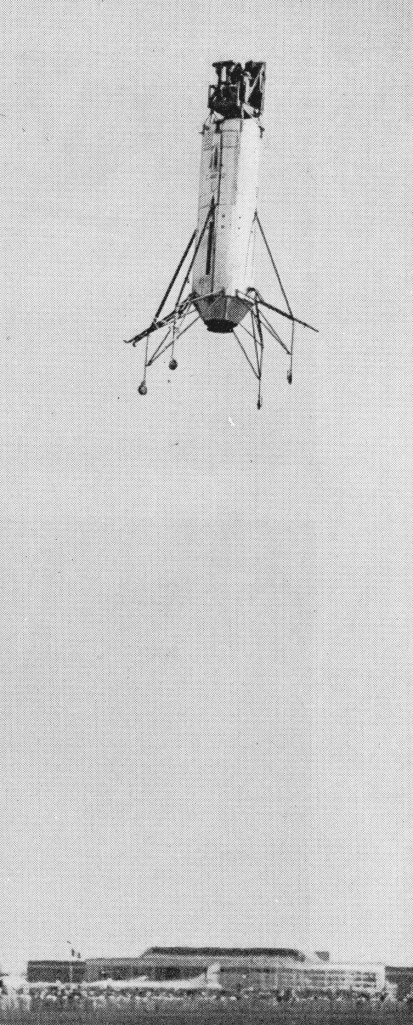
The C.450 Coleoptere was a VTOL research aeroplane, designed by von Zborowski,,that rose vertically on the power of its SNECMA Atar 101 turbojet before translating into forward flight supported by its annular wing.

The C.450 Coleoptere was derived from the Atar Volant test vehicle, and combined the concept of tail-sitting vertical take-off and an annular wing. Powered by an 8157-lb (3700-kg) thrust SNECMA Atar 101EX, the Coleoptere first flew in May 1959 and completed a limited test programme before the aeroplane was lost in an accident.

Smyth Sidewinder

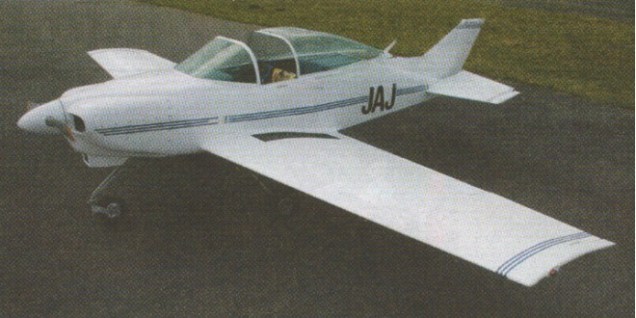
This side-by-side two-seater combines good looks and performance in an all-metal package that makes it more like a factory-built aircraft than a homebuilt. The design was started by former Navy pilot, Jerry Smyth in 1958, later modified by George Blair, and the prototype finally flew in February 1969. The design received the “Outstanding Design” award at the 1969 17th Sport Aviation Convention at Rockford, Illinois. Several have been built since then including some with fully-retractable undercarriage.

Fuselage is built around steel tubing for superior crash protection. Stabilizer is all-flying with an anti-servo tab to provide control fell and pitch trim. Airfoil is NACA 63-009. Alt control surfaces are mass-balanced. All three trike gear wheels wear pants. Provision is made for engines of 60 to 180 hp that weigh up to 310 lbs. A 125 hp unit giving a cruising speed of 255 km/h and a range of 685 km. It is a side-by-side two seater that uses a sliding canopy, tapered steel rod landing gear, stabilators and fiberglass cowling.

It is stressed to 9 g’s “ultimate”.

EU-Wish is the owner of the Smythe Sidewinder Design. The plans package contains 112 pages with many full size parts shown and all the necessary information to build the Sidewinder. Original copyright protected plans with official serial numbers were available from EU-WISH Aircraft.

Engine: Lycoming 125-hp 0-290
Wingspan 24’l0”
Wing area: 96 sq.ft
Length 19’4”
Height: 5ft 5.5in
Gross Wt. 1450 lb
Empty Wt. 867 lb
Fuel capaci¬ty: 17.5USG
Top 185 mph
Cruise (75 per¬cent) 160 mph
Stall 55 mph
Climb rate 900 fpm
Range 425 sm
Seats: 2

Engine: Lycoming O-320-E2A, 150hp
Prop: Hartzell CSU, 66in
Gross Wt. 1600 lb
Empty Wt. 1129 lb
Fuel capaci¬ty: 103 lt
Wingspan 24’l0”
Length 19’4”
Height: 5ft 5.5in
Wing area: 96 sq.ft
Seats: 2

EU-Wish Aircraft Sidewinder
Engine: 125 Hp
Wing Span: 24′ 10″
Wing Area: 96 sq. ft.
Fuel Capacity: 17.5 gal.
Baggage Weight: 60 lbs.
Gross Weight: 1450 lbs.
Empty Weight: 867 lbs.
Useful Load: 583 lbs.
Max. Speed: 175 mph
Cruise Speed: 160 mph
Stall Speed – No Flap: 55 mph
Rate Of Climb: 900-1500 fpm

EU-Wish Aircraft Sidewinder S&GA
Engine: Lycoming O-320, 160 hp
HP range: 90-180
Length: 19.3 ft
Wing span: 24.8 ft
Wing area: 96 sq.ft
Empty weight: 867 lb
Gross weight: 1550 lb
Fuel capacity: 17.5 USG
Cruise: 167 mph
Stall: 60 mph
Range: 490 sm
Rate of climb: 1200 fpm
Takeoff dist: 1200 ft
Landing dist: 900 ft
Seats: 2
Cockpit width: 38 in
Landing gear: nosewheel
S-M-J Maverick I

Built by M L Shanklin, (–) Moore, and (–) Johnson in 1968, the S-M-J Maverick I was a single place open cockpit monoplane.

Reported built at Kelly Field, Mooresville, it was registered N6417 and first flew on 2 July 1968.

It was destroyed there in a crash on 20 September 1969 after a wing failure.

Engine: 150hp Lycoming O-320
Wingspan: 25’0″
Length: 19’0″
Useful load: 725 lb
Max speed: 160 mph
Cruise: 140 mph
Stall: 80 mph
Seats: 1

Smith, W. Termite

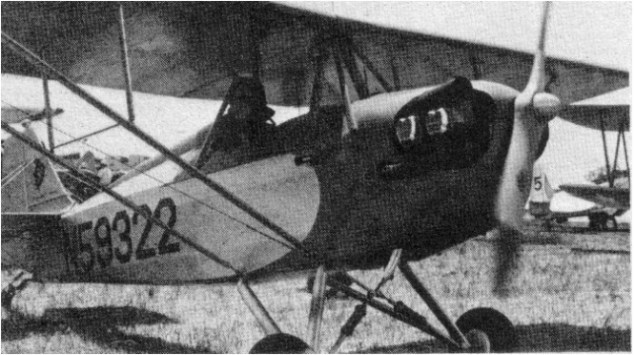
The original circa 1955 Termite N7939A, designed by Wilbur Smith, was powered by a 36-hp Aeronca engine, but since then other engines such as the 38-hp Continental and the 65-hp Lycom¬ing have been used.

The Termite is a single-seat sporting monoplane with a braced parasol-type wing Its wing struc¬ture is built with two wood spars, an aluminum leading edge and fabric covering aft of the front spar. The fuselage is an all-wood structure with plywood covering from the rear of the cockpit forward and fabric covering aft. The tail section is also fabric covered. The Termite’s landing gear is a Piper Cub type.

Engine: 40hp Continental
Wingspan 23’6”
Length 15’l”
Gross Wt. 658 lb
Empty Wt. 432 lb
Top speed 95 mph
Cruise 83 mph
Landing mph 38
Climb rate 450 fpm
Ceiling 6000 ft
Takeoff run 350 ft
Landing roll 400 ft
Range 150 sm