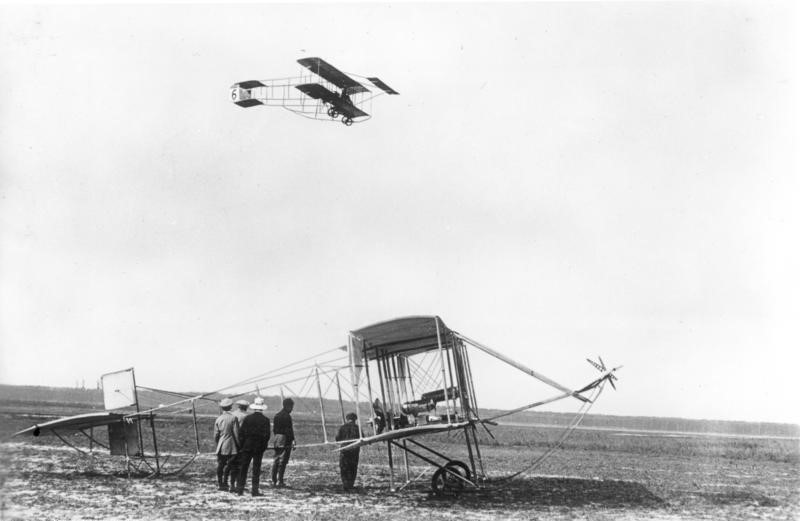
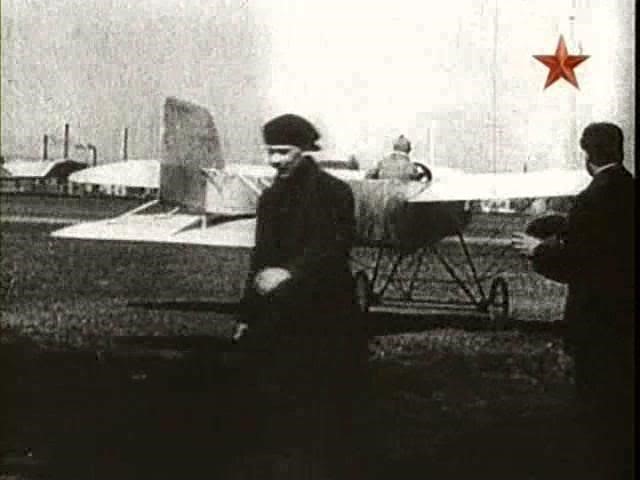
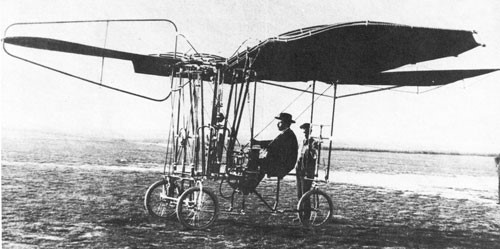
The “Hoch-Tief-Doppeldecker” built by the “Deutsche Sommer Flugzeugwerke GmbH” at Frankfurt-Rebstock in 1912. This machine was designed by Robert Sommer and had a circular fuselage, was powered by a 70 hp Hoffmann “Rotor” 7-cylinder engine. The lower wings were attached direct to the landing gear, therefore there was some space between wings and body.
The Sommer 1910 Biplane was designed by Roger Sommer. It was a pusher configuration biplane resembling the successful Farman III, and was built in large numbers for the time. One was owned by Charles Rolls.
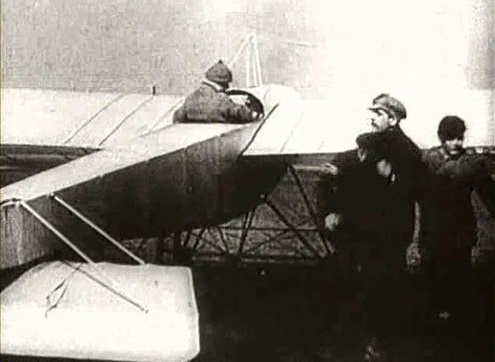
In May 1909 Sommer bought a Farman III aircraft, and on 7 August 1909 he gained fame in this by breaking the endurance record held by Wilbur Wright, making a flight lasting 2 hr 27 min 15 sec. Later that year he made a successful appearance at the Doncaster flight meeting, winning the prize for the greatest distance flown during the meeting. Meanwhile, he had started building an aircraft of his own design at Mouzon in the Ardennes, where his family had a felt-making business.
The design of the Sommer biplane was derived from that of the Farman III, the aircraft being a pusher configuration equal-span biplane powered by a 50 hp (37 kW) Gnome Omega. Lateral control was effected by D-shaped ailerons on the upper wing. A single elevator was mounted in front of the wings: behind the wings wire-braced wooden booms carried a horizontal surface which was operated independently of the front elevator and was used to adjust the aircraft’s trim rather than for control purposes. Early examples has a single large rudder mounted below this: this was later changed to four smaller rudders, two above it and two below, and subsequently changed again to one above and one below. The twin skids of the undercarriage were extended forwards to form part of the supporting structure for the elevator, and a single pair of wheels were mounted on an axle between the skids. A two-seat “Military” version with an extended upper wing was produced later.
The prototype was first flown by Sommer on 4 January 1910 at Mouzon, when he managed three flights of over 4 km (2.5 mi) This first machine was sold to a M. Viateaux within two weeks, and by the end of February he had built a replacement and established a flying school at Mouzon. A large number of examples were built: by spring 1910 Sommer had sixty aircraft on order. Sommer had established flying school at Douzy using his machines.
One example was bought by Charles Rolls, and was exhibited on the Royal Aero Society stand at the 1910 Aero Show at Olympia
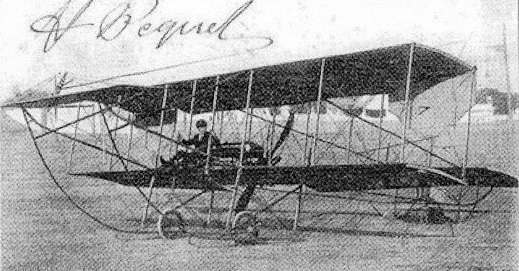
A small number of license-built copies of the Sommer biplane were built in England by Humber. These were of mixed steel and wood construction, and one was used to carry out the world’s first official mail-carrying flight, when 6,500 letters were flown by Henri Pequet from the United Provinces Exhibition at Allahabad to Naini. The letters bore an official frank “First Aerial Post, U.P. Exhibition, Allahabad, 1911”, the text surrounding a drawing of the aircraft.
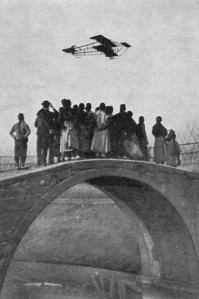
The first aeroplane flight in China was most likely on February 21, 1911, with René Vallon and his Sommer biplane flying over Shanghai. Like other entrepreneurial aviators, he was hoping to sell the concept to onlookers.
René Vallon and his Sommer above Shanghai.
Powerplant: 1 × Gnome Omega 7, 37 kW (50 hp) Wingspan: 10.36 m (34 ft 0 in) Wing area: 36 m2 (390 sq ft) Length: 12.5 m (41 ft 0 in) Crew: 1 Capacity: 1
This Roger Sommer monoplane, a fabric covered fuselage version, was designed by Ingénieur Tonnet and flown circa 1911/1912. Léon Bathiat flew many variants of this fast monoplane in several competitions during 1910 and 1911, and in 1912 all interests were purchased by Bathiat who sold these monoplanes under the name Bathiat-Sanchez. Very similar to the Bathiat-Sanchez Type E, shown at the Paris Aero Salon of 1913.
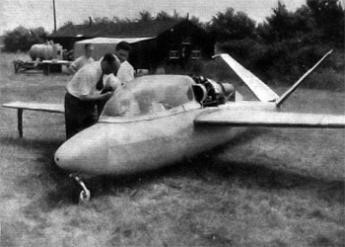
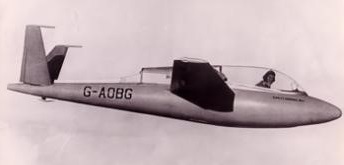
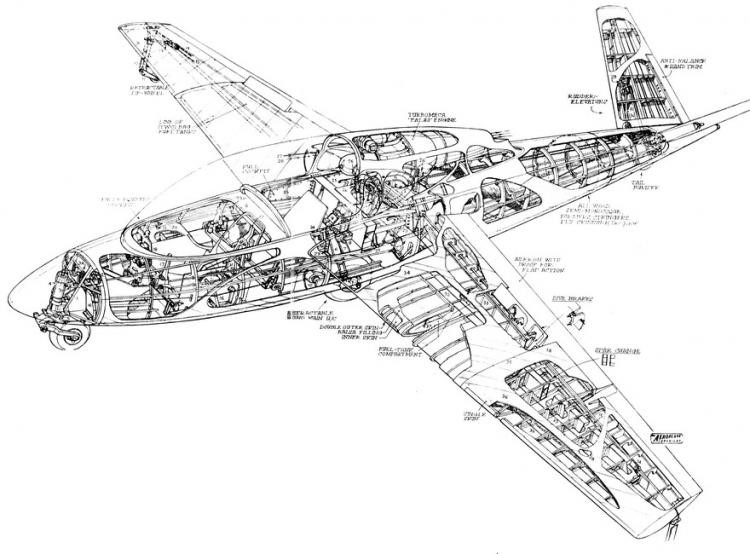
Funded by Nat Somers and designed by Hugh Kendall the Somers Kendal SK-1 was planned to win a Royal Aero Club prize for the design of a light aircraft, and to race, all with acrobatic abilities.
The tandem two-seat SK-1 is made of wood. The wings each hold a structural tank. Both tanks have a total capacity of 227 liters. The leading edge and wing tips are made of synthetic fiber impregnated fiberglass. The laminar wing has an aspect ratio of 8. The flaps extend over the entire span and contribute to the high lift by simultaneously operating down.
The only metal parts of the aircraft are the engine mounts, the landing gear and butterfly tail. The undercarriage front wheel was a Miles Gemini tail wheel, with a singe main wheel. Side outriggers fully retracted into the wing.
The butterfly tail is full flying and smaller trailing edge flaps act as servo trim tabs.
Built at Woodley, the first flight of the SK-1 was flown by Hugh Woodley Kendall, its designer, on Oct. 8, 1955, registered G-AOBC. It suffered a mid-air turbine failure on 11 July 1957.
The lack of market opportunity (either as aircraft race or as training aircraft for the RAF) terminated the project.
It went to the College of Aeronautics, Cranfield for use as a design example but departed in the mid-1960s.
It was found in 1974 under re-build at a farm near Dunstable.
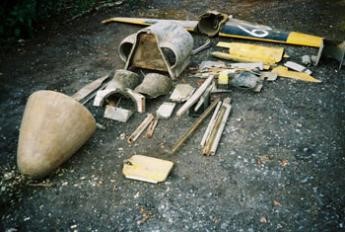
Circa 2010, the Somers-Kendall SK-1 was bought by Peter Bishop of Hamburg, Germany. The body is in good condition and it was transferred to Classic Aero Services in France for restoration.
Some other elements exist, but the wings and canopy were missing.
Engine: Turbomeca Palas, 160 Kp Span 22 ft 9 in / 6.93 m Wing area: 6.25 m² Length 20 ft 10 in / 6.35 m Height: 1.62 m Fuselage weight: 217 Kg Engine and accessories weight: 90 Kg Equipment and oil weight; 35 Kg Empty weight: 343 Kg Aerobatic mauw 1300 lb Fuel capacity: 228 lt Vne: 645 km / h Max speed: 332 mph / 535 Km / h (at sea level) Max cruise: 450 km / h Initial climb rate: 1850 ft / min Range: 1160 km at 20,000 ft at 190 kts Take-off (50 feet, 750 Kg): 685m Landing dist (50 feet to 650 Kg): 595m Load factor: + / – 6 g
The “Sturmvogel” was an ornithopter designed by Austro-Hungarian engineer Andreas Soltau. It was powered by a carbonic acid engine. It was a relatively large machine, with a span of 11 meters and a wing area of 30 square meters. It had an elevator at the rear, a birdlike construction, and the rudder in front.
The machine was not successful, as the flapping had a too low frequency to lift it off. Tests were made at Linz on 16 August 1909, which were highly published in the contemporary Austro-Hungarian press. After his adventure with the Sturmvogel, Soltau left aeronautics, but he can still be traced in patents dating from the 1920s, one of which features a hot-air engine.
Also available as a single seater, the two seater seats side-by-side.
Diamant LP
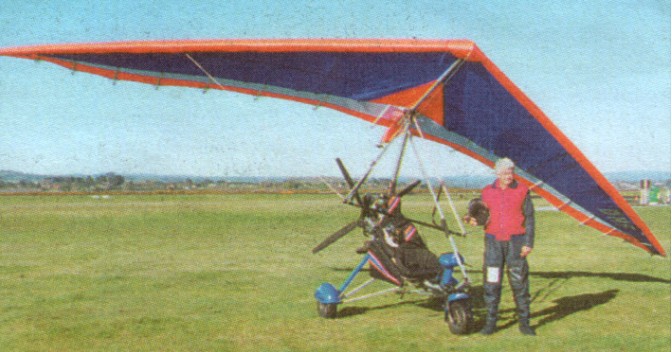
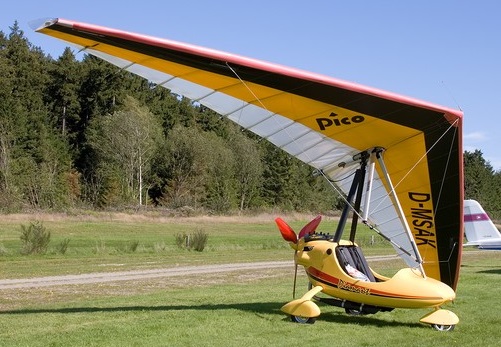
The Solid Air Diamant LP (English: Diamond, Light Performance) is a German ultralight trike, designed and produced by Solid Air UL-Bau Franz of Hundheim, Rheinland-Pfalz. The aircraft was supplied as a complete ready-to-fly-aircraft.
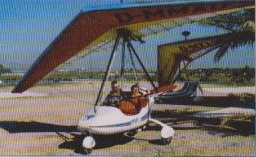
The Solid Air Diamant Twin (English: Diamond) ultralight trike was supplied as a complete ready-to-fly-aircraft.
Diamant Twin
Diamant Twin Hazard Empty weight: 170 kg Wing span: 10.50 m Wing area: 13 sq.m Fuel capacity: 40-60 lt Certification: Vz Engine: Hirth F 30, 60 hp MAUW: 383 kg Seats: 2 Max speed: 120 kph Cruise speed: 110 kph Minimum speed: 50 kph Climb rate: 3.5 m/s Fuel consumption: 8 lt/hr Price (1998): 41 000 DM
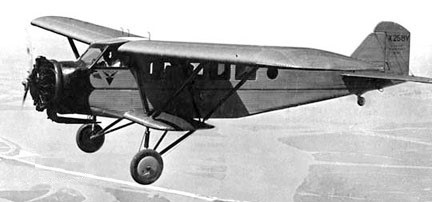
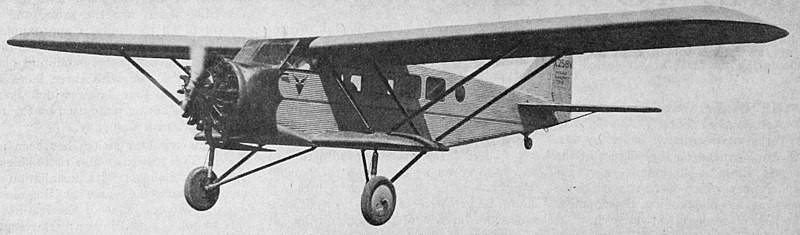
Designed by William L. Lewis, the 1930 Solar MS-1 (ATC 2-252) was a sesquiplane all-metal eight-passenger transport aircraft evolution of Prudden SE-1.
Its wings were braced to each other with warren truss-style struts. The lower stub wings carried the well separated legs of the fixed undercarriage. The fuselage was of rectangular cross-section and featured a fully enclosed flight deck and passenger cabin. The tail was of conventional design with strut-braced stabilizers and carrying a fixed tailwheel. Construction was of metal throughout with corrugated skins, and was powered by a single 420 hp (310 kW) Pratt & Whitney Wasp radial engine in the nose.
First flying on 21 January 1930, piloted by Doug Kelly, the one built was registered NX/NC258V. Kelly described it as “one of the finest closed planes I have ever flown”, and Charles Lindbergh also praised the MS-1 when he flew it a few days later. Despite this, the airlines did not order the type, although Northwest Airways and ten other airlines considered, and rejected buying examples due to the effect that the onset of the Great Depression was having on their traffic volumes.
A 6,000 mi (9,700 km) record flight from Los Angeles, California to Tokyo was planned, but never happened. The high point was a 7,000 mi (11,000 km) transcontinental flight over 25 states that the president of Solar took with his entire family, including his wife and three children, aged 9, 7 and 3, which attracted considerable interest from the media who dubbed it the “flying nursery”. A purchasing agent for a major airline then promised a substantial order, but dropped dead of a heart attack the day the order was to be signed, and his replacement called off the deal.
Solar made the prototype available for charter flights for a while, but in 1931 sold it to an operator in Mexico who used it to transport coffee beans. On the Mexican register as XB-AFK, the MS-1 was destroyed in a crash in 1936.
Solar would never build another aircraft after the MS-1, turning to saucepans to survive the depression, and later stainless-steel exhaust shrouds.
Solar MS-1 Powerplant: 1 × Pratt & Whitney R-1340 Wasp, 420 hp (310 kW) Propeller: 2-bladed fixed pitch metal Upper wingspan: 56 ft 6 in (17.22 m) Upper wing chord: 100 in (2.54 m) Upper wing dihedral: 2° Lower wingspan: 18 ft 0 in (5.49 m) Lower wing chord: 70 in (1.78 m) Lower wing dihedral: 0° Wing area: 496.5 sq ft (46.13 sq.m) Airfoil: Göttingen 398 Length: 35 ft 11 in (10.95 m) Height: 10 ft 2 in (3.10 m) Empty weight: 3,650 lb (1,656 kg) Gross weight: 7,000 lb (3,175 kg) Fuel capacity: 135 US gal (112 imp gal; 510 l) Oil Capacity: 8 US gal (30 l; 6.7 imp gal) Maximum speed: 130 mph (210 km/h, 110 kn) Cruise speed: 115 mph (185 km/h, 100 kn) Landing speed: 60 mph (52 kn; 97 km/h) Service ceiling: 15,000 ft (4,600 m) Absolute ceiling: 18,400 ft (5,600 m) Rate of climb: 750 ft/min (3.8 m/s) initial Wing loading: 14 lb/sq ft (68 kg/sq.m) Power/mass: 16.4 lb/hp (10.0 kg/kW) Crew: Two Capacity: Eight passengers Undercarriage track: 9 ft 6 in (2.90 m)
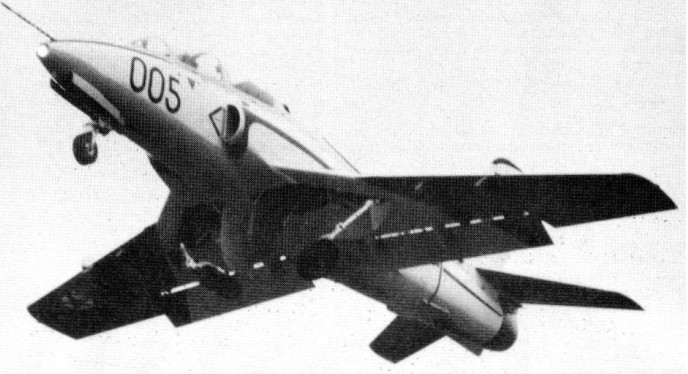
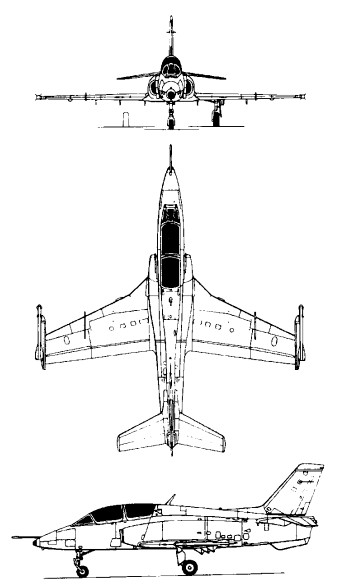
Designed to replace the T-33 and the earlier G.2A Galeb in Jugoslavian Air Force service, this two-seat basic trainer/light strike aircraft has swept wings and all-swept tail surfaces, the tailplane having pronounced anhedral, and stepped tandem seating. Its performance is improved by the introduction of a 17.8kN Rolls-Royce Viper turbojet.
The first of two prototypes was flown on 17 July 1978 and the first of six pre-production aircraft on 17 December 1980. These and the first prototype were designated G-4 PPP, and had fixed tailplanes with inset elevators and no anhedral.
Production examples (and the second prototype) were designated G-4 and featured an all-moving anhedral tailplane and comprehensive avionics improvements. Armament includes a detachable underfuselage 23mm cannon pod, and a variety of stores on four underwing hardpoints. A Ferranti D282 gyro gunsight is standard equipment.
The G-4 was been ordered in large numbers for the Yugoslav air force. They were delivered to the Air Academy at Zemunik (later relocated to Udbina) and to advanced flying schools at Pula and Totograd. The academy fleet includes the ‘Letece Zvezde’ (Flying Stars) formation display team, whose aircraft are painted in a red, white and blue colour scheme.
Twelve G-4s, in two batches of six, were delivered to Myanmar in 1991 and 1992.
A ground-attack trainer, with advanced avionics, an upgraded nav/attack system, and wingtip missile launch rails was developed under the designation G-4M, but no prototype has flown. A similar single-seat derivative designated G-5 was also under development.
The UTVA factory was heavily bombarded in 1999 and certain parts of it were still off limits due to the unexploded ordnance in 2012. All five original lasta 95 prototypes were destroyed in the factory and the only existing Supergaleb G4MD prototype was lightly damaged.
G.4 Super Galeb Engine: 1 x R-R Viper 632 Mk. 632 Installed thrust: 17.8 kN Span: 9.88 m / 32 ft 5 in Length: 11.86 m / 39 ft 11 in Height: 4.28 m / 14 ft 1 in Wing area: 19.5 sq.m / 209.90 sq ft Empty wt: 3250 kg MTOW: 6330 kg / 13955 lb Loaded weight: 3250 kg / 7165 lb Warload: 1350 kg Max speed: 491 kt / 910 kph / 565 mph Landing speed: 89 kt / 165 km/h Cruising speed: 459 kt / 850 km/h Initial ROC: 1800 m / min Ceiling: 15,000 m / 49200 ft T/O run: 600 m Ldg run: 550 m Fuel internal: 1720 lt Combat radius lo-lo-lo: 300 km Range w/max.payload: 600 km / 373 miles Armament: 1 x 23 mm GSz-23L cannon Hardpoints: 5 Crew: 2
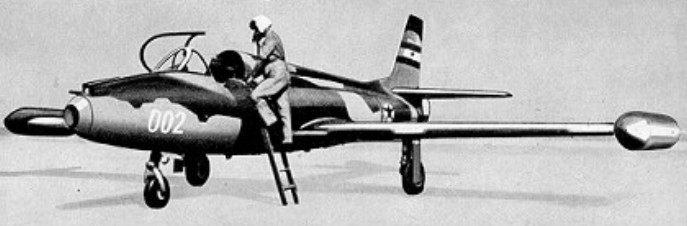
The Galeb was complemented by a generally similar but higher performance single-seat light attack/tactical reconnaissance version designated J-1 Jastreb (Hawk), which had a strengthened airframe and was powered by the improved Rolls-Royce Viper 531 turbojet. This was built as the J-1 attack and RJ-1 tactical reconnaissance aircraft for the Yugoslav air force, with corresponding J-1E and RJ-1 E versions for export. For operational conversion a two-seat TJ-1 was developed.
Production of all versions of the Jastreb ended during 1978.
J-1 Jastreb Engine: 1 x Rolls-Royce “Viper” 531, 1361kg Max take-off weight: 5100 kg / 11244 lb Loaded weight: 2820 kg / 6217 lb Wingspan: 11.68 m / 38 ft 4 in Length: 10.88 m / 36 ft 8 in Height: 3.64 m / 12 ft 11 in Wing area: 19.43 sq.m / 209.14 sq ft Max. speed: 820 km/h / 510 mph Ceiling: 12000 m / 39350 ft Range w/max.fuel: 1520 km / 945 miles Armament: 3 x 12.7mm machine-guns Hard points: 8 Crew: 1