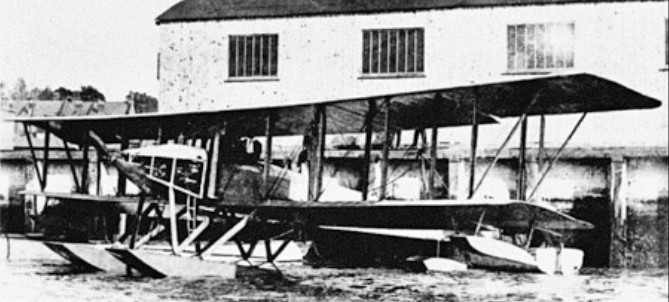
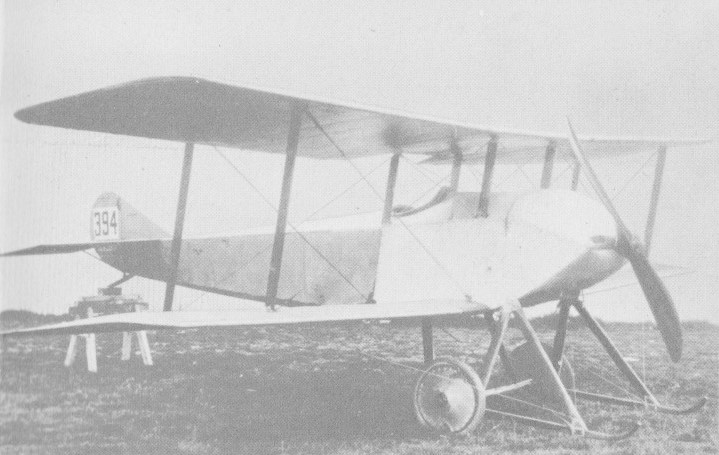
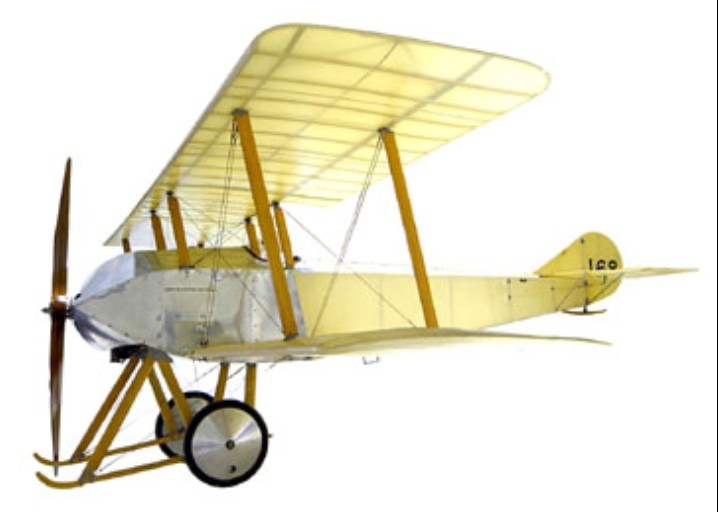
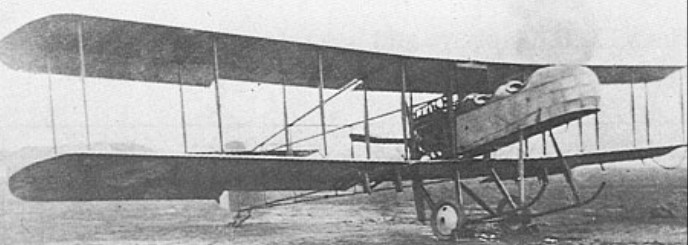
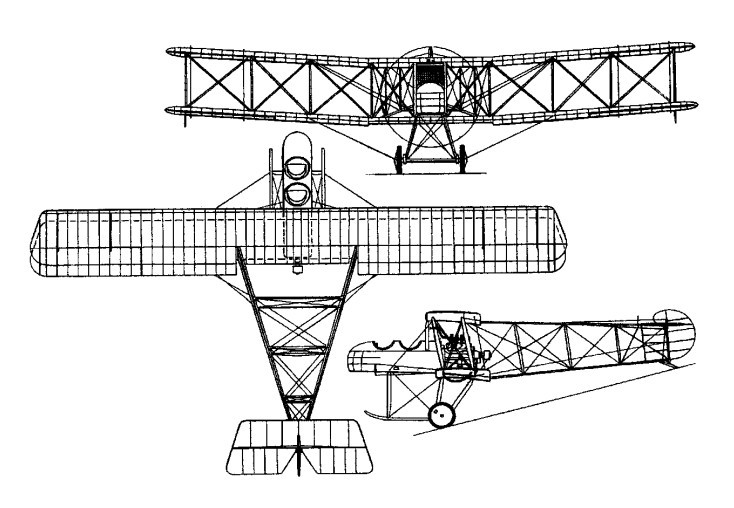
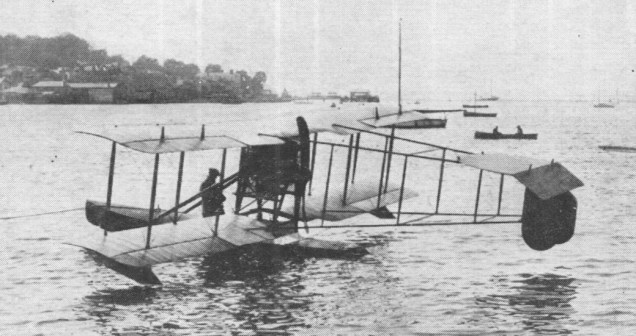
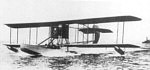
The Sopwith Type C and the Sopwith Special were actually two virtually identical designs built to two different contracts – the Type Cs were ordered in July 1914, whilst the ‘Special Tractor Biplane Seaplane’ was ordered first in February 1914. Despite appearing after the Special, the Three Type Cs were allocated the RNAS serials 157 to 159 and the Special received the serial number 170. The photo above shows the Sopwith Special number 170.
The Special and Type Cs were the first purpose built British aeroplanes capable of carrying a torpedo, unfortunately they were not capable of lifting said torpedo into the air! The design was generally considered a failure because of this rather embarrassing character trait. In 1914 commander of the Calshot naval air station Cmdr Arthur Longmore of the Royal Naval Air Service and other RNAS pilots carried out torpedo carrying practice with 14-inch weapons in what Longmore described as the Sopwith Canton-Unné seaplane in August 1914 during experiments at Calshot. Its name was derived from its powerplant.
Engine: 1 x 205hp Canton-Unne (Salmson) 14-cylinder water-cooled radial engine Max take-off weight: 1963 kg / 4328 lb Wingspan: 20.12 m / 66 ft 0 in Length: 10.97 m / 36 ft 0 in Wing area: 72.93 sq.m / 785.01 sq ft Crew: 2
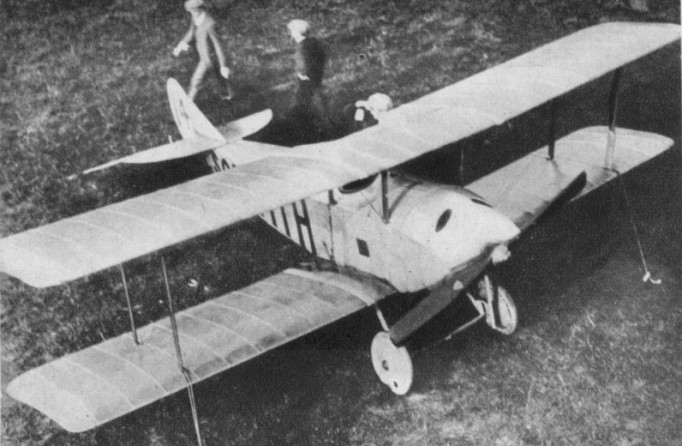
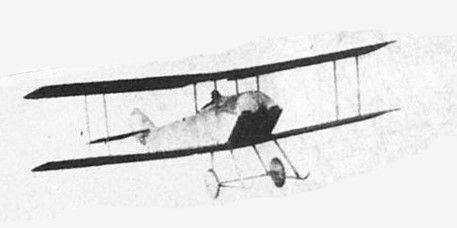
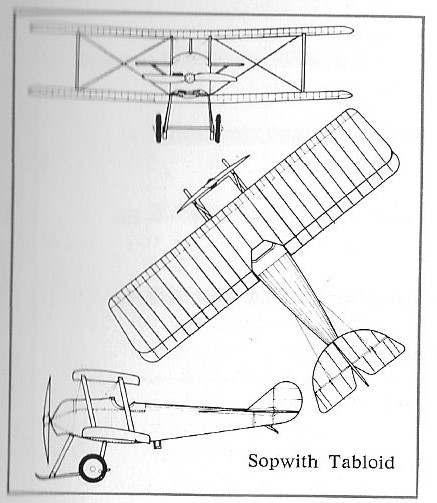
The Sopwith Aviation Company Tabloid was originally designed as sports aircraft and was first flown by Harry Hawker on 27 November 1913. It was a two-seater single-bay biplane with a side-by-side seating configuration. It was powered by a Gnôme rotary and had warping wings for lateral control.
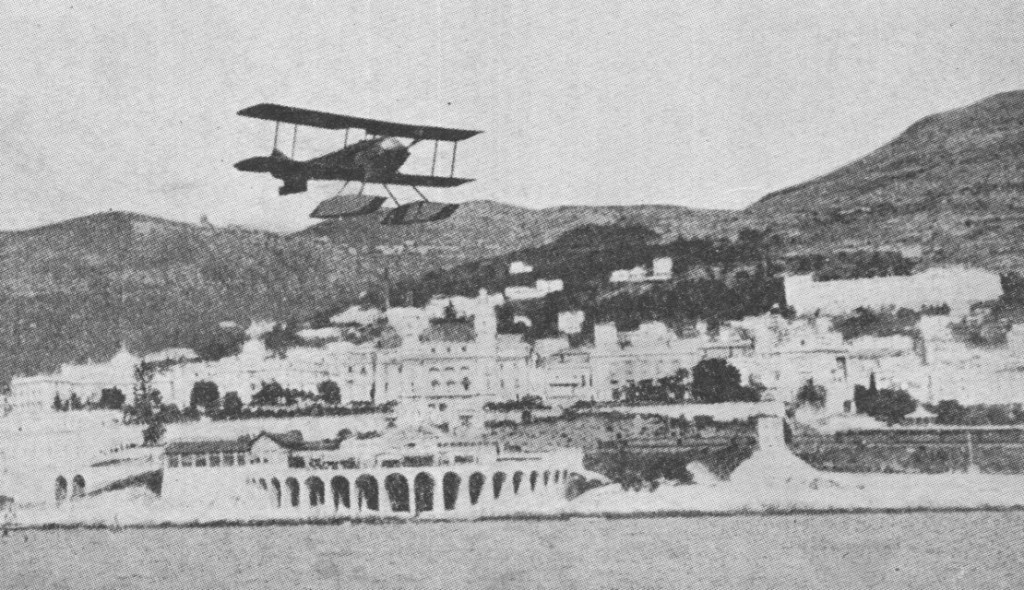
A single-seat Tabloid was quickly mounted on floats and entered in the 1914 Schneider Trophy in Monaco – which it handily won giving Britain her first victory in the annual contest piloted by Howard Pixton, at the same time setting a world seaplane speed record at 92 mph. It’s turn of speed so demoralised the other dozen or so entries from 6 countries that only one other even bothered to take off. The performance was so convincing that the British military ordered many of these aircraft, which was developed into the Sopwith Schneider. It therefore became the first single-seat scout anywhere to go into production for military use.
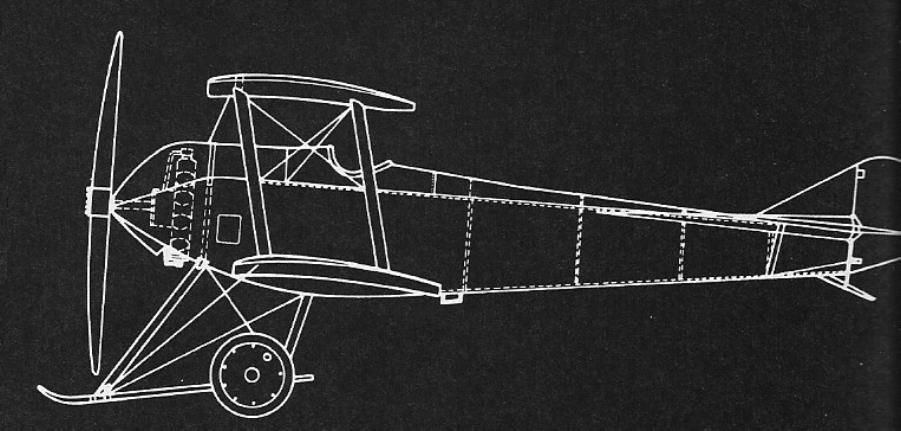
A single-bay biplane, the two-spar wooden wings and wooden fuselage are fabric covered. Wing warping rather than ailerons was used, and conventional tail surfaces were fitted. Two skids were normally fitted forward of the wheels.
Some aircraft were fitted experimentally with a Lewis machine gun above the wing centre section or on the side of the fuselage, with steel plates on the airscrew blades to deflect bullets. A few 20 lb bombs could be carried.
The Tabloid was ordered by both the Royal Flying Corps and Royal Naval Air Service; the latter using it for some of the earliest strategic bombing attacks against Germany. Thirty-six Tabloid were delivered for the RNAS and RFC between October 1914 and June 1915. When the 1914 18 War started, Tabloids went to Belgium with a squadron of the RNAS.
The Royal Naval Air Service used their Tabloids in early bombing attacks against the airship sheds at Cologne and Dusseldorf in an attempt to deny the Germans the use of operating bases close to the North Sea. The first raid took place on 22 September 1914 and although not a success was the first ever air raid on Germany. The second raid was much more successful. In one raid F1t. Lt. R.L.G.Marix destroyed an airship shed at Dusseldorf with his 20 lb bombs, complete with the secret Zeppelin Z.1X inside.
Royal Flying Corps Tabloids were used for scouting duties and were involved in some of the earliest experiments in arming aircraft. From February 1915 a number of Tabloids were fitted with Lewis machine-guns. Although it was one of the first aircraft to have a machine gun fitted to fire through the propeller arc it was only after the Tabloid had been withdrawn from operational service in the spring of 1915 that a successful interrupter gear was developed.
Replica ultralight: Circa Reproductions Sopwith Tabloid / Baby
Engine: Gnome Monosoupape, 80 hp / 75kW Span: 25 ft. 6 in / 7.76 m Length: 20 ft. 4 in / 6.1 m Height: 8 ft. 5 in / 2.56 m Wing chord: 5 ft. 11 in Wing area: 241.3 sq. ft / 22.3 sq.m Weight empty: 730 lb Loaded weight: 1120 lb ROC: 1200 fpm Endurance: 2.5 hr Max speed: 80 kt / 92 mph / 148km/h Landing speed: 32 kt / 59 km/h Seats: 2
Engine: Gnome, 100 hp Wingspan: 25 ft 6 in / 7.77 m Length: 20 ft 4 in / 6.20 m Height: 8 ft 5 in / 2.57 m Weight: 1120 lb / 508 kg Max speed: 92 mph / 148 kph Ceiling: 15,000 ft / 4572 m Endurance: 3.30 hrs Armament: 1 x mg Crew: 1
The Gun Bus was essentially a landplane derivative of the S.P.Gn (Sopwith Pusher, gun. The Gun Bus, intended for the fighting role, carried a 7.7mm machine gun on a flexible mount in the forward cockpit and was powered by a 100hp Gnome Monosoupape rotary engine. A more powerful version, with a 150hp Sunbeam eight-cylinder water-cooled engine, was developed specifically for the RNAS, this having a redesigned nacelle and a revised undercarriage. Six of the Sunbeam-powered Gun Buses were built for the RNAS by Sopwith, a further 30 being ordered for the service from Robey & Company, these last being intended for bombing (and possibly anti-submarine) duties as distinct from fighting. The pilot was moved forward to the front cockpit, a bombing panel being let into the floor and four bomb carriers being fitted beneath the lower wing.
Wingspan: 15.24 m /50 ft 0 in Length: 9.90 m / 33 ft 6 in Height: 3.45 m / 11 ft 4 in Wing area: 44.03 sq.m / 473.93 sq ft Max. speed: 129 km/h / 80 mph
The Sopwith Pusher, gun, was a gun-carrying two-seat pusher biplane with twin floats. Six of these floatplanes were ordered from the recently-founded Sopwith Aviation Company by the Greek government in March 1914, but immediately commandeered by the Admiralty when war was declared in August that year, subsequently serving with the RNAS.
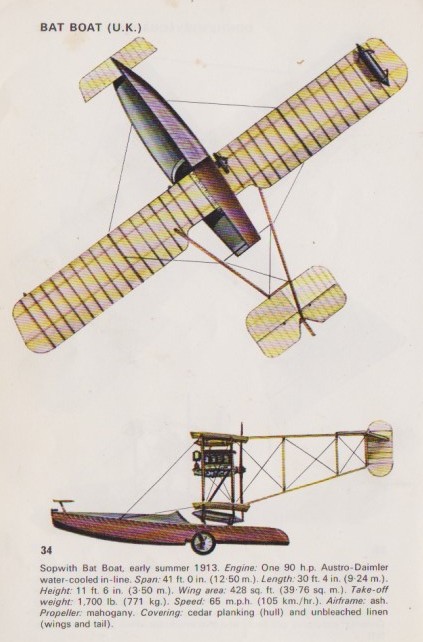
The first amphibian built in Europe circa 1913. A reconnaissance flying boat.
One Bat Boat and two Three-seaters were bought by Winston Churchill for the Naval Wing of the RFC.
Bat Boats Type 1
1913 Sopwith Bat Boats Type 1 amphibian version
1913 Bat Boats Type 1 BB1 Span: 41′ Length: 30’4″ Weight: 1540 lb allup Speed: 60-65 mph
Bat Boat Type 1 BB2 and BB3 amphibian Span: 41′ Length: 32′ dihedral 3 deg
Sopwith Bat Boat II Engine: Salmson, 197 hp Length: 35.302 ft / 10.76 m Height: 11.909 ft / 3.63 m Wingspan: 54.987 ft / 16.76 m Wing area: 599.985 sqft / 55.74 sq.m Max take off weight: 3184.0 lb / 1444.0 kg Weight empty: 2302.0 lb / 1044.0 kg Max. weight carried: 882.0 lbs / 400.0 kg Max. speed: 61 kts / 113 km/h Wing loading: 5.33 lbs/sq.ft / 26.00 kg/sq.m Crew: 2
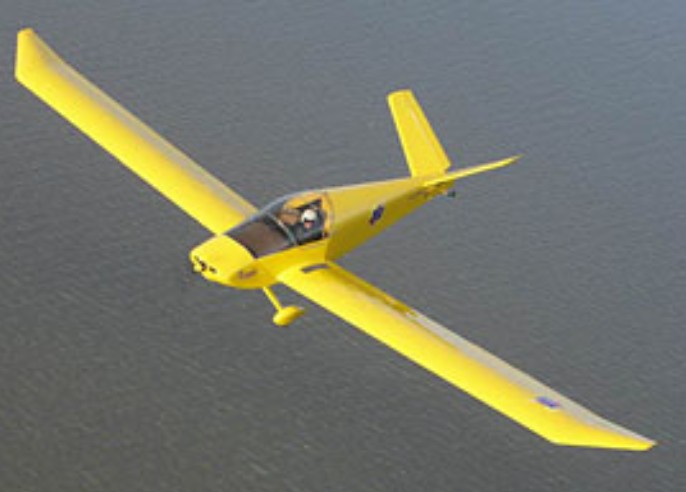
The XENOS follows in the Monnett tradition of bringing the cost of motor gliding to a highly affordable level. Using the same cost-effective and easy-to-build construction techniques and materials of the Sonex and Waiex, the Xenos offers another Reality Check for the soaring world. The Xenos comes standard with utility wing tips that can be easily removed to fit inside a 40 foot hangar, and can be quickly interchanged with optional aerobatic wingtips. The Xenos can either be flown as a Sport Pilot/LSA, or it can be flown by pilots that hold a glider rating with a self-launch glider endorsement. The Xenos can be flown as a powered aircraft, a self-launched glider that soars with the engine off, or it can motor-soar over great distances with incredible fuel economy.
The Xenos can either be flown as a Sport Pilot/LSA, or it can be flown by pilots that hold a glider rating with a self-launch glider endorsement. The Xenos can be flown as a powered aircraft, a self-launched glider that soars with the engine off, or it can motor-soar over great distances for fuel economy.
The Xenos is only available in kit form. The Xenos complete kit includes many pre-fabricated precision parts. Landing gear can be nose or tail wheel. Dual stick controls are standard.
Engine: 80 hp 2180 AeroVee Length: 19′ 9″ Wing Span (Utility): 45′ 8″ Wing Span (Aerobatic, solo): 39′ 4″ Wing Area (Utility): 158 sq ft Wing Area (Aerobatic, solo): 144 sq ft Tail Configuration: Y-tail Tail Height: 59″ Tail Width–with tail tips: 102″ Main Gear Width: 71″ (with wheel pants) Primary Structure: 6061 Aluminum Cockpit Width: 40 in. More Info Fuel Capacity: 16 US Gal Stall Speed (clean): 44 mph [71 km/h] Maneuvering Speed: 115 mph [185 km/h] Never Exceed Speed (Vne): 150 mph [241 km/h] Empty Weight: 750 lbs Baggage (Max): 40 lbs Range: 400 miles Cruise Speed @ Sea Level: 100 mph Cruise Speed @ 8000 ft (TAS): 120 mph Power Loading: 15.938 T.O. Distance: 300 ft Landing Distance: 300 ft Cockpit width: 40 in Utility Gross Weight: 1275 lbs Useful Load: 525 lbs Rate of Climb: 800-1000 fpm Load Factor: +4.4 / -2.2 G L/D: 24:1 CG Limits: 25-36% Wing Chord Aerobatic Gross Weight: 1050 lbs Rate of Climb: 1000-1250 fpm Load Factor: +6.0 / -3.0 G CG Limits: 27-32% Wing Chord
Engine: 120 hp Jabiru Length: 19′ 9″ Wing Span (Utility): 45′ 8″ Wing Span (Aerobatic, solo): 39′ 4″ Wing Area (Utility): 158 sq ft Wing Area (Aerobatic, solo): 144 sq ft Tail Configuration: Y-tail Tail Height: 59″ Tail Width–with tail tips: 102″ Main Gear Width: 71″ (with wheel pants) Primary Structure: 6061 Aluminum Cockpit Width: 40 in. More Info Fuel Capacity: 16 US Gal Stall Speed (clean): 44 mph [71 km/h] Maneuvering Speed: 115 mph [185 km/h] Never Exceed Speed (Vne): 150 mph [241 km/h] Empty Weight: 760 lbs Baggage (Max): 40 lbs Range: 350 miles Cruise Speed @ Sea Level: 120 mph Cruise Speed @ 8000 ft (TAS): 140 mph Power Loading: 10.625 T.O. Distance: 250 ft Landing Distance: 300 ft Cockpit width: 40 in Utility Gross Weight: 1275 lbs Useful Load: 515 lbs Rate of Climb: 1200-1400 fpm Load Factor: +4.4 / -2.2 G L/D: 24:1 CG Limits: 25-36% Wing Chord Aerobatic Gross Weight: 1050 lbs Rate of Climb: 2000+ fpm Load Factor: +6.0 / -3.0 G CG Limits: 27-32% Wing Chord VNE: 167 kt / 192 mph / 309 kmh
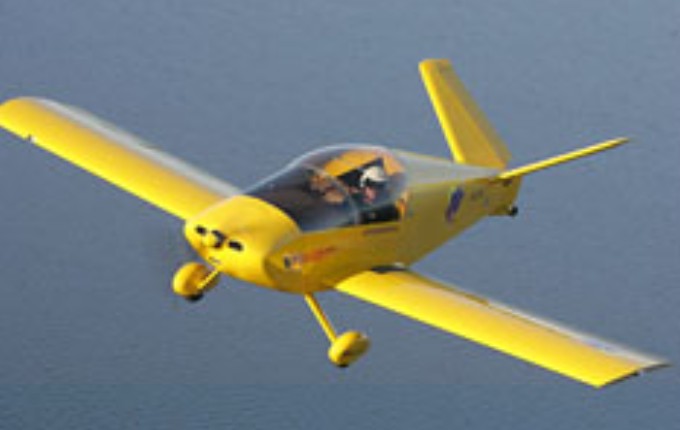
WAIEX (pronounced “Y-X”) is simply a Y-tail Sonex. Built purely for it’s good looks, the Waiex specifications and performance numbers are identical to those of the Sonex and, like the Sonex, is perfectly suited to the new US Sport Pilot/LSA regulations. The Waiex retains the same Sonex flight characteristics and high performance in all phases of flight, including aerobatics.
The Waiex is only available in kit form. The Waiex complete kit includes many pre-fabricated precision parts.
Engine: 80 hp 2180 AeroVee Length: 18′ 1″ Wing Span: 22′ Wing Area: 98.0 sq. ft. Tail Configuration: Y-tail Tail Height (Std Gear): 51″ Tail Height (Tri-Gear): 69″ Tail Width – with tail tips: 88″ Main Gear Width: 71″ (with wheel pants) Air Foil: 64-415 Primary Structure: 6061 aluminum Cockpit Width: 40 in. Fuel Capacity: 16 US Gal. Stall Speed (full flaps): 40 mph [64 km/h] Stall Speed (clean): 46 mph [74 km/h] Max Flap Extended Speed (Vfe): 100 mph [161 km/h] Maneuvering Speed: 125 mph [201 km/h] Never Exceed Speed (Vne): 171 kt / 197 mph / 317 km/h Empty Weight: 620 lbs. Range: 550 miles Cruise Speed @ Sea Level: 130 mph Cruise Speed @ 8000 ft (TAS): 150 mph Power Loading (GW/HP): 13.125 T.O. Distance: 400 ft Landing Distance: 500 ft Cockpit width: 40 in Utility Category Gross Weight: 1100 lbs Baggage (Max): 40 lbs Useful Load: 480 lbs Rate of Climb: 800-1000 fpm Load Factor: +4.4 / -2.2 G L/D: 11:1 CG Limits: 20-32% Wing Chord Aerobatic Category Gross Weight: 950 lbs Baggage (Max): 10 lbs Rate of Climb: 1000-1250 fpm Load Factor: +6.0 / -3 G CG Limits: 23-29% Wing Chord
Engine: 80 hp Jabiru Length: 18′ 1″ Wing Span: 22′ Wing Area: 98.0 sq. ft. Tail Configuration: Y-tail Tail Height (Std Gear): 51″ Tail Height (Tri-Gear): 69″ Tail Width – with tail tips: 88″ Main Gear Width: 71″ (with wheel pants) Air Foil: 64-415 Primary Structure: 6061 aluminum Cockpit Width: 40 in. Fuel Capacity: 16 US Gal. Stall Speed (full flaps): 40 mph [64 km/h] Stall Speed (clean): 46 mph [74 km/h] Max Flap Extended Speed (Vfe): 100 mph [161 km/h] Maneuvering Speed: 125 mph [201 km/h] Never Exceed Speed (Vne): 171 kt / 197 mph / 317 km/h Empty Weight: 620 lbs. Range: 550 miles Cruise Speed @ Sea Level: 130 mph Cruise Speed @ 8000 ft (TAS): 150 mph Power Loading (GW/HP): 13.125 T.O. Distance: 400 ft Landing Distance: 500 ft Cockpit width: 40 in Utility Category Gross Weight: 1100 lbs Baggage (Max): 40 lbs Useful Load: 480 lbs Rate of Climb: 800-1000 fpm Load Factor: +4.4 / -2.2 G L/D: 11:1 CG Limits: 20-32% Wing Chord Aerobatic Category Gross Weight: 950 lbs Baggage (Max): 10 lbs Rate of Climb: 1000-1250 fpm Load Factor: +6.0 / -3 G CG Limits: 23-29% Wing Chord
Engine: 120 hp Jabiru Length: 18′ 1″ Wing Span: 22′ Wing Area: 98.0 sq. ft. Tail Configuration: Y-tail Tail Height (Std Gear): 51″ Tail Height (Tri-Gear): 69″ Tail Width – with tail tips: 88″ Main Gear Width: 71″ (with wheel pants) Air Foil: 64-415 Primary Structure: 6061 aluminum Cockpit Width: 40 in. Fuel Capacity: 16 US Gal. Stall Speed (full flaps): 40 mph [64 km/h] Stall Speed (clean): 46 mph [74 km/h] Max Flap Extended Speed (Vfe): 100 mph [161 km/h] Maneuvering Speed: 125 mph [201 km/h] Never Exceed Speed (Vne): 171 kt / 197 mph / 317 km/h Empty Weight: 620 lbs. Range: 400 miles Cruise Speed @ Sea Level: 135 mph Cruise Speed @ 8000 ft (TAS): 170 mph Power Loading (GW/HP): 9.583 T.O. Distance: 250 ft Landing Distance: 500 ft Cockpit width: 40 in Utility Category Gross Weight: 1150 lbs Baggage (Max): 40 lbs Useful Load: 530 lbs Rate of Climb: 1200-1400 fpm Load Factor: +4.4 / -2.2 G L/D: 11:1 CG Limits: 20-32% Wing Chord Aerobatic Category Gross Weight: 950 lbs Baggage (Max): 10 lbs Rate of Climb: 2000+ fpm Load Factor: +6.0 / -3 G CG Limits: 23-29% Wing Chord
The 1912 Somerville Biplane was an exhibition and sightseeing ship for Earl S Daughery, who relocated to Long Beach CA and founded its municipal airport.
Somerville Biplane with Daugherty at the helm
Coal City’s Illinois Aero Construction Co (IAC) initials were on the plane and 51; most likely when it was used as a trainer at IAC’s flying school.
Built by the Illinois Aero Construction Company and designed as an automatically stable machine by William E. (Billy) Somerville.
The 1910 Somerville-Borel was mentioned in the 27 September 1913 Aero and Hydro as a 50hp Gnôme-powered monoplane being flown at Rensselaer IN. Advertised as “automatically stable,” it might have been a copy, rather than a rebuild as thought, of the Morane-Borel.