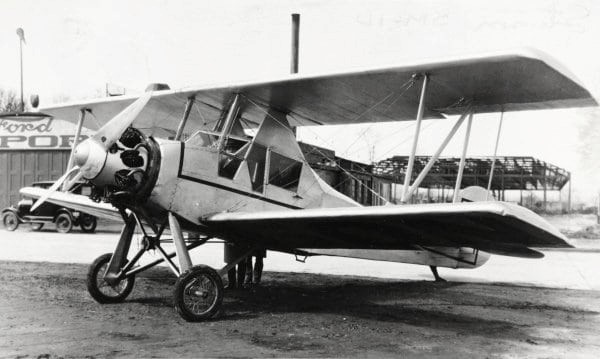
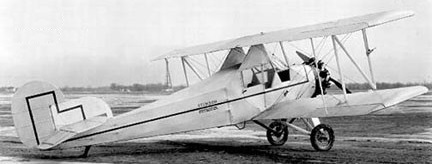
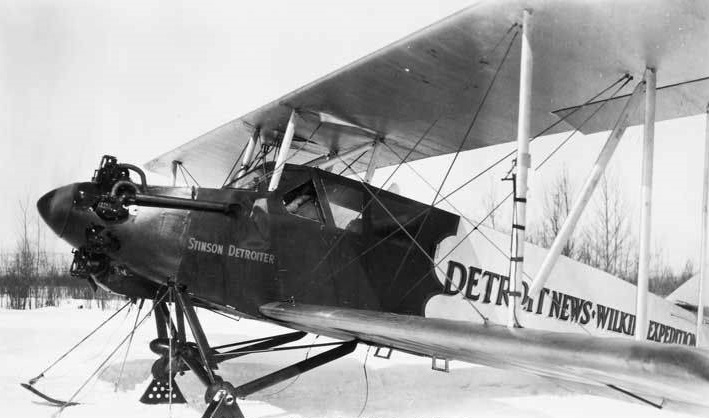
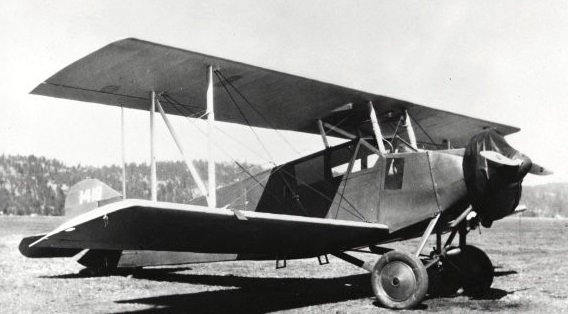
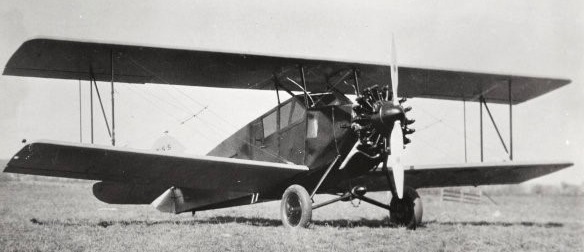
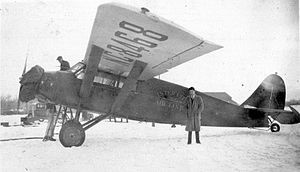
The first design from the Detroit-based Stinson Aircraft Syndicate was the Stinson SB-1 Detroiter, a four-seat cabin biplane with novel features such as cabin heating, individual wheel brakes and electric starter for the nose-mounted 220 hp (164 kW) Wright J-5 Whirlwind engine. The Harley Davidson brakes were demonstrated on a snowy maiden flight requiring wheel chains to be added to prevent skidding.
The prototype sold to Horace Elgin Dodge, first production model sold to John Duval Dodge of Dodgeson.
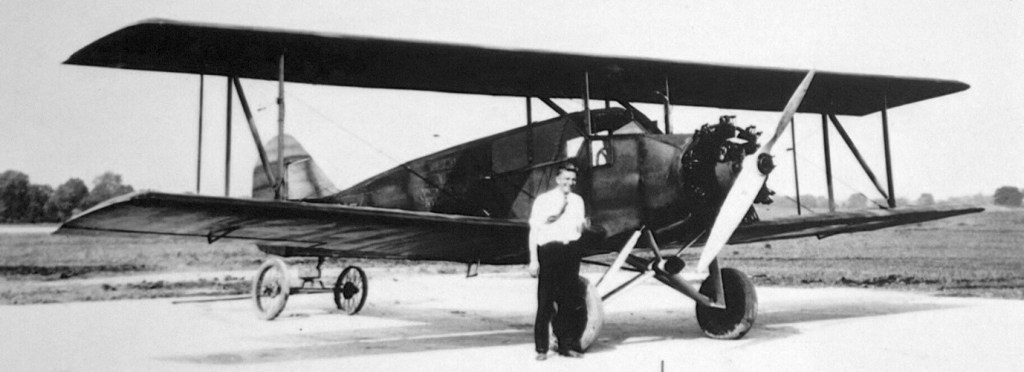
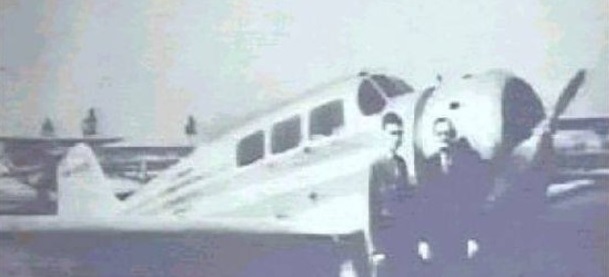
A 1928 photo of Eddie Stinson in front of an SB-1
Stinson SB-1 Detroiter NC1419 msn 112
The SB-1 was much modified.
Twenty-six SB-1 were built.
This aircraft was soon developed into the six-seat Stinson SM-1D Detroiter, a braced high-wing monoplane version which made its first flight on 25 January 1926.
SB-1
Certified ATC 24, the 1926 SB-1 Detroiter was equipped with electric starter and individual wheel brakes. They sold for $11,000-12,000.
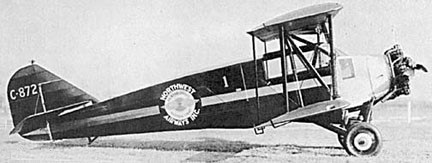
Of the 26 built, the first planes went to Northwest Airlines.
Stinson SB-1 NC872 c/n 1
ATC 2-330 in 1931 was for SB-1 powered by 200hp Wright J-4 as Detroiter Special (3 conversions).
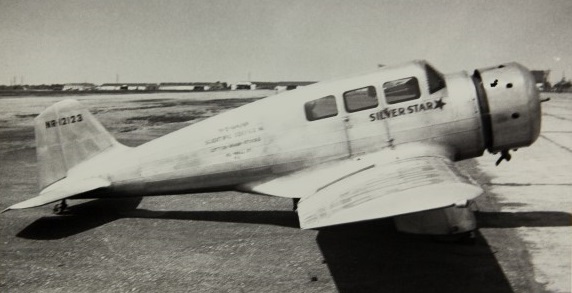
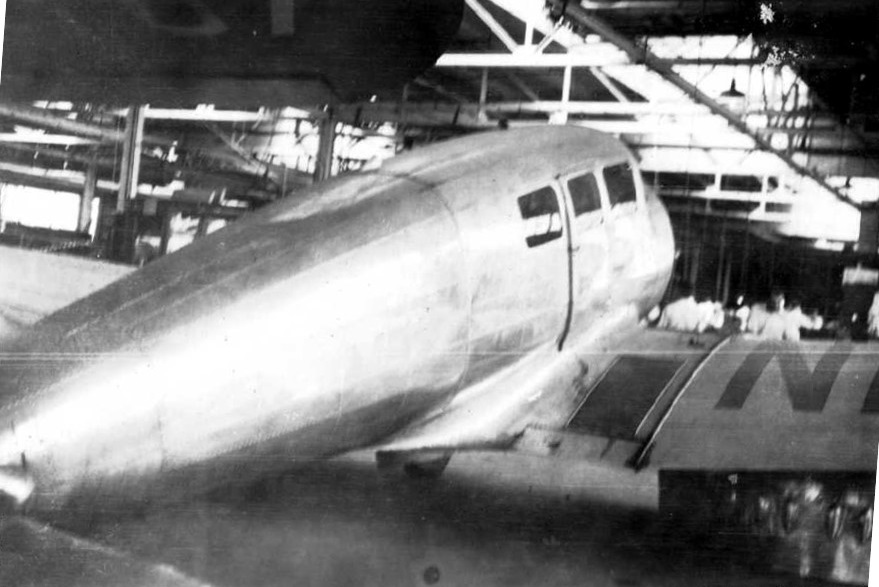
Stinson Model M Serial number 32000, the only one built, was built in August 1932 at Wayne Michigan with a 240 hp Lycoming R-680-BA engine. It was of all metal construction and originally licensed in the Restricted category as NR12123. The engine was at some stage changed to a 220 hp Wright J-5.
Stinson Aircraft used it for making speed tests from Detroit to different parts of United States and Canada.
Stinson sold to the airplane in March 1934 where it was again used in the restricted category for advertising purposes at various air meets and races. The airplane was eventually purchased by William D. Gann (successful mathematician & investment broker) who used it to make crop/commodity survey’s – he named the airplane “The Silver Star”. Repowered with 400hp Wright as Silver Star for competition in the 1934 Nationals, but did not run.
Stinson Model M, NR12123, inside the Stinson Wayne factory 1932-33
Gann ended up in a battle with the Department of Commerce over licensing the airplane since it was never built under a Type Certificate or a Group 2 Approval. The airplane was eventually sold to Santos Melido Marte in Miami (former Secretary of State of the Armed Forces of the Dominican Republic) and flown out of the US (without any US Customs approvals) on 11 August 1937 to the Dominican Republic. There is no record of the airplane after it left the US.
The 1934 Stinson L was a four-place cabin, low-wing monoplane with retractable undercarriage. Designed by Robert Hall, after first testing, the experimental taper-wing design was deemed too difficult for average pilot, and was cancelled. Only the one, NX14199, was built, powered by a 225hp Lycoming R-680B engine.
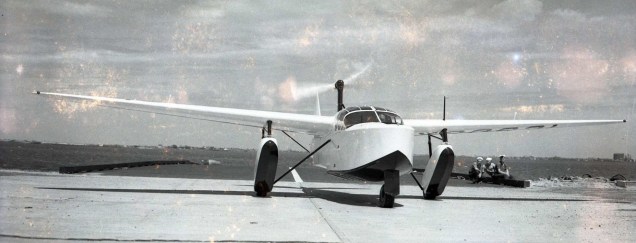
The 1930 SM-9 was four-place cabin, mid-wing monoplane experimental amphibian. Powered by a 215hp Lycoming R-680 engine and registered NX414Y M-9000, it was scrapped after a crash-landing
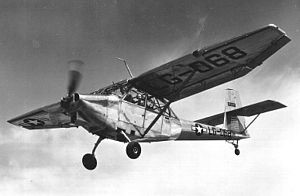
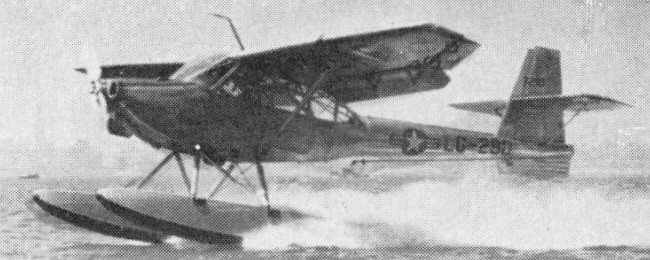
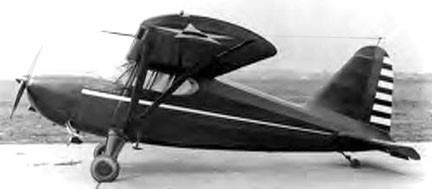
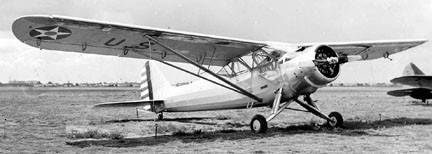
The Stinson XL-13 AAF liaison plane had a 240 hp Franklin engine.
Stinson XL-13
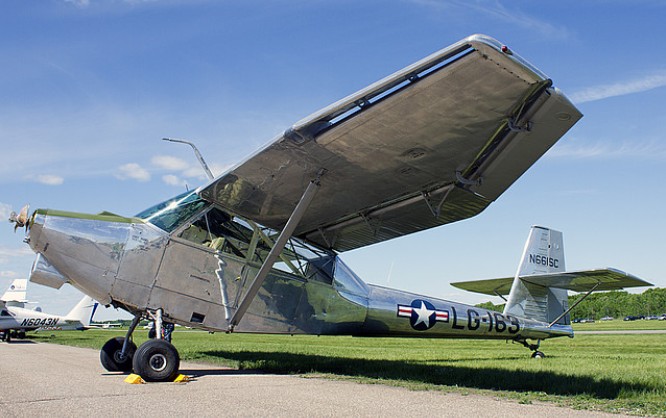
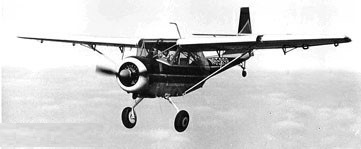
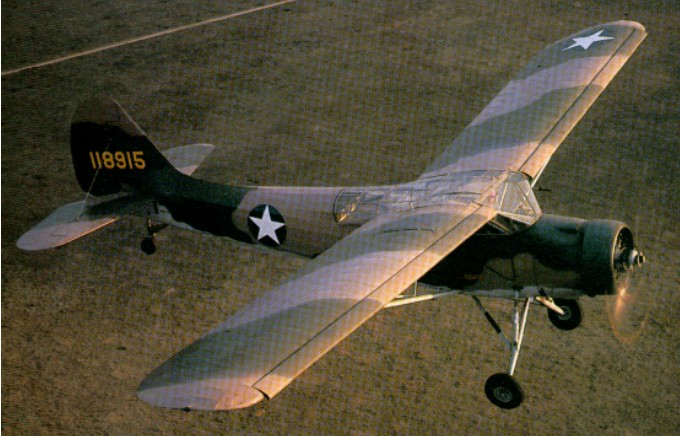
The Stinson L-13 (sometimes known as the Grasshopper) was a conventional high-wing tailwheel monoplane used for observation, liaison, and air ambulance duties first flown in 1945.
L-13A
Developed when Stinson was a subsidiary of Consolidated Vultee, rights to it were not included in the 1948 sale of Stinson to Piper. Mass production was therefore undertaken by Convair, which built 302 of them.
Convair L-13A
A 2-3 seat liaison and ambulance aircraft built for the USAF, power was a 245 h.p. Franklin O-425-9 engine. The L-13 has folding wings, interchangeable wheel, float or ski undercarriage, and can be towed as a glider. Two stretchers can be carried, as well as the pilot and medical attendant.
The United States Army received 43 ex-Air Force L-13As following the outbreak of the Korean War, serving in the Continental United States to free up aircraft for active service overseas. Some were still operated in 1955.
The L-13B were modified to operate in sub-zero temperatures.
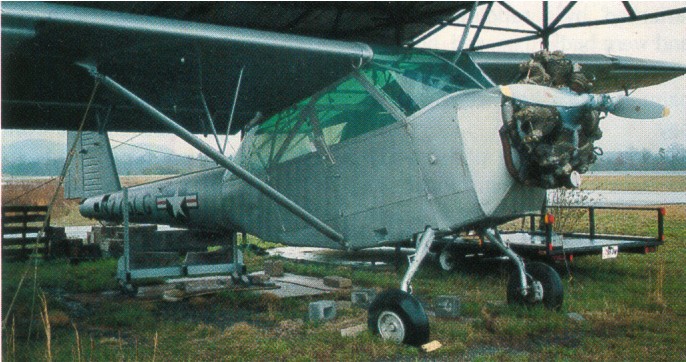
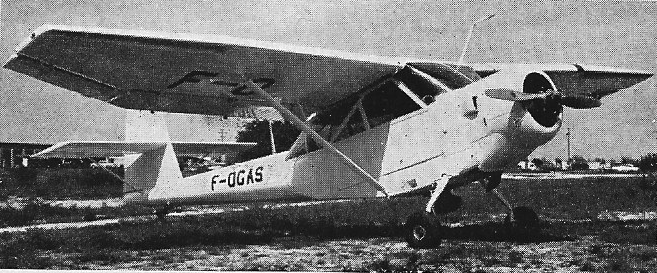
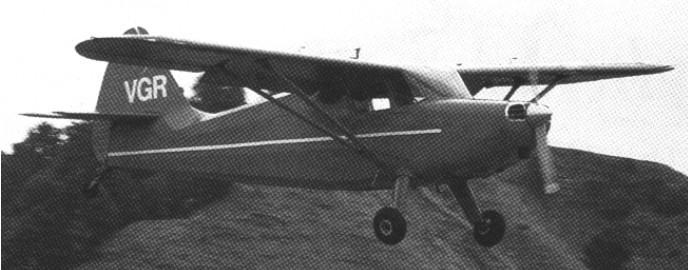
Following their military service, some were converted for civil bush flying use, fitting a radial engine by Acme Aircraft Company as the Centaur, while others underwent similar conversions by Caribbean Traders Inc, as the Husky.
L-13A converted to Caribbean Traders Husky III standard with a 450 h.p. Wright R-975 engine
L-13A
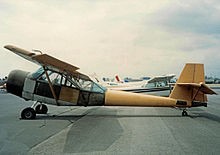
The Acme Aircraft Centaur 101 and 102 circa 1953 were six-place conversions of surplus Stinson/Convair L-13A for bush flying, based on a prototype by Longren Aircraft Co, Torrance CA (N4901V). The Centaur 101 had a 300hp Lycoming R-680-E3, and Centaur 102 with 300hp Jacobs R-755-A2. Reportedly only a few were converted.
Acme Aircraft Centaur 101
Acme Aircraft Centaur 1 April 1975 at Watsonville Airport– courtesy Thomas John Crowhurst
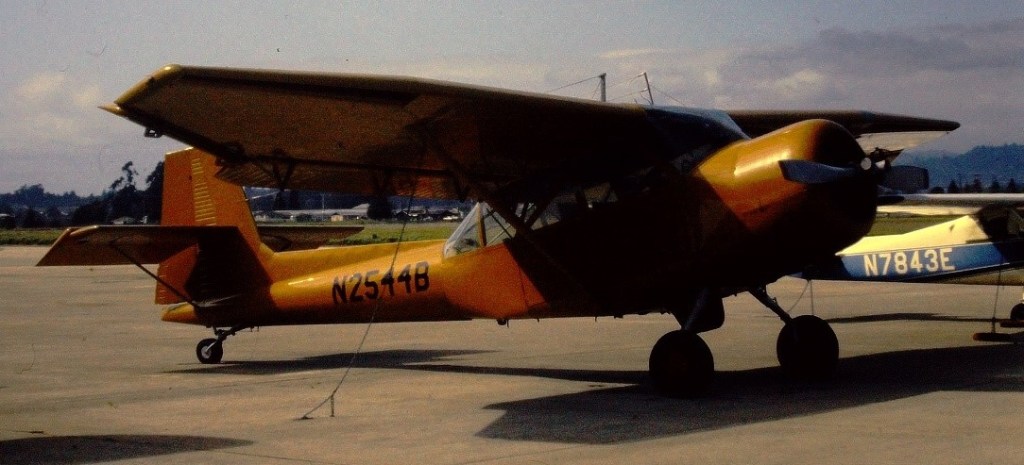
Servicair Co of Glendale CA, USA, converted Convair L-13 to Servicair Loadmaster circa 1960. One converted was N2544B and maybe others.
Conversion – Lycoming R-680 – 8 seat
Variants:
XL-13 Prototype aircraft. Two built. Engine: Franklin O-425-6, 245 hp (183 kW) MTOW: 2900 lb Top speed: 115 mph Stall: 40 mph
L-13A Production aircraft, 300 built. Engine: 1 × Franklin O-425-9, 250 hp (187 kW) Wingspan: 40 ft 5½ in (12.33 m) Wing area: 270 sq ft (25.1 m²) Length: 31 ft 9 in (9.68 m) Height: 8 ft 5 in (2.57 m) Empty weight: 2,070 lb (941 kg) Loaded weight: 3,185lb (1,448 kg) Maximum speed: 115 mph (100 knots, 185 km/h) Cruise speed: 92 mph (80 knots, 148 km/h) Range: 368 miles (320 nmi, 592 km) Service ceiling: 15,000 ft (4,570 m) Rate of climb: 830 ft/min (4.2 m/s) Crew: one Capacity: two passengers
L-13B Conversion of L-13A for cold weather operation, capable of operating from wheels, skis or floats. 28 converted.
Acme Centaur 101 Conversion of L-13 as six-seat bush aircraft. Powered by 300 hp (224 kW) Lycoming R-680-E3.
Acme Centaur 102 Similar to Acme Centaur 101, with Jacobs R-755-A2 radial.
Caribbean Traders Husky I Civil conversion of L-13A. Retained O-425 engine.
Caribbean Traders Husky II Civil conversion of L-13A. Powered by 300 hp R-680-13 engine on modified engine mount capable of swinging out for easy maintenance.
Caribbean Traders Husky III Similar to Husky II, but powered by 450 hp (338 kW) Wright R-975-7 radial engine.
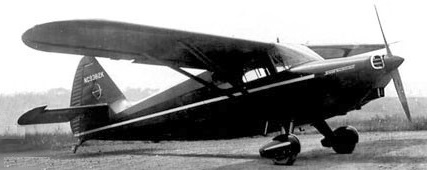
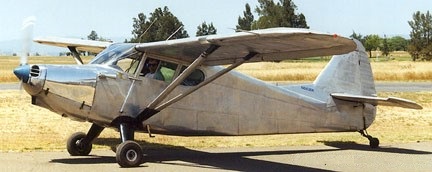
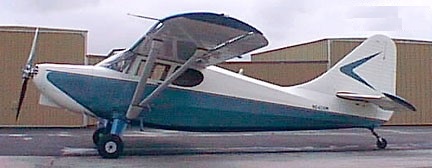
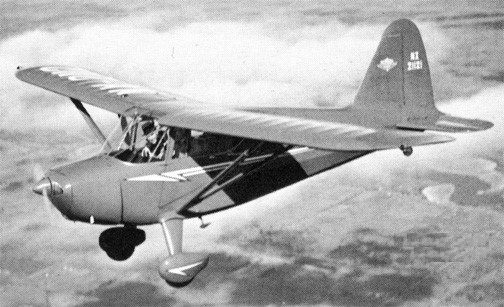
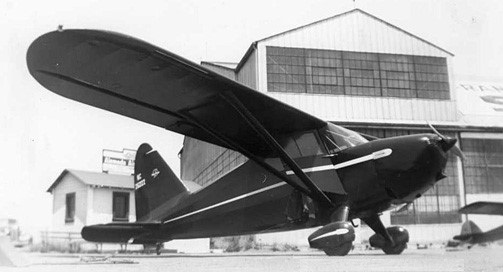
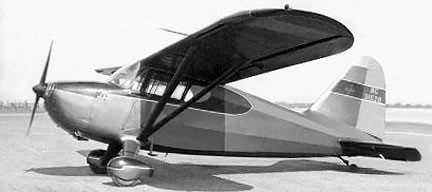
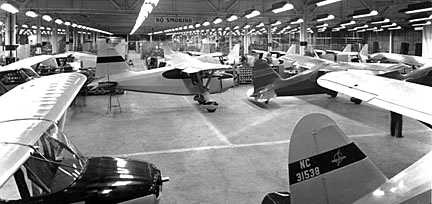
The model 108 Voyager was a post-war production version of the model 105 Voyager (90 hp Franklin) of 1939. Designed by B J Simmons the 108 Voyager first flew on 1 December 1944. The prototype NX31519 was powered by a 125hp Lycoming.
When introduced in August 1945 (ATC 767), the model 108 Voyager accounted for almost half of all four-place aircraft sold at $5,000, $5,489 in 1946. By the end of 1947, Stinson Aircraft had built over 5200 Voyagers, including a Station Wagon version.
Two versions powered by a 165 hp Franklin 6A4-150-B3 engine were produced in quantity by the Stinson division of Consolidated Vultee, the Standard Voyager and the externally similar Station Wagon.
The two-place Station Wagon sold for $5,745. The model 10-A was an enlarged version.
Stinson Station Wagon NC9382K
By then the boom had ended and 200 unsold Voyagers were parked at Willow Run Airport after 742 were built.
Stinson 108-1 N8436K
In 1947 the model 108-1 appeared with cosmetic improvements. 1,508 were built.
The 108-2, powered by a 165hp 6A4-B3 engine, was priced at $6,250 and 1,250 were built.
Stinson 108-2 N9368K
The 1948 108-3, renamed Piper-Stinson, enlarged tail and fuel tanks. 1,760 were built, including 125 built by Piper, some with a smaller, Piper-designed vertical tail. 18 wee exports to Spain.
Stinson 108-3 NC9382K
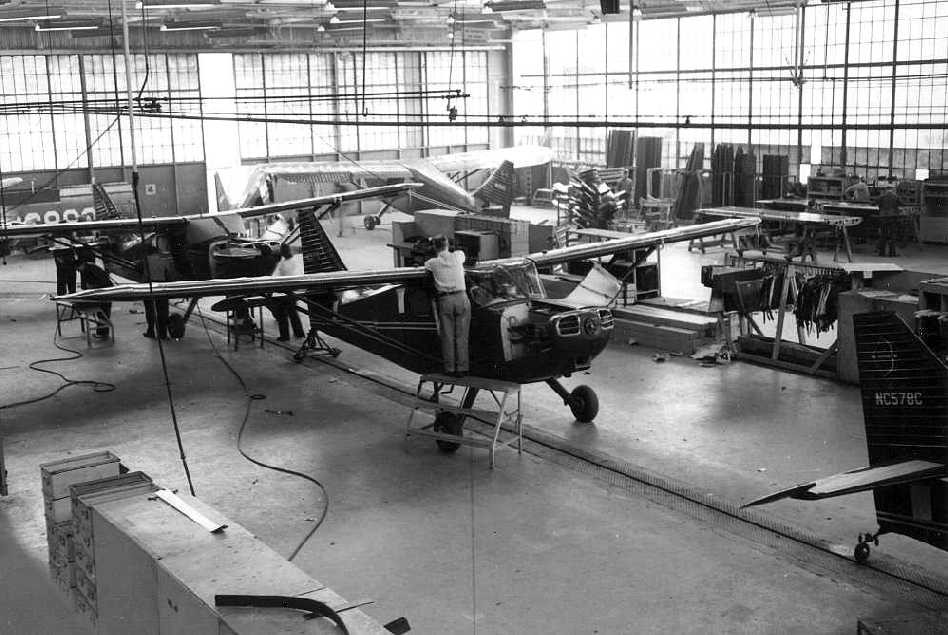
Wayne Stinson Factory building Stinson 108-3 Flying Station Wagons late September / early October 1947. NC578C is shown on the production line, with 4 other 108-3s in various stages of construction.
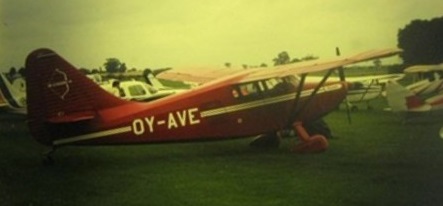
Stinson 108-3 Voyager OY-AVE
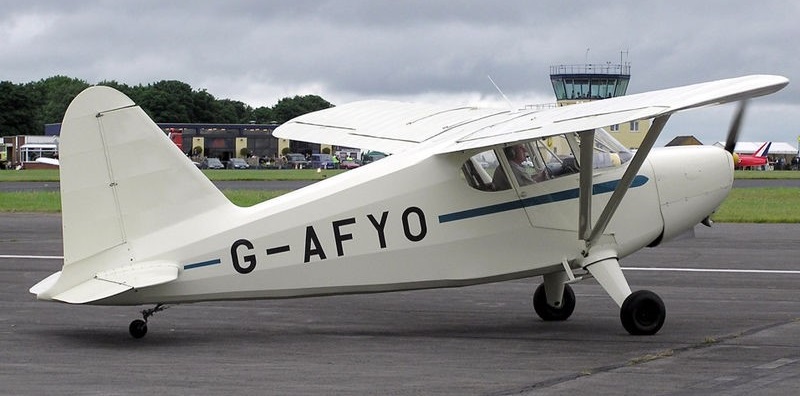
In 1964 Universal Aircraft Industries, Denver, re-certificated the Stinson 108-3 Voyager as the Model 108-5, powered by a 180 hp Franklin. First flying on 21 April 1964, N5565V, it was licenced in both utility and normal category and gross weights were 2000 lb and 2400 lb respectively. Cruising speed was 126 mph.
Univair also marketed kit for modifying the 108-3 to -5.
In the 1960s Chambers Aircraft Co of Greenville TX offered tricycle-gear conversions for Voyagers.
The pre-war civilian Stinson HW-75 (ATC 709) was a 75-horsepower civilian high-wing design built by Peter Altman, William Mara, Maurice A Mills, and Lewis E Reisner at the Stinson Aircraft Company at Wayne, Michigan and marketed as the Model 105. The “105” designation was unofficial, indicating cruising speed and used for publicity when first introduced at NY World’s Fair, priced at $2,995. The prototype HW-75, NC21121 c/n 7000, first flew on 3 February 1939 (piloted by Al Schramm) with a 50 hp engine but the production Model 105 airplanes were fitted with either the standard 75 hp engine, or an optional 80 hp Continental for $3,375. The Stinson 105 featured two side-by-side seats up front and a third “jumpseat” in the rear of the small cabin on which a child or small adult small could sit sideways. Featuring aerodynamic Handley-Page style slots on the outer third of the wings, the design was easy to fly, difficult to stall aerodynamically, and nearly impossible to spin.
Stinson HW-75 NC26222
275 HW-75 were built, including 20 to the RCAF. The design was modified in 1941 as the Stinson-Vultee V76 with a 185hp Lycoming O-435 engine.
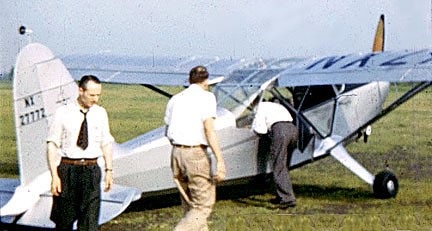
Stinson V76 First flight NX27772
The Model 76, NX27772, first flew on 28 June 1941, piloted by Al Schramm.
In 1940, the Model 105 saw some minor improvements and was marketed as the “New 105”. Four months later, in keeping with the automobile industry practice of introducing a new model in the spring each year, Stinson came out with the Model 10 Voyager that had a slightly wider cabin and some cosmetic changes but was essentially still a Model 105 with a new look. The engineering designation was HW-80, but the 75 hp engine was also offered as a cheaper option. The 80 hp engine was now standard and they called it the “Voyager”. In early 1940, Stinson moved production from Michigan to a new factory built in Nashville, Tennessee where the Model 10’s were built. Shortly after this move, the company became a subsidiary of the Vultee Aircraft Corporation.
For the 1941 model year, more cosmetic changes and interior refinements were made and a 90 hp Franklin 4-cylinder engine was fitted. This version was sold as the Model 10A Voyager. In the postwar era, the fuselage of the 10A was enlarged to accommodate four seats, and the four-cylinder powerplant was replaced with a Franklin 125 hp six-cylinder engine, and eventually a 150hp and 165 hp “heavy case” version. This 4-seat conversion became the Stinson Model 108 Voyager and was the only civilian plane commercially produced by Stinson after WWII. The prototype first flew in December 1944.
Six examples of the Model 10 Voyager equipped with 80 horsepower Continental A-80 engines, Lear radios and wind-driven electric generators were purchased by the military for testing under the experimental designation YO-54 41-143 to 41-148.
Stinson YO-54
The Stinson 75, or Vultee-Stinson V75, of 1940 was the first prototype of L-5, militarized from the Model 10 with a 100hp Lycoming engine. Designed by A P Fontaine, it was first flown on 19 June 1940, piloted by Al Schramm. Evaluated in September 1940 by the Air Corps for potential use as a low-cost off-the-shelf replacement for the complex, expensive and much larger O-49 Vigilant that Stinson had designed in 1939, the YO-54 failed to meet performance requirements and other military criteria. The only addition not found on the stock Model 10 was a wind generator used to run a radio set specified in the contract. Four of the six were passed to the Civil Air Patrol. The other two were scavenged for parts.
The sole 75C, NX27711, was a 75B modified with a 125hp Franklin engine.
The US Army Air Corps used at least six 1940 V-75 for observation and liaison in 1942. They were 10-A (Model HW-90 ATC 738) powered by 90 hp Franklin O-200 engines and designated L-9A and YO-54. About 500 of the 10A were built, priced at $3,355. Eight civilian Model 10-A with 90 hp Franklin 4AC engines were used designated O-49/L-9B with Franklin O-200 engines. A few of 600 ordered by France were operated in France. One went to the RAF. One -75B was modified with a 125hp Franklin as the -75C, NX27711.
Stinson 10 NC26222
Stinson 10-A
The Stinson 10-A, also known as the Voyager 90, was a three place high wing monoplane, powered by a four cylinder, 90 hp Franklin 4AC engine, with a fixed pitch, wooden propeller. It received ATC #738 in early March 1941. The Voyager was a new version of the Model 105. It had improved attributes and performance, the cowling had been redesigned and shortened, and along with a newly contoured windshield, provided better visibility. Over 700 of those Voyagers were built in 1941.
The 10-A was equipped with ball-bearing mounted flight controls and leading edge slots. Three position flaps, shock absorbing oleo spring gear struts, 48 inch tread main gear, hydraulic brakes and a steerable tail wheel suited short field work.
The 10-A wings had spruce spars, and the fuselage was welded steel tube. A 20 USG fuel tank was installed in the right wing and another 20 USG tank could be installed in the left wing. The vertical stabiliser was steel, while the horizontal stabiliser was built up from spruce and covered with poplar plywood.
The aircraft had a fly away price of US$3355. The plane was available as a Standard or Deluxe model. The Deluxe having navigation lights, an electric starter and a generator, and bonding for a radio that could be later mounted in its walnut finished instrument panel.
Stinson 10As on the assembly line 6 March 1941
The 10-B of 1941 (ATC 738) was a conversion of 10-A NC27714 c/n 7761 to 75hp Lycoming GO-145-C3 engine.
In 1948 Piper took over the Stinson Division of Consolidated Vultee Aircraft Corporation and acquired the Stinson Voyager production rights, but production of this type was soon halted.
10-A Voyager / L-9B Engine: Franklin 4AC, 90 hp Height: 6 ft 6 in TO dist: 550 ft ROC: 600 fpm Max speed: 115 mph Cruise range; 330 miles Landing speed: 47 mph Landing roll; 150 ft
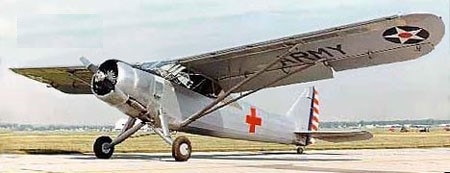
The 1940 L-1 Vigilant liaison aircraft is the military variant of the Stinson model V-74. The prototype L-1 with full-span automatic slots and slotted flaps for Army evaluation first flew on 15 July 1940, piloted by Al Schramm. It operated in and out of a 200′ circle.
Originally designated the O-49, redesignated from O-49 to L-1 in April 1942, with early ones briefly designated L-49, the 334 O-49s were designated L-1C for the air ambulance role, L-1D as trainers in glider pick-up techniques, and the L-1E and L-1F air ambulances with floats. Designations for those in ambulance duties were appended with suffix -VW.
Stinson O-49
First flying on 15 July 1940, piloted by Al Schramm, priced at $21,000, one hundred and forty-two were built; 40-192 to 40-291, and 40-3101 to 40-3142, of which 14 went to the RAF as Vigilant IA.
One hundred and eighty-two L-1A / O-49A were built; 41-18900/19081, plus 54 to the RAF as Vigilant I.
Stinson L-1A 41-19039
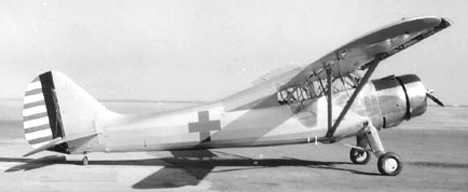
Four L-1A were converted to L-1B / O-49B Ambulance version in 1942.
Stinson O-49B Ambulance
The L-1C of 1942 were L-1A 113 converted as ambulances
Twenty-one L-1A were converted to glider tug trainers as L-1D.
The 1943 L-1E were seven L-1 converted to amphibious ambulance, equipped with twin-EDO floats.
Stinson L-1E
The L-1F of 1943 is similar to L-1E with minor modifications. Four conversions from L-1A and 1 from L-1C were made, plus a few converted to CQ-2 target controllers.
The L-1T was a glider tug conversion of L-1.
105 L-1s were received by the RAF as the Vigilant I.
A few L-1F were used as aerial target controller late in the war, designated CQ-2.
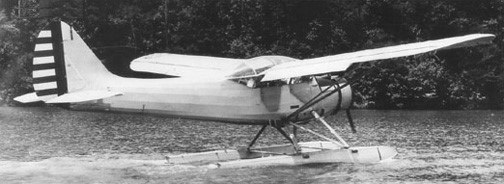
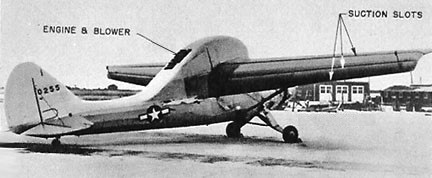
Professor E A Stalker conducted numerous wind tunnel and aeroplane design studies in the late 1930s and in 1942 was given a $50,000 contract by the USAAF to modify Stinson-Vultee L-1 40-255 with a suction flap arrangement. The contract was actually to the Dow Chemical Co of Bay City MI, where Stalker was employed.
Modifications consisted essentially of a new plywood wing that contained full-span, double-segment flaps together with full-span suction slots and ducts, plus addition of a suction blower in the fuselage driven by an auxiliary 80hp Franklin O-180-1.
Stinson L-1 Dow Co experiment in BLC 40-255
The two-section flap covered 40 percent of the chord—the front section deflecting to 35 degrees and the rear to 82 degrees in the fully down position. The outboard section of the aft flap had an additional independent travel of 22 degrees and 33 degrees in the flap’s down and up positions, respectively, which provided lateral control. A large hump in the fuselage housed the blower, and louvres on the rear of the hump controlled the pump’s exit flow.
Its first flight was made on 6 Mar 1944 at Tri-City Airport (p: Maj R E Horner), followed by 19 flights by Dow test pilot R B Gorrill. After a limited amount of testing by Stalker’s group, the L-1 was transferred to Wright Field for additional tests. During early stall tests it entered an uncontrollable spin and crashed, killing pilot Lt P A Hobe.
This first effort was something of a state-of-the-art experiment. The mechanism for boundary layer control was bulky and complicated and, although it worked satisfactorily (a maximum lift coefficient of 3.6 was obtained), the benefit to aircraft performance was difficult to measure—indeed, the gain was practically cancelled by the increased weight of the special wing, engine, and ducting.
Besides, the L-1 was perhaps an unfortunate choice for this experiment since the standard model itself had slotted leading edges, flaps, and an unusually large wing area, all of which made it a high-lift aircraft in its original configuration. When Stalker on 20 Jan 1945 reviewed the L-1 programme, he noted that ‘mechanical, structural, and weight difficulties have thus far prevented successful application to military or commercial airplanes,’ despite the general acceptance of laboratory and theoretical demonstrations of boundary layer control. He felt that the major drawbacks made evident by the L-1 modifications were very poor lateral control and restrictive weights of wing and blower. He also forecast future problems from lack of internal wing space for fuel, guns, or wheels, as well as structural difficulties in adapting boundary layer control to thin wings.
L-1A / O-49 Engine : Lycoming R-680, 295 hp Length : 36.844 ft / 11.23 m Height : 10.531 ft / 3.21 m Wingspan : 54.724 ft / 16.68 m Max take off weight : 3384.7 lb / 1535.0 kg Max. speed : 106 kts / 196 km/h Cruising speed : 94 kts / 175 km/h Service ceiling : 19373 ft / 5905 m Range : 244 nm / 451 km
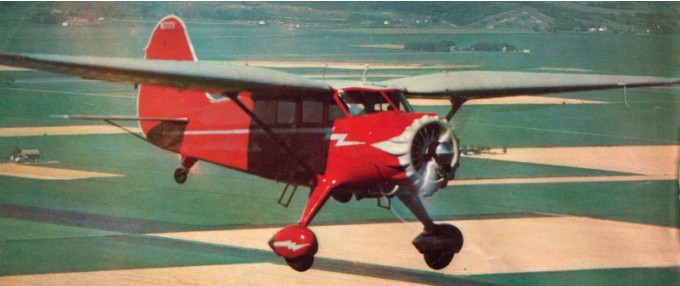
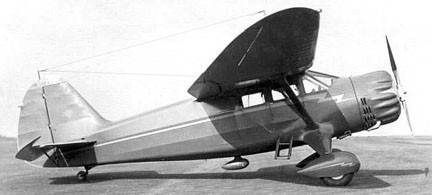
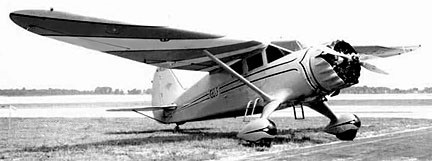
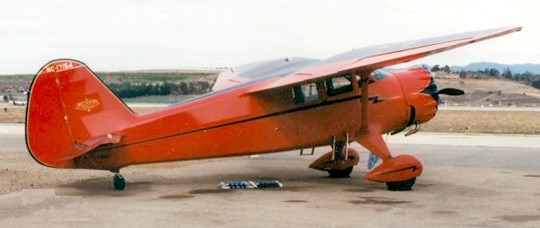
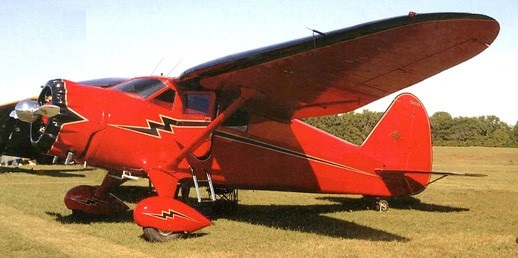
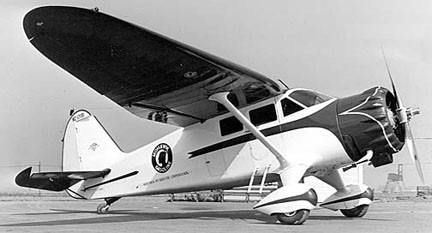
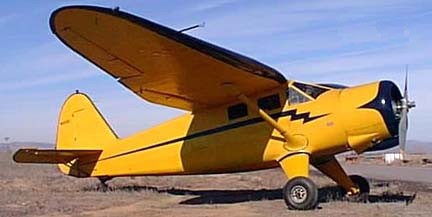
By the mid 1930s, Stinson had developed the classic gullwing models, the SR 9 and SR 10, which were the standard of busi¬nesses until the beginning of the War, when they became model V 77 personnel transports and navigation trainers.
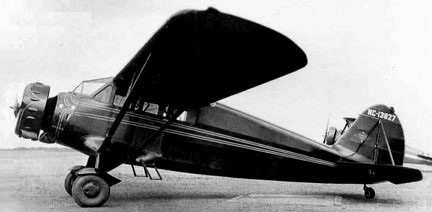
The Stinson SR of 1933 (ATC 510) was a replacement for the R series, designed by Lloyd Skinner and priced at $3,995.
Stinson SR NC13827
Eighty-eight SR model were built, of which two were SR Special: one under (2-499) [NS3=NS6] and one with 240hp R-680 under (2-471) [NS81Y=NC13542].
The 1933 SR-1 Reliant (ATC 513) were powered with 240hp Lycoming R-680 engines. The were built, NC13485 and NC13499, of which the first became SR-1 Special with a 225hp R-680 engine under (2-496).
The one SR-2 Reliant built, in 1933 (ATC 510) was an SR with equipment additions and weight adjustment. As NS13832 it went to the Pennsylvania Aeronautics Dept.
Two SR-3 Reliant were built, in 1933 (ATC 513), being SR-1 with slight differences in tail group and added equipment. The useful load was 993 lb.
Two 1933 SR-4 Reliant (ATC 519) were built, including NC1328.
Eleven SR-5 Reliant and SR-5 Special were built from 1934; NX13834, NC13836/13838, NC13843/13847, NC13649, and NC13856. Built without flaps, they were priced at $5,774. Using ATC 530, 2-492 was for smaller tail, wing flaps as SR-5 Special for NX13834 and NC13836; (2-494) for 245hp R-680 NC13838. (530) later extended to cover SR-5A and -5E.
About 75 SR-5A (ATC 536) were built from 1934. Two served in the Army as L-12 in 1942, one each to USN and USCG as XR3Q-1 and RQ-1 in 1935. (2-491) for EDO float conversion; (2-511) as SR-5A Special with weight adjustment. (536) later cancelled and replaced by (530).
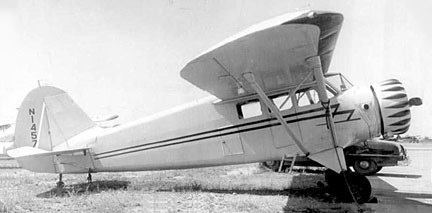
Stinson SR-5A NC1457x
The 1934 SR-5B (ATC 530) was powered with a 240hp Lycoming R-680 engine. Only one was built. The 1934 SR-5C added flaps a 260hp Lycoming R-680 engine. At least six were built.
One SR-5D was built (ATC 536, 2-493), in 1934, as a cargo version with wood prop and smaller tail. It was powered with a 215hp Lycoming.
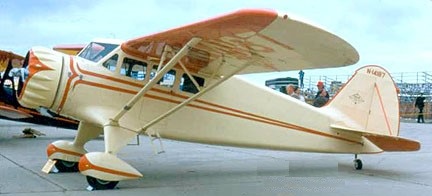
The 1934 SR-5E (ATC 537) powered with a 225hp Lycoming R-680 engine, was priced at $5,775. Fifty-two were built, the (537) later cancelled and replaced by (530).
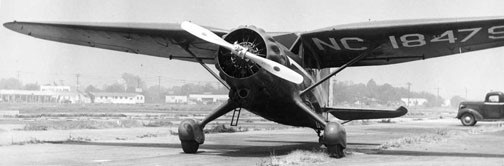
Stinson SR-5E NC14187
The two SR-5F built in 1934 (ATC 550) were custom-built SR-5E. One with a 285hp Wright Cyclone, NC14156, and one with a 250hp Wright Cyclone, NC14162.
The SR-5X built in 1934, NX14199, was the prototype SR-6, and powered with a 245hp Lycoming R-680 engine.
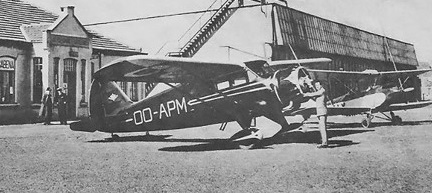
Stinson SR-6 Reliant OO-APM c/n 9299
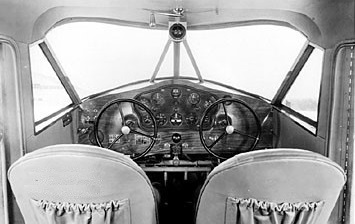
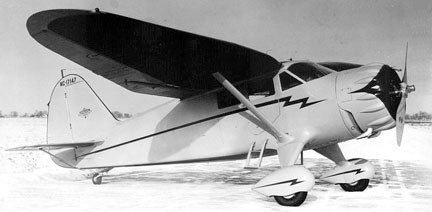
About 50 of the 1935 SR-6 Reliant (ATC 580) were built. Seating 4-5, powered by a 245hp Lycoming R-680 engine, they were priced at $6,000-9,000. Three SR-6A were built, and three SR-6B, priced at $6,995. The SR-6C was possibly never completed. All under ATC 580.
An experimental model SR-6X was built in 1935 (ATC 580), registered NC15139.
Designed by Robert Hall, Harold Hoekstra, C R Irvine, and Lloyd Skinner, the SR-7 Reliant was the first of the distinctive “gull-wing” SR series.
SR-7
The SR-7A was not built. Forty-seven of the 1936 SR-7B (ATC 594) were built, priced at $6,485.
SR-7
Powered by the 260hp Lycoming R-680-B5 engine, three 1936 SR-7C (ATC 594) were built.
The SR-8 Reliant were four-place. The M-suffix denoted “Multi-purpose” cargo modified models.
SR-8
Two SR-8A (ATC 608) were built in 1936, NC16145 and N16172, powered by 225hp Lycoming R-680-B4 engines and priced at $6,500.
Stinson SR-8B NC16173
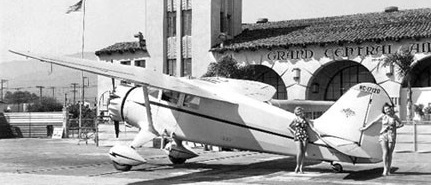
The SR-8B (ATC 608) were built in 1936. The SR-8BM was a cargo model with double doors on the right side, metal cabin walls, and removable seats.
Stinson SR-8BM NC17120
Priced at $10,000, fifty-seven SR-8B were built of which one, NC16142, was converted to SR-8C and four went to the USAAF as UC-81.
Twenty SR-8C (ATC 608) were built from 1936, priced at $10,000. Two of them went to the USAAF as UC-81L.
Priced at $10,500, eleven SR-8D (ATC 609) were built in 1936.
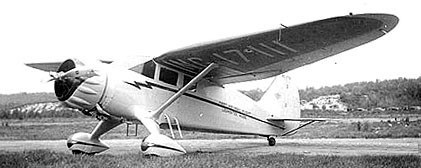
Stinson SR-8E NC17111
The 1937 SR-8E (ATC 609) was powered by 320hp Wright R-760-E2 engines and priced at $12,000. Thirty-five were built, of which one went to the USAAF as UC-81B.
The five-place SR-9 Reliant were the first Reliants to have curved windshields, as well as other streamlining.
The SR-9A was not produced.
Stinson SR-9B NC17154
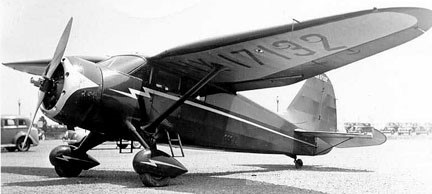
The SR-9B (ATC 621) of 1936 was also Available in SR-9BM cargo version, one, NX17192, of which was used to test a 310hp Guiberson A-1020 engine in 1942. Price at $9,385, thirty-five were built, some which went to the USAAF as UC-81N.
Stinson SR-9C NC18439
Sixty-five of the SR-9C (ATC 621) were built from 1936, price at $10,000. The SR-9CM was a cargo version. Some went to the USAAF as UC-81C.
The 1937 SR-9D (ATC 625) was priced at $12,000 and used by the USAAF as UC-81G.
Stinson SR-9D NC17132
The 1937 SR-9F (ATC 640) was powered by a 400hp P&W Wasp engine and priced at $18,000. Thirty-four were built, operated by the USAAF as UC-81E.
Stinson SR-9F NC17191
The 1937 SR-9FM NC89 was a “Multi-purpose” cargo version.
The 1937 SR-9FD NC2215 was a “Deluxe” model powered with a 450hp P&W and extra fuel tank for an 850-mile range.
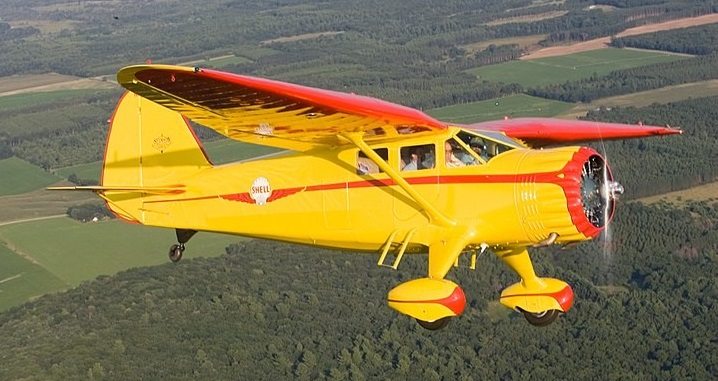
Jimmy Doolittle’s Shell Stinson Reliant SR-10, restored
The Stinson SR-10 Reliant five-place was designed by Gordon Israel. The SR-10A was not produced. Two 1938 SR-10B (ATC 678), NC18480 and G-AFHB, were sold as an “economy model” for $9,995.
Fifty-three of the 1938 SR-10C (ATC 678), powered by a 260hp Lycoming R-680-D5 engine, were sold as “standard model” for $10,995, some to the USAAF as UC-81K.
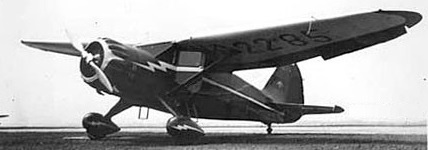
Stinson SR-10C NC2285
The three 1938 SR-10D (ATC 679) built were exports to Brazil, for $14,000.
From 1938 twenty-one SR-10E (ATC 679) were built at $14,350. One was impressed by the USAAF as UC-81H, and one went to Argentina.
Eighteen SR-10F (ATC 685) were built from 1938. The last of the civil Reliants. Eight were impressed by the USAAF as UC-81F, with one tested as XC-81D glider tow in civil registration; NX2311.
Stinson SR-10F NC18479
Twelve 1938 SR-10G (ATC 678) went to the USAAF as UC-81A for $12,585. They were powered by 290hp Lycoming R-680-E1 engines.
The SR-10H was to be powered by 265hp Lycoming R-680 engines but no records found of any being built.
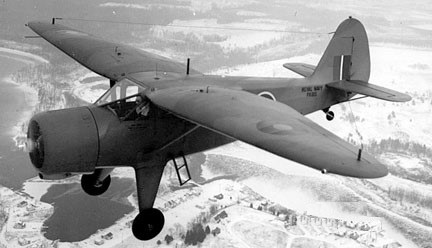
Eleven civil 1941 SR-10J / Vultee V77 (ATC 774) were built, plus 500 military versions principally for Lend-Lease to Great Britain as Reliant I through IV instrument trainers and cargo ships. Of this lot, 62 were impressed by USN, but apparently did not get the pre-war Navy designation of RQ.
The two 1938 SR-10K (ATC 679), NC21147 and NC21148 were special modification of SR-10F with 450hp Wright R-975-E3 engines for the NYC Police Dept. priced at $19,000.
The L-12 Reliant of 1944 were USAAF personnel transport. Four were built, 44-52992, -52994/52996, with four seats and the same as the SR-5.
AT-19 Reliant
The AT-19, or Stinson-Vultee V77 (ATC 774), of 1942 was military production of the SR-10J as personnel transport and trainer.
Stinson-Vultee V77 N69990
500 were built, with most going to Great Britain under Lend-Lease as Reliant I/II/III/IV, but registered and used by USAAF as AT-19 [42-46640/46889, 43-43964/44213], and with 62 to USN [30481/30542]. One, NX39414, with a 450hp P&W R-985 designated as V77-B.
The AT-19 and -19A were 8 three-place instrument and navigation trainers. Civil Voyagers were provisionally assigned the AT-19A and -19B designations before becoming L-9A and -9B, which often causes confusion in the ranks, but Reliant was the official AT-19.
The L-9 (AT-19) were civil Voyager impressed by the USAAF in a utility role/ personnel transport.
There were eight 1942 L-9A; 42-88666 to 42-88673, powered with 90hp Franklin O-200 engines. The twelve L-9B of 1943; 42-94130, -94136, -97051, -97430, -97432, -97434, -107278, -107406/107410, were powered by 90hp Franklin AC-199 engines.
The L-9 (AT-19) were civil Voyager impressed by the USAAF in a utility role/ personnel transport.
There were eight 1942 L-9A; 42-88666 to 42-88673, powered with 90hp Franklin O-200 engines. The twelve L-9B of 1943; 42-94130, -94136, -97051, -97430, -97432, -97434, -107278, -107406/107410, were powered by 90hp Franklin AC-199 engines.
Twelve AT-19B from 1943 were observation and photo-survey aircraft.
The 1943 AT-19C were single-place cargo carrier.
500 AT-19s were delivered with USAAF s/ns for Lend-Lease. There has always been, and still is, a question about how many actually went to England or overseas, and how many stayed unassembled in crates in the US: c/n 1-186 RAF [FK814/999] USAAF [42-46640/46825] total: 186 c/n 187-250 RAF [FL100/163] USAAF [42-46826/46889] total: 64 c/n 251-500 RAF [FB523/772] USAAF [42-43964/44213] total: 250
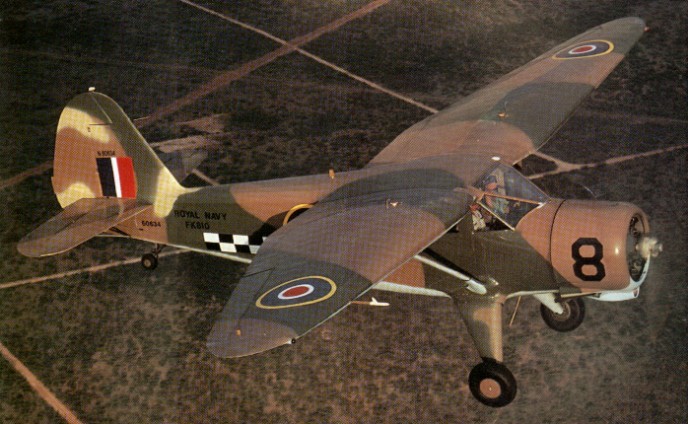
Stinson Reliant I RNAS FK-815
Either late in the war, or after it was over, various Lend- Lease planes were returned to the US, such as the Fairchild PT-26 Cornells of the RCAF, and it is claimed that 353 of these were given to the USN. At that time there were other USAAF planes transferred to the USN. The s/ns for this batch were [11294/11646], and they were listed as “Reassignment” and “Reverse Lend-Lease.
To muddy the waters further, there were 62 Navy serials, [30481/30542], listed as “Duplicate Assignment” for AT-19s by the USN, plus 2 more, [37637/37638], listed as “Cancelled.” I don’t think that these numbers should be considered as “real” airplanes, and were paper assignments only.
The letter “Q” (as in RQ) was only used for Stinson from 1934- 36, according to the latest USN 1910-95 book, it was not used for Stinson during WW2. It was not unusual for the USN to use an USAAF designation on something they didn’t buy, and if you look at all of the WW2 impressments of civilian planes by the USN, they used the civil designation on their aircraft history cards, etc..
As to whether or not the USN ever operated the AT-19s, I would say probably not, but there is no proof either way. It’s all very fuzzy!
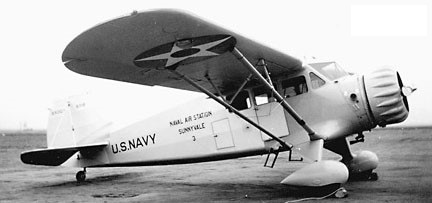
The SR-5A in naval uniform were designated XR3Q-1 in 1934 to the USN (9718)
Stinson XR3Q-1 9718
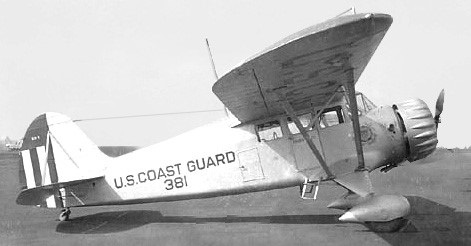
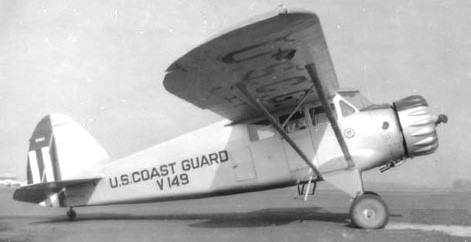
One went to the USCG in 1935 as RQ-1 [381=V149]—mismarked on its tail as QR-1—then in 1937 renumbered [V149] and redesignated R3Q-1.
Stinson QR-1/RQ-1 [381=V149]
Stinson R3Q-1 [V149]
Forty-three of the 1937 SR-9E (ATC 625) went to the USAAF as UC-81J. They were priced at $12,500. Also, one in -9EM cargo version, NS/NC3640, impressed by the AAF in WW2 as UC-81M 42-94134. One experimental model, NX17132, was fitted with a 310hp Guiberson D diesel engine.
SR-5A Engine: 245-hp (183-kW) Lycoming R-680-6 Wingspan: 41.011 ft / 12.5 m Length: 27.264 ft / 8.31 m Height: 8.432 ft / 2.57 m Max take off weight: 3475.1 lb / 1576.0 kg Weight empty: 2326.3 lb / 1055.0 kg Max. speed: 117 kt / 217 km/h Cruise: 120 mph Stall: 50 mph Service ceiling: 15502 ft / 4725 m Range: 560 nm / 1038 km Seats: 4
The first design from the Detroit-based Stinson Aircraft Syndicate was the Stinson SB-1 Detroiter, a four-seat cabin biplane with novel features such as cabin heating, individual wheel brakes and electric starter for the nose-mounted 220 hp (164 kW) Wright J-5 Whirlwind engine.
Stinson SM-1
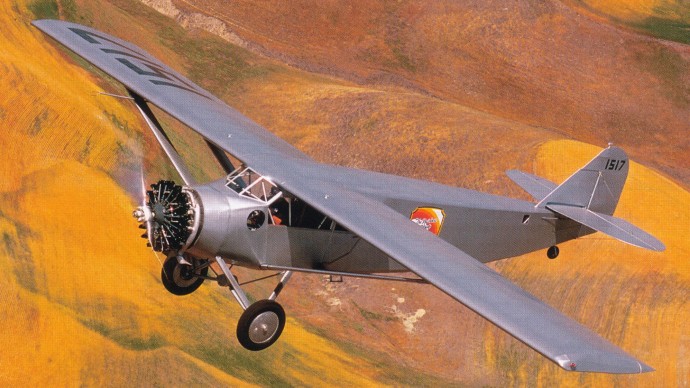
Designed by William Naylor, the SM-1 Detroiter prototype NX1524 first flew in April 1927.
Priced at $12,500, seven were sold as SM-1 Special (2-174) issued in 1930 for increased load as SM-1 Special NC3647 (ATC 2-174). SM-1 NC857 took first place in the 1927 Ford Air Tour, SM-1 was the first Braniff Airways plane, in 1928.
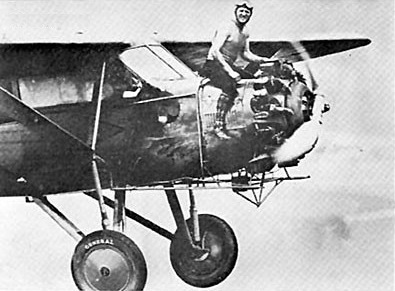
Stinson SM-1B Hunter Brothers City of Chicago1930 endurance flight with mechanic’s external running-board NC5189
Stinson SM-1B Hunter Brothers City of Chicago1930 endurance flight with mechanic’s external running-board NC5189
Thirty-six SM-1B (ATC 2-24) were built from 1928; NC3696, NC4185, NC4473, NC4876, NC5189, NC5485, NC5639, NC5676, NC5679, NC5683/5684, NC5741, NC5993, NC6657, NC6764, NC6827/6828, NC6868/6869, NC7023/7024, NC7127, NC7168, NC7218, NC7313/7314, NC7369, NC7422, NC7468/7470, NC7472/7474, NC7575/7576, plus some conversions from SM-1. ATC 2-224n 1930 was for the five-place SM-1B Special NC3348, NC5325, and NC6763, with allowable weight increase.
This aircraft was soon developed into the six-seat Stinson SM-1D Detroiter, a braced high-wing monoplane version which made its first flight on 25 January 1926. The aircraft was soon a success and it enabled Stinson to get $150,000 in public capital to incorporate the Stinson Aircraft Corporation on 4 May 1926.
The SM-1D Special (ATC 60) had a 220hp Wright J-5 conversion in 1929. NS6762 c/n D-302, was the SM-1DA. ATC 2-142 was for a 300hp Wright J-6 as SM-1D-300.
Five of the 1928 SM-1DA (ATC 74) were built, priced at $12,500, including NC5900 and NC6762.
The 1928 SM-1DB (ATC 76) was as the SM-1DA with interior refinements. One was built; NC6580.
The SM-1DC of 1928 (ATC 77) was a two-place cargo version of the SM-1DA
The 1928 SM-1DD (ATC 78) NC486H was an SM-1DA with greater load (2220 lb) for bush operations.
Designed by L M Woolson, the 1928 SM-1DX NX7654 (ATC 2-228) was powered by a 225hp Packard diesel (the first diesel to fly).
The 1929 SM-1F (ATC 136) sold for $11,000-13,500. SM-1FS was floatplane version under (ATC 212) for about $15,000. About 26 were built.
Seventy-five of the Wright J-5-powered versions were built, followed by 30 Wright J-6-powered aircraft. From 1928, SM-1 aircraft were used on scheduled services by Paul Braniff’s Braniff Air Lines and by Northwest Airways.
Three of this model were bought by Honduran Air Force in 1933. The China National Aviation Corporation, China Airways Federal, and Shanghai-Chengtu Airways operated the Detroiter in the 1920s–30s, and in Peru they were operated by Faucett and the Peruvian Air Force.
Stinson SM-1F
In 1930 a SM-1FS with a crew of three reached Bermuda from New York City, the first flight ever to the islands. Getting there the aircraft had to land twice, once because of darkness and later after running out of fuel. With a wing strut damaged, it was shipped back to New York.
A Detroiter version of the Stinson Junior powered with a Packard diesel engine, held the world record for endurance without refuelling.
In all over 100 were built, and in 1928 Stinson developed the smaller SM-2 Junior model to appeal to private owners.