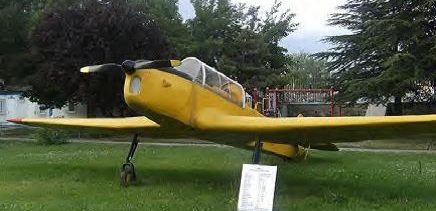
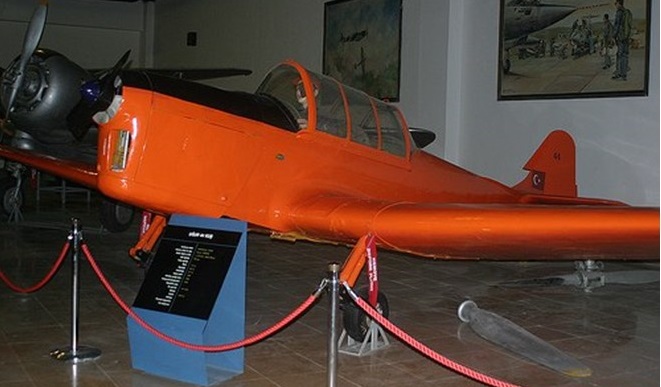
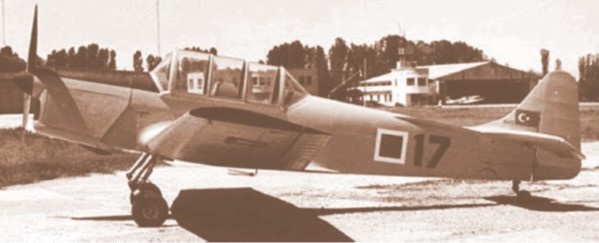
THK THK-15 / MKEK Model 4 Uğur (Luck)

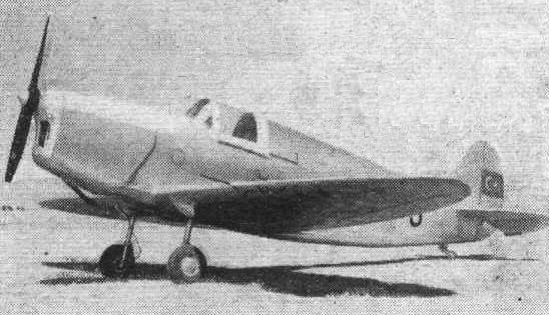
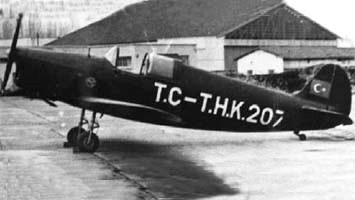
A tandem two-seat primary trainer, the THK-15 was an updated Magister, made of metal, and with a cockpit canopy.

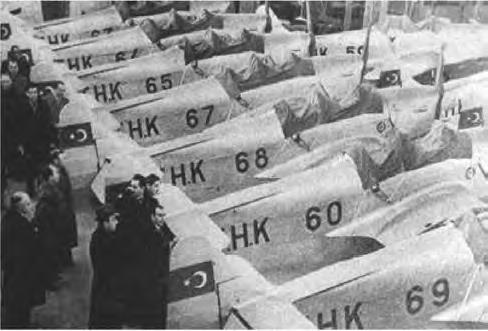
Of 100 ordered for the Turkish Air Force, 60 had been delivered and production ceased in 1956.

54 were used by the Turkish Air Force 1955-1963 and the remaining THK-15 were donated to the Jordan Royal Air Force.

After the change to MKEK the MKEK-4 designation was used.

(TC-KUJ)/44 MKEK 4 Ugur (5144)

Gallery

MKEK 4 Ugur
Engine: DH Gipsy Major 10 Mk.I, 145 hp
Wing span: 31 ft 2.5 in / 9.50 m
Wing area: 171 sq.ft
Length: 24 ft 7.25 in
Empty weight: 1465 lb
Loaded weight: 2045 lb
Max speed: 135 mph
Cruise: 110 mph
ROC: 800 fpm
Service ceiling: 16,000 ft
Range: 300 mi
Seats: 2 tandem

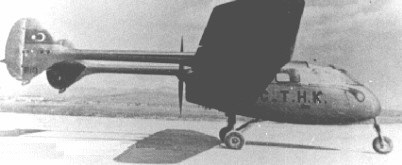
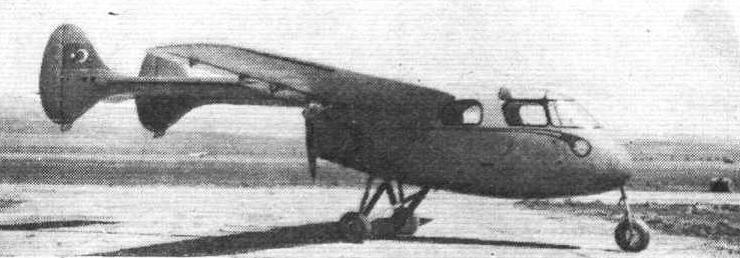
THK THK-11

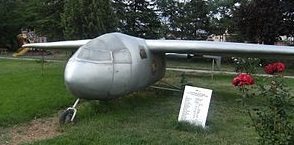
The THK-11 was a high-wing twin-boom three-seat cantilever cabin monoplane with a 135 hp (101 kW) de Havilland Gipsy Major piston engine driving a pusher propeller. It has a fixed nose-wheel landing gear and was first flown in 1947.

Designed and built by Türk Hava Kurumu (THK – Turkish Aeronautical Association), only one was built.

The sole THK-11 is on display at the Ankara Türk Hava Kurumu Müzesi – (Ankara Turkish Aeronautical Museum).

Engine: 1 × de Havilland Gipsy Major, 101 kW (135 hp)
Propeller: 2-bladed fixed-pitch pusher
Wingspan: 11.80 m (38 ft 9 in)
Wing area: 18.7 sq.m (201 sq ft)
Length: 8.44 m (27 ft 8 in)
Height: 2.59 m (8 ft 6 in)
Empty weight: 828 kg (1,825 lb)
Gross weight: 1,150 kg (2,535 lb)
Maximum speed: 201 km/h (125 mph; 109 kn)
Cruise speed: 164 km/h (102 mph; 89 kn)
Landing speed: 80 km/h (50 mph; 43 kn)
Range: 800 km (497 mi; 432 nmi) in still air
Service ceiling: 3,500 m (11,500 ft)
Rate of climb: 3.5 m/s (690 ft/min)
Wing loading: 61.5 kg/sq.m (12.6 lb/sq ft)
Power/mass: 11.4 kg/kW (18.7 lb/hp)
Crew: 2
Capacity: 1 passenger

THK THK-2 / MKEK 2

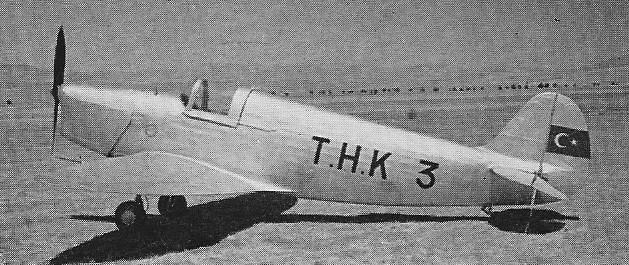
In 1936, Turkey bought 36 Polish R.24E fighter, simultaneously launching construction of an aircraft factory in Etimesgut near Ankara. The director of the factory became a Pole Jeri Vedrichovsky. The first aircraft built with the help of Polish engineers was the TNK-2 training monoplane. Stanislav Rogalsky, Jeri Telsiye and Leszek Duleba took part in its development. The design team took the RWD-10 as a basis, with several modifications. Preserving the same wooden construction of the Polish prototype. The single cockpit made completely closed. The English DH “Gipsy Major” motor, was also installed on Miles M.14 training aircraft built under licence.

The design and construction of the aircraft took place in 1943-1944 at the Turkish Aviation League (Turk Hava Kurumu).

Designed for aerobatic training, the first prototype of the TNK-2 was airborne in mid-1944. The second prototype took to the air in 1945, showing better performance than the first and the British Miles M.14.

Serial production amounted to only four aircraft that served in the Turkish Air Force until the mid-1950s. In 1952, after changing the name of the company, these aircraft were renamed MKEK-2.

Engine: de Havilland Gipsy Major, 135hp
Wingspan: 8.00m / 26 ft 2 in
Wing area: 10.20sq.m
Length: 7.00m / 23 ft
Height: 2.10m / 7 ft 1 in
Empty weight: 490kg / 1078 lb
Normal takeoff weight: 660kg / 1452 lb
Maximum speed: 265km / h / 164 mph
Cruising speed: 235km / h / 136 mph
Landing speed: 59 mph
Initial ROC: 1710 fpm
Practical range: 700km / 435 mi
Service ceiling: 6000m / 19,685 ft
Crew: 1
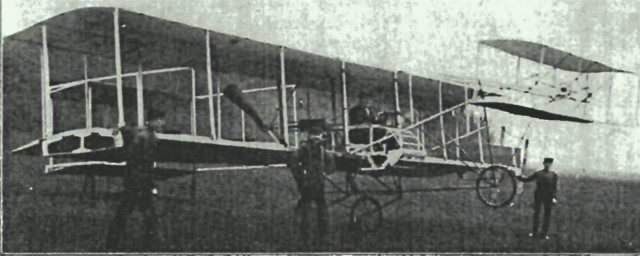
Thiele 1910 biplane

Little is known about this machine, except that it was designed by Ingenieur Erich Thiele, who made some flight tests in with it in 1910, and that “Flugsport” erroneously attributed it to Stefano Amerigo. Early in 1911, Thiele created the “Sächsische Flugzeugwerke” which in November 1911 became the famous Deutsche Flugzeugwerke.

TVAL Sopwith Pup

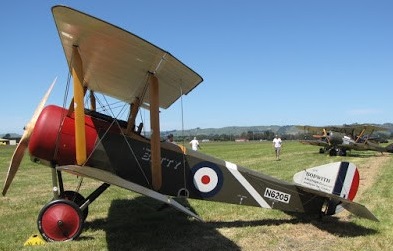
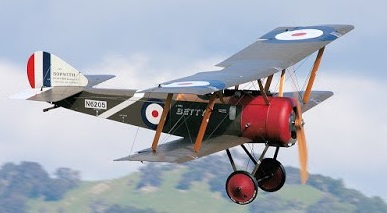
The Vintage Aviator has built a series of Sopwith Pup reproductions and their first example was ZK-PPY which was first registered on 9 May 2012 and is painted as N6205 of the RNAS from 1917.

The original N6205 was the mount of FSLT J. S. T. Fall in April/May 1917. He named his aircraft “Betty” after his sister. The above photo was taken at Masterton, New Zealand, on 12 Novembber 2011.

ZK-PPY was originally named “Betty” on both the port and starboard sides.

Somewhere along the line the Fall family became aware of TVAL’s Pup and contacted them to advise that J.S.T Fall had two sisters and he actually painted his other sister’s name on the starboard side of the aircraft. So TVAL changed it and it now bears the name “Phyllis” on the starboard side, as in the above photo taken at Masterton on 23 November 1917.

Thesis Aviation The Sportster

The Sportster features a see through pylon. First flown in 1997, the 1998 kit price was US$4994.

Engine: Kawasaki 340, 38 hp
HP range: 38-55
Height: 6.9 ft
Length: 14 ft
Wing span: 17.5 ft
Wing area: 82 sq.ft
Fuel capacity: 5 USG
Empty weight: 252 lb
Gross weight: 460 lb
Top speed: 75 mph
Cruise: 62 mph
Stall: 29 mph
Range: 125 sm
Rate of climb: 700 fpm
Takeoff dist: 200 ft
Landing dist: 200 ft
Seats: 1
Landing gear: tailwheel

Thesis Aviation The Speedster

A staggerwing racer design with the upper wing flush with the fuselage top. First flown in 1995 and kits were available.

Engine: Kawasaki 440-A, 40 hp
HP range: 38-52
Height: 5 ft
Length: 13.7 ft
Wing span: 17.5 ft
Wing area: 77.5 sq.ft
Fuel capacity: 5 USG
Empty weight: 252 lb
Gross weight: 460 lb
Top speed: 75 mph
Cruise: 62 mph
Stall: 29 mph
Range: 125 sm
Rate of climb: 700 fpm
Takeoff dist: 150 ft
Landing dist: 200 ft
Seats: 1
Landing gear: tailwheel