Thunderbird Aircraft Thunderbird / W-14 / WH-14

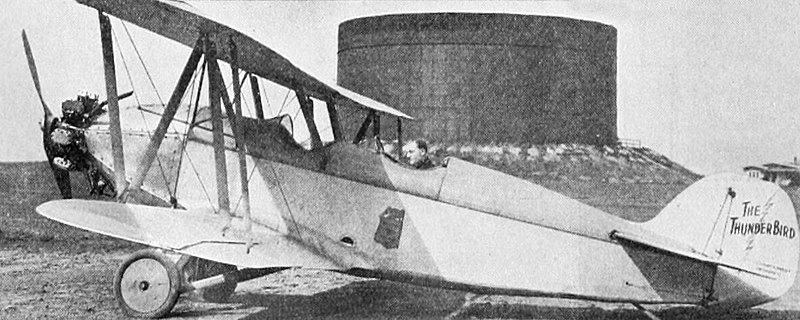
Thunderbird WH-14-O

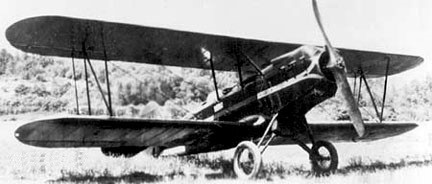
Thunderbird Aircraft was established to build and develop the Thunderbird biplane, designed by Theodore A. Woolsey, and first flown in June 1926. The production W-14 was a three-seat open-cockpit biplane powered by a Curtiss OX-5 engine.

Design of the Thunderbird W-14 family was begun in 1926 by the W-F-W Aircraft Corporation (formed by Theodore Woolsey, Jack Frye and Paul Whittier).

The Thunderbird W-14 was an unequal span single bay biplane with wings of rectangular plan out to rounded tips, built around twin wooden spars and fabric-covered. Both upper and lower wings were set with 3° of dihedral and had externally interconnected ailerons. Outward-leaning N-form interplane struts joined the wings, set with 20 in (510 mm) of stagger, and the upper wing was mounted over the fuselage on outward-leaning cabane struts with an inverted V from the forward spar and a single strut from the rear spar on each side.

The prototype’s OX-5 water-cooled engine was cleanly cowled, with its 43 US gal (36 imp gal; 160 L) fuel tank immediately behind it and its radiator centrally positioned on the upper wing underside. There were two open cockpits in tandem. The forward one seated either two passengers side-by-side or a trainee pilot, positioned largely under the upper wing. The pilot sat, sightly raised, in the rear cockpit. The stagger and a gentle cut-out enhanced the field of view from both cockpits. Behind the engine the fuselage was a trapezoidal section girder structure of welded steel tubes, tapering rearwards and with a rounded decking behind the cockpits.

The Thunderbird had a conventional tail with a semi-circular plan tailplane mounted on top of the fuselage, wire-braced to the fin. It carried rounded elevators separated by a gap for rudder movement. The fin was also rounded, with a large unbalanced rudder of semi-elliptical profile.

Its original fixed, conventional landing gear was a standard single axle design with pairs of legs and trailing drag struts. There were no brakes and the early tailskid could not be steered.

The Thunderbird made its first flight 11 July 1926. By the autumn of 1927 numerous modifications had been made in preparation for production. These included laminated, rather than solid, wing spars, Warren girder ribs and a steel, rather than wire, cross-braced fuselage. A new, split axle undercarriage was introduced, with axles hinged from the central fuselage underside and equipped with rubber-chord shock absorbers. The tailskid was now steerable.

Designed by Ted Woolsey, the open cockpit biplane series was first flown on 11 July 1926 (piloted by Jack Frye).

As production started W_F_W was re-organised as the Aero Corporation of California with investment from Walter Hamilton (Frye & Woolsey, Monte Edwards, Walter Hamilton, Paul Richter). With the break-up of the partnership Woolsey arranged new investment to take over the business, which became Thunderbird Aircraft Inc. of 900 N Allen St, Glendale, CA.
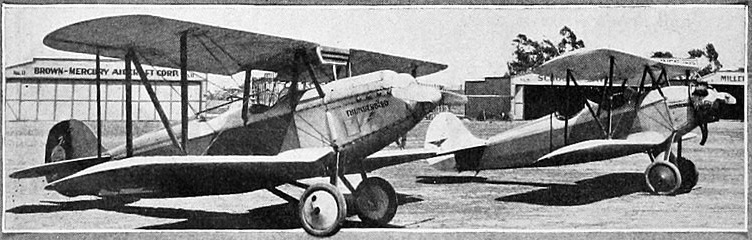
OX-5 powered Thunderbird alongside a Bailey C-7-R powered aircraft

Production Thunderbirds offered several other engines, all more powerful than the Curtiss (for $3,350). The least powerful was the 95 hp (71 kW) Dayton Bear which originally powered an iceboat.
Bailey C-7-R powered Thunderbird W-14

The Bailey CR-7 Bull’s Eye was a 120 hp (89 kW) 7-ctlinder radial engine as was the 150 hp (110 kW) Axelson (Floco) B as W-14-F. The elderly, heavy 140 hp (100 kW) Hispano E water-cooled V-8 engine (for $3,750) increased speeds of the W-14-H by 15 mph (24 km/h; 13 kn) and the climb rate by 12% but needed a 60 US gal (50 imp gal; 230 l) fuel tank to maintain the W-O-14’s range. All but the first were certified to power the W-14.

One was registered N7201as a W-14 (no suffix) with a 130hp Hallett engine,
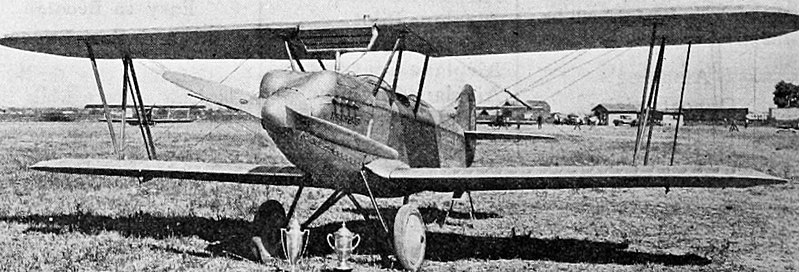
Between 40 and 50 production Thunderbirds (ATC 2-141) were built between 1927 and 1929. There were several agencies across the south-western states and it was popular with small flying clubs in the Los Angeles area. Some were used in the Philippines until the Japanese invasion. Others were exported to Canada. In 1929, however, the onset of the depression and a management dispute ended the company even though they had an outstanding order for 50 from a single buyer.

Known registrations:
N5243, N5404, N5457, N5588, N5770, N5830, N5969, N6502, N6573, N6589, et al.

Because the early advertisements for the Thunderbird said only that its maximum speed was over 100 mph, some journals suggested that the 95 mph cruising speed was in fact the maximum. To refute this, a standard Thunderbird with a three-year-old OX-5 engine, previously used by an aero club, was entered for the November 1927 Santa Anna air meet for aircraft with under 100 hp engines, where it won a trophy by completing a triangular course at an average speed of 114 mph (183 km/h; 99 kn). A few days later on 21 November 1927, at the National Guard field in Los Angeles Clint Burrows, the company test pilot, flew four flights each in opposite directions at an average speed of 119.4 mph (192.2 km/h; 103.8 kn). The aircraft was then sold to an air-taxi company for use between Los Angeles and Tucson.

One standard W-14, NX9830, was bought by Roscoe Turner and modified by the addition of a 50 ft (15 m) diameter parachute held in the wing centre-section to be deployed to save the aircraft and those aboard in an emergency.

Only one Thunderbird remains airworthy, a W-O-14. It was restored by Denny Trone and flew from Brodhead, Wisconsin. After his death in a 2008 flying accident it was donated to the Eagles Mere Air Museum along with other old aircraft he had restored. Ogden lists it as a General Aircraft Company Thunderbird W-14.

Variants:

Engine: Curtiss OX-5, 90hp
Wingspan: 31’0″
Length: 24’6″
Useful load: 850 lb
Max speed: 115 mph
Cruise speed: 95 mph
Stall: 38 mph
Range: 400 mi
Ceiling: 15,000′
Seats: 3

W-B-14 (W-14-B)
Probable designation of the Thunderbird when powered by a 140 hp (104 kW) Bailey C-7-R “Bull’s Eye” 7-cyl radial engine.

W-O-14 (W-14-O)
Engine: 150 hp (112 kW) Curtiss OX-5
Propeller: 2-bladed fixed-pitch
Upper wingspan: 33 ft (10 m)
Lower wingspan: 31 ft (9.4 m)
Wing area: 300 sq ft (28 m2)
Length: 24 ft 6 in (7.47 m)
Height: 9 ft (2.7 m)
Empty weight: 1,300 lb (590 kg)
Gross weight: 2,100 lb (953 kg)
Fuel capacity: 43 US gal (36 imp gal; 160 L)
Maximum speed: 120 mph (190 km/h, 100 kn)
Cruise speed: 95 mph (153 km/h, 83 kn)
Stall speed: 38 mph (61 km/h, 33 kn)
Range: 400 mi (640 km, 350 nmi)
Service ceiling: 15,000 ft (4,600 m)
Rate of climb: 800 ft/min (4.1 m/s) initial
Landing speed:38 mph (61 km/h; 33 kn)
Crew: One
Capacity: Two passengers / 850 lb (386 kg) payload

W-F-14 (W-14-F)
Powered by a 140 hp (104 kW) Axelson-Floco B 7-cyl radial engine.

W-H-14 (W-14-H)
Powered by a 150 hp (112 kW) Wright-Hisso E V-8 engine.

W-14
One aircraft (7201) powered by a 130 hp (97 kW) Hallett H-526 7-cyl radial engine.
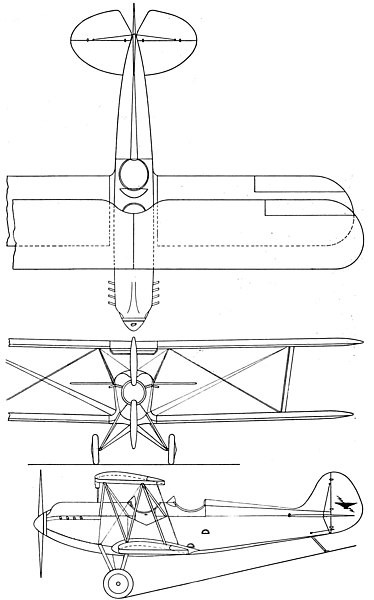
Thunderbird W-14-O

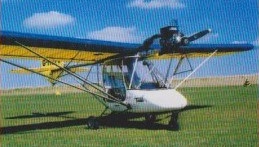
Thruster Aircraft Services T.600 Nova / Commandair

Commandair

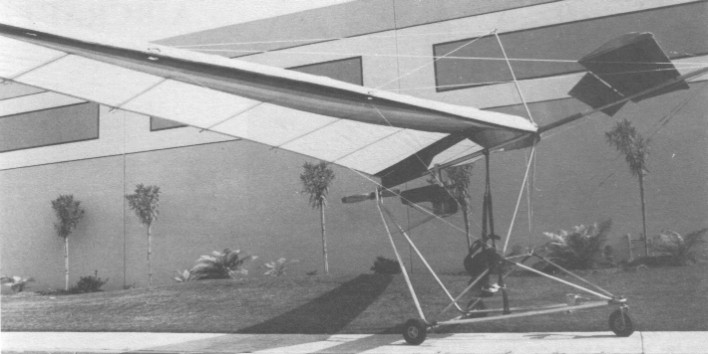
A two-seat microlight developed from T.300.

Originating in Australia, by 1998 the tube and fabric design had been built in the UK for a number of years, and marketed in the UK as the Nova T600 N.

A tricycle version on the Commandair was exported from Australia to the UK as the Nova T600 T.

T600 T

Nova T600 T
Engine: Rotax 503, 52 hp
Wing span: 9.60 m
Wing area: 15 sq.m
MAUW: 360 kg
Empty weight: 150 kg
Fuel capacity: 40 lt
Max speed: 130 kph
Cruise speed: 100 kph
Minimum speed: 65 kph
Climb rate: 5 m/s
Certification: BCAR S
Seats: 2
Fuel consumption: 13 lt/hr
Price (1998): £12,350

Commandair
Engine: Rotax 503, 52 hp
Wing span: 9.60 m
Wing area: 15 sq.m
MAUW: 360 kg
Empty weight: 15- kg
Fuel capacity: 40 lt
Max speed: 130 kph
Cruise speed: 100 kph
Minimum speed: 65 kph
Climb rate: 5 m/s
Certification: BCAR S
Seats: 2
Fuel consumption: 13 lt/hr
Price (1998): £13,350

Thruster Aircraft Thruster / Cohen Thruster

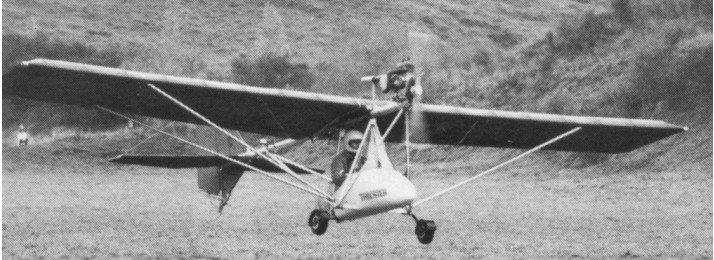
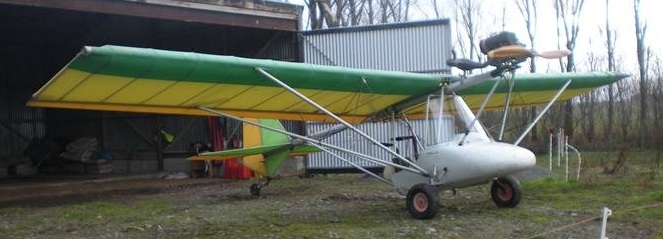
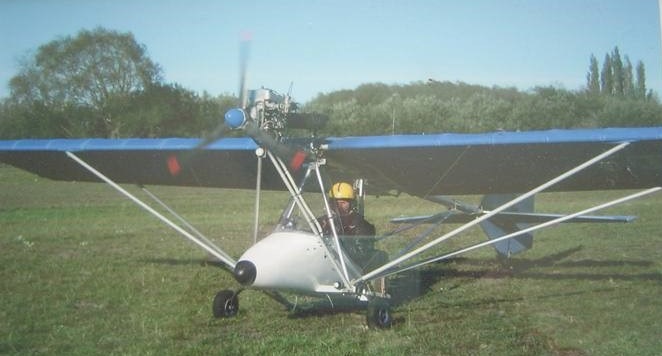
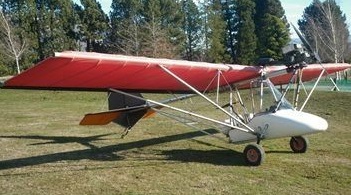
The fifth design of Steve Cohen, first appearing in 1982. A unique wing design allows each wing to rack and fold inside the double surface dacron skins for trailering. A fibreglass pod keeps the pilot warm on wintery days and the strut braced high wing tail dragger design makes it a good rough strip performer. A two-place/utility version is available which sports a new pod for passenger and pilot and power is supplied from a 60 hp Rotax 503 via a geared reduction drive.

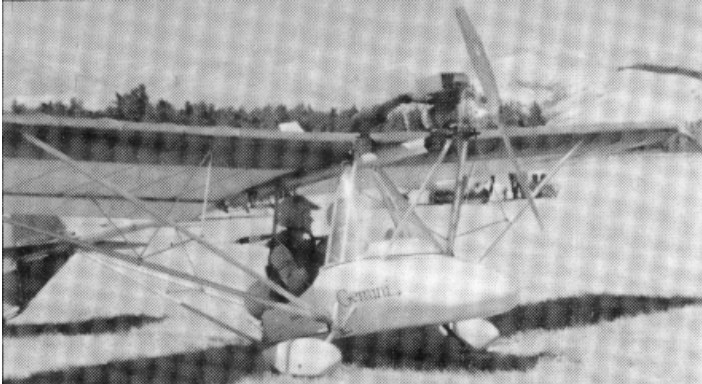
Thruster Gemini 503TC

The Thruster 85 has a shorter wing span and the fabric of the lower wing sewn onto the ribs. Conventional 3 axis controls, single or two place.

In 1998 the two seat Thruster returned to production.

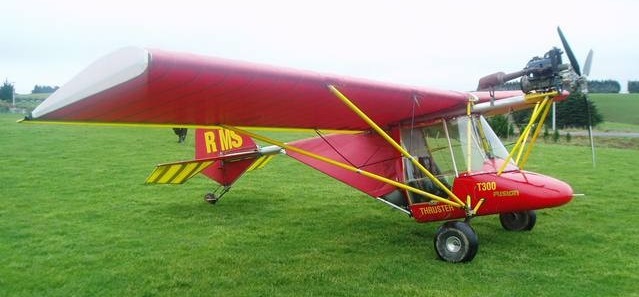
The T.300 is a side-by-side two-seat open microlight, and T.500 derivative with enclosed rear fuselage.

Thruster Single Seat
Thruster T300

Gallery

Thruster
Engine: Fuji Robin 440, 50 hp
Wing span: 29 ft 5 in / 8.97 m
Length: 18 ft 5 in / 5.61 m
Wing area: 150 sq.ft / 13.94 sq.m
Empty wt: 260 lbs / 117.9 kg
Fuel capacity: 25 ltr
Cruise speed: 50 kts@ 50% power
Stall: 27kts
ROC: 1000-1500 fpm
Range: 150 sm

Thruster 85
Engine: Rotax 377, 40 hp
Wing span: 7.8m
Length: 5.3m
Empty wt: 135 kg
MTOW: 227 kg
Range: 306 km
Seats: 1
Fuel capacity: 25 ltr
Cruise: 55kts
Stall: 33 kts

Engine: Rotax 503
Seats: 1
Wing span: 7.8m
Length: 5.3m
Fuel capacity: 25 ltr

T300
Engine: Rotax 582
Prop: Warp Drive 3 Blade Ground Adjustable
Seats: 2
Tyres: 8.00 x 6

T500
Engine: Rotax
Seats: 2

Thruster TST
Engine: Rotax 503, 58 hp @ 6300 rpm
Wing span: 31 ft 6 in / 9.6 m
Length: 18 ft / 5.5 m
Height: 6 ft 6 in / 2.0 m
Empty weight: 331 lb / 150 kg
MTOW: 788 lb / 358 kg
Cruise 90%: 63 mph / 55 kt
Cruise 70%: 52 mph / 45 kt
Stall: 40 mph / 35 kt
Vne: 92 mph / 80 kt
TO dist 50 ft: 360 ft / 110 m
Rate of climb: 500 fpm / 150 m/min
Landing roll: 327 ft / 100 m
Fuel capacity: 9 Imp Gal / 40 lt
Fuel burn: 15-22 lt/hr
Endurance w/res; 1.5 hr
Max X-wind: 15 kt

Those Flying Machines Pegasus

Pegasus I

Single seat single engined high wing monoplane with hybrid control. Wing has swept back leading edge, and tapering chord; no tail, canard wing. Pitch control by elevator on canard; yaw control by tip rudders; no separate roll control; control inputs through weight shift for pitch and tiller for yaw. Wing braced from above by kingpost and cables, from below by cables; wing profile; 30% double surface. Undercarriage has three wheels in tricycle formation; no suspension on nosewheel and glass fibre suspension on main wheels. Push right go right nosewheel steering independent from yaw control. No brakes. Aluminium tube framwork without pod. Engine mounted below wing driving pusher propeller.

Those Flying Machines Pegasus Article

The Pegasus is a hybrid control machine, with the pilot in a swing seat connected to the elevator on the canard. A tiller arrangement sometimes called a yoke, operates tip rudders to give yaw control, with roll control by induced.
Pegasus comes in two forms, the Pegasus I with single cylinder engine and the Pegasus II with a twin. For the single, there is only one engine option, the 215 cc Cuyuna 215 developing 20 hp, but Pegasus II buyers can choose from Kawasaki or Cuyuna twin cylinder units.

Options include hand and ballistically deployed parachutes, a strobe and for the Kawasaki only electric start. The company’s main marketing effort is now being directed toward the Pegasus II, which is listed at $4695 ready to fly in standard form in 1983.

Pegasus
Engine: Cuyuna 202
Prop: 132 cm x 81 cm pitch
Wingspan: 9.8m
Weight: 113kg
Fuel capacity: 19 ltr
Cruise speed: 35 kts
Stall: l9kts
Construction time: 40 hr

Pegasus II
Engine: Cuyuna 430, 35hp at 5800rpm
Propeller diameter and pitch 54 x 36 inch, 1.37 x 0.91 m
V belt reduction, ratio 2.2/1
Max static thrust 238 lb, 108 kg
Power per unit area 0.19 hp/sq.ft, 2.1 hp/sq.m
Fuel capacity 4.2 US gal, 3.5 Imp gal, 15.9 litre
Length overall 15.4 ft, 14.70 m
Height overall 9.9ft, 3.00m
Wing span 35.2ft, 10.72m
Total wing area 182 sq.ft, 16.9 sq.m
Empty weight 203 lb, 92 kg
Max take off weight 503 lb, 228kg
Payload 300 lb, 136kg
Max wing loading 2.76 lb/sq.ft, 13.5 kg/sq.m
Max power loading 14.4 lb/hp, 13.5 kg/hp
Load factors; +6.0, 2.0 ultimate
Max level speed 60 mph, 97 kph
Never exceed speed 55 mph, 88 kph
Cruising speed 37 mph, 59 kph
Stall¬ing speed 25 mph, 40 kph
Max climb rate at sea level 450 ft/min, 2.3 m/s
Best glide ratio with power off 7/1

Thorp T-5 / T-6 / Boeing T-5

Air Trails August 1939

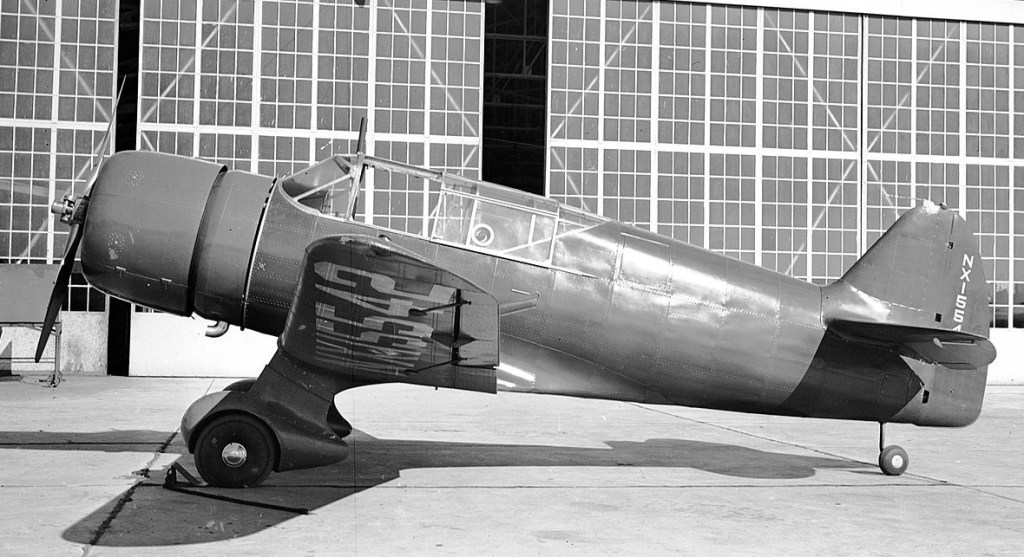
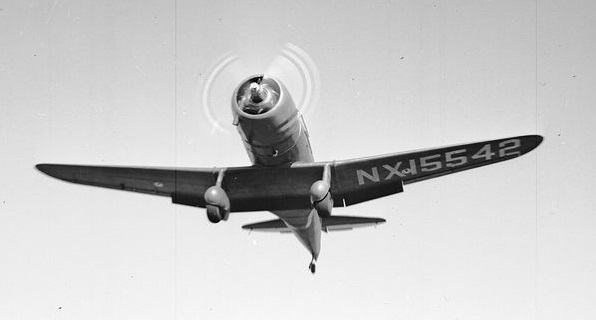
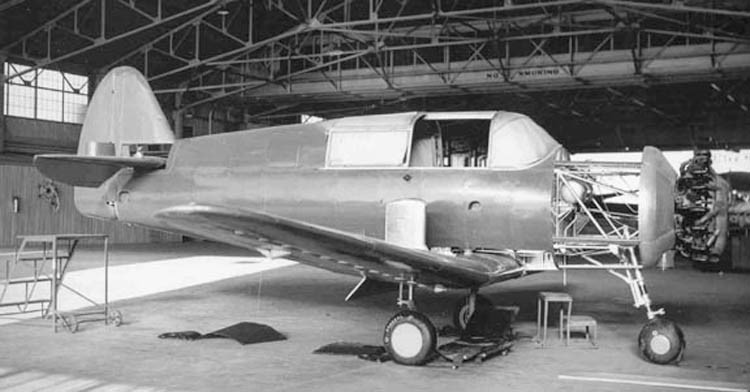
A two place cabin, low wing monoplane, produced in 1939 the Thorp T-5 NX15542 was a prototype trainer for the Boeing School of Aeronautics, based on Paulic XT-3B design, which had been dismantled.

The Boeing T-5 or Thorp T-5 was a student-built aircraft that was an all-metal, side-by-side configuration, low-wing, conventional landing gear-equipped aircraft. It was test flown by Eddie Allen in 1939.

Officially neither a Boeing Co design nor product, this attractive tandem-seat trainer was built by students at Boeing School and thusly adopted the Boeing name for licensing convenience as NX15542.

Refitted with tricycle gear and a 215hp Lycoming as the T-6 in 1939 by Paulic.

It was flown for 15-20 hours, then dismantled.

War clouds and metal shortages brought an end to the project and the T-5 / T-6 was scrapped.

Engine: Wright R-760, 350hp
Wingspan: 34’1″
Length: 24’9″
Useful load: 885 lb
Max speed: 226 mph
Cruise speed: 200 mph
Stall: 65 mph
Seats: 2

Thorp T-11 / T-211 Sky Scooter / Arrow / Indus Aviation T211 Thorpedo / Sport E / Taneja T211

A modern, higher horsepower version of John Thorp’s design, the Sky Scooter.

The Thorp T-211, was designed by John Thorp and first flown in 1945. The original airplane was designed and type certificated in 1946 as the Thorp T11 (ATC 791). Thorp was to construct eight prototypes, and had the design certified by the FAA, but was unable to find a foothold in the Cessna-dominated post-war US market. The post-war slump forced shelving of plans after three prototypes were built. With its low parts count and matched-hole drilling process, it is an easy airplane to build and an easy airplane to fly, for the first time builder/pilot. The price was originally projected as $1,000, which proved unrealistic, was $2,700.

The T-211 was developed with a 90 horsepower continental upgrade in 1953. The project was therefore shelved until the homebuilding boom saw the rights to the aircraft acquired first by Adams Industries and then by Thorp Aero in the 1970s, the latter firm building five examples as the Thorp Arrow or T-211 Aero Sport built in Sturgis Kentucky, but only sold overseas or part 141 operations due to current liability laws. The kits were then manufactured by AD Aerospace in the United Kingdom and Venture Light Aircraft in the United States.

Flying The Thorp Sky Skooter April 1964

Thorp T 211

Tubular Aircraft Products Company Inc built under licence from Thorp Aircraft Company the Model 211. From 1965, Tubular Aircraft Products built 100 parts kits with Continental O-200 powerplants and 11 production models. Eight built by Spring 1965; suspended 1966.

In 1964 the Sky Scooter 211 was in production at Tubular Aircraft Products Co Inc of Los Angeles, California. Powered by a 100 hp Continental engine, it has a cruise speed of 120 mph, gross weight of 1270 lb. Dual stick controls are standard, as are starter, nav-lights and anti-corrosion.

Tubular Aircraft Products Sky Scooter 211

In 2010 the aircraft was also back in production as a kit aircraft by AD Aerospace of Manchester, United Kingdom. This model is powered by a six-cylinder 120 hp (89 kW) Jabiru 3300 powerplant. The kit, less engine, sold for £15,000 in 2011.

Thorp T-211

A Wilksch Airmotive WAM-120 turbocharged 3-cylinder, 2 stroke, diesel, which burns 3-3.5 USGPH of Jet A fuel has been tested in a Thorpe T-211 in England. In four years to 2008, the aircraft completed 400 hrs. Performance included a 500 fpm climb at 14,000ft.

Updated to 100 HP in the 1960’s, and designated the T211, it was completely re-engineered, modernized and re-certified by the FAA in 1990. Thorp Aero of Sturgis, Kentucky purchased rights and tooling and in 1990-91, manufactured the T 211 under an FAA Production Certificate. The project was stopped due to the economic climate of the times.

Indus Aviation T211 Thorpedo LSA
Taneja T211

Thorp Aero of Sturgis, Kentucky in 1990-91, manufactured the T 211 under a production certificate. The project was stopped due to the economic climate of the times. IndUS Aviation acquired the rights to production, tooling and a large inventory of parts and spares in preparation for the manufacture of this airplane.

IndUS, formed by Indian-born surgeon Ram Pattisapu, acquired the rights to the T-211, including tooling and parts. IndUS had enough parts in hand to assemble an initial 20-25 aircraft, after which it is planned that TAAL will begin manufacturing parts. “We have shipped kits to India for assembly, to demonstrate what can be done,” Pattisapu says. “They will have 10 shipsets by the end of December 03/early January 04, with half the aircraft coming back to the USA for the light sport market.”

IndUS chose the name Sport E to reflect the fact that this FAA type-certified airplane was offered for the homebuilder to assemble under the Experimental category (51% rule), as well as the Light Sport Aircraft category. The Sport E was available in three product types depending on customer requirements and market regions: The Sport E / Certified, The Sport E / Experimental and the Sport E / Light Sport Aircraft.

The type-certified Part 23 Normal Category version Sport E, has the specifications as designated on the Type Certificate. A Continental O-200 Engine and a Sensinich metal propeller along with basic VFR instrumentation as standard. The aircraft were assembled at Dallas Executive airport.

Taneja Aerospace and Aviation Limited (TAAL) tied up with IndUS Aviation Inc., a Dallas, Texas-based company, to manufacture light aircraft in India. TAAL is scheduled to deliver the first aircraft for the Indian and US markets by 1 March 2004. IndUS was aiming for Indian certification of the Sport E, with TAAL assembling and delivering aircraft for the domestic market. Wings and fuselages will be shipped to Dallas, where assembly of aircraft for the US market will be completed.

The Sport E is expected to sell in the USA for $65,000-70,000 once the light-sport category is established. IndUS also planned to sell the aircraft as a fast-build kitplane, costing around $25,000, excluding engine and instruments.

There is also interest from flight schools in Australia and Canada in the fully certificated aircraft, Pattisapu says, but this will require TAAL to obtain a US Federal Aviation Administration production certificate, which will be difficult as there is no airworthiness bilateral between India and the USA.

IndUS Aviation began production of the T-211 to the guidelines of Light Sport Aircraft in the mid-2000s. The Thorp T-211 was the first US-designed Special Light Sport Aircraft to receive certification from the Federal Aviation Administration. The light-sport version uses the 120 hp (89 kW) Jabiru 3300 engine, while the type certified version uses a 100 hp (75 kW) Continental O-200 engine and is equipped for both VFR and IFR flying.

The Thorp T211 (also known as Sport E) was being manufactured in the US. Parts of two aircraft had already been delivered to TAAL for assembly in India. Parts for ten more aircraft were scheduled to arrive in December 03 for assembly. However, within six months, TAAL was to take up the manufacture of parts as well.

Thorp T-211 Sky Skooter on display at the IndUS Aviation booth at Sun ‘n Fun 2006

TAAL has also planned to get the approval from the Director General of Civil Aviation (DGCA) for flying this plane in India. At the introductory price in the range of Rs. 30 lakhs (including flying training), this aircraft was expected to give a boost to the absent owner-pilot category India.

Due to the high costs associated with product liability, the number of type-certified aircraft produced is a limited number of these aircraft available for sale in the USA and the United Kingdom to flight schools, clubs and individuals. IndUS was having the aircraft type-certified in India under the regulations of that country. Taneja, based in Tamil Nadu, southern India, manufacture the Thorp T211 two seater aircraft for domestic and export markets.

Thorp designed the T-211 to be an easy build aircraft. His innovative matched-hole drilling process makes it tremendously easy for even a novice builder to go from start to finish in the shortest amount of time. IndUS offered the Sport E / Experimental category aircraft in an EZ-Build configuration, which includes substantial finishout of sections of the airframe, allowing the builder to complete the project within the 51% rule.

Much of the assembly of the wings, empennage and fuselage completed, leaving bottom panels open for access to finish installation of the controls and other components by the builder. IndUS had available several builder assistance programs at the Dallas location. Through collaboration in India, IndUS were able to offer these fast and easy to build kits at tremendous cost and time savings.

IndUS has several different engine options for the Experimental and Light Sport Aircraft: Continental 0-200, Jabiru or Wilksch Airmotive WAM 120.

IndUS planned to re certify the Sport E (T-211) under the LSA category.

Variants:

SkySkooter (T-111)
The 1946 SkySkooter is based on the T-111 with an 85 hp (63 kW) Jabiru 2200 engine and is certified as a Light Sport Aircraft.

Thorp T-211
1953

Thorpedo (T211)
The Thorpedo is based on the Thorp T211 with a lighter 120 hp (89 kW) Jabiru 3300 engine and it is certified as a Light Sport Aircraft.

Certified T211
This aircraft is an FAA certified Thorp T211, similar to the original model and has a 100 hp (75 kW) Continental O-200A engine. It was available in two variants, one with VFR avionics and another with IFR equipment.

Thorpedo DP
A prototype diesel-powered variant of the T-211 was produced in 2008, it is fitted with a WAM 120 two-stroke inverted diesel engine.

Gallery

T-11
Engine: 65hp Lycoming O-145
Wingspan: 25’0″
Length: 17’6″
Useful load: 490 lb
Max speed: 113 mph
Cruise speed: 90 mph
Stall: 43 mph
Range: 360mi
Seats: 2

T-211
Engine: 1 x Continental O-200A, 100 hp (75 kW)
TBO: 1600 hrs
Prop: McCauley 2 blade, fixed pitch 67 in
Length: 18 ft 2 in (5.49 m)
Height: 6 ft 1 in (1.92 m)
Wingspan: 25 ft (7.62 m)
Wing area: 105 sq.ft (9.67 m²)
Wing aspect ratio: 6.2
Empty weight: 750 lb (339 kg)
Max ramp wt: 1270 lbs
Max take off wt: 1270 lb (575 kg)
Max useful load: 537 lb
Max landing wt: 1270 lb
Power loading: 12.7 lbs/hp
Wing loading: 12.1 lb/ft² (60 kg/m²)
Fuel capacity: 21 gal usable (78 l)
Max useable fuel: 144 lb
Baggage capacity: 40 lb (18 kg)
Rate of climb: 750 ft/min (229 m/min)
Climb gradient: 966 ft/nm
Service ceiling: 12,500 ft (3,810 m)
Max speed: 138 kt / 120 mph / 193 km/h
Stalling speed clean: 50 kt
Stall speed flaps down: 42 kt
Range: 375 miles (764 km)
Turbulent air penetration speed: 109 kt
Fixed undercarriage.
Seats: 2

Tubular Aircraft Product 211
Engine: 100hp Continental O-200A
Wingspan: 25’0″
Length: 18’0″
Useful load: 537 lb
Max speed: 135 mph
Cruise: 120 mph
Stall: 44 mph
Range: 480 mi

Indus Aviation T211 Thorpedo LSA
Stall: 39 kt / 45 mph / 72 kmh
Cruise: 107 kt / 123 mph / 198 kmh
Empty Weight: 352 kg / 775 lbs
MTOW Weight: 576 kg / 1270 lbs
Take-off distance: 450 ft / 137 m
Landing distance: 495 ft / 151 m