Tijuana Aircraft Co Tijuana / BC-1 / BC-2 / BC-3

William Waterhouse was a respected structural analyst and engineer who “… undertook an assignment late in 1927 for the Mexican Government, which wanted to [produce] its own aircraft. Two monoplanes were constructed by Tijuana Aircraft Co, headed by Gov Abelardo Rodriquez of Baja California. Plans were furnished by the Mexican War Department and adapted by Waterhouse.

The planes, completed in early 1928. In test flights of the first, an observation type, a German BMW engine was used, but the second ship, expected to carry 380 gallons of fuel and make a non-stop flight to Mexico City, was scheduled for a Wright Whirlwind.”
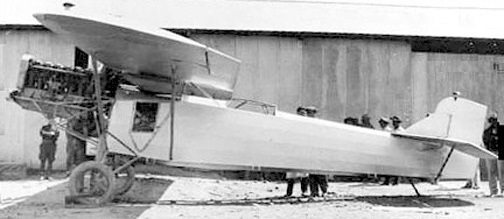
It was flown by Luis Farell Cubillas, who on 8 March 1928 took off from the Tijuana factory enroute to Mexico City. The temporary-fitted 185hp BMW IIIa quit between Hermosillo and Navajoa, and Farell crash-landed on mountainous terrain. He was uninjured but the BC-1 was destroyed.
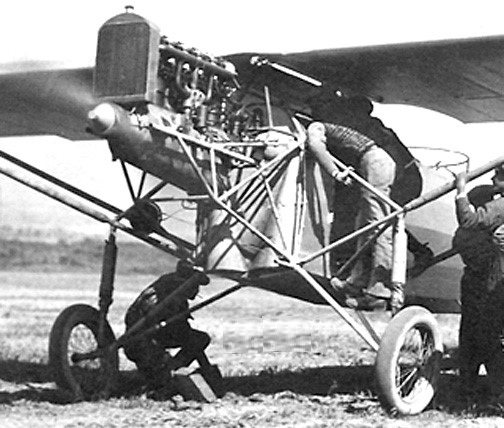
Tijuana BC-1 BMW installation

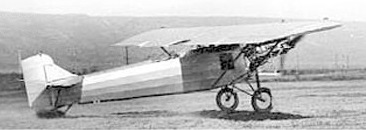
An article in Air Pictorial 27/2 by Jose Villela Jr, showed a photo of a parasol monoplane with a 185hp BMW, except the observer’s cockpit has been replaced with the pilot’s cockpit and power is a radial engine. That ship had “BC-2” on its Waterhouse-like vertical tail, and “BAJA CALIFORNIA” painted on the rear fuselage; photo caption: “Col. Fierro in ‘Baja California No. 2’ lands in the Canal Zone after his flight to Panama in 1928.” In his article Villela says, “Later Colonel Roberto Fierro in the Mexican-built ‘Baja California 2’ made the first non-stop flight between Mexico City and Havana in 14 hours, 50 minutes.”

The rear cockpit looks like it has a ring for a machine gun.
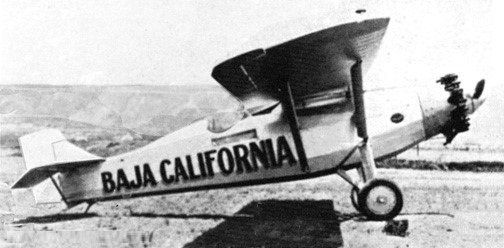
Tijuana BC-2

There was a later BC-3 described in Wagner’s article with a photo that has a family resemblance to the others, including the Waterhouse vertical tail.

BC-1
Engine: 185hp BMW
Wingspan: 43’0″
Length: 30’0″
Max speed: 122 mph

BC-2
Engine: Wright J-5C
Wingspan: 46’6″
Length: 28’6″
Max speed: 136 mph
Stall: 48 mph
Seats: 1

BC-3
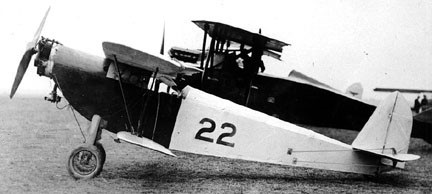
Thurston Tawney Owl

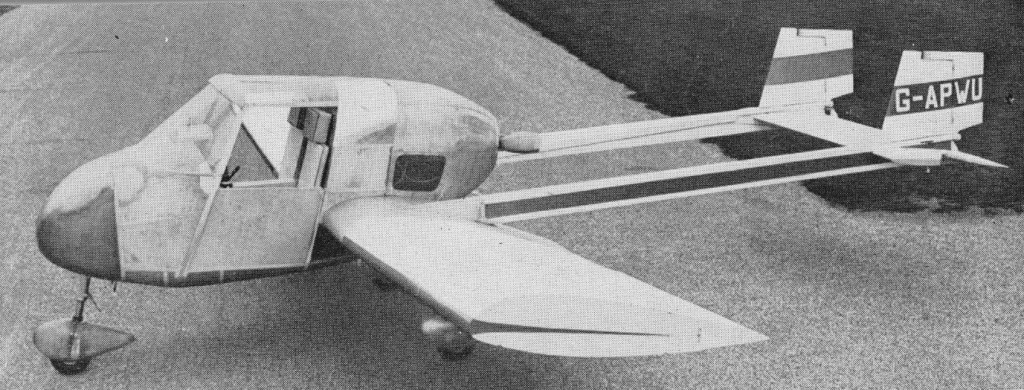
An attempt to produce a cheap new British lightplane, the Owl was designed by Tony Creedon and Eric Thurston, and built at Stapleford Tawney in Essex.

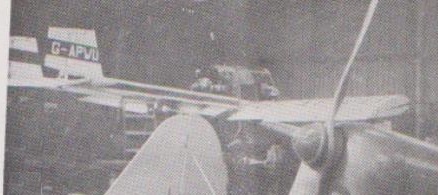
Thurston Tawney Owl G-APWU under construction at Stapleford Tawney in 1960.

It had a 75 hp Porsche engine and a metal and plastic airframe.

The first flight, on 22 April 1960, ended in a forced landing. Registered G-APWU c/n TA,1-1, it was put into store, firstly at Stapleford then Stendon and later offered for sale.

Engine: Porsche 678/4, 75 hp
Wingspan: 24.00 ft
Length: 19.06 ft
Seats: 2 side-by-side

Thurston TA-16 Trojan / Seafire

Thurston TA-16

David B. Thurston, veteran amphibian aircraft designer was completing certification requirements for his four-place waterbird, the TA16 Trojan, to be called the Seafire when FAA-certified. This means that home-builders will have a proven, FAA-certi¬fied amphibian structure if they follow the plans with care. The proto-type Seafire is scheduled for flight testing in July 1981, while 45 home-builders already have Trojans under construction. Thurston, designer of the Colonial Skimmer (still produced as the Lake Amphibian) and the Teal Amphibian, estimates that the Tro¬jan/Seafire can be built in 3000 hours by anyone with previous airframe construction experience. This time can be reduced by using subassem¬blies and parts currently available from Underwood Aircraft, 18440 South Broadway, Gardena, CA 90248. The Trojan/Seafire has a radius of ac¬tion in excess of three hours and can operate from water, land, snow or ice.

The prototype N16SA first flew on 10 December 1981 and about 45 were under construction by 1982.

Construction, aluminum alloy with fiberglass bow deck skin and windshield enclosure
Power 160 – 250 hp

TA-16 Seafire
Engine: Lycoming O-540-A4D5, 250 hp
Span: 37’ 0”
Wing Area: 183 sq.ft
Length: 27’ 1.59”
Gross Weight: 3000 lb
Empty Weight: 1850 lb
Fuel: 80 U.S. gal
Vmax: 175 mph
Cruise: 155 mph
Stall: 60 mph
Range: 1000 mi
Climb: 1000 fpm
Endurance: 6-10 hours
Seats: 4

Thurston Teal TSC-1A / Schweitzer Teal / Teal Aircraft Teal

Thurston Aircraft Corp designed and manufactured the TSC-1A1 Teal two/three-seat light amphibian later acquired by Schweizer and later Teal Aircraft Corporation.

The TSC-1A Teal prototype N1968T first flew in June 1968 and, selling for $17,150, fifteen went to the USN. The improved TSC-1A1 Teal flew in 1972.

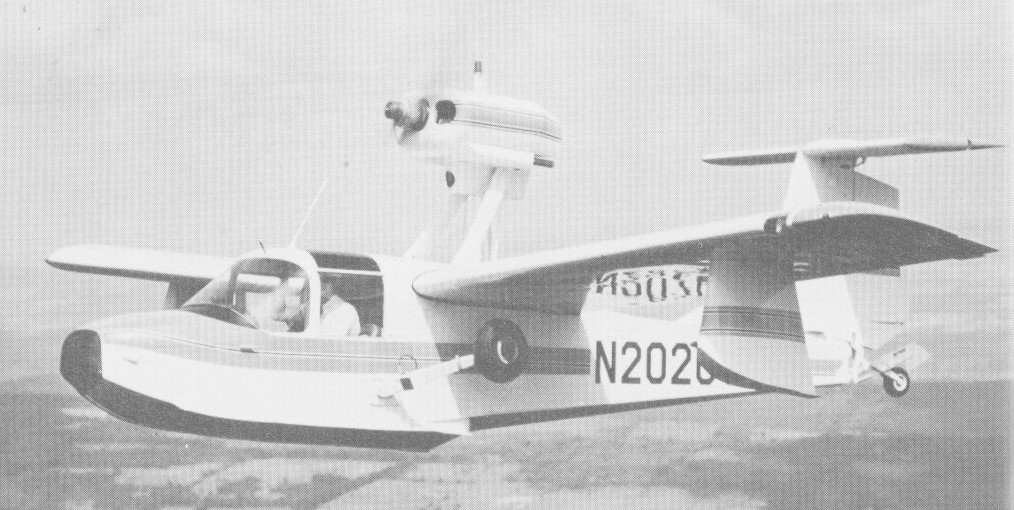
The TSC-1A2 Teal II N2020 first flew in October 1972. The TSC-1A2 Teal II was an improved version featuring slotted trailing-edge flaps, new wing leading-edge fuel tanks, optional hull fuel tank, and independent retraction of the tail wheel.

TSC-1A2 Teal II

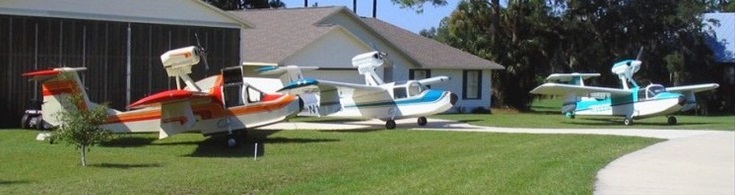
From 1976 Teal Aircraft Corp held manufacturing and tooling rights for the Thurston Teal, which was previously owned by Schweizer Aircraft Corporation. It was being produced by Teal Aircraft in St. Augustine, Florida, at the rate of 24 a year. For about $40,000, they’ll put you into the 150 horsepower Teal II, which cruises at 102 knots and carries a 765 pound equipped useful load. For $2,000 more, they’ll sell you the same airplane with a 180 hp engine the Teal III. The TSC-1A3 Teal III first flying in September 1991.

Thurston Aeromarine Corp superseded International Aeromarine; initially to produce two-seat Teal III amphibian (delivered from 1995), then expected to be followed by Seafire four-seat amphibian.

Thurston TSC-1A N2005T

Gallery

TSC-1A Teal
Engine: Lycoming O-320-A3B, 150hp
Wingspan: 31’11”
Length: 23’7″
Useful load: 600 lb
Max speed: 125 mph
Cruise speed: 108 mph
Stall: 54 mph
Range: 400 mi
Seats: 2
No built: 15

TSC-1A1 Teal

TSC-1A2 Teal II
Engine: Lycoming O-320-A3B, 150hp
Wingspan: 31’11” / 9.73 m
Length: 23’7″ / 7.19 m
Empty weight: 1435 lb / 651 kg
MTOW: 2200 lb / 998 kg
Useful load: 565 lb
Max cruise 5000ftt/1525m: 116 mph / 101 kt / 187 kph
Stall: 52 mph
ROC: 650 fpm / 198 m/min
Service ceiling: 12,000 ft / 3660 m
Range econ cruise 96kt/110mph/177kph 45min res: 472 mi / 410 nm / 759 kph
Range econ cruise 96kt/110mph/177kph 45min res opt fuel: 748 mi / 650 nm / 1203 kph
Seats: 2
Baggage capacity: 230 lb / 104 kg
Price 1974: $22,475

TSC-1A3 Teal III
Engine: Textron Lycoming O-360-1F6D, 180hp
Wingspan: 36’0″
Length: 23’10”
Useful load: 800 lb
Max speed: 116 mph
Cruise speed: 112 mph
Stall: 55 mph
Range: 500 mi
Seats: 2

Teal Aircraft Corp TSC 1A3 Marlin
Engine: Lycoming O-360-A1F6D, 180 hp
Seats: 2/4
Wing loading: 14.7 lb/sq.ft
Pwr loading: 12.8 lb/hp
Max TO wt: 2300 lb
Empty wt: 1435 lb
Equipped useful load: 782 lb
Payload max fuel: 350 lb
Range max fuel/ 75% pwr: 561 nm/ 5.3 hr
Range max fuel/ 55% pwr: 739 nm/ 7.7 hr
Service ceiling: 14,000 ft
75% cruise: 104 kt. 55% cruise: 96 kt
Stall: 45 kt
1.3 Vso: 59 kt
ROC: 700 fpm
Min field length land / water: 1000 / 1300 ft

TSC-1A1

Thunder & Colt AS 105

A T&C AS 105 Mk II hot air airship at the 1996 Worlds in Italy.

Mk2 Gondola and 105,000 cu.ft. Mk2 envelope

With the thermal airship, the shape is maintained by a small pressurising motor while the heat is supplied in the same manner as a common or garden hot air balloon, via a large twin burner. Fuel for both motors and the heating is supplied from two 100 litre LPG tanks.

All AS-105 are certified under Civil Aviation Authority UK AN 17803

Length: 34 m
Height: 13 m
MAUW: 750 kg
Fuel: LPG
Fuel cap: 2 x 100 lt
Endurance: 2 hr
Envelope capacity. 105,000 cu.ft
Max envelope temp: 120 degC
Max envelope pressure: 14 mm/Hg
Vertical rate of climb: 500 ft/min
Service ceiling. 6000 ft
Normal operational altitude minimum legal
Structural cruise: 12 14 kt
Vne: 15 kt
Forward propulsion: Honda, 600 cc V-twin lquid cooled
Seating capacity: 2 persons

AS-105 MkII
Length overall: 34.0 m (111 ft 6.5 in)
Max. diameter: 13.87 m (45 ft 6 in)
Volume: 2,973.3 cu.m (105,000 cu ft)
Max. speed: 37 km/h (23 mph)
Endurance: 2 h 30 min

Thunder & Colt AS56 Blimp

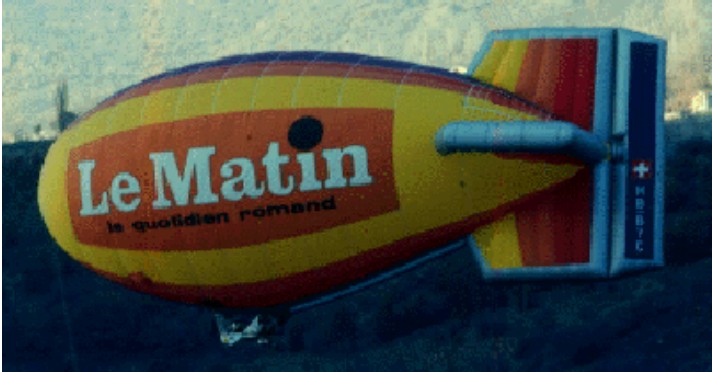
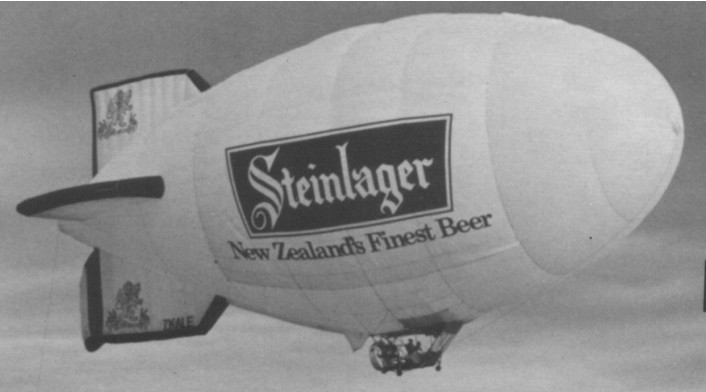
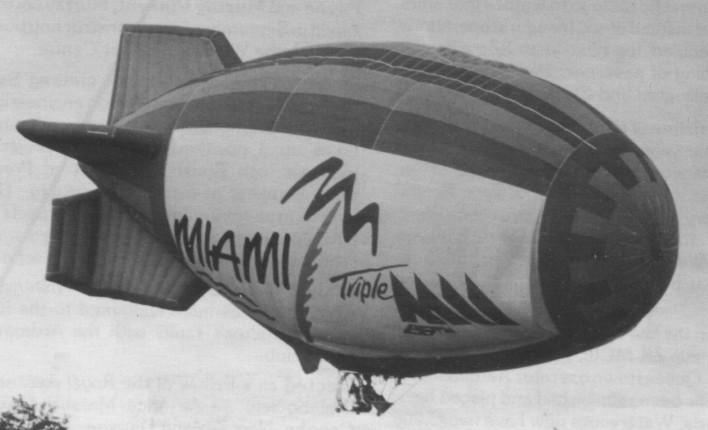
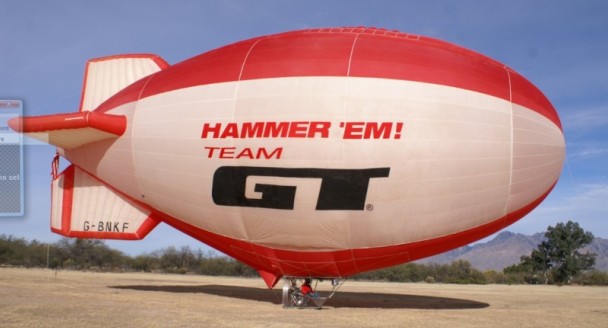
The circa 1885 Thunder and Colt Pressurized Thermal Airship instead of using helium for lift, uses low pressure (3 psi) hot air to provide static lift. The hot air is supplied by a hot air balloon burner located above the pilot’s head inside the hull. Directly beneath the burner is a modified 2 stroke engine that drives a small fan that provides constant pressure in order to provide rigidity to the hull. Behind the pilot is a 24 horsepower 3-cylinder 2 stroke German Konig radial engine that swings a 52″ pusher propeller
A Certified Aircraft

The pilot climbs by raising the temperature inside the hull. He descends by allowing it to cool. There is a small amount (20%) of dynamic lift that increases with speed. Rudder only.

Gallery

Top speed: 23 mph / 20 kt
Cruise: 15 mph
Useful Load: 250 lb
Endurance w/res: 1.5 hr
Seats: 1