A two seat enclosed autogyro. The basic frame is bolted 2×2 aluminium, with twin rudders and fibreglass cabin.
The Shadow is fitted with certified disc brakes, a gearbox-driven prerotator, and full electrical system for avionics, lights, etc.
Easily reducible height for storage in a garage or transport by trailer.
Engine: Lycoming 0-320, 150 to 180 hp Length: 13 ft Height: 8 ft 4 in (reducible to 6 ft) Width: 7 ft Number Of Seats: 2 Empty Weight: 750 lbs Gross Weight: 1,290 lbs Useful Load: 540 lbs Rotor Diameter: 29 ft Rotor Construction: Composite Disc Loading: 1.95 lb/sq.ft Fuel Capacity: 12 USGal (18 USGal opt.) Range: 100 (min.) to 150+ miles Take-Off Distance: 100 to 150 ft Landing Distance: 0 to 25 ft Rate-Of-Climb: 800 to 1,500+ fpm Cruise Speed: 70 to 80 mph Maximum Speed: 100 mph Vne: 110 mph Service Ceiling: 18,000 ft
It was necessary to create a Japanese Air Force to accurately film 20th Century Fox’s “Tora! Tora! Tora!” since no World War II Japanese air¬craft existed in any quantity. Three types were needed; Nakajima B5N 2 “Kate” torpedo bombers, Mitsubishi A6M “Zero” fighters, and Aichi D3A “Val” dive bombers. Ten of each were needed.
The “Vals” were made in 1968 by Steward-Davis from BT¬13’s, the Vultee “Vibrator”, also with the 600 hp Pratt & Whitney. Primary modifications to the BT 13 were a new cowl, extended canopy “Green¬house”, re designed vertical fin, wing dive brakes, heavily spatted main gear, and bomb rack. With the larger engine and wheel fairings this aircraft performs better than the original.
Ten were built, the first N56336. One, N63227, crashed in Hawaii during filming.
It was necessary to create a Japanese Air Force to accurately film 20th Century Fox’s “Tora! Tora! Tora!” since no World War II Japanese air¬craft existed in any quantity. Three types were needed; Nakajima B5N 2 “Kate” torpedo bombers, Mitsubishi A6M “Zero” fighters, and Aichi D3A “Val” dive bombers. Ten of each were needed.
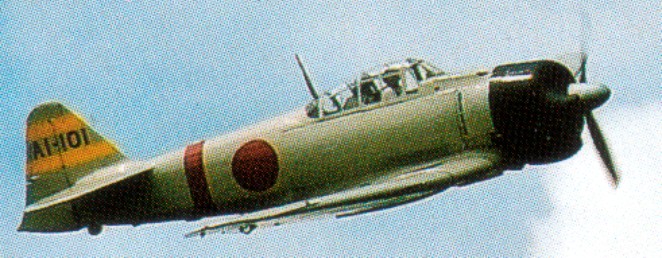
The “Zeros” were made from stock AT 6’s or Harvards by adding wheel covers, authentic cowling and cowl flaps, rounded wing tips, and bomb or auxiliary fuel tank racks. In addition, the cockpit area was modified to match the distinctive Japanese design, as was the area in front of the cockpit. This latter modification was for the two forward firing cowl machine guns. Last but by no means least was the unique and accurate paint scheme. Power is provided by a 600 hp Pratt & Whitney engine.
It was necessary to create a Japanese Air Force to accurately film 20th Century Fox’s “Tora! Tora! Tora!” since no World War II Japanese aircraft existed in any quantity. Three types were needed; Nakajima B5N 2 “Kate” torpedo bombers, Mitsubishi A6M “Zero” fighters, and Aichi D3A “Val” dive bombers. Ten of each were needed. Probably the greatest challenge to the Hollywood film makers as producing an authentic looking “Kate” torpedo plane. To make ten “Kates” it was necessary to use ten BT 13’s and ten Canadian Harvards.
Itoh Chu Koku Seibi Kabushiki Kaisha, late in 1968, converted a number of North American T-6 Texan trainers to represent Nakajima B5N torpedo-bombers for film Tora! Tora! Tora!
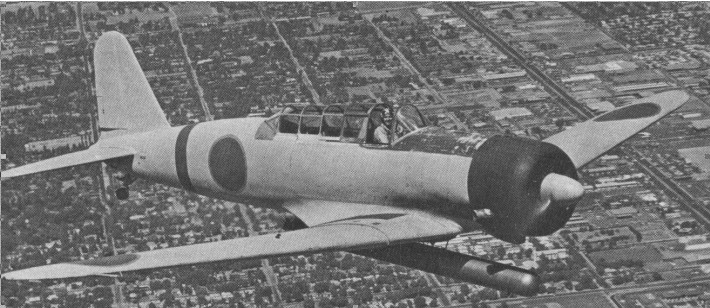
Beginning at the nose, a new spinner was added, along with a deeper cowling with cowl flaps. To create a proper nose profile the engine was moved forward eighteen inches and a dummy exhaust added to the left side. The oil cooler air scoop on the left side was moved to the bottom of the cowl to match the original “Kate”. The Harvard heater was removed from the right side. Japanese wing roots were made from a mould of the Curtiss P 40 wing root fairings, while the wheel well “bumps” on the leading edge were faired in with sheet metal. To complete the wings, eighteen inch rounded extensions replaced the original tips. The cockpit glass was changed and the canopy extended to a three-seat configuration which accommodates the pilot, navigator, and rear gunner. Just aft of the wing trailing edge a seven inch extension of totally new airframe was added. The only change made there was the addition of a sheet metal fairing to make the BT fin (on the new BT 13 tail section) slant at a greater angle. To complete this fantastic project, a true to life torpedo was added, the torpedo being slightly smaller in diameter than the original to allow the Harvard landing gear to properly retract. The addition of proper gear covers was the final modification necessary to complete the job.
The 1930 20th Century Sky King, also noted as Sport, was a two-place tandem, high-wing monoplane described as having a monocoque construction fuselage and roughly triangular in cross-section, the vertex being toward the ground.