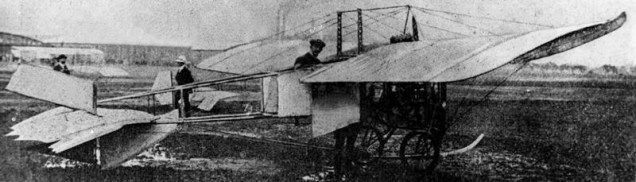
The “Strucc” (“Ostrich”) was the second monoplane design of Hungarian engineer János Adorján. It was equipped with a 25 hp engine of Adorján’s own construction and made some short flights at the June 1910 Budapest aviation meeting.
The “Strucc” (Ostrich) obtained the 3rd prize in the 2nd International Air Race of June 1910.
Earl (“Skeezix”) and Jerry Adkisson, two brothers at Tuscola airport, joined the Experimental Aircraft Association (EAA) in 1955 and began gathering material for their construction project in the Autumn of that year. Their aircraft would be patterned after the P.Z.L. P.24, a popular Polish gull-winged fighter aircraft of World War II.
Using wings from a 1946 Luscombe 8, cut and re-formed into the gull-wing configuration, the cabin and forward fuselage section were formed of steel tubes. A Luscombe tailcone was attached to the aft end of the steel-tube frame, and standard Luscombe tail surfaces were adapted, with their tips squared off. The spring-steel main landing gear was taken from a Cessna. The planned engine was a 125 to 145 hp (93 to 108 kW) Warner radial engine, but settled for a 65 hp (48 kW) Continental A65 driving a Beech-Robey controllable propeller in the initial installation.
The craft first flew in 1957 and only one was built. The original 65hp Continental was replaced by a 125hp Lycoming O-290-G4 by John Canfield circa 1963.
Engine: 1 × Lycoming O-290-G4, 125 hp (93 kW) Capacity: 300 lb (136 kg) Length: 20 ft 0 in (6.10 m) Wingspan: 24 ft 6 in (7.47 m) Useful load: 300 lb Maximum speed: 156 kn; 290 km/h (180 mph) Cruise speed: 130 kn; 241 km/h (150 mph) Stall speed: 52 kn; 97 km/h (60 mph) Range: 300 mi Crew: 1
Ader’s progress attracted the interest of the minister of war, Charles de Freycinet. With the backing of the French War Office, Ader developed and constructed the Avion III (with the help of Ing. Morel). It resembled an enormous bat made of linen and wood, equipped with two four bladed tractor propellers, each powered by a steam engine of 30 hp (22 kW). Using a circular track at Satory, Ader carried out taxiing trials at the Satory army base near Versailles on 12 October 1897 with the aircraft taxiing along a circular track, and two days later attempted a flight. After a short run the machine was caught by a gust of wind, slewed off the track, and came to a stop. After this the French army withdrew its funding, but kept the results secret. After the Wright brothers made their flight, the commission released in November 1910 the official reports on Ader’s attempted flights, stating that they were unsuccessful.
The Avion III had a 52 ft 6 in (16.0 m) wing span, gross weight of about 882 lb (400 kg).
Clément Ader’s Avion III is still displayed at the Musée des Arts et Métiers in Paris.
Ader Avion First flight: 1897 Wing span: 17m / 56 ft Weight: 400 kg / 882 lb
Clément Ader turned to the problem of mechanical flight and until the end of his life gave much time and money to this. Using the studies of Louis Pierre Mouillard (1834–1897) on the flight of birds, he constructed his first flying machine in 1886, the Éole. It was a bat-like design run by a lightweight steam engine of his own invention, with 4 cylinders developing 20 horsepower (15 kW), driving a four-blade propeller. The engine weighed no more than 4 kg/kW (7 pounds per horsepower). The wings had a span of 14 m (46 ft). All-up weight was 300 kg (650 lb). On 9 October 1890, Ader attempted a flight of the Éole, in the grounds of the Chateau Pereire at Armainvilliers. It is accepted that the aircraft took off, reaching a height of 20 cm, (8 in) and flew uncontrolled for approximately 50 m (160 ft), 13 years before the Wright Brothers.
Engine: One 20 hp Ader four-cylinder steam engine Prop: 4 blade tractor propeller, approx 11 ft 6 in (3.50 m) dia. Wing span: 45 ft 11 in (14.00 m) Wing area: 301.4 sq ft (28.0 sq.m) Length: 21 ft 4 in (6.50 m) Weight empty: 498 lb (226 kg) Gross weight: 652 lb (296 kg) Accommodation: Crew of 1
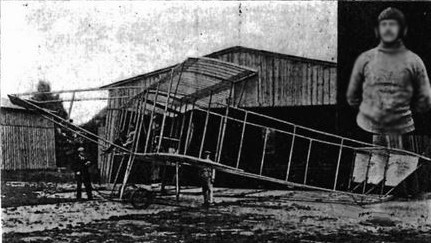
A Farman-like biplane, built by Max Friedrich Adelmann of Chemnitz, Germany. Little is known of the machine. It was powered by a 60 hp Schneeweiß “Wodan” engine from Chemnitz and according to early press reports “engine and aircraft performed very well”. Adelmann proposed a cross country flight to Leipzig in Summer 1911, but after that nothing of his flying ventures was reported.
120 X Legacy C-FFPF is a modified Cessna 120, first flown in June 2009. Equipped with Subaru EJ22 power c/w electroair ignition and airflow performance injection, 900 x 6 tires, droop tips, dual seats, control sticks (no steering wheels), and upgraded panel.
Owners William B & Mike A Gittens of Yarmouth, NS, Canada, planned to fit EDO 2000 floats in the future.
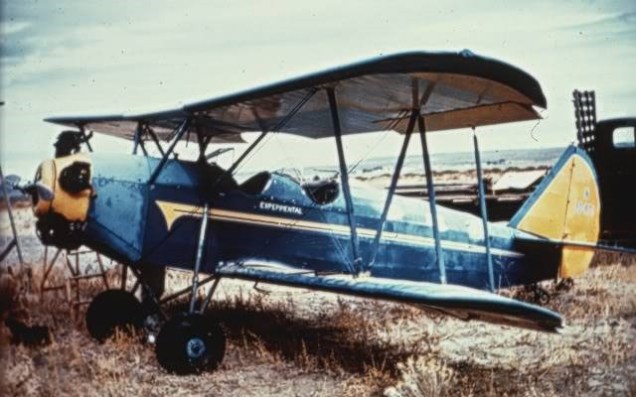
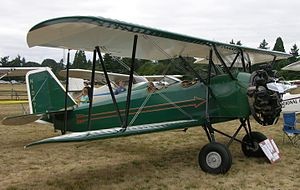
The Adcox Student Prince was a two-seat open-cockpit biplane designed by Basil Smith and built by the students of the US Adcox Aviation Trade School in 1929. It was based on the one-off Adcox Special, and the first example flew on 17 September 1929 (piloted by Basil Smith), powered by an 85hp Cirrus Mk III. The Cirrus, with inherent dependability problems, was soon replaced by 100hp Kinner K-5.
A single example of a Student Prince X (NC10686) was produced in 1931 powered by a 90hp ACE engine.
A total of six were built of which only 3 were certificated (NC263V, NX828M, NC893K) under ATC 2-258. The other three being restricted to flights within Oregon. The last one ended up certificated after WW2 as an amateur-built aircraft.
As of 2004, a single example remains registered in the United States, which was successively re-engined with 100hp Kinner K-5, then 110hp Warner Scarab Junior, Comet 150hp, 150hp Wright-Hisso A and 220hp Continental E-225 in 1963.
Student Prince Engine: 1 × Cirrus Mk III, 85 hp (63 kW) Wingspan: 30 ft 3 in (9.22 m) Length: 23 ft 6 in (7.16 m) Useful load: 585 lb Maximum speed: 110 mph (177 km/h; 96 kn) Cruise: 85 mph Stsll: 37 mph Range: 500 mi (434 nmi; 805 km) Capacity: 2