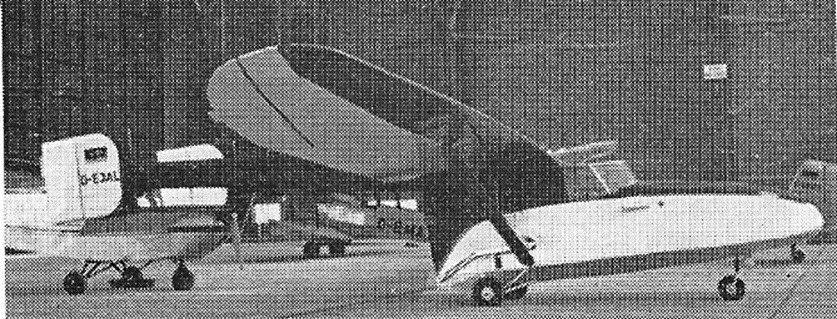
The Graf Saurma Milan D-EJAL is a twin-boom single-seater with a pusher engine circa 1956.
Originally the Milan had a tail wheel undercarriage.
The Graf Saurma Milan D-EJAL is a twin-boom single-seater with a pusher engine circa 1956.
Originally the Milan had a tail wheel undercarriage.
The 1910 Graf “Napoli 1” monoplane was designed and built by Emilio Graf in Italy.
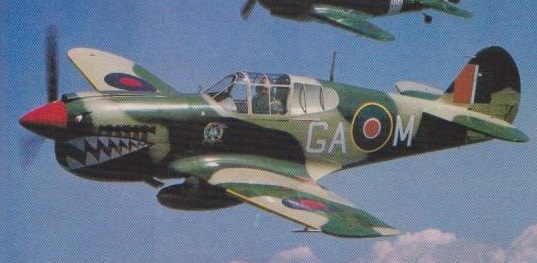
In 1988 two homebuilders from Edmonton, Alberta, Canada, attended the EAA Fly-in with their replica fighters. Ross Grady had his P-40 and Bob Tessori had his Regianne 2002.
Grady intended to build a replica that could be mistaken for the real thing. He was selling plans in 1988 for $400.
1988
Grady Construction and Engineering Ltd
11717 78th St
Edmonton
Alberta
Canada T5B 2J2
Built a P-40 replica
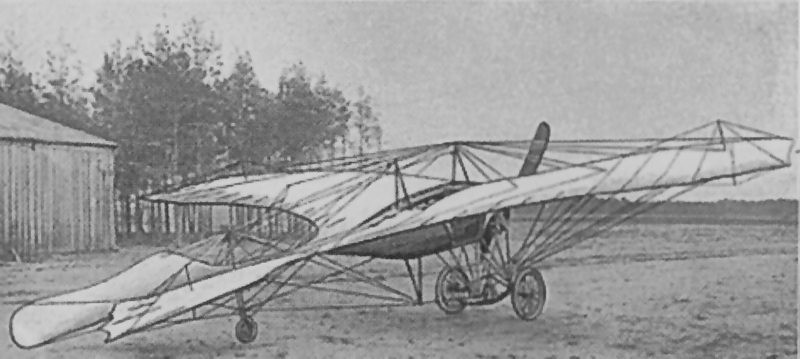
At the 1912 Allgemeine Luftfahrzeug-Ausstellung in Berlin, Hans Grade displayed two new monoplanes, with a “normal” fuselage, egg-shaped and tapering into a flat tail, instead the usual gondolas of his previous airplanes. One was a “Renneindecker”, identified as the D type, and the other was the bigger “Militäreindecker” with a 60/90 hp Grade engine, type E.
At the 1912 Allgemeine Luftfahrzeug-Ausstellung in Berlin, Hans Grade displayed two new monoplanes, with a “normal” fuselage, egg-shaped and tapering into a flat tail, instead the usual gondolas of his previous airplanes. One was a “Renneindecker”, identified as the D type, with a 30/45 hp Grade engine.
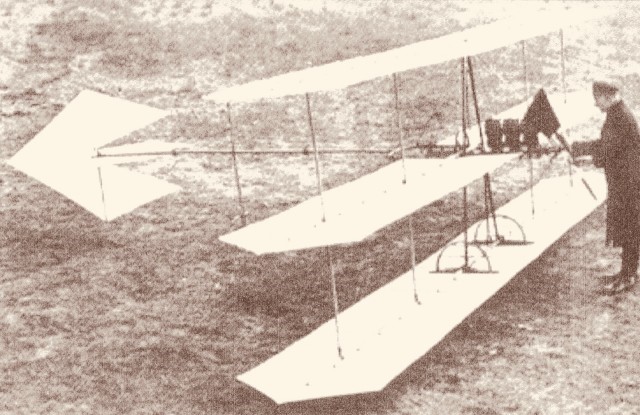
Hans Grade built this machine during his military service with the Magdeburg pioneers. At the end of September 1908, the first roll tests began on the Cracauer Anger outside Magdeburg. About a month later, on 2 November 1908, he made the first German powered flight. He reached by the end of the year flights at 1.5 meters altitude over 100 to 400 meters in 30 to 40 seconds, essentially straight ahead. In 1909, he decided to finish the experiments and build a new aircraft, based on the experience gained. This new monoplane won him the Lanz Prize on October 30, 1909. A replica of the machine can be found at the Technikmuseum Magdeburg.
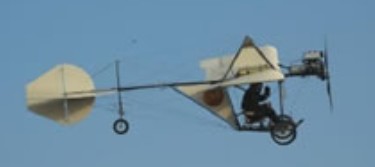
Designed by Grade in 1909 to get the Lanz-Prize, which was to be given to the first aviator in Germany who flew 2,5km around two poles. Grade did accomplish this in November 1909 in Berlin-Johannisthal.
Hans Grade competed at Nice in 1910 with a monoplane of his own design.
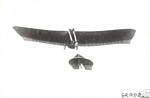
Engine : Grade, 24 hp
Length : 24.606 ft / 7.5 m
Height : 6.562 ft / 2.0 m
Wingspan : 32.808 ft / 10.0 m
Max take off weight : 419.0 lb / 190.0 kg
Max. speed : 38 kts / 70 km/h
Service ceiling : 1312 ft / 400 m
Crew : 1
Hans Grade was the first German to fly in a triplane of his own design and with his own engine. Before First World War Grade had a civil flying school at Bork. His aircraft, mostly high-wing monoplanes, were not adopted by the military. First Germanjooping flights made in a Grade monoplane with landing gear both above and below wing.
Hans Grade had built 17 different types, while the general layout was very similar in most cases.
Sold factory to Aviatik during First World War.
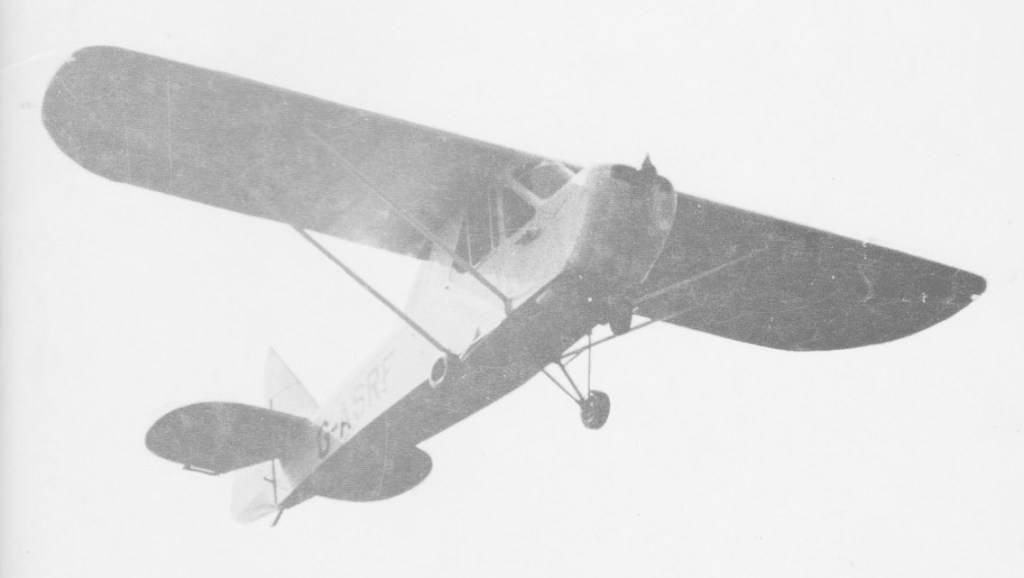
Built by G.W.Gowland in the mid-1960s, the Gowland Jenny Wren G-ASRF c/n GWG.2, PFA.1300, was basically a Luton Minor with an enclosed cockpit with pilot and a child’s seat in tandem, tricycle undercarriage, and a Lycoming O-145-A2 engine.
It was built by the designer at Brookmans Park with final assembly taking place at Panshanger in 1966. It used the wings of Luton Minor G-ACEP (PFA.538b).
The first flight took place on 13 October 1966.
Withdrawn from use prior to 1971, it was thought to be stored at Gowlands home. Only one conversion was made.

