Hanson Woodwind

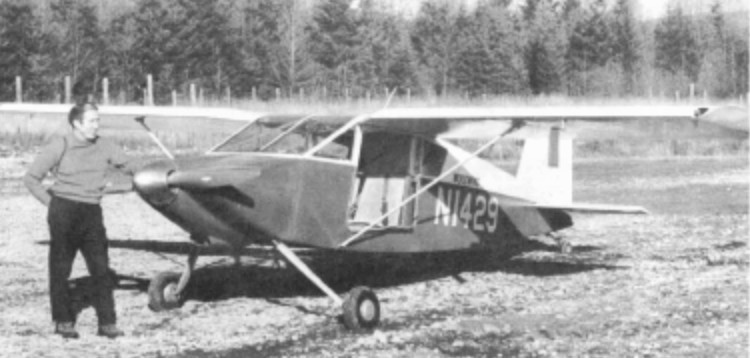
The Hanson Woodwind is an all-wooden homebuilt aircraft with a fiberglass wing designed by Carl Hansen.

The Woodwind is a two seat side-by-side configuration, strut-braced, high-wing aircraft with conventional landing gear and Plexiglas doors. Some construction elements were adapted from the all-wood Bowers Fly Baby. The Woodwind was a homebuilt copy of the Wittman Tailwind using all-wood construction, rather than welded steel tube and aircraft fabric covering for the fuselage. The Wittman design uses plywood covering for its wings, while the Woodwind uses fiberglass. The fuselage sides and tail surfaces are built flat on a table at the same time and covered with aircraft grade plywood. The wings are covered in fiberglass with stainless steel torque tubes for aileron control. The fuel tanks and cowling are also made from fiberglass. The prototype used a moose-hide interior.

The prototype first flew on 20 June 1969. The aircraft was written off in an non-fatal accident on 5 June 1976 after hitting a large rock.

Engine: 1 × Lycoming O-235-C, 100 hp (75 kW)
Propeller: 2-bladed variable-pitch Sensenich “Skyblade”
Capacity: 2
Empty weight: 851 lb (386 kg)
Gross weight: 1,425 lb (646 kg)
Fuel capacity: 32 U.S. gallons (120 L; 27 imp gal)
Maximum speed: 126 kt / 233 km/h (145 mph)
Cruise speed: 122 kt / 225 km/h (140 mph)
Stall speed: 52 kt / 97 km/h (60 mph)
Hansen Baby Bullet

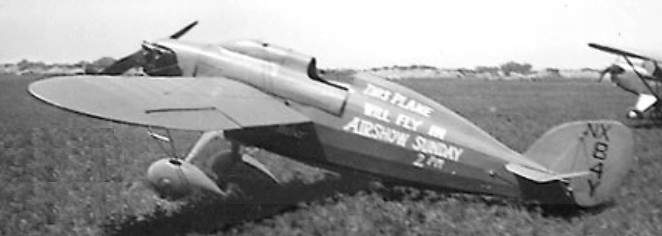
Hansen Special Baby Bullet III NR84Y

Three Hansen racers were built. The first a modified Heath Baby Bullet as Baby Bullet [11351]. The second, from a Heath 115, with 40hp Continental A-40 (span: 16’6″) as Baby Bullet II for 1932 Nationals [NR282W] (piloted by Art Davis and Walt Bagnick). The third as Baby Bullet III for 1934 Nationals [NR84Y] (piloted by Art Davis), and rebuilt in 1947 as Francis-Angell midget racer.

Baby Bullet I
Engine: Wright-Morehouse, 29hp
Wingspan: 20’0″
Seats: 1

Baby Bullet II
Engine: Continental A-40, 40hp
Wingspan: 16’6″
Seats: 1

Baby Bullet III
Seats: 1

Hansen, Friedrich

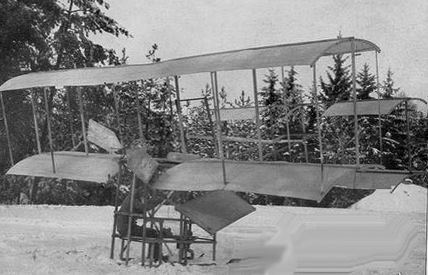
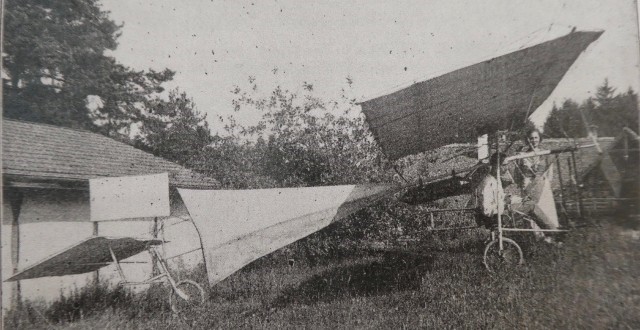
Friedrich Hansen was born in 1890 in Aachen. In 1908 he built two aeroplanes in Zürich and made some “hops”. In 1909 he built the Monoplan III monoplane which crashed after some trials, and then flew Wright and Blériot machines in Pau. In 1911 he designed the Statax motor in England. He returned to Germany at the start of the war, but was wounded. In December 1914 he founded Flugmaschine REX GmbH together with the businessman Walter Gutbier in Köln-Ossendorf, and designed a fighter. In 1923, he moved to Switzerland where he built engines. He was also the author several books about aviation.

Hansa-Brandenburg W.34

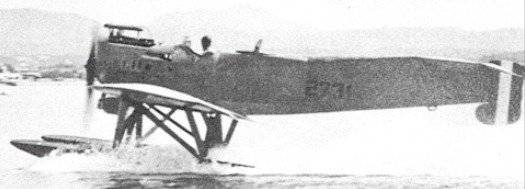
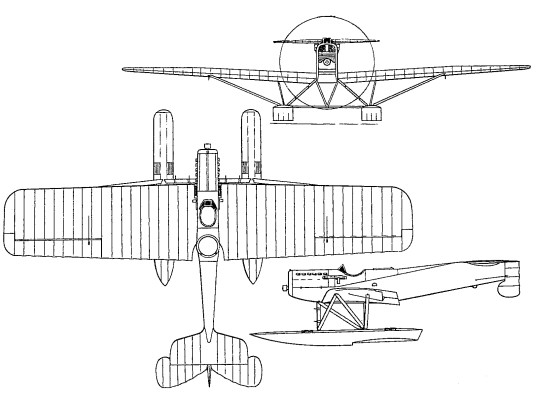
Continuing the line of two-seat patrol fighter monoplanes initiated with the W.29, the W.34 was the final WWI development of the series of float seaplanes designed for the Hansa- und Brandenburgische Flugzeug- Werke by Ernst Heinkel and Hans Klemm. Essentially a scaled-up W.33 intended for the 300hp Basse und Selve BuS IVa six-cylinder water-cooled engine, only one prototype of the W.34 had been completed by the end of the War. Additional examples powered by the 300hp Fiat A 12bis engine were built after the termination of hostilities.

Max take-off weight: 2270 kg / 5005 lb
Empty weight: 1534 kg / 3382 lb
Wingspan: 16.60 m / 54 ft 6 in
Length: 11.10 m / 36 ft 5 in
Wing area: 49.0 sq.m / 527.43 sq ft
Max. speed: 175 km/h / 109 mph

Hansa-Brandenburg W.33 / Kjeller FF.8 Make

W.33

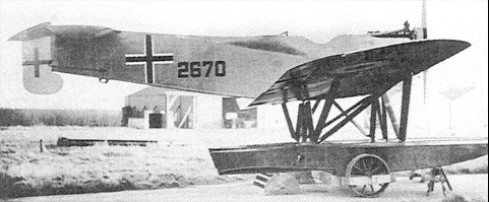
Ordered in April 1918, the W.33 was basically a larger and more powerful development of the W.29 and, augmenting the smaller fighter seaplane, saw service from North Sea air stations during the closing months of World War I.

The W.33 was powered by a 260hp Mb IVa six-cylinder inline water-cooled engine and armament normally comprised two forward-firing 7.62mm LMG 08/15 machine guns and one Parabellum in the rear cockpit. One aircraft was experimentally fitted with a 20mm Becker cannon in the rear cockpit, and several aircraft were fitted with radio and had one of the LMGs removed.

At least six of an initial order of 26 W.33s had been taken into the German Navy’s inventory when hostilities terminated, but the Norwegian Naval Flying Boat Factory built 30 under licence and the Norwegian Army Aircraft Factory built a further 11.

Kjeller Aircraft Factory license built Hansa-Brandenburg W.33 as the F.F.8 Måke (Seagull).

I.V.L. A22

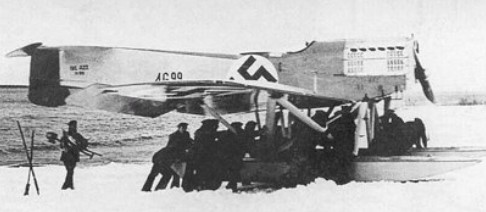
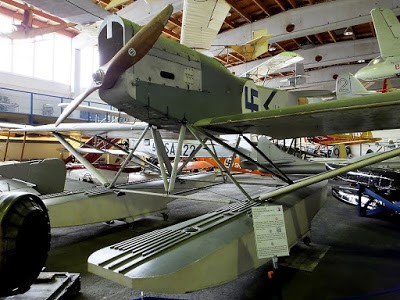
The Finnish Aviation Force’s Aircraft Factory assembled two W.33s as pattern aircraft in 1922, and licence-manufactured a further 120 during 1923-26. Two were sold to Latvia. Finnish manufactured planes were powered by 300 hp Fiat A-12bis motors.

I.V.L. A.22 Hansa

Gallery

W.33
Engine: 1 x 183kW Maybach Mb.IV
Wingspan: 15.85 m (52 ft)
Length: 11.10 m (36 ft 5 in)
Height: 3.37 m / 11 ft 1 in
Wing area: 44.0 sq.m / 473.61 sq ft
Max take off weight: 2050 kg (4510 lb)
Empty weight: 1420 kg / 3131 lb
Maxi¬mum speed: 173 km/h (107 mph)
Ceiling: 5000 m / 16400 ft
Armament: 2-3 x 7.92mm machine guns
Crew: 2