A two-seat sporting, training, and agricultural lightplane (first flown 1987).
Aircraft
Industria Aeronautica del Peru sa
Peru
Originally intended to assemble Aermacchi MB-339A jet trainers, but instead put into production Chuspi two-seat sporting, training, and agricultural lightplane (first flown 1987). Later planned to build Aero Boero lightplanes and Pilatus Turbo Porter types.
Industrial Electric Indiana Flyer
Single plane, shoulder wing, cockpit enclosed, twin booms/rudders, pusher. POWERPLANT: Lloyd twin-cylinder, electric starter. LANDING GEAR: Tricycle, steerable nosewheel.
Wingspan 32 ft
Wing area 160 sq.ft.
Aspect ratio 6.5:1.
Length 179”.
Empty weight 233 lbs.
Payload 225 lbs.
Wing loading 2.25 lbs/sq.ft.
Cruise speed 42 mph.
Stall speed 30 mph.
Vmax 55 mph.
Takeoff run 300’.
Landing roll 150’.
Climb rate 300+ fpm.
Fuel capacity 2.2 USG.
Engine displacement 400cc.
Rated hp 22.
Indus Aviation
IndUS Aviation is an American light aircraft manufacturer founded in 1994 by Ram Pattisapu, M.D., and headquartered in Dallas, Texas at the Dallas Executive Airport. The company manufactures variants of the Thorp T-211 and the T-111, originally designed by John Thorp. Sub-assembly and component manufacturing is contracted out to the Indian company Taneja Aerospace & Aviation with final assembly in the company’s Dallas factory.
IndUS acquired the rights to the Thorp T-211, including tooling and parts. IndUS Aviation was developing an improved version of the Thorp T-211 which they call the Thorpedo LP and the Sport E.
By February 2010 the company had 28 aircraft in customer hands and registered with the FAA, including one T-11 Sky Skooter and 27 T-211s.
In March 2010, due to the ongoing economic situation, the company was undergoing a reorganization and its website domain registration had expired. By December 2010 the company reorganization was still reported as underway while the website had been restored.
Indraero Aero 110
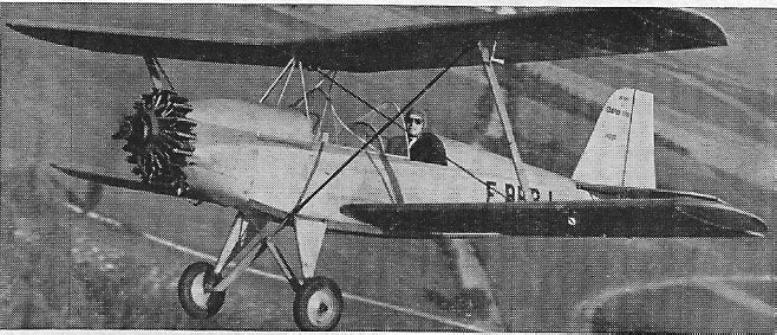
The Aero 110 fuselage has a fabric covered steel-tube framework and powered by a 45 hp Salmson 9ADB radial air-cooled engine.
A Single-bay staggered biplane, upper and lower wings are of equal span and chord. A hinged panel in the upper wing provides access to the front cockpit. Full dual controls are fitted.
Produced by the Societe Indraero and flown for the first time on 1 May 1950, the Aero 110 was produced for the Service de l’Aviation Legre et Sportive (S.A.L.S.).
Engine: 45 hp Salmson 9ADB
Wing span: 24 ft 11 in
Length: 18 ft 4 in
Empty weight: 594 lb
Loaded weight: 1000 lb
Max speed: 81 mph
Cruise: 71.4 mph
Indraero Aero 101
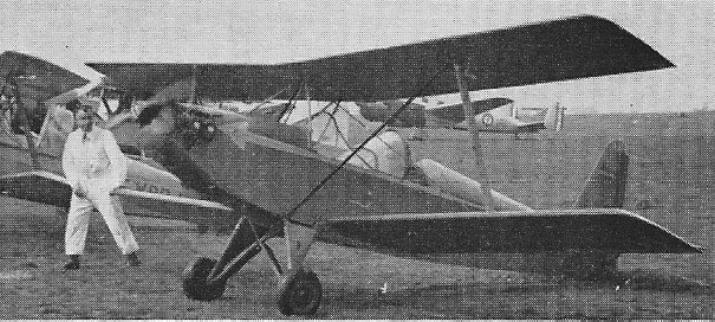
Developed by the Societe Indraero and first flown in 1953, the Aero 101 was designed by MM. Chapeau and Blanchet as a light tandem two-seat training biplane for the Service de l’Aviation Legre et Sportive (S.A.L.S.), and an initial production batch of thirteen was built.
Derived from the Aero 110, it differs by being all-wood construction, a tail wheel and brakes. Powered by a 75 hp Minie 4 DC-32 engine, the tandem open cockpits are fitted with dual controls.
Engine: 75 hp Minie 4 DC-32
Wing span: 24 ft 11 in
Length: 18 ft 4 in
Max speed: 108.6 mph
Cruise: 93 mph
ROC: 630 fpm
Inalet Co
Russia
Formerly known as VIST and founded 1990, is developing a range of turboshaft-powered transport aircraft with vertical take-off and landing/air-cushion capability, by virtue of engine power being switched between conventional propellers and a large horizontal fan occupying the center fuselage. Also developing a 32-passenger regional airliner as the lnalet-32, featuring an aerodynamically shaped fuselage and stub wings, plus the more conventional Inalet- 60 62/68-passenger regional airliner and freighter with twin turbofan engines mounted at the rear of the fuselage.
Impulse Aircraft Impulse
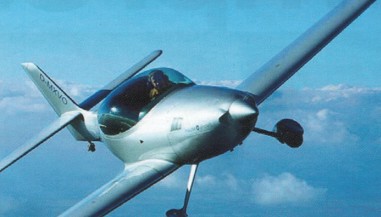
The Impulse 100 took three development and 1600 hours of flight testing (the prototype completing 1200 hours)
Tested safe load factors were +-5,6G with a safety margin of 1,725.
Kit quality control is achieved by vacuum bagging every individual composite piece.
The cockpit has adjustable seats and unobstructed view through the canopy.
Power is by a Jabiru 3300 engine consuming automotive fuel.
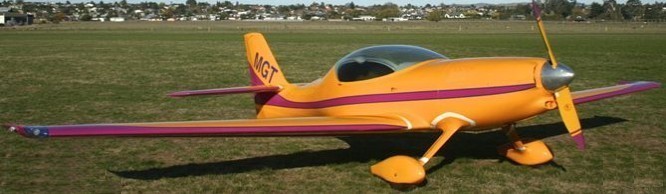
The Carbon Fibre, German Kit Plane comes with dual controls & brakes, landing light, wingtip strobes, and electric flaps.
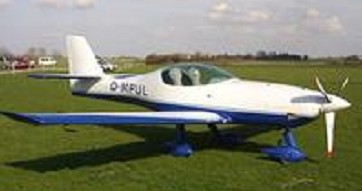
Impulse 100 td
Engine: Jabiru 3300, 120hp
Propeller: GT fixed pitch
Wingspan 8.74m
Empty Weight: 280 kg / 617 lbs
MTOW Weight: 472 kg / 1041 lbs
Usable fuel: 100 litre
Stall 30 degree flap: 33 kt / 39 mph / 62 kmh
Cruise 75% power at 2000 ft: 130 kt / 149 mph / 240 kmh
Vne: 225 knots
Climb Rate: 1600 ft/min / 8 m/s
Maneuvering speed: 220 km/h
Take-off distance (50ft obstacle): 520 ft / 160 m
Landing distance (50ft obstacle): 850 ft / 260 m
Fuel burn: 22 lt/hr @ cruise.
Range: 500 nm or 4 hours
Seats: 2
IMPA Impita
IMPA initiated an aircraft production line continued with the prototype IMPA RR-12D-13D RR IMPA, IMPA Your Sa, IMPA Plover, the Impita, and in 1944 opened an office in the town of Quilmes dedicated to this production.
IMPA Plover
IMPA initiated an aircraft production line continued with the prototype IMPA RR-12D-13D RR IMPA, IMPA Your Sa, IMPA Plover, the Impita, and in 1944 opened an office in the town of Quilmes dedicated to this production.

