USA
International Aircraft Manufacturing Inc established at Alexandria, Minnesota, from Downer, to build a new version of the Bellanca Model 14-19-3A four-seat light aircraft designed originally by G. M. Bellanca.
Aircraft
Integrated Systems Aero Engineering Omega II
The Omega II tandem two-seat piston-engined aerobatic lightplane, developed from the Streak 90 Palomino. Originally offered as kit, but then only as a more-powerful certificated aircraft.
Integrated Systems Aero Engineering Inc
USA
Markets the Omega II tandem two-seat piston-engined aerobatic lightplane, developed from the Streak 90 Palomino. Originally offered as kit, but then only as a more-powerful certificated aircraft.
Inteco VM-23
Inteco produced the VM-23 Variant as a four-seat cabin monoplane.
IPT IPT-10 Junior
The Instituto de Pesquisas Tecnológicas IPT-10 Junior is a three-seat cabin monoplane.
IPT IPT-4 / Companhia Aeronáutica Paulista CAP-1 Planalto / CAP-3 / CAP-6
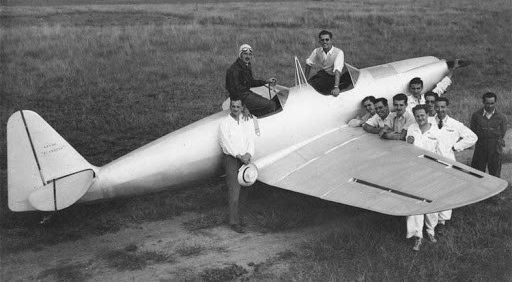
The Technological Research Institute constituted the technical base on which Companhia Aeronáutica Paulista emerged. It was the Paulistinha project, passed on to Companhia Aeronáutica Paulista (CPA) together with the Planalto plane that generated the first royalties paid to the IPT.
The IPT-4 was designed by Clay Presgrave do Amaral of Instituto de Pesquisas Tecnológicas (IPT). The project had been initiated under the designation IPT-4 and although the design work had been contracted to CAP, IPT insisted on a wing profile of its own choosing that led to serious stability problems in the final product. It was a low-wing single-engine, for pilot training. The structure was made of wood, with plywood and canvas coverings. It was equipped with a 90-horsepower Franklin engine. The pilot and instructor in tandem open cockpits with fixed tailwheel undercarriage.
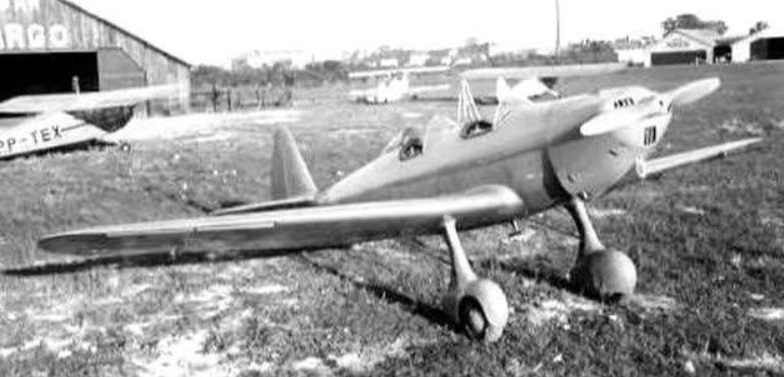
Clay do Amaral was part of the first board of the Companhia Aeronáutica Paulista, and IPT-4 became CAP-1, called Planalto.
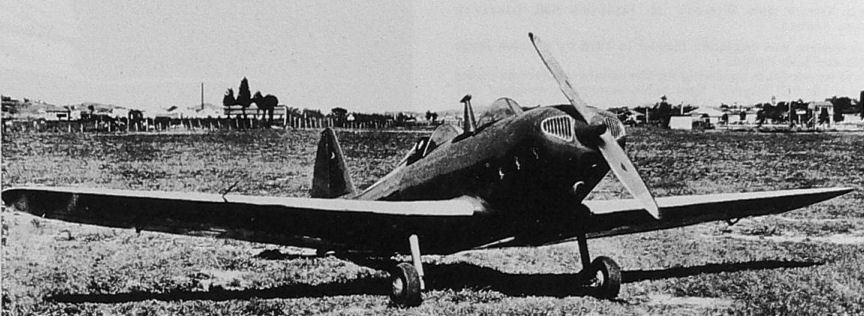
First flying in June 1942 (prototype registration PP-TFW), successful test of the aircraft made it possible to sign a contract for the production of 20 aircraft. Since the institute did not have its own production facilities, the contract was handed over to Companhia Aeronautica Paulista (CAP). As a result, production aircraft were already produced under the designation CAP-1 Planalto.
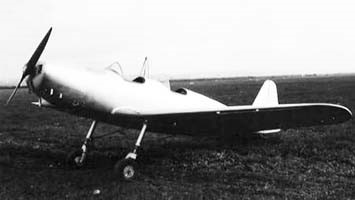
The CAP-3 replaced the CAP-1’s Franklin 4AC engine with a de Havilland Gipsy with double its power in the mid-40s, but the stability problems remained unaddressed until CAP engineer Oswaldo Fadigas redesigned the wing in the CAP-6. The firm attempted to sell this latter type to the Ministry of Aeronautics, but succeeded only in selling conversion kits for the existing CAP-1s and -3s in the military’s inventory.
IPT-4 Planalto
Engine: Franklin 4AC-199-B3, 90 hp
Seats: 2
CAP-1
Engine: Franklin 4AC-199-B3, 67 kW (90 hp)
Wingspan: 8.6 m (28 ft 3 in)
Wing area: 12 sq.m (130 sq ft)
Aspect ratio: 6.16:1
Length: 6.4 m (21 ft 0 in)
Height: 2.6 m (8 ft 6 in)
Empty weight: 335 kg (739 lb)
Gross weight: 570 kg (1,257 lb)
Cruise speed: 155 km/h (96 mph, 84 kn)
Stall speed: 85 km/h (53 mph, 46 kn)
Endurance: 2.5 hours
Crew: 2
CAP-3
Engine: Gipsy
CAP-6
IPT IPT-3 Saracura
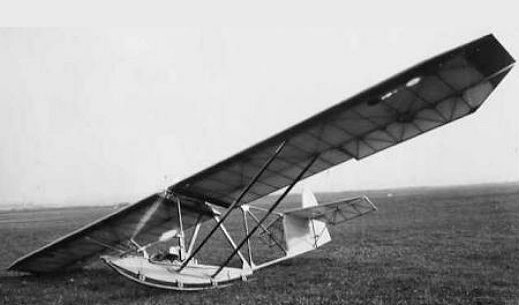
The IPT-3 glider, called Saracura, was a copy of the German Zoegling, intended for pilot training. The IPT-3 first flew in September 1942. It was a simple model, easy to handle.
Saracura = Saracura rail (Aramides saracura), bird from Latin America
IPT IPT-2 Aratinga
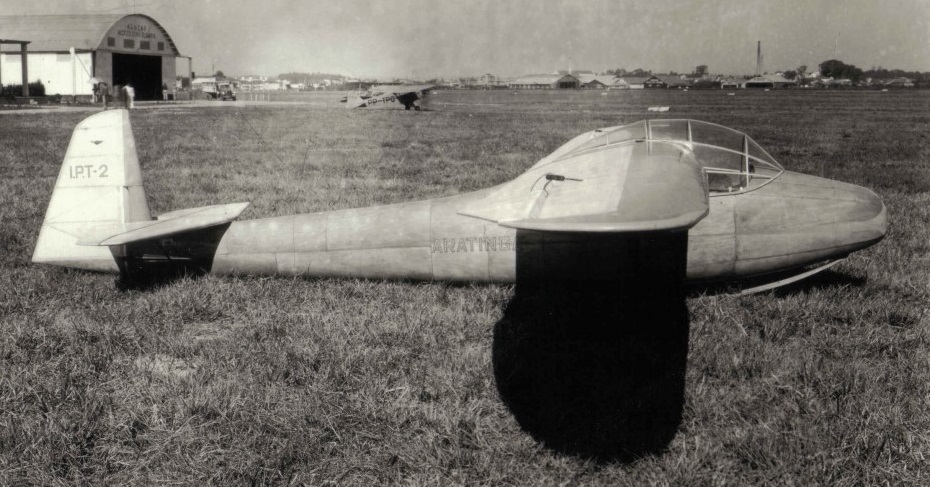
The IPT-2 Aratinga was a glider produced by the Brazilian Instituto de Pesquisas Tecnologicas (IPT).
In the early 1940s, the Wood Research Department of the Instituto de Pesquisas Tecnologicas carried out intensive research into the use of indigenous woods in aircraft construction. The results were so promising that it was decided to set up its own aviation department. Its first director was Frede Abranches Brotero, who gathered a team of young engineers around him. Silvio de Oliveira was entrusted with the development of a new advanced glider and decided to revise the Grunau Baby, which was already used in Brazil.
The IPT-2 Aratinga was designed as a shoulder-wing aircraft with a conventional tail unit and a closed single-seat cockpit. A skid was under the hull. The machine was a wooden structure made from local woods, with the hull partly covered with plywood and partly covered with fabric. The wings were completely covered with fabric.
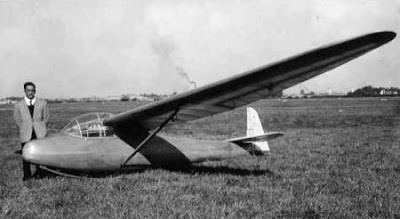
The only prototype IPT-2 Aratinga glider performed its maiden flight in July 1942.
The machine was later used by José Carlos de Barros Neiva, who developed it into a successful glider, the Neiva B Monitor.
Wing span: 10 m
Wing area: 8.7 m²
Length: 5.52 m
Empty weight: 185 kg
Minimum speed: 55 km / h
Top speed: 130 km / h
Seats: 1
IPT IPT-1 Gafanhoto
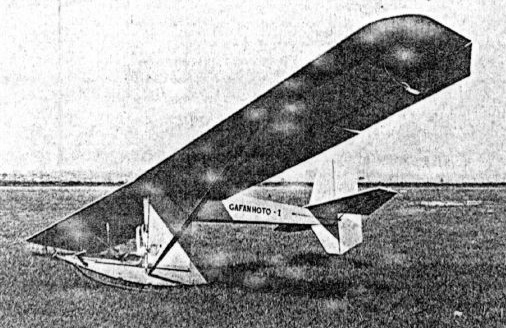
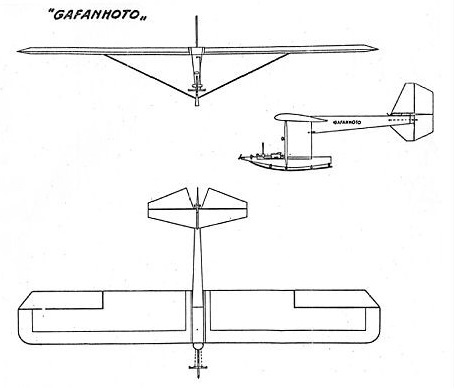
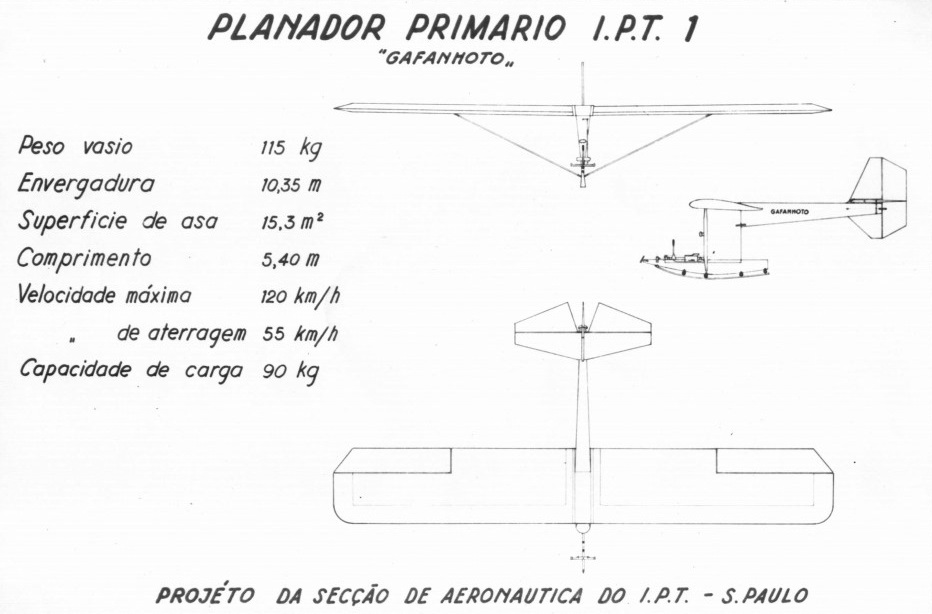
In 1948, the Divison of Aeronautics of the IPT was created, originated from the Section of Aeronautics. The IPT designed a glider for primary instruction, the Gafanhoto, which was designated IPT-1 Gafanhoto (Grasshopper). A public-domain report was published by IPT containing the required information to build the glider.
To enable budding pilots to take their first steps, the Brazilian aero clubs needed a simple beginner glider. The IPT-1 Gafanhoto was the first aircraft designed by the newly established Instituto de Pesquisas Tecnologicas in São Paulo. The plan was to construct a simple plane that could be built from interested clubs themselves and could launch pulled by a winch or by a vehicle.
The gafanhoto was made entirely from local woods. The aircraft was a braced, braced high-wing aircraft. The fuselage, under which a single skid with rubber buffers was attached, consisted of a wooden frame and was clad with plywood. As with the SG 38 school glider, the pilot sat completely outdoors. The wings and the tail unit were a wooden structure covered with fabric. In the course of the flight tests it turned out that the wings had to be lowered, which led to the central struts being shortened by 20 cm.
First flown in 1942, the only machine built flew for several years, there was no series production.
Wing span: 10.35 m
Wing area: 15.3 m²
Length: 5.40 m
Empty weight: 115 kg
Max. Takeoff weight: 205 kg
Minimum speed: 55 km / h
Top speed: 120 km / h
Seats: 1
Instituto de Pesiquas Technologicas / IPT
In 1899 in São Paulo the Strength of Material Laboratory of the Engineering Faculty Escola Politécnica was created. In the first years of its existence, the Laboratory performed tests with materials mostly employed in the civil construction. In 1926, the Laboratory evolved itself into the Laboratory for Material Testing also gaining research attributions and in turn gave later birth to the Instituto de Pesquisas Tecnológicas (IPT). The interest of IPT in aviation appeared from studies looking for application areas of wood in engineering. A report containing properties of numerous wooden elements, result of an extensive and systematic research, was published by IPT and was worldwide acknowledged. In 1938, Frederico Brotero and Orthon Hoover designed a monoplace aircraft of wooden structure. The first one of the four prototypes of the aircraft was constructed in the IPT facilities and finished in Rio Claro, a city located in the countryside in the State of São Paulo. The airplane was nicknamed Bichinho de Rio Claro (Rio Claro’s mascot) but later it gained the IPT-0 denomination.
In 1948, the Divison of Aeronautics of the IPT was created, originated from the Section of Aeronautics. The IPT designed a glider for primary instruction, the Gafanhoto, which was designated IPT-1. A public-domain report was published by IPT containing the required information to build the glider.
IPT built 17 different types of aircraft along its aeronautical activities.

