USA
Founded at Cincinnati, Ohio, the company was incorporated in 1928. Production included the International F-17 Sportsman, a three-seat open cockpit biplane, and the F- 18 Air Coach, a six-seat enclosed cabin biplane.
Aircraft
International Aeromarine TA16 Seafire
International Aeromarine Corp was founded in 1982, partly owned by David Thurston, to produce TA16 Seafire amphibian.
International Aeromarine Corp
USA
Founded 1982, partly owned by David Thurston, to produce TA16 Seafire amphibian.
Interceptor 400 / Prop-Jets Inc Interceptor 400A
Interceptor Corporation (established November 18,1968) acquired all rights and tooling of the Myers 200C from Aero Commander Inc. A modification of this design, called the Interceptor 400, was tested by the Interceptor Corp.
The prototype Interceptor 400 first flew June 27,1969, a turbine-engined development of the Myers 200C built as the Model 200D, equipped with an AiResearch turboprop powerplant flat-rated at 400 shp. Cruising speeds in excess of 280 mph were reported. The prototype was sold and subsequently repurchased by Interceptor Company, which acquired Type Certificate at end of 1974. The Interceptor 400 was an advanced four-seat cabin monoplane with a pressurized cabin, powered by a 665 shp Garrett-AirResearch turboprop engine.
Prop-Jets Inc was founded to continue development of Interceptor 400 turboprop- powered four-seat light aircraft, as 400A.
Interceptor 400
Engine: Garrett-AirResearch turboprop, 665 shp
Seats: 4
Cruise: 280 mph
Interceptor Co / Interceptor Corp
USA
Original company, Interceptor Corporation, established November 18,1968. First aircraft produced was Interceptor 400, a turbine-engined development of the Myers 200C built as the Model 200D by Aero Commander Inc, from whom Interceptor Corporation acquired all rights and tooling.
Prototype Interceptor 400 first flew June 27,1969. Was sold and subsequently repurchased by Interceptor Company, which acquired Type Certificate at end of 1974. The Interceptor 400 was an advanced four-seat cabin monoplane with a pressurized cabin, which was an unusual feature for this class of aircraft. It was powered by a 665 shp Garrett-AirResearch turboprop engine.
Interavia I-5 / I-12 / Technoavia SM-92
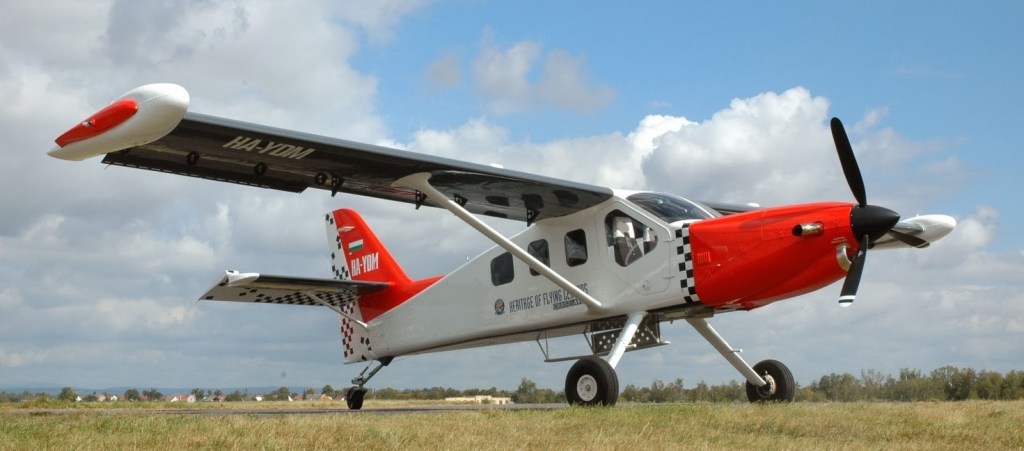
I-5 project was developed into the Technoavia SM-92 Finist, which was also being developed by Interavia as the I-12.
Technoavia produces the SM-92 Finist as a six-passenger or seven-paratroop light STOL transport (first flown December 1993. It can be armed.
The Technoavia SMG-92 Turbo Finist is a turbine powered tail dragger that will carry 10 skydivers. Advantages are the high wing, large sliding exit door, large outside step and inside and outside handrails.
The Technoavia SMG-92 Turbo Finist is a turbine powered tail dragger that will carry 10 skydivers. Advantages are the high wing, large sliding exit door, large outside step and inside and outside handrails.
Interavia I-3 / Technoavia SP-91
I-3 is single-seat unlimited aerobatic monoplane (first flown 1993), easily converted into a tandem two-seater by use of an interchangeable modular cockpit unit (produced as the Technoavia SP-91).
Interavia I-1L
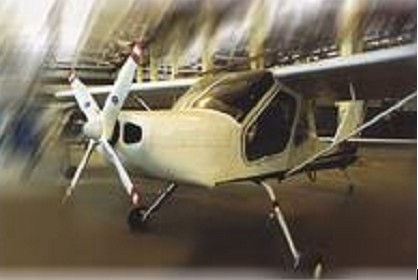
Developed from the SL-90 Leshiy (first flown 1991) two-seat lightplane (first flown 1992) for pleasure flying and various other roles including training, survey, and agriculture.
Cruise: 81 kt / 93 mph / 150 kmh
VNE: 135 kt / 155 mph / 250 kmh
MTOW Weight: 840 kg / 1852 lbs
Take-off distance (50ft obstacle): 920 ft / 280 m
Landing distance (50ft obstacle): 720 ft / 220 m
Interavia SL-90 Leshiy
SL-90 Leshiy (first flown 1991) was developed as a patrol lightplane for forestry service, partly developed by Aviotechnica (joint Russian and Bulgarian company) and manufactured in 1992.
Interavia Design Bureau
Moscow
Produced SL-90 Leshiy (first flown 1991) as patrol lightplane for forestry service, partly developed by Aviotechnica (joint Russian and Bulgarian company) and manufactured in 1992; developed into the I-1 two-seat lightplane (first flown 1992) for pleasure flying and various other roles including training, survey, and agriculture. I-3 is single-seat unlimited aerobatic monoplane (first flown 1993), easily converted into a tandem two-seater by use of an interchangeable modular cockpit unit (seeTechnoavia SP-91).

