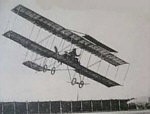
The 1910 Jeannin biplane was designed and built by Emil Jeannin in Germany.
The 1910 Jeannin biplane was designed and built by Emil Jeannin in Germany.
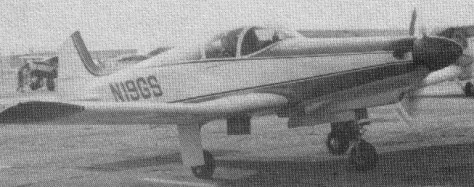
The Barracuda is a sophisticated enclosed-cabin two-seater in the im¬age of the Thorp T-18, with tricycle landing gear, all-wood construc¬tion, and a three-bladed, controllable-pitch propeller. Its designer was a former RAF fighter pilot, Geoffrey Siers, who founded Jeffair. The retractable landing gear features electro-hydraulic retraction. The cabin is fitted with dual controls, gull-wing doors and two armchair-type seats.
Engine 220-hp Lycoming.
Gross Wt. 2200 lb
Empty Wt. 1495 lb
Fuel capacity 44 USG.
Wingspan 24’9”
Length 21 ‘6”
Wing area: 128 sq.ft.
Top speed 218 mph.
Cruise 200 mph
Stall 62 mph.
Climb rate 2000 fpm
Seats: 2
1980: Jeffair Corp, Box 975, Renton, WA 98055, USA.
Built the Jeffair Barracuda
A single-seat ultra-light monoplane. Poinsard-engined prototype flew successfully, but lack of suitable production engine prevented manufacture and by 1951 company had been dissolved.
France
JDM was founded in the late 1940s by Jean Dabos to market the Roitelet (Wren) single-seat ultra-light monoplane. Poinsard-engined prototype flew successfully, but lack of suitable production engine prevented manufacture and by 1951 company had been dissolved.
The 1911 Jatho “Stahltaube” (“Steel Dove”) monoplane was designed and built by Karl Jatho in Germany.
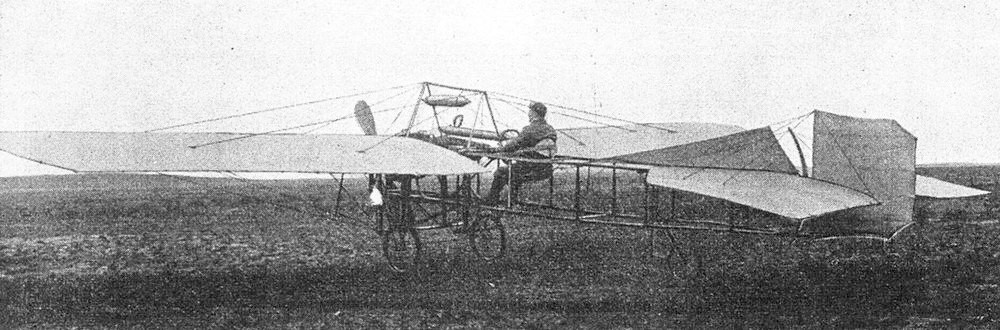
This 1910 Jatho Eindecker was first fitted with a 35 hp Koerting engine. It is likely that this Blériot-inspired monoplane was later identified as the Jatho V, later fitted with an Argus engine.
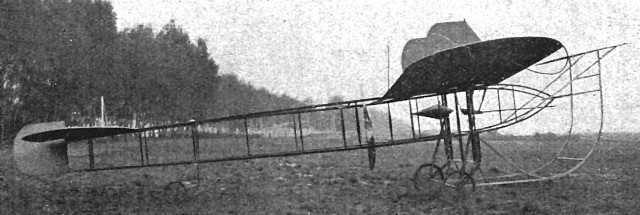
Not much is known about this pusher, which was designed by pioneer Karl Jatho (1873-1933) of Germany. It had a 50 hp Argus engine, a wing span of 11.8 m and a maximum speed of 70 km/h. It was built by the Hannoversche Flugzeugwerke GmbH in 1910 and was reported to fly well.
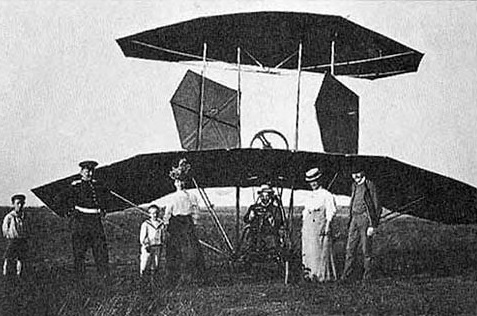
Rebuilt from Karl Jatho’s earlier Dreidecker, which had been damaged on August 21, 1903, the Jatho Doppeldecker “Motordrachen” of 1903 was powered by a 9-12 hp Buchet motor, belt-drive pusher propeller.
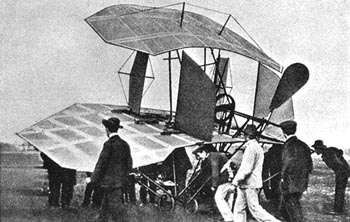
Two Germans, Gustav Weisskopf and Karl Jatho, made the first motorized flight on August 14, 1901 with a 21-horsepower monoplane with 12 horses, a flight of 850 meters. The second was a similar performance on August 18, 1903.
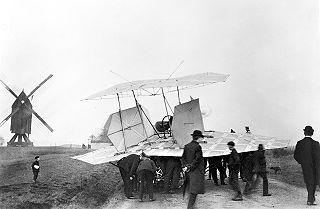
It is on the moor of Vahrenfelder, that Karl Jatho flew 18 meters, rising to 1 meter of height, with his biplane type “Zweidecker I”. The propulsion was from a two-bladed propeller and single-cylinder Buchet engine of 9 horses.
Engine: Buchet, 9-12 hp
Wingspan: 8 m
Wing area: 36 sq.m
Length: 3.6 m
Height: 1.78 m
In September 1973 the Liverpool Echo covered a story about a man who was building an aircraft to be powered by a form of electric motor. Jan Jaskiewicz was the designer and builder, although at the time he was employing two women to do the fabric work for him. He had leased an old school for his workshop in Great Homer Street, Liverpool, UK.
The aircraft was of tubular steel construction and employed a large amount of glass-fibre areas. Empty weight was quoted at 300 lb. At that time a professional-looking fuselage had been completed and the wings were about to be worked on. The exact nature of the engine, which the designer referred to as a battery engine”, was not revealed.

