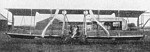
The 1910 Jezzi No. 1 tractor Biplane was designed and built by Leo Jezzi in the UK.
The 1910 Jezzi No. 1 tractor Biplane was designed and built by Leo Jezzi in the UK.
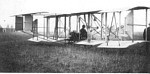
The 1910 Jezzi No. 1 pusher biplane was designed and built by Leo Jezzi in the UK.
Jetstream Aircraft company was formed in September 1970 to continue development/construction and production of the H.P.137 Jetstream twin-turboprop transport after closure that year of Handley Page Aircraft Ltd.
An initial production line was laid down at Northampton in late 1970 for the Jetstream Series 200, but manufacture was taken over in early 1970s by Scottish Aviation before any aircraft had been built. With Scottish Aviation part of British Aerospace from 1977, Jetstream aircraft became BAe types.
Jetstream Aircraft Ltd. was founded in January 1993 as part of British Aerospace’s Regional Aircraft division reorganisation, briefly becoming part of Aero International (Regional) before placing under British Aerospace Regional Aircraft Ltd. (BARAL) for engineering management support to former Jetstream customers (Jetstream aircraft by then out of production).
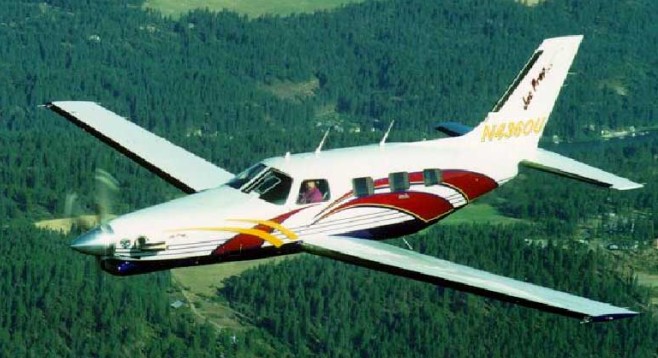
The JetPROP DLX is essentially a firewall forward conversion of the Piper PA-46 Malibu. Prior to mounting the Pratt & Whitney PT6A-35 turbine, the old piston engine is removed and the firewall is rebuilt.
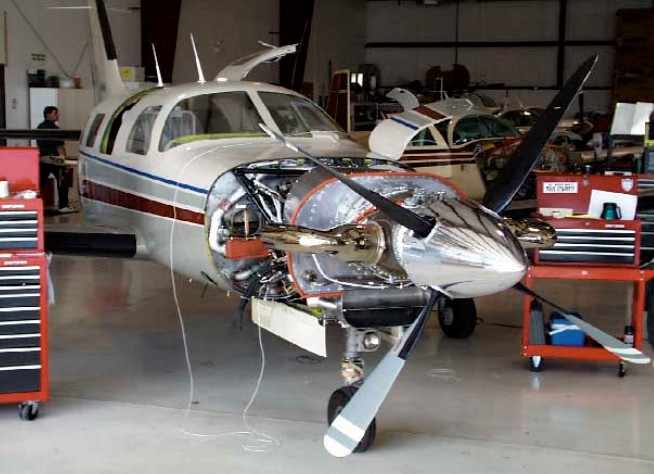
Conversion begins in earnest with the mating of Pratt & Whitney’s 750hp PT6A-35 turbine engine to the Malibu/Mirage airframe. The intake nacelle includes an ice door to prevent damage to the PT6A-35 engine.
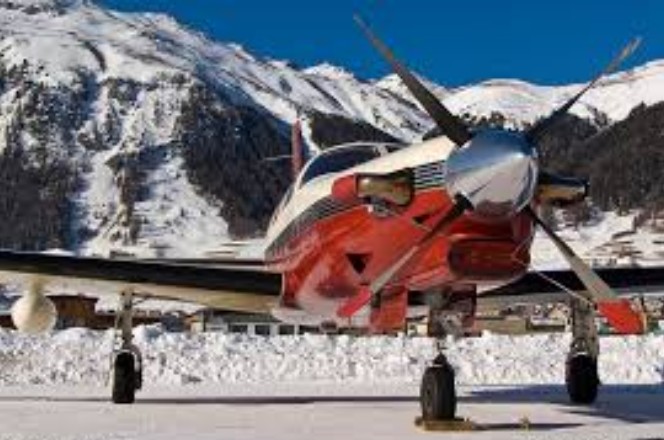
JetPROP DLX
Engine: P&W PT6A-35, 560 hp flat rated
Wingspan: 43′
Length: 30′ 1″
Height: 11′ 3″
Cabin Length: 12′ 3″
Empty Weight: 2,950 lb
Ramp Weight: 4,318 lb
Takeoff Gross Weight: 4,300 lb
Useful Load: 1,358 lb
Payload 356 lb
Max. Landing Weight: 4,100 lb
Baggage Capacity: 100 lb
Fuel Capacity: 151.1 USG
Noise Level: 69 dB
Fuel Burn (Idle): 14 USGPH
Climb Rate (Initial): 3,000 FPM
Takeoff – Over 50′: 1,200′
Landing – Over 50′: 1,000′
Service Ceiling: 27,000′
Max. Speed: 265+ knots
Normal Speed: 260 knots
Normal Range: 1,000 NM
Long Range Speed: 235 knots
Long Range: 1,100+ NM
Normal Fuel Burn: 34 USGPH
Stall Speed (Flaps Down): 61 kt
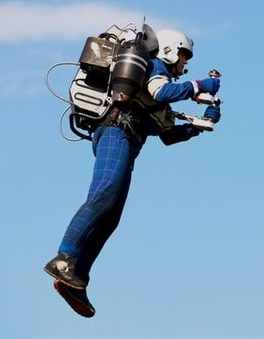
It’s a jet and a backpack; that can take off vertically. There’s a large suitcase that our whole JB-9 will fit into. It’ll fit in the back of a car. The JB-9 uses a carbon-fiber corset that straps to the pilot’s back, with the majority of the “backpack” section carrying fuel. The device can carry a total of 10 gallons of fuel, which it burns at around a gallon a minute. And the fuel itself is kerosene.
Mounted to each side is a small jet turbine engine that provides upward thrust. These engines mix ambient air with their exhaust gases to bring temperatures down to a comfortably warm airstream. The exhaust temperature actually declines really quickly.
On the left hand is a twistgrip controlling yaw. If I turn the hand to the left, it will spin to the left. There are some little yaw vanes at the bottom of each engine, a little cup that tilts backward and forward. They’re on push/pull cables. They’re always going in the opposite direction to each other, so if you vector the right engine forward, the left one goes backward and you get that yaw rotation.
On the right is a fly by wire throttle driving the engines. That actually works back to front compared to a motorcycle throttle. Going back into the 1960s, the way Bell had it set up, you turn your hand inwards to develop thrust. The JB-9 works the same way.
The twistgrips sit on the end of levers, which can be pushed up and down to tilt the jet engines, either individually or together. Rather than just vectoring the thrust, they vectoring the entire engine on a sort of gimbal arrangement, not only moving the line of the thrust, but moving the centre of thrust.
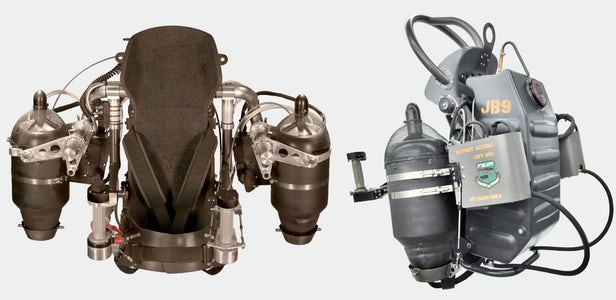
To go forward or backwards, which requires pitch, effectively its pushing both handles down, that’ll make it go forward. Pulling them up, or actually allowing them to come up, because that’s what they want to do under thrust, will make it go backwards. Or more likely, just slow down from speed. The whole thing is completely manual at the moment, it’s literally a pair of levers tilting the engines.
You don’t need much roll as it’s similar to that. Once you start a roll it will basically follow that. It’s kind of kinesthetic, once you start a roll by shifting your body one way and pushing your arms down a little to the left, it’ll continue that rolling motion to the left.
The JB-9 is limited to the required standards, which is 55 knots, or just over 100 kilometers per hour.
Vertical speed depends more on the fuel payload. There is an initial climb rate of 500-1000 feet a minute and as fuel burns off, you get extraordinary vertical rates. Being turbine engines, they don’t run out of performance as the air thins. They’ll just keep going, they’re compressing the air like a turbocharger.
The total endurance of the JB-9 is 10 minutes plus, depending on pilot weight. It also depends a little bit on temperature, altitude and that kind of thing, but that’s by no means as significant as the total pilot weight.
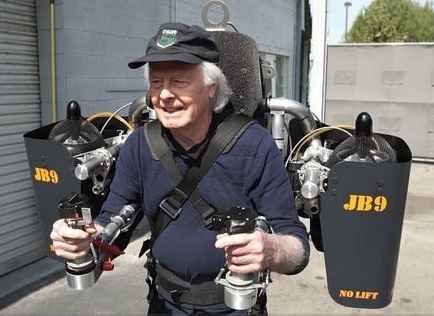
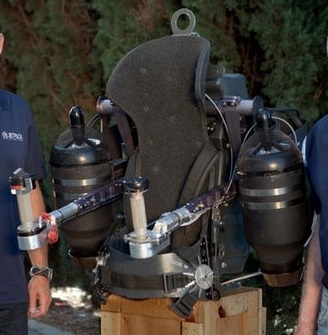
Jetpack Aviation is the project of Australian businessman David Mayman. He spent his life in software and mining and fairly sensible occupations, but his passion has been to build a jetpack. Nelson Tyler, an engineer and inventor based in Hollywood, and Mayman got together in 2005 and that’s what’s made it possible.
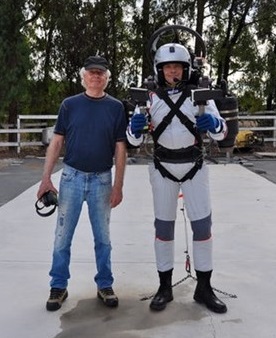
Tyler had worked on the Rocketbelt flight project at the 1984 Olympics, and for the last 45 years had been every bit as obsessed as Mayman with the idea of building a proper portable jetpack with decent endurance that anyone could fly. And the JB-9 jetpack they have demonstrated that meets most people’s expectations of what a real jetpack should be.
A twin-boom executive jet aircraft based on newly built components of de Havilland Vampire T Mk 11 fighter type. Initial Jetcraft Executive Mark I prototype built.
USA
Planned to market twin-boom executive jet aircraft based on newly built components of de Havilland Vampire T Mk 11 fighter type. Initial Jetcraft Executive Mark I prototype built.
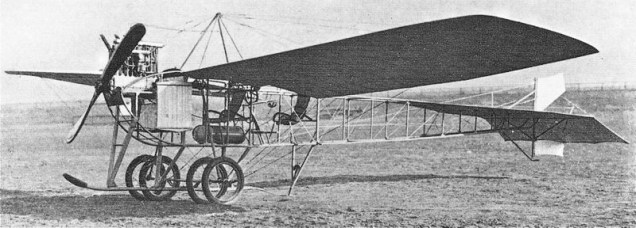
The first of Emil Jeannin’s monoplanes, the 1912 Eindecker Typ A design was the basis for all Jeannin’s Eindecker before the Stahltaube. It was sold with a 50/70 hp Argus, or a Gnôme engine.
The Jeannin Stahltaube (Steel Pidgeon) of 1914 is a late model of the typical light reconnaisance and training aircraft common at the start of WW I. Unarmed, heavy engine and barely maneuverable.
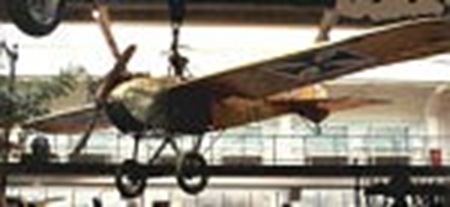
Length : 31.791 ft / 9.69 m
Height : 9.744 ft / 2.97 m
Wingspan : 45.505 ft / 13.87 m
Wing area : 387.504 sq.ft / 36.0 sq.m
Max take off weight : 1885.3 lb / 855.0 kg
Weight empty : 1323.0 lb / 600.0 kg
Max. weight carried : 562.3 lb / 255.0 kg
Max. speed : 62 kt / 115 km/h
Cruising speed : 54 kt / 100 km/h
Wing load : 4.92 lb/sq.ft / 24.0 kg/sq.m
Range : 162 nm / 300 km
Engine : Daimler D I od. Argus As I, 99 hp
Crew : 2

