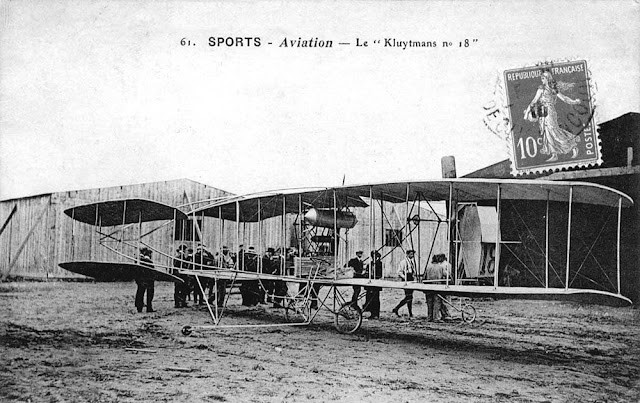
Knoller B.1(Th)
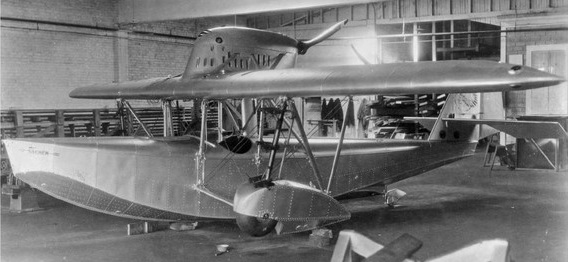
Designed by Felix Knoll and built by Brayton Aeronautical Corp, the Sachem appeared in 1931 as a three place, parasol wing amphibian powered by a 160 hp Menasco B-6 pusher enclosed in a streamlined nacelle. The single step hull was all metal while wings and tail surfaces were fabric covered. Strut mounted sponsons also contained retractable landing gear.
The pontons proved to offer too much resistance in the water and limited speed sufficiently to prevent lift-off from water. Although the craft was equipped to take off and land on the ground, attempts were to wait until water laft-off was achieved.
The Sachem was entered into Govt. competition won by Grumman. Destroyed in New Bedford Ma. 1938 Hurricane
The Knoll-Brayton Aeronautical Co of Norwich, Connecticut, leased Fish Farm, north of Groton airport, and moved all its equipment from Norwich to establish its headquarters there.
Circa 1939s airplsane builder
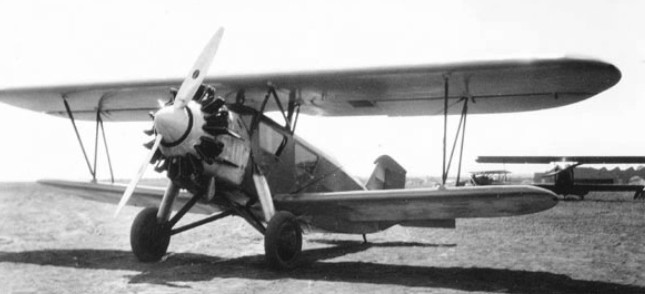
The KN-2 and KN-3 models shared the common airframe of the KN-1, though they were upgraded with more powerful 300 and 425 horsepower engines. The KN-3 also had an open-place cockpit in back of the cabin, allowing the seating of one additional passenger inside.
On was built in 1929, registered X9950, powered by a 425 hp Pratt and Whitney R-1340.
On June 12, 1929, test-pilot Russell Dick flying the Knoll KN-3, beat the US Army’s Lieutenant Walker piloting a Thomas-Morse pursuit plane in a race performing at the Wichita Air Show. On June 21 he performed again at the Aerial Wedding of Kansas, Oklahoma, Missouri, and Texas. He did steep power dives from 3000 feet to 100 feet, thrilling the crowds and demonstrating the strength of the airframe.
KN-3
Engine: 1 × Pratt and Whitney R-1340-9, 425 hp (317 kW)
Wingspan: 33 ft 6 in (10.21 m)
Wing area: 264 sq.ft (24.5 sq.m)
Length: 24 ft 3 in (7.39 m)
Empty weight: 2,100 lb (953 kg)
Gross weight: 4,000 lb (1,814 kg)
Range: 800 miles (1,287 km)
Maximum speed: 175 mph (282 km/h)
Service ceiling: 18,000 ft (5,486 m)
Rate of climb: 1,200 ft/min (6.1 m/s)
Crew: One pilot
Capacity: 4 passengers
The KN-2 and KN-3 models shared the common airframe of the KN-1, though they were upgraded with more powerful 300 and 425 horsepower engines.
One KN-2 was built in 1929 and registered X8899. Power was by a Wright J6 of 300 hp.
Felix Knoll, formerly of The Rohrbach Metal Aeroplane Company (Germany) and later the Chief Engineer of the Heinkel Aircraft Company, immigrated to the United States from Germany for better opportunities. Within weeks of being in the country, Wichita business leaders recruited Felix to come to Wichita and start a company of his own. Engineering work, stress calculations, and drawings for the first model, the KN-1, were completed in Room 623 of the Broadview Hotel. Felix and Herbert Schwenke; another German immigrant from The Rohrbach Metal Aeroplane Company, worked on the plans together.
George Siedhoff, who owned and built the Broadview Hotel where the KN-1 was designed, was selected to build a new 50,000 square foot factory on a 148 acre tract of land at the northeast corner of Kellogg and Webb Road. The company set up a temporary shop at 471 W 1st street in the former building of both the Travel Air Company and Laird Whippoorwill. By the end of December, 1928, the first airplane was ready to fly. It was a four-seat cabin biplane with forward stagger.
Over five hundred spectators gathered around the East Airport to watch the KN-1 first flight. Amongst the crowd were Lloyd Stearman, Walter Beech, reporters, and motion picture camerame. The December 30, 1928 first test flight was so successful that pilot Howard Jones chose to double the planned time and stayed in the air for thirty minutes. He took the airplane through loops, rolls, and power dives.
Three KN-1s were built. Registrations were X9090 and X8861. One airplane was destroyed by fire on February 1, 1929 while sitting idle; when a Laird aircraft landed on top of it.
KN-1
Engine: 1 × Wright J-5-9, 220 hp (164 kW)
Wingspan: 33 ft 6 in (10.21 m)
Wing area: 264 sq.ft (24.5 sq.m)
Length: 23 ft 3 in (7.09 m)
Empty weight: 1,800 lb (816 kg)
Gross weight: 3,050 lb (1,383 kg)
Maximum speed: 140 mph (225 km/h)
Range: 1,200 miles (1,931 km)
Service ceiling: 14,000 ft ft (4,267 m)
Rate of climb: 800 ft/min (4.1 m/s)
Crew: One pilot
Capacity: 3 passengers
The Knoll Aircraft Corporation received its state charter on October 10, 1928. Felix Knoll, formerly of The Rohrbach Metal Aeroplane Company (Germany) and later the Chief Engineer of the Heinkel Aircraft Company, immigrated to the United States from Germany for better opportunities. Within weeks of being in the country, Wichita business leaders recruited Felix to come to Wichita and start a company of his own. Engineering work, stress calculations, and drawings for the first model, the KN-1, were completed in Room 623 of the Broadview Hotel. Felix and Herbert Schwenke; another German immigrant from The Rohrbach Metal Aeroplane Company, worked on the plans together.
George Siedhoff, who owned and built the Broadview Hotel where the KN-1 was designed, was selected to build a new 50,000 square foot factory on a 148 acre tract of land at the northeast corner of Kellogg and Webb Road. The building featured two stories, a mezzanine area, clear story windows, and adjacent runway. Assets such as machinery, tools, and equipment were purchased from the bankruptcy of Laird Whippoorwill Airplane Company. The company set up a temporary shop at 471 W 1st street in the former building of both the Travel Air Company and Laird Whippoorwill. By the end of December, 1928, the first airplane was ready to fly.
Over five hundred spectators gathered around the East Airport to watch the KN-1 first flight. Amongst the crowd were Lloyd Stearman, Walter Beech, reporters, and motion picture camerame. The December 30, 1928 first test flight was so successful that pilot Howard Jones chose to double the planned time and stayed in the air for thirty minutes. He took the airplane through loops, rolls, and power dives.
In June 1929 new issues of Stock were released.
By July 1929 the company was not paying its bills. The company assets were found to be embezzled soon afterward. Demand for new aircraft in the summer of 1929 was softening. Arguments between the board of directors and management broke out over the necessity of building the new factory, the hiring of too many engineers, and also the Yunker contract work. Payment for the Yunker work was to have been stock in the Yunker Aircraft Company. The lack of funds, and sales combined with the depression, halted production with three new aircraft in development. The company was placed into receivership on August 26, 1929, under the management of Ray Theis.
On December 18, 1929, the assets were liquidated at auction. Roy Buckley purchased the manufacturing machinery and equipment. He would later found the Buckley Aircraft Company. George Siedhoff purchased uncompleted airframe sections and parts, as well as the rights to X8899. C.V. Snyder bought the new plant and grounds. The Yellow Air Cab Company, in turn, bought it in late 1930. The airport property was then purchased by Beechcraft in 1940 and became their Plant II.
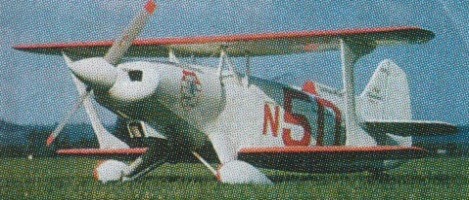
Designed by Vernon Payne in the USA in 1933, the Payne Knight Twister is a single seat biplane with a tube construction fuselage and wooden wings. All fabric covered.
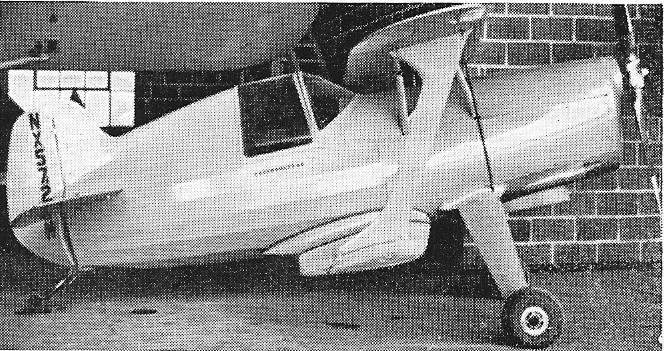
Engine: Lycoming, 108 hp.
HP range: 85-160.
Span upper: 15.00 ft
Span lower: 13 ft
Wing area: 55 sq.ft.
Length: 13.5 ft.
Height: 5 ft.
Weight empty: 517 lbs.
Gross: 865 lbs.
Fuel cap: 20 USG.
Speed max: 180 mph.
Cruise: 165 mph.
Range: 610 sm.
Stall: 55 mph.
ROC: 1800 fpm.
Take-off dist: 400 ft.
Landing dist: 800 ft.
Seats: 1-2.
Landing gear: tail wheel.
By 1995 was marketed by Steen Aero Lab.
LSA builder
The 1909 Kluytman twin-pusher biplane was designed and built by Kluytman in France.