The Latécoère Laté 610 Series were 1935 4-engined long-range flying boats
Laté 610: [Project] May 1935 recce flying boat for Aéronavale Laté 610 as designed, single fin, span 38 m, length 24.5 m Laté 611: enlarged recce flying boat to mod. Dec 1935 spec. Laté 611 as planned, 4 x 1000 hp HS.79.02 radials Laté 611-01: 1939, conv. under const. to 4 x 10¹⁰ hp G-R 14N4/5 Laté 611-01, G-R 14N30/31 engines substituted after trials Laté 612 diff. in having 4 x powered turrets (incl. tail turret)
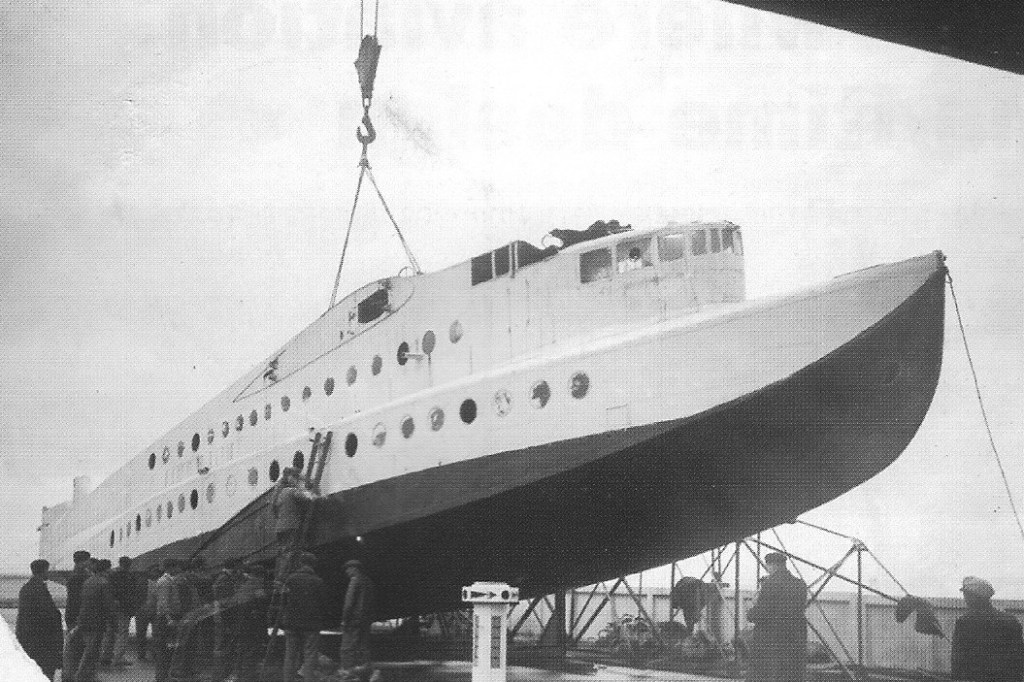
The Late 521 was a flying-boat with strut-braced high wings and short stub sponsons. Named Lieutenant de Vaisseau Paris, it was powered by six 641kW Hispano-Suiza 12Ycrs engines (inboard engines mounted as tandem pairs) and flew for the first time on 17 January 1935. A total of 76 passengers could be accommodated on the two decks of the two-step hull. The craft sank in a storm on its inaugural flight to the USA, but was salvaged and rebuilt with 484.4kW Hispano-Suiza 12Nbr engines. It subsequently established seaplane load-over-distance and load-to-height records in 1937.
The Late 522 (powered by six 671kW Hispano-Suiza 12Y37 engines) appeared in April 1937 but World War II prevented a regular transatlantic service. Both the Late 521 and 522 were impressed into French Navy service on 1 September 1939, three naval Late 523 having already been delivered between January and October 1938. These were armed with five 7.5mm Darne machine-guns and carried up to 1,200kg of bombs. Maximum endurance was 33 hours.
The Late 522 returned to passenger service in March 1940. The remaining aircraft of the series performed Atlantic patrols with Escadrilles E6 and E12. One Late 523 had been lost in September 1939, a second was scuttled in June 1940; and the Late 521 was demobilised in August of that year. The surviving Late 523 was grounded in August 1942, having flown with Escadrille 4E out of Dakar since June 1941. The Late 521 and 522 were destroyed at Berre by retreating Germans in August 1944.
Late 521
Variants: Laté 520: [Project] 1930-33, 4 x 1000 hp HS.18 Sbr, engine abandoned Laté 521: 1935, 6 x 860 hp HS.12Ybrs (2 x tandem pairs, 2 x tractors) Laté 521 sunk at Pensacola in hurricane, to France for rebuilding Laté 521: 1937, rebuilt with 6 x 650 hp HS.12Nbr (later to mil.) Laté 521: 1939, Aéronavale serv., 970 hp HS.12Y-37 then 900 hp ’27 Laté 522: 1939, Air France transatlantic serv., 970 hp HS.12Y-37 Laté 522: 1939, Aéronavale, 900 hp HS.12Y-27, then back to ’37 Laté 523: 1938, Aéronavale recce vers., 900 hp HS.12Y-27, 3 built
Engines: 6 x HS 12 Ybrs, 630kW Max take-off weight: 37400 kg / 82453 lb Empty weight: 21480 kg / 47356 lb Wingspan: 49.3 m / 161 ft 9 in Length: 31.6 m / 103 ft 8 in Wing area: 330.0 sq.m / 3552.09 sq ft Max. speed: 250 km/h / 155 mph Cruise speed: 213 km/h / 132 mph Ceiling: 6300 m / 20650 ft Range w/max.fuel: 5800 km / 3604 miles Crew: 6 Passengers: 70
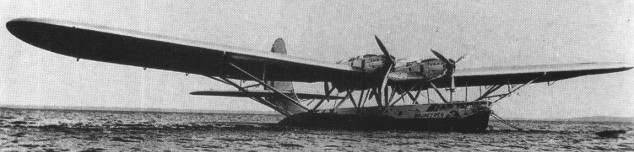
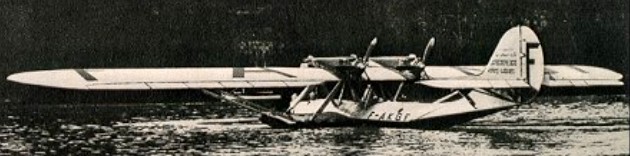
The Latécoère 300.01 was the company’s first four-engined flying-boat and flew originally in 1931, but sank in the Etang de Berre, near Marseilles, later that year. When salvaged it was re¬built and named Croix du Sud (First flight 7 October 1932) with four 650 hp / 484.4kW Hispano-Suiza 12NBr water-cooled engines in tandem pairs. On 31 December 1933 Croix du Sud set up a new international class record by flying the 2,285 miles (3,679 km) from Berre to St Louis (Senegal) in just under 24 hours.
It operated the Air France South Atlantic mail service between Dakar, Senegal and Natal, Brazil. It completed 23 missions before being lost at sea on December 7, 1936. The pilot was the famous French aviator Jean Mermoz.
Jean Mermoz’s Croix du Sud. Latécoère 300 in 1936
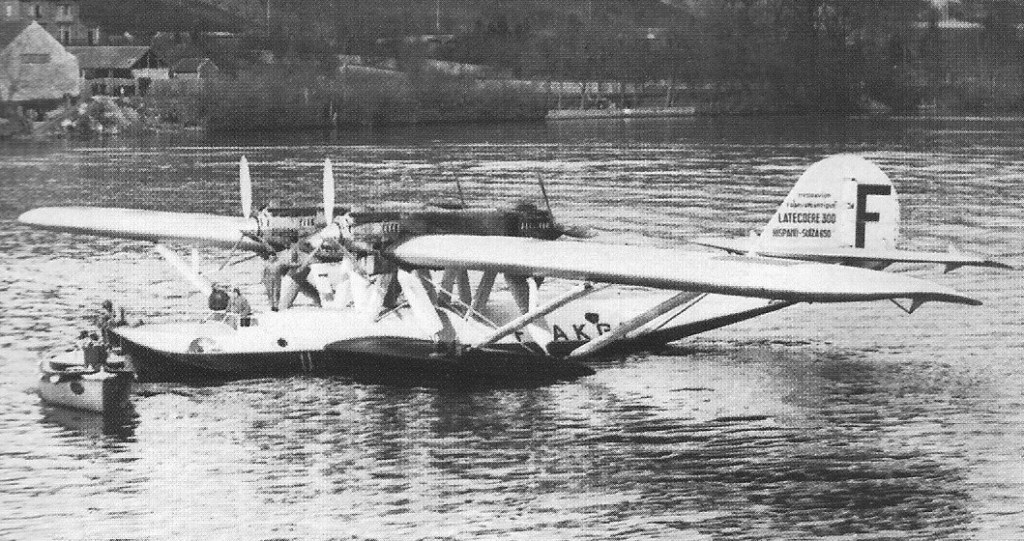
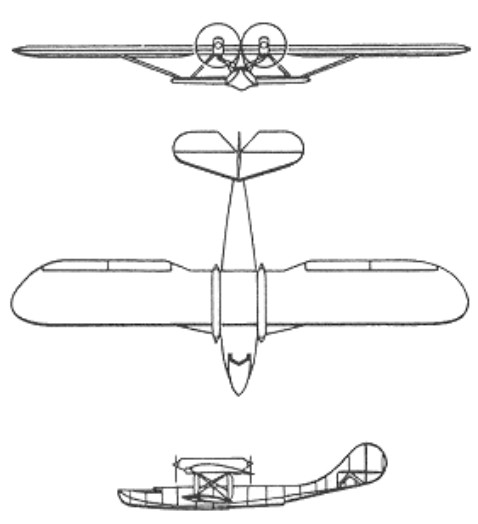
Three improved Latécoère 301 aircraft with 485-kW (650-hp) Hispano-Suiza l2Nbr engines were built during 1935-6, incorporating changes made to the Late 300 in 1935, including increased wing dihedral and enlarged tail surfaces. The all-metal two-step hull accommodated a four-man crew with sleeping accommodation, mail load and most of the fuel.
The first of the 301s was lost, the remaining two were used in South Atlantic service until 1939. In 1939 the last remaining 301 was converted to military service, joining the 302s in patrol duties in West Africa.
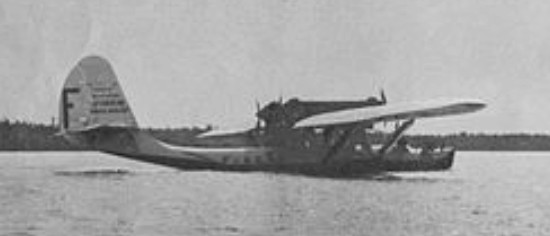
The basic type’s long-range performance attracted the attention of the French Navy, and in 1936 the French naval air service received three examples of the Latecoere 302, a fully navalised version of the Latécoère 301, with 930-hp / 693kW Hispano-Suiza 12Ydrs engines, between 1935 and 1936. They had machine-gun posts in bow and two beam positions, as well as two in the engine nacelles. Bomb load was 300kg. The aircraft supported a crew of four and included sleeping accommodations. Fuel and payload were stored inside the hull.
Late 302 equipped Escadrille E4 at Berre, joined by the last civil but militarised Late 301 in August 1939. These were operated in the patrol role, operating from West Africa together with a single navalised Latécoère 301 until scrapped in 1941.
Laté 300 – 1931 flying boat for Aéropostale (Dakar-Natal), 4 x 650 hp HS.12Ner Laté 300-01: aground Berre Dec 1931, rebuilt 1932 as Croix-du-Sud Laté 301: 1934-35 version for Air France, 3 built (2 later to military) Laté 301 to Aéronavale: 2/1017 for spares, 3/1018 to part Laté 302 std. Laté 302: 1936 version for Aéronavale, 4 x HS.12Ydrs, 3 built Laté 302 crew of 8 (inst. of 4), 3 x Darne MGs, 4 x 75 kg bombs
Variants:
Laté 300 Mailplane with Hispano-Suiza 12Nbr engines, one built.
Laté 301 Mailplane with Hispano-Suiza 12Nbr engines, three built.
Laté 302 Maritime reconnaissance aircraft with Hispano-Suiza 12Ydrs engines, three built.
Latécoère 300.1 Engines: 4 x Hispano-¬Suiza 12 Nbr, 750 hp, Propeller: three blade. Wing span: 145 ft 0.25in (44,20 m). Length: 84 ft 9in (25.83 m). Wing area: 2.798.6 sq.ft (260 sq.m). Gross weight: 50,706 lb (23,000 kg). Max speed: 130 mph (210 kph) at S/L. Typical range: 2,985 miles (4,800 km). Crew: 4. Pas¬senger/mail payload: 2,910 lb (1,320kg).
Latécoère 301
Latécoère 302 Engines: 4 × Hispano-Suiza 12Ydrs2, 694 kW (930 hp) each Length: 26.16 m (85 ft 9.5 in) Wingspan: 44.01 m (144 ft 4.25 in) Height: 7.98 m (26 ft 2⅛ in) Wing area: 258 sq.m (2,755.6 sq.ft) Empty weight: 14,340 kg (31,548 lb) Loaded weight: 24,050 kg (52,911 lb) Maximum speed: 240 km/h, 130 knots, 149 mph at 2,000 m (6,560 ft) Cruise speed: 185 km/h (xx100 knots (190 km/h), 115 mph (185 km/h)) Range: 3,300 km (1,783 nm, 2,050 mi (3,300 km)) Range w/max.fuel: 4800 km / 2983 miles Service ceiling: 5,000 m (xx16,400 ft (5,000 m)) Wing loading: 93.2 kg/sq.m (19.2 lb/sq.ft) Power/mass: 0.11 kW/kg (0.070 hp/lb) Endurance: 20 hours at 150 km/h (93 mph) Climb to 2,000 m (6,560 ft): 12.5 min Armament Guns: 1 7.5 mm (0.3 in) Darne machine gun in bow, 2 firing through beam windows Bombs: 4 x 75 kg (165 lb) bombs Crew: 8 Armament: 5 or 7×7.5-mm (0.295-in) Darne machine-guns plus provision for up to 300 kg (661 lb) of bombs under wing. Crew: 4
The design of Latécoère 299 was started on March 8, 1937, when the Marine Ministry of France approved a general program for the renewal of the aircraft fleet.
Among other specifications, an assignment was made for the design of SB aircraft (observer-bomber). The specification was for a single-engine seaplane weighing up to 3,500 kg, a double seaplane weighing up to 1600 kg and a twin-engine aircraft with a folding wing for the carrier “Bearn”. There are several tasks at once: planes must be reconaisance, spotting enemy submarines, dive bombing or torpedo attack, and also covered by friendly vessels with smoke. the max speed should be at least 300 km \ h.
In May 1936, Socièté Industrielle d’Aviation Latécoère successfully tested the Latecoere 298 floatplane. In some parameters, such as the speed, it did not fit into the requirements, but otherwise it was quite suitable for completion of the category SB.
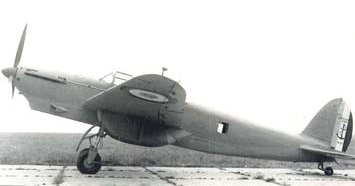
In December 1937 the ministry issued an updated specification, which indicated a speed of 400 km / h, and the folding and unfolding time of the wing should not exceed 3 minutes. In such parameters Latecoere 298 clearly did not fit, so it was necessary to refine the fuselage, tail and wing, and also had to provide for the installation of a more powerful 920 hp HS.12Y-27 motor. In June 1938, the layout of Latecoere 298 was revised accordingly and presented by the evaluation commission. The new aircraft, switched to the usual wheeled undercarriage, was named Latecoere 299. The preliminary design was liked by the higher ranks of naval aviation, especially as it was developed on the basis of the already serial torpedo carrier. The first order for two prototypes was received on July 5, 1938, with the final delivery date no later than July 5 of the following year.
Both prototypes were built and successfully passed tests. The only thing that does not succeed was the maximum design speed. The mass production of the Latecoere 299 was prevented by the capitulation of France. Further development of this aircraft was considered a secondary task and all work on it in July 1940 was stopped. Two Latecoere 299 remained standing in the hangar, and slowly parts were removed for other aircraft.
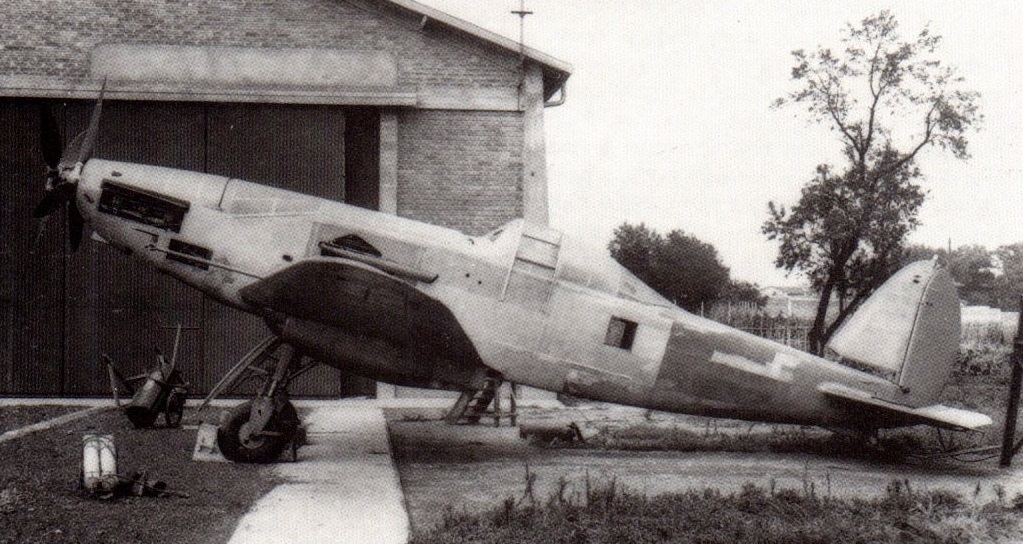
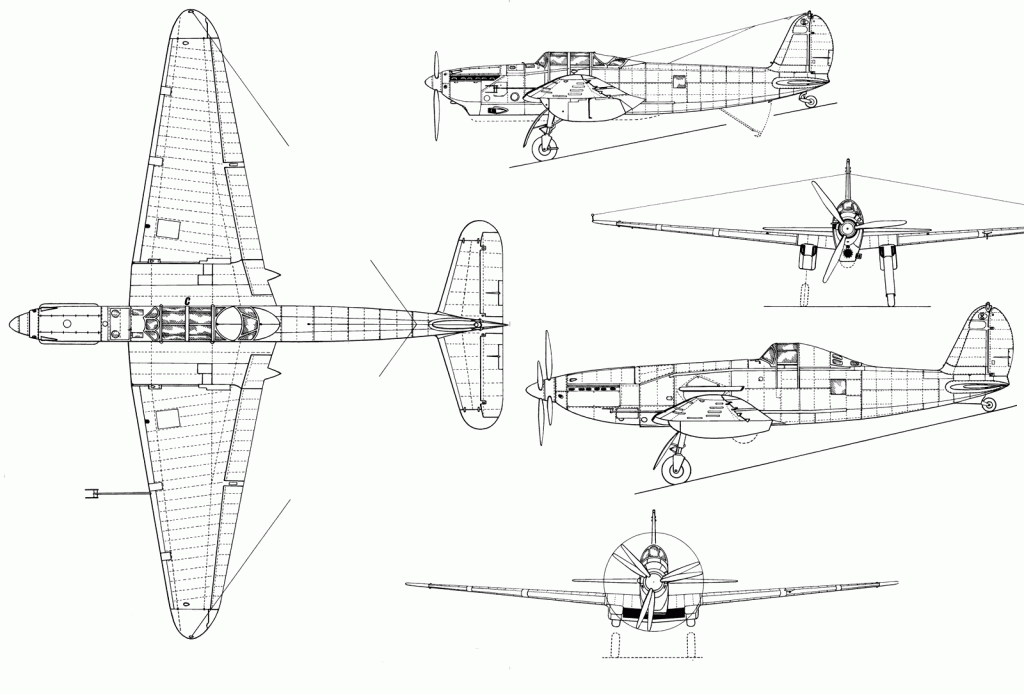
In the autumn of 1940, work was resumed on the design and construction of a twin-engine fighter Arsenal VB.10 with a tandem arrangement of motors. A few months earlier, the Ministry of Aviation had signed a contract for the construction of 30 serial aircraft, although they had not even begun to build a prototype. This fighter was designed by designers Vernis and Gatier and had very promising characteristics, so VB.10 fell into the category of priority developments. If now there was nowhere to hurry, Verniss “bargained” from the DTI (Office of Advanced Technology) both Latecotere 299 prototypes, the Laté 299-01 and Laté 299-02, both with 970 hp HS.12Y-43 engines.
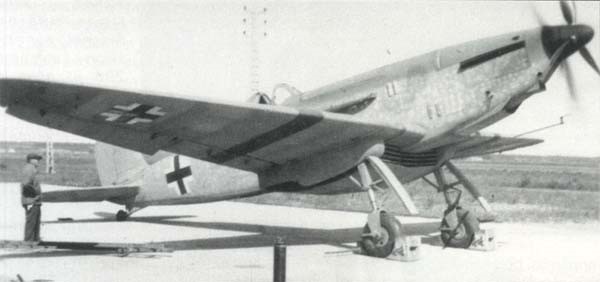
It was not difficult to do this, as these planes suddenly turned out to be unclaimed. Verniss suggested using them to develop the installation of tandem HS 12Z motors, connected by an Arsenal 200 transmission system and rotating in opposite directions, two coaxial props with a diameter of 3.2 meters. Because of this, the single-seat cockpit was moved closer to the tail. Because of this, it was necessary to make the cabin single and move it closer to the tail, but in the rear part there was a place for a mechanic who could regulate the operation of the power plant.
Reconstruction of the aircraft began in 1942 and after processing it received the new designation Latecoere 299A. When the aircraft was almost ready for testing, it turned out that it was not realistic to get the HS 12Z engines in the near future, and instead of them the less powerful but quite affordable HS 12Y-31 (800 hp) were installed.
Complete occupation of the country prevented the completion of the matter, but Verniss managed by some miracle to convince the Germans to continue building prototypes, which was done in 1943. As a result of delays, the Latecoere 299A was rolled out onto the take-off field only in April 1944, after two months of preliminary static tests. He never rose into the air. The German pilots at the Bron airbase took several runs on it, ending in capotation with damage to the nose of the fuselage. Latecoere 299A was again sent for repair, where he waited for a raid of allied aircraft. On April 30, 1944, this aircraft burned down in a hangar, leaving Verniss without a test bench.
Late 299 Engine: Hispano-Suiza 12 Y-43, 920 hp Wing span: 15.64 m Wing area: 34.60 sq.m Length: 12.28 m Height: 4.46 m Empty weight: 3170 kg Normal takeoff weight: 4650 kg Maximum speed: 345 km / h Cruising speed: 275 km / h Range: 900 km Rate of climb: 348 m / min Ceiling: 6600 m Crew: 3 Armament: two stationary and one manual 7.5 mm Darne mg Bombload: up to 900 kg