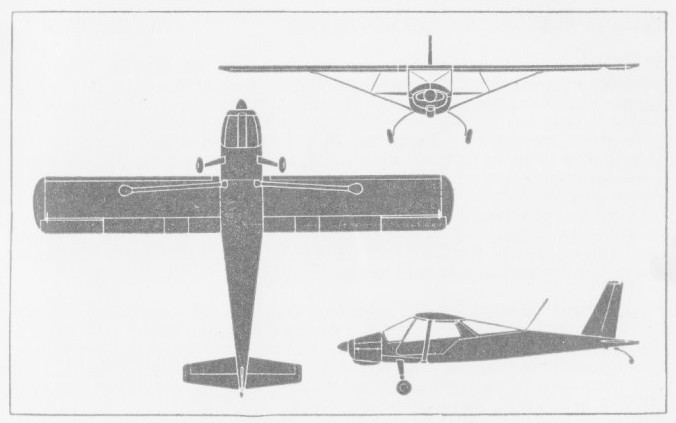
Employing formed honeycomb skins to carry virtually all structural loads in the external surface iof the airframe, the Vipan (Peewit) has no wing spar as such and features a continuous, one-piece cantilever undercarriage of glass-fibre reinforced plastic.
A four-seat cabin monoplane, the first prototype, powered by a 160 hp Lycoming O-320-B2B engine, flew on 25 February 1961.
Two further prototypes, with 180 hp Lycoming O-360 engines, were produced under a Swedish Army contract, the first flying on 27 June 1962.
MFI-10B Engine: 180 hp Lycoming O-360-A1D Wingspan: 35 ft 1.5 in Length: 26 ft 1 in Height: 6 ft 5 in Wing area: 168.993 sq.ft Empty weight: 1433 lb Normal loaded weight: 2280 lb MTOW: 2590 lb Max speed: 142 mph at 7500 ft ROC: 950 fpm Range: 620 mi at 130 mph
MFI was founded 1959 as AB Malmo Flygindustri as a subsidiary of Trellborgs Gummifabric AB, with Bjorn Andreasson as designer. His independently-designed BA-7 developed as MFI-9 two-seat light aircraft, production prototype flown May 17,1961, license production by Bolkow as 208C Junior. MFI-10 Vipan short-field four-seater flown February 25,1961. Company acquired by Saab-Scandia in 1961 and evolved MFI-15 multipurpose two/three-seat military aircraft, flown 11 July 1969, later renamed Safari and then further developed into MFI-17 Supporter armed ground-support version, first flown July 6,1972.
Malmo Forsknings & Innovations AB founded by Bjorn Andreasson after original MFI. Produced MFI-18. Intended to put MFI-11 lightplane into production (first flown 1992) as modern version of MFI-9B, but program halted. Production of BA-14B lightplane (first flown 1988) was also then delayed.
Karol Makowiecki was a landowner living in Odessa and an aviation enthusiast, who has made a balloon already in 1906 and in 1911 he made a copy of Farman biplane in 1912 and later established a factory of aircraft equipment where – besides the main production – two more “Farman-like” aircraft were made.
Turkey Full name Makina ve Kimya Endustrisi Kurumu. In 1952 MKEK took over THK factory at Ankara, together with existing designs. THK-15 became the MKEK Model 1, THK-16 the Model 2, THK-5 and 5A the Models 5 and 5A, THK Prototype 14 the Model 6 and THK-2 the Model 7. Developed Model 4 Ugur tandem two-seat primary trainer for Turkish Air Force, three presented to Royal Jordanian Air Force.
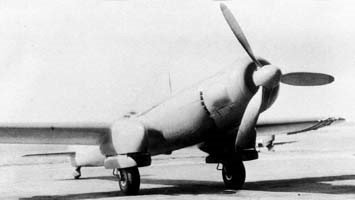
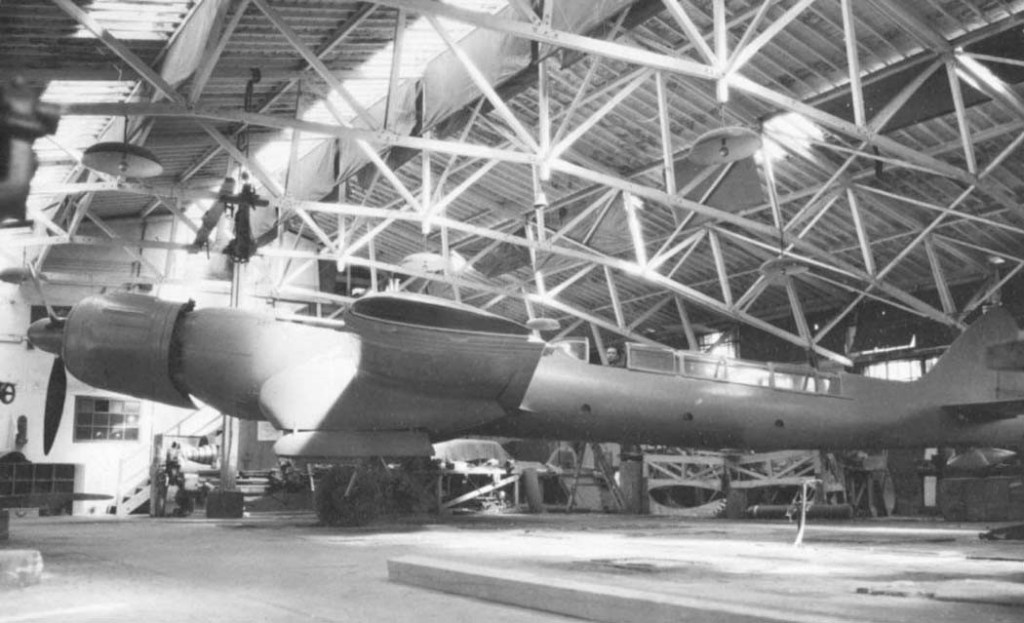
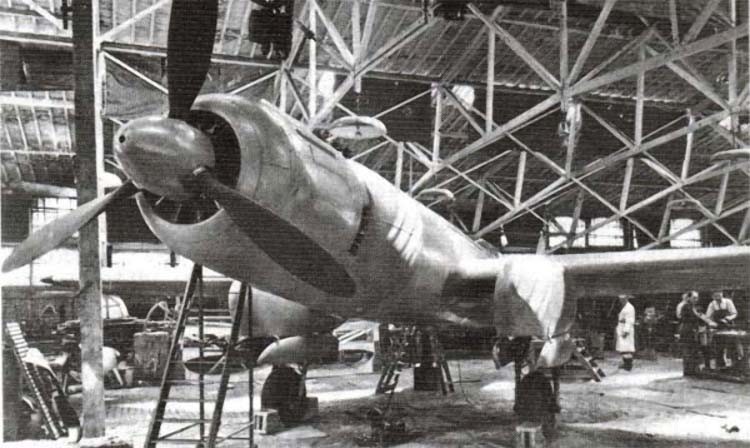
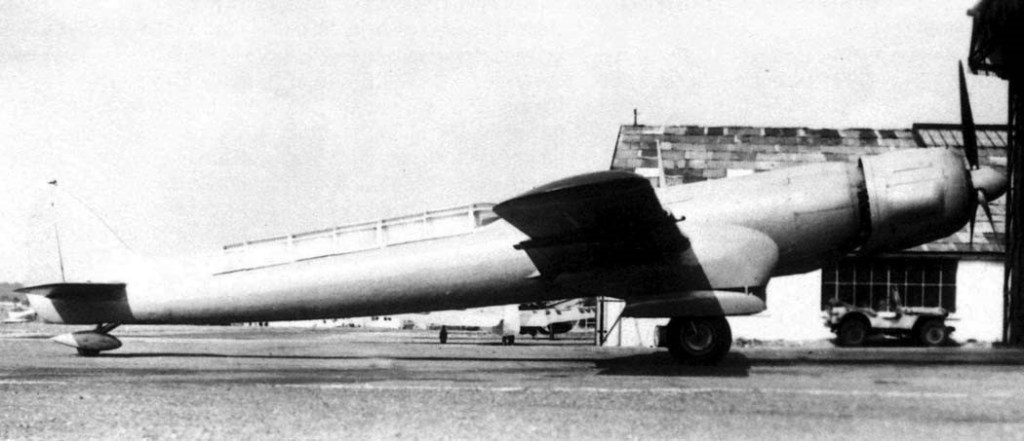
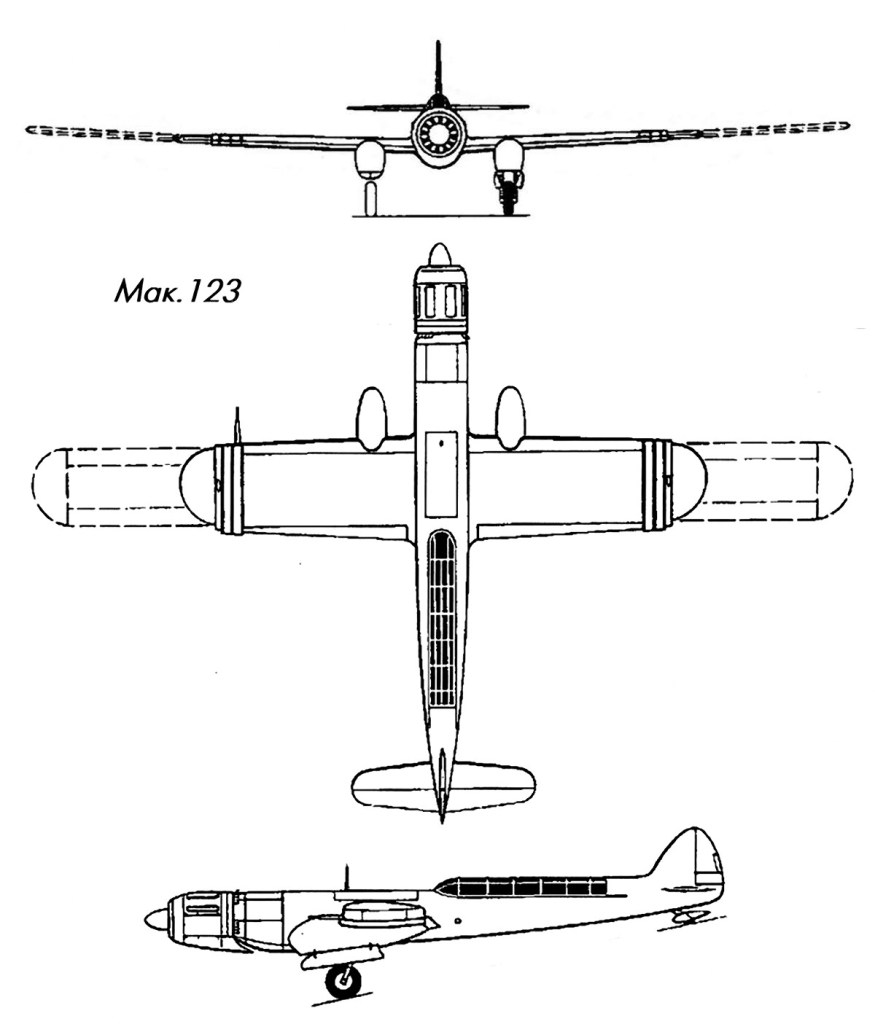
At the end of the war, Ivan Ivanovich Makhonin, with the support of the French Aviation Ministry, built in 1947 a 4-seat Mak.123 aircraft based on the same principles as his predecessors Mak.10 and Mak.101.
A device with a variable wing length (the wing length varied from 13 to 21 m, and the area from 20 to 36 sq.m) and a captured BMW 801 engine with a power of 1800 hp. tested in the same year.
First flying in 1947, the original feature of the aircraft was the cabin with a tandem landing (one behind the other) of all four crew members.
It was assumed that Mak.123 could become the base model for a promising reconnaissance aircraft, but the inventor failed to continue research and the project was terminated after it crashed and not re-built.
Engine: BMW 801, 1800 hp Wingspan: 13.00 – 21.00 m Wing area: 20.00 – 36.00 sq.m Empty weight: 7000 kg Normal take-off weight: 10,000 kg Maximum speed: 300 km/h Practical ceiling: 5500 m Seats: 4
In the early 1930s several designers became interested in the possibility of changing the configuration of wings between take off and fast flight. Two routes were explored, the first primarily involving camber and hence lift coefficient reduction and the other a decrease of wing area by span reduction at high speed. The Makhonine Mak-10 of the second.
The Makhonine Mak-10, was a variable geometry research aircraft, built to investigate variable area / telescopic wings during 1931 in France. Details of the Mak-10 are sparse but its novel feature was a telescopic wing which increased the span for take-off by 8 m (26 ft 3 in) or 60% of its high-speed configuration. The outer panels retracted into the central ones, their inner ends supported on bearings rolling along one or more spars. The ends of the centre section were reinforced with cuffs. The wing apart, it was a conventional cantilever low wing monoplane, with twin open cockpits, the rear one sometimes faired in, and faired, fixed landing gear. It was powered by a 480 kW (644 hp), three bank, W-configuration, twelve-cylinder Lorraine 12Eb engine.
Mak-10 with wings almost completely retracted
The first flight of the Mak-10 was on 11 August 1931 During four years of development the Mak-10 was re-engined with a 600 kW (800 hp) Gnome-Rhône 14K Mistral Major fourteen cylinder, two row radial engine which gave it a top speed of 380 km/h (240 mph) and the new designation Mak-101.
Mak-10 Engine: Lorraine 12Eb, 480 kW (644 hp) Propeller: 2-blade Wingspan: 13 m (42 ft 8 in) retracted 21 m (69 ft) extended Wing area: 33 sq.m (230 sq ft) retracted 33 m2 (360 sq ft) extended Gross weight: 5,000 kg (11,023 lb) Maximum speed: 300 km/h (190 mph, 160 kn) Crew: 2
Mak-101 Engine: Gnome-Rhône 14K Mistral Major, 600 kW (800 hp) Propeller: 2-blade Wingspan: 13 m (42 ft 8 in) retracted 21 m (69 ft) extended Wing area: 21 m2 (230 sq ft) retracted 33 m2 (360 sq ft) extended Top speed 380 km/h (240 mph)
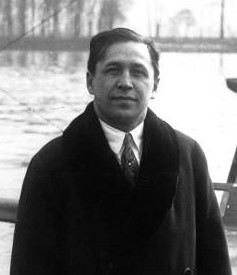
Born in Russia in 1895, Yvan Makhonine, finds himself in the war of 14/18 in a state research center to invent weapons and ammunition of all kinds, which brings him fortune.
Around 1917, he invented a way to produce synthetic fuel, able to run without noticeable changes, all types of combustion engines typically powered by gasoline or other fuels.
Unlike gasoline, his fuel can not be ignited in the cold, but only when hot as fuel. But though it can only be ignited with difficulty by auto ignition, unlike gasoline, it can help to significantly increase the efficiency of combustion engines by simply raising their compression rate.
This fuel, a little fatter than gasoline, with the appearance of diesel, is easily sprayable by carburetor engines, provided you bring the electric air preheating systems to facilitate cold starts and to increase the efficiency of the usual means of heating the body of the carburettor.
Some adjusting the weight floats and sizes of the nozzles are to be made because of the density of the product, markedly higher than gasoline, and close to 1.0.
Around 1918, Mr. Makhonine built an electric-powered locomotive with motors driving the wheel axles are powered by a power generator itself driven by an internal combustion engine with a high compression ratio. The cars of this train were also equipped with electric motors.
According to witnesses, it leaves a vapor with the appearance of a thick smoke, which feeds directly into the combustion engine electric generator.
If this “smoke” is sent to a conventional distillation apparatus, it condenses as fuel that can be stored for later use.
This electric powered locomotive, ultra modern for its time compared to intensive steam engines, was used in Russian cars until 1920 or 1921.
Beginning 1922, Mr. Makhonine with his wife (the singer Nathalie Ermolenko) and fortune, arrived in France, and decided to sell his invention to the French State.
For many years the fuel was used successfully in all vehicles equipped with an internal combustion engine, automobiles, trucks, boats, planes etc.
Finally everything stopped around 1927, when he found himself almost ruined after suffering the fate of many inventors.
Mr. Ivan Makhonine, engineer, Russian inventor, died in France in 1973 in a retirement home for Russian emigrants, without disclosing the precise secret of his invention, i.e., the exact technology that transformed the machine hydrocarbon vapors and other carbon products in a “smoke” condensable giving this famous fuel and this with tremendous efficiency, which we are unable to achieve with our current science.
Mr. Makhonine knew just make an ideal fuel that was neither petrol nor diesel, but an intermediate product.
He could manufacture this fuel from raw materials most unfit for this, i.e., coal tars, the worst coal, crude oil, vegetable oils and all hydrocarbon or carbonaceous waste.
What we know is that it was preparing the base product with means that differed product (see French Patent No. 622036 below), so as to extract a steam that was posing in a kind large insulated tube externally – not described in the patent system – whose other end is connected directly to an engine, or a conventional distillation apparatus where the fuel comes out.
We know that production of this exceptional fuel yields were approximately 95% crude oils and coal tars. These results are not comparable with that obtained in quantity and quality by conventional methods which are known to us.
We also know that the engines burning the fuel, in addition to their exceptional performance, did not pollute, produced no smoke or the usual unpleasant smell, but only a sort of hot gas with a slight pleasant odor.
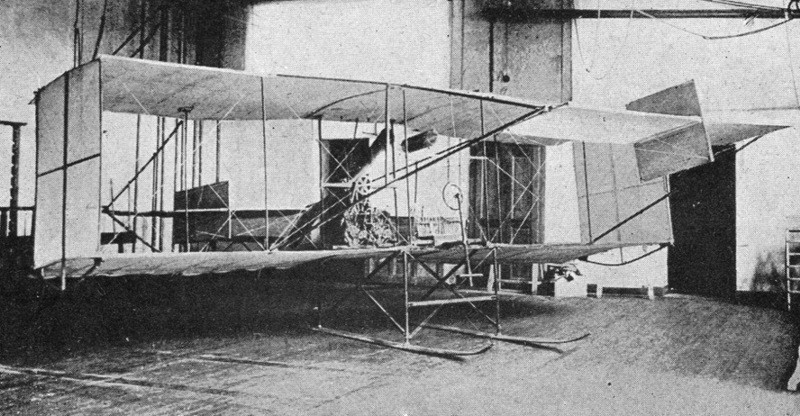
Mr. Maire and Mr. Perrin built in 1909 a biplane in Lausanne (Switzerland) powered by a 20 hp engine driving a pusher propeller. As the tests were to be performed on the snowy fields of Lausanne, skis were mounted as an undercarriage. There is no information about the flying capabilities of the machine.