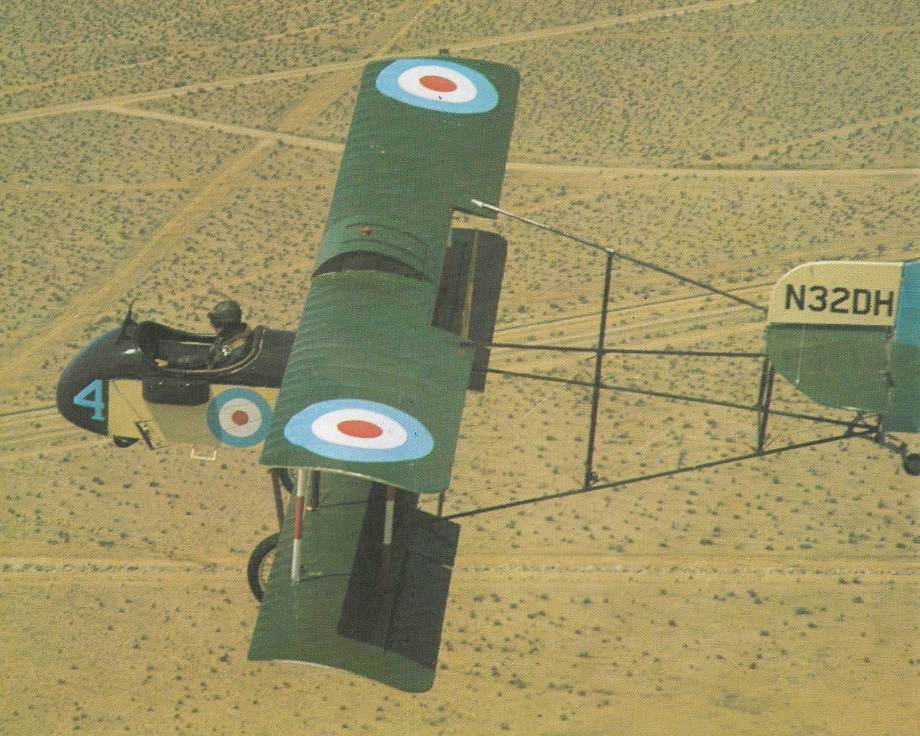
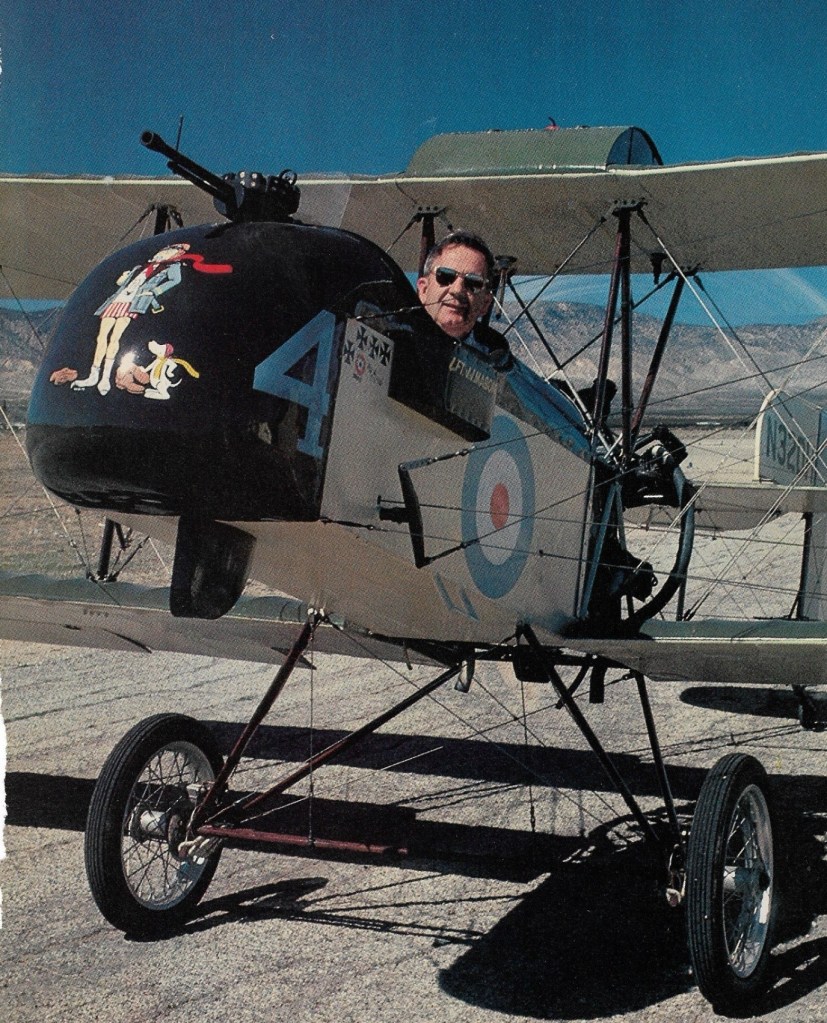
Built by Clark B Matthews, the 1927 Matthews 2-B / CBM Special featured a Curtiss JN-4C empennage and fuselage with a widened front cockpit, and Aeromarine wings. Only one was built, NC2020 c/n 2, and the registration expired on 1 July 1935.
Engine: 90hp Curtiss OX-5 Wingspan: 30 ft 11 in Length: 24 ft 6 in Seats: 3
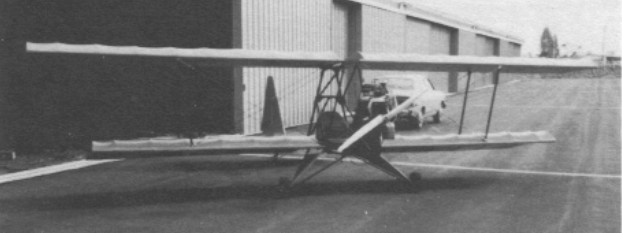
Single seat single engined biplane with three ¬axis control. Wings have unswept leading and trailing edges, and constant chord; conven¬tional tail. Wings braced by struts and transverse X cables; wing profile double ¬surface. Undercarriage has three wheels in tail dragger formation. Tailwheel steering. Aluminium tube framework. Engine mounted between wings driving tractor propeller. Like the CCC, the PUP from Lyle Mathews is only sold as a set of plans. The PUP (Perfect Ultralight Plane) is a single seater biplane with its lower wing of shorter span than the top. The top wing is supported by a tubular framework which forms the cockpit and also acts as the mount for the tractor engine fitted in the nose of the PUP and on which the two triangular main¬ gear legs are mounted. The wings are sup¬ported by interwing struts and flying and landing wires in an X configuration, in the tradition of the old biplanes. The convention¬al tail and the steerable tail wheel are carried on a rectangular section, aluminium spar of 1 x 3 inch (25 x 76 mm). For simplicity the PUP has a metal structure built with gussets and pop rivets. The prototype formed its first flight at the beginning of 1983 using a Lloyd 22hp engine which Lyle Mathews then re¬placed with a Kawasaki TA440. Plans cost $15 in the US and Canada, $20 elsewhere in 1982.
Engine: Kawasaki TA440, 38.5 hp Propeller diameter and pitch 54 x 30 inch, 1.37 x 0.76 m Power per unit area 0.26 hp/sq.ft, 2.9 hp/sq.m Empty weight 248 lb, 112kg Max take off weight 450 lb, 204kg Payload 202 lb, 92kg Wing span 24.0ft, 7.31 m Constant chord 5.0 ft, 1.52 m Sweepback 0 degs Total wing area 143 sq.ft, 13.3 sq.m Max wing loading 3.15 lb/sq.ft, 15.3 kg/sq.m Max power loading 11.7 lb/hp, 5.3kg/hp Cruising speed 40mph, 64kph Stalling speed 28mph, 45 kph Max climb rate at sea level 600 ft/min, 3.0 m/s.
Single seat single engined high wing mono¬plane. Wing has unswept leading and trailing edges, and constant chord; cruciforin tail. Undercarriage has three wheels in tricycle formation. Aluminium tube framework. En¬gine mounted below wing driving pusher propeller. Other details depend on builder’s specifications. Lyle Mathews sells sets of plans of ultralights for homebuilders and this machine which he has designed himself leaves the choice of weight¬shift, hybrid or conventional control system to the constructor, depending on how he or she builds the control surfaces. Lyle Mathews’ CCC (Cross Country Cruiser) can be described as a high wing monoplane with a rectangular wing form and a cruciform tail with tricycle undercarriage; it uses ‘tradition¬al’ tube and fabric construction. It is intended to receive 15 to 30 hp range engines in pusher configuration, mounted on the rear tubes of the pilot frame. The plans are sold in the USA and Canada for $15 and in other countries for $20 in 1982. The data for each CCC depend on how the constructor has chosen to build the aircraft.
Engine: Lloyd, 22 hp Wing span 34.0ft, 10.36m Constant chord 5.0 ft, 1.52 m Sweepback 0 degs Total wing area 165 sq.ft, 15.3 sq.m Wing aspect ratio 7.0/1 Empty weight 1691b, 77kg Max level speed 52 mph, 83 kph Cruising speed 35 mph, 56 kph Stalling speed 22 mph, 35 kph Max climb rate at sea level 350 ft/min, 1.7 m/s Take off distance 90 ft, 27 m.
The sole Master Aircraft Greyhound of 1929 was registered N819H c/n B-1. The owner reported to CAA that the plane was “very unsatisfactory and never used again” and the registration expired on 1 September 1935.
Engine: Velie M-5 Wingspan: 32 ft 0 in Length: 21 ft 0 in
In 1988, the purely human powered Daedalus, a light-weight aircraft built by a team at the Massachusetts Institute of Technology, flew 71.5 miles from the Greek island of Crete to Santorini. The 69 lb craft, peadeled by a Greek Olympic cyclist, got caught in turbulence as it approached the beach at Santorini. It crashed in the sea a few yards from shore.