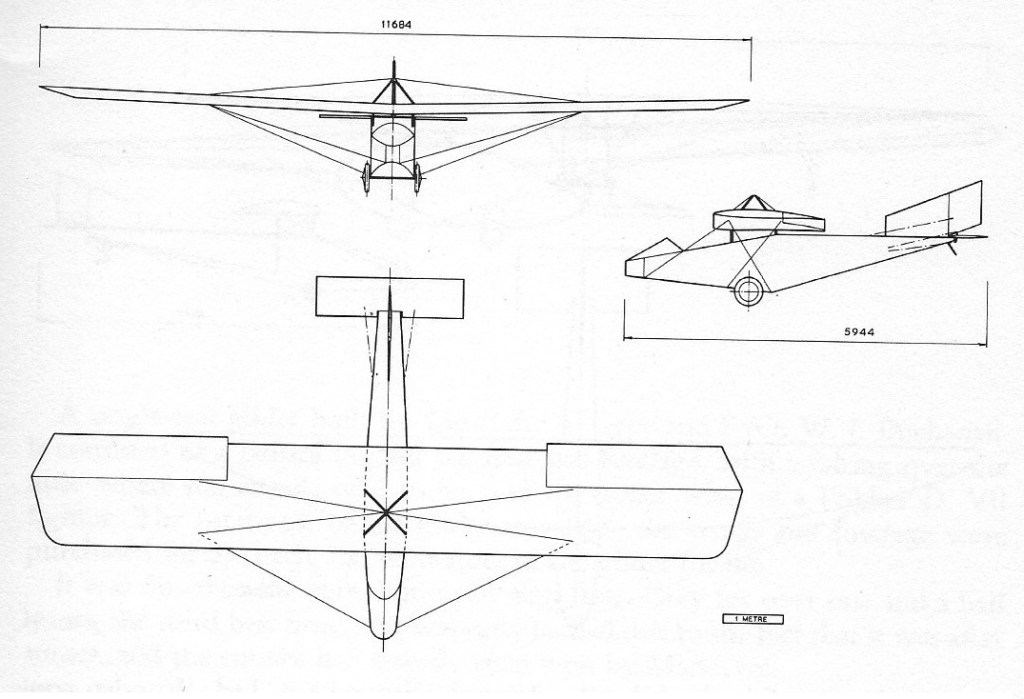
A single-seat glider designed and built by Capt. F.W. Merriam at Whiteley Bank in the Isle of Wight.
Of wooden construction with wire braced wings, the undercarriage has fixed centre twin main wheels, plus tail skid. No airbrakes or flaps ae fitted.
Only one was built, for the 1922 Itford competition as No.18. After the contest it was used at the Whiteley Bank School of gliding on the Isle of Wight, and was converted to a two-seater, with dual controls. It was still in existence at the newly formed Isle of Wight Gliding Club in 1930.
Wingspan: 11.68 m / 38 ft 4 in Length: 5.94 m / 19 ft 6 in Wing area: 20.90 sq.m / 225 sq.ft Aspect ratio: 6.54 Wing section: RAF 15 Empty weight: 90.72 kg / 200 lb AUW: 163.3 kg / 360 lb Wing loading: 7.81 kg/sq.m / 1.6 lb/sq.ft Seats: 1-2
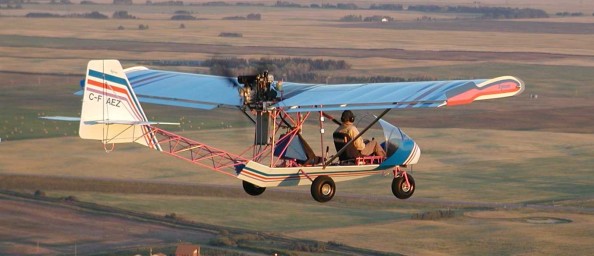
The Merlin was designed in 1986 by John Burch. The Merlin’s fuselage is all pre-welded at the factory and consists almost entirely of 5/8″ x .035 4130 chromoly steel tubing, versus 1/2″ tubing found in most tube and fabric kits. This framework provides the foundation for the Merlin’s ruggedness. The entire steel structure and all pieces are sandblasted and epoxy-primed, ensuring no worry of rust.
Fiberglass cowlings are custom designed and manufactured for each of the standard Merlin GT engine packages. These easy-to-install two- piece cowlings enable the builder to enclose his powerplant simply and efficiently.
The Merlin cockpit is a 41″ wide, and leg and headroom are sufficient to handle a pilot up to 6’6″ tall, plus passenger. For storage, a standard-equipment 10 cubic foot cargo pod is normally installed inside the cockpit, behind the seats. A skylight in the roof is available as an option.
The landing gear is a chromoly steel tube and bungee shock cord arrangement. Each Merlin GT is supplied with standard 8.00 x 6 tundra tires (approx. 19″ high x 8″ wide). Independent hydraulic toe brakes are also standard on every Merlin GT.
The Merlin is an aircraft designed to fly out of short unimproved strips. The plane is fairly tail-heavy on the ground, ensuring no tendency to nose over and damage the prop. This feature also makes the Merlin easier to handle on landing, with ample positive control of the fully steerable tailwheel.
Wing construction on the Merlin has a leading edge built of 2024T6 aircraft aluminum. The 9″ aluminum “I”-beam main spars (0.080″ laminated) and wing leading edges (“D-cells”) are completely pre-built by the Merlin Aircraft factory. The wing ribs are constructed by the builder, using high-density foam for lightweight and strength. These easily assembled ribs are capped with heavy-duty 0.040″ aluminum “U” channels. These “U” channel rib caps are joined from top to bottom of the rib by 1 ” straps of aluminum. There is no structural wood in the aircraft. Foam has been chosen because of its durability. Fewer ribs are required due to the rigidity they provide, simplifying construction and installation. The foam ribs can be repaired, if necessary, much more easily and affordably than either wood or aluminum stamping. Slotted full span ailerons have been incorporated into the design, for slow flight control and a responsive roll rate. The aileron horns are made of heavy aluminum and have never experienced any cracking or in-flight failures. The ailerons are controlled by push rods inside the cockpit, not by cables in the wing. This system eliminates high maintenance pulleys, hardware, bell cranks and control cables. The aileron control rods are easily accessible for routine inspection. Combined with the pre- fabricated “D” cells and aluminum capped foam ribs, these simple wings are the key to the Merlin GT’s established 350 hour quick build time. Each Merlin GT also comes with simple “folding-wing” capability, to facilitate trailering and road transport.
Typical take off distances with the 65 HP Rotax 582 is 150 to 200 feet dual, and about 100 feet solo. With a power-off stall as low as 34 mph, with low inertia and plenty of induced drag during landing (from the simple high-lift wing), landing rolls at full gross weight are often only 250 ft, and a true cruise speed of 85 mph.
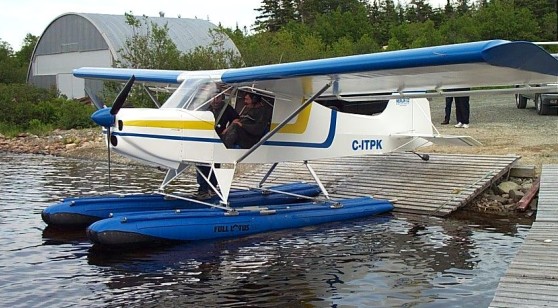
Being designed in Ontario, Canada, operation on floats and skis were a prime concern from day one. The first Merlin off the production line was fitted with Full Lotus amphibious floats. Each kit since has float-mounting plates welded to the airframe, making every aircraft easily adaptable to floats. In winter, the floats can easily be replaced by skis. These fit directly onto the existing axle tubes. Cruise speeds observed on skis are the same as on wheels-85 mph with the standard 68″ ground adjustable two-blade prop.
Blue Yonder Merlin GT / EZ
The Merlin GT is built using tried and proven building techniques, materials and aircraft hardware. Component kits were also available.
Aerocomp Merlin GT 582
First flown in January 1985, the Merlin GT-582 operates on wheels, floats or skis. One option is the Rotax 618 engine.
The AirComp Merlin GT-Rotax 912 features a wing folding option, and a 100 hp Continental option. First flown in January 1993.
Aerocomp inc Merlin Stall: 30 kt / 35 mph / 56 kmh Cruise: 78 kt / 90 mph / 145 kmh VNE: 104 kt / 120 mph / 193 kmh Empty Weight: 261 kg / 575 lbs MTOW Weight: 590 kg / 1300 lbs Climb Ratio: 1500 ft/min / 8 m/s Take-off distance (50ft obstacle): 400 ft / 122 m Landing distance (50ft obstacle): 400 ft / 122 m
Aerocomp Merlin GT-582 Empty weight: 220 kg Wing span: 9.1 m Wing area: 15.3 sq.m Fuel capacity: 49 lt Engine: Rotax 582, 64 hp MAUW: 520 kg Seats: 2 Max speed: 190 kph Cruise speed: 135 kph Minimum speed: 65 kph Climb rate: 7.5 m/s Fuel consumption: 15 lt/hr
Merlin GT-582 Speed max: 120 mph Cruise: 85 mph Range: 333 sm Stall: 34 mph ROC: 1100 fpm Take-off dist: 105 ft Landing dist: 150 ft Service ceiling: 18,000 ft Engine: Rotax 582, 65 hp Fuel cap: 16 USG Weight empty: 480 lb Gross: 1300 lb Height: 6.5 ft Length: 20 ft Wing span: 30 ft Wing area: 167 sq.ft Seats: 2 Landing gear: tail wheel
AirComp Merlin GT-Formula 110 Speed max: 120 mph Cruise: 98 mph Range: 379 sm Stall: 40 mph ROC: 1600 fpm Take-off dist: 120 ft Landing dist: 175 ft Service ceiling: 18,000 ft Engine: Subaru, 110 hp HP range: 65-120 Fuel cap: 16 USG Weight empty: 615 lb Gross: 1300 lb Height: 6.5 ft Length: 20 ft Wing span: 30 ft Wing area: 167 sq.ft Seats: 2 Landing gear: tail wheel
AirComp Merlin GT-Rotax 912 Speed max: 120 mph Cruise: 93 mph Range: 350 sm Stall: 38 mph ROC: 1500 fpm Take-off dist: 100 ft Landing dist: 150 ft Service ceiling: 18,000 ft Engine: Rotax 912, 120 hp HP range: 65-120 Fuel cap: 16 USG Weight empty: 615 lb Gross: 1300 lb Height: 6.5 ft Length: 20 ft Wing span: 30 ft Wing area: 167 sq.ft Seats: 2 Landing gear: tail wheel
Blue Yonder Merlin GT/EZ Cruise: 92 mph Range: 810 sm Stall: 32 mph ROC: 1500 fpm Take-off dist: 100 ft Landing dist: 200 ft Engine: Rotax 912S, 100 hp HP range: 65-130 Fuel cap: 24 USG Weight empty: 796 lb Gross: 1450 lb Length: 21 ft Wing span: 33 ft Wing area: 186 sq.ft Seats: 2 Cockpit width: 41 in Landing gear: floats
Blue Yonder Merlin Top Speed: 100 mph. Cruise Speed: 70 mph. Stall Speed: 35 mph. Fuel Capacity: 32 gal. Range: 350 n.m. Takeoff Distance: 50 ft. Landing Distance: 175 ft. Service Ceiling: 15,000 ft. Empty Weight: 789 lbs. Gross Weight: 1400 lbs. Height: 7 ft. Length: 23 ft. Wingspan: 35.5 ft. Wing Area: 235 sq. ft. Number of Seats: 2
Engines: 2 Rotax Top Speed: 100 mph. Cruise Speed: 70 mph. Stall Speed: 35 mph. Fuel Capacity: 32 USgal Range: 350 nm Takeoff Distance: 50 ft. Landing Distance: 175 ft Service Ceiling: 15,000 ft Empty Weight: 789 lb Gross Weight: 1400 lb Height: 7 ft Length: 23 ft Wingspan: 35.5 ft Wing Area: 235 sq. ft Number of Seats: 2
Blue Yonder win EZ Flyer Engines: 2 Rotax 503, 52 hp Hp range: 52-13 each Cruise Speed: 70 mph. Stall Speed: 38 mph. Range: 400 sm Takeoff Distance: 50 ft. Landing Distance: 175 ft Fuel Capacity: 33 USgal Empty Weight: 789 lb Gross Weight: 1450 lb Length: 23 ft Wingspan: 35.5 ft Wing Area: 235 sq. ft Number of Seats: 2
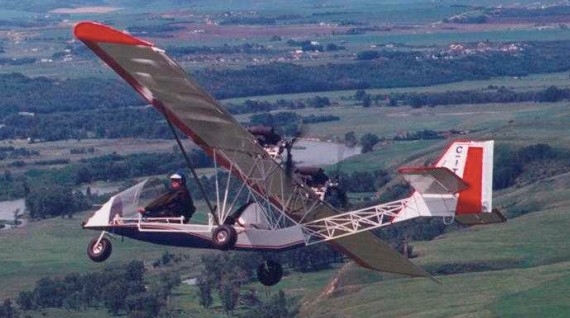
The two-place ultralight trainer EZ-Flyer was designed by Canadian Wayne Winters, using a lot of the Merlin’s wing and tail structure.
The LSA EZ-Flyer II has a chromoly steel tube fuselage structure. It is a predominantly triangulated structure. The engine is pusher mounted behind the wing and on top of the steel fuselage cage. It can handle all the bigger Rotax engines and Merlin indicates that the 80-hp Rotax 912 four-stroke engine.
It is a 4130 chromoly steel construct that is painted at the factory prior to shipping. The wing has an aluminum “D” cell, is Ceconite covered and strut braced, but sports a large wingtip “fence” at the end that was removed from factory ships for testing. The ailerons are not quite full-span but are hinged in a frise-type setup with no differential. There are no flaps, and the wing is a constant chord assembly.
The rudder tri-gear has a set of very heavy spring steel gear legs and 18 inch tundra tires. The EZ-Flyer II is 21 feet long, 6 feet high, and has a span of 30 feet. The wing has 165 sq. ft. of wing area, a 10 US gal fuel capacity, and is stressed to +4 and -2 Gs. With the standard Rotax 503, the 465-lb EZ-Flyer II has a max gross weight of 1000 lbs, leaving more than a 500 lbs payload.
The empty EZ-Flyer has a tendency to sit on its tail with the nose sticking skyward.
Dual controls come in the form of a long J-neck control stick, rudder pedals, and a single-lever braking system to the left of the pilot seat. The throttle is also on the left and is made prominent on the prototype by a small golf-ball-shaped handle that sits atop the lever. The front seat offers minimal protection from the elements with a small windscreen that does keep the worst of the breeze out of your face.
There is some notable down thrust evident in full-power operations that will require initiating a positive rotation until you get to a much higher than normal light-off speeds. Lift-off at about 35 mph and 350 feet.
Engine: Rotax 582, 65 hp Max speed: 100mph Cruise speed: 70 mph Stall: 30 mph ROC:700 fpm Takeoff distance: 90 ft. Landing dist: 150 ft Fuel cap: 9 USG Empty weight: 483 lb Gross weight: 1050 lbs Height: 6 ft Length: 21 ft Wing span: 26 ft Wing area: 137 sq.ft. Seats: 2 Undercarriage: tricycle
Blue Yonder EZ Flyer Engine: Rotax 503, 52 hp HP range: 50-74. Speed max: 100 mph Cruise: 65 mph. Stall: 30 mph ROC: 650 fpm. Take-off dist: 90 ft Landing dist: 150 ft. Fuel cap: 9 USG Weight empty: 469 lbs. Gross: 1050 lbs Height: 6 ft. Length: 21 ft Wing span: 26 ft. Wing area: 137 sq.ft Seats: 2 tandem. Landing gear: nose wheel.
Blue Yonder EZ Flyer Engine: Rotax 582, 65 hp HP range: 50-130. Cruise: 70 mph. Stall: 35 mph ROC: 700 fpm. Take-off dist: 100 ft Landing dist: 175 ft. Fuel cap: 24 USG Weight empty: 535 lbs. Gross: 1300 lbs Length: 21 ft Wing span: 31 ft. Wing area: 176 sq.ft Seats: 2 tandem. Landing gear: nose wheel.
Made kits available to construct the Merlin GT-582 two-seat monoplane, originally developed in Canada as the Macair Merlin.
1996: 509 Airport Rd, Muskegon, MI 49441, USA. The company closed due to financial difficulty. The designs were being produced by Blue Yonder Aviation, Inc., and one is also available from AeroComp Inc.
This two-seat aerobatic biplane is stressed to a +6G and -3G limit, and +9G to -4.5G ultimate. It was first flown in 1973, and its designer, Edwin Merkel, planned to produce the biplane in a two-seater trainer version and a single-place competition model. The Mark II is completely covered with a light alloy skin outside, and underneath the fuselage is welded steel tube while the wings feature a single-spar tor¬sional structure. Other extras include an antiservo tab, ground-adjustable trim tab and optional cockpit canopy.
Gross Wt. 1540 lb Empty Wt. 1200 lb Fuel capacity 18 USG Wingspan 25’6” Length 22’9” Engine 220-hp Franklin Top speed 206 mph Cruise mph 160 Stall 55 mph Climb rate 2500 fpm Takeoff run 300 ft Landing roll 300 ft Range 250 miles
Meridionali-Aerfer Spa succeeded Societa Aninima Industrie Aeronautiche Romeo, which had been formed in 1934 to absorb Officine Ferroviarie Meridionali’s aviation activities. Became part of Societa Italiana Ernesto Breda group. Developed Ro.37 two-seat reconnaissance biplane which served October 1936 with Italian Aviacion Legionaria during Spanish Civil War and equipped Italian Air Force reconnaissance units during Second World War. Also used operationally were Ro.43 two-seat, single-float catapult seaplane and single-seat fighter version, Ro.44.