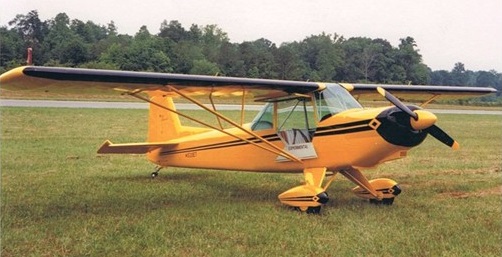
Mitchell Nimbus

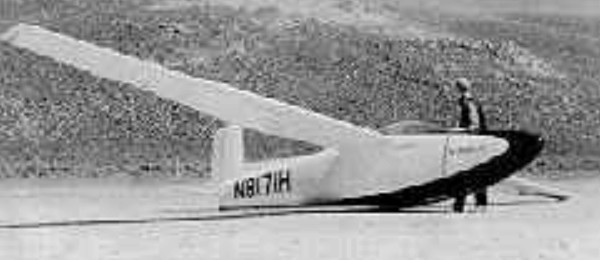
Nimbus III

The Nimbus III was developed in 1956 by Don Mitchell from the earlier I and II models. Mitchell produced nine kits, of which four were completed. The prototype Nimbus III has a Gottingen airfoil and considerably less performance.

Nimbus III
Wing span: 12.19 m / 40 ft
Wing area: 9.85 sq.m / 106 sq.ft
Empty Weight: 204 kg / 450 lb
Payload: 100 kg / 220 lb
Gross Weight: 304 kg / 670 lb
Wing Load: 30.86 kg/sq.m / 6.4 lb/sq.ft
Aspect ratio: 14.7
Airfoil: Wortmann FX-05-191
L/DMax: 39 106 kph / 57 kt / 66 mph
MinSink: 0.73 m/s /2.4 fps / 1.42 kt
Seats: 1
Structure: all-wood, 3-piece wing
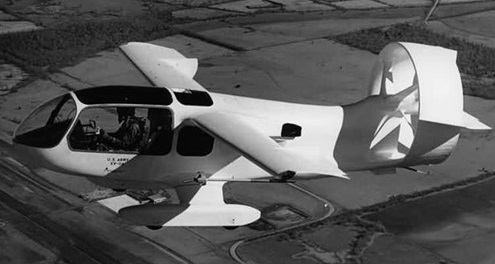
Mississippi State University XV-11 Marvel

Students and researchers at Mississippi State University in Jackson built and flew the XV-11 Marvel in 1965 to test boundary layer and STOL technology. The name M.A.R.V.E.L. stood for “Mississippi Aerophysics Research Vehicle with Extended Latitude”.

The first all-composite aircraft, it carried out its initial program of research on behalf of the US Army in the late 1960s, and was rebuilt in the 1980s as a proof-of-concept for a utility aircraft.

The Marvel is now on permanent display at the Southern Museum of Flight at the Birmingham International Airport in Alabama.

Mission Aircraft Morrison 6 / Barr 6

The airframe is designed around the efficiency of the 8 cyl Lycoming engine the engine prop combination produces a balance of objectives that allows speed, service and the freedom of no flight restrictions.

All skins of the Morrison 6 kit are made with 7781 e-glass prepreg and epoxy resin content of 36 to 38 %, vacuumed bagged and cooked at 250 degrees, plus the fibers in the prepreg stay in a straight line making for a stronger skin. Nomex core wrapped in adhesive. Designed for ease of assembly. Pre-cured graphlite carbon rod packs are built into the structure to carry the designed loads. The advantage of the rods is that the fibers in the rods are straight and will test out to the tinsel strength designed.

Morrison 6
Engine: Lycoming IO-720 A1BD, 400 hp
Recommend TBO: 1800 hr
HP range: 400-450
Propeller: Hartzell Constant Speed HC-E3YR-1RF/F8468A-6R
Propeller Diameter: 83 in
Propeller Ground Clearance: 9.75 in
Length: 29 ft 11 in
Height: 7 ft 2 in
Wingspan: 35 ft 10 in
Wing Area: 174 sq.ft
Stabilizer span: 13 ft 0 in
Stabilizer: 24.84 sq.ft
Elevators: 20.09 sq.ft
Vertical fin: 12.00 sq.ft
Aileron: 17.32 sq.ft
Flaps: 29 sq.ft
Wing airfoil: Modified NACA 2412
Ailerons: Frieze Type Wide – Chord
Flaps: NACA Single Slotted
Wing Aspect Ratio: 7.63
Wing Chord: Root 64″ Tip 42″
Diheadral: 1° 44′
Wing Loading: 25.9 lb./sq.ft
Power Loading: 11.25 lb./hp
Span Loading: 125.9 lb./ft
Empty Weight: 2197-2501 lb
Gross Weight: 4500 lb
Useful Load: 2303 – 1999 lb
Wing Root Incidence: +1° 30′
Wing Tip Incidence: -1° 30′
Stabilizer Incidence: -3° 0′
Engine Incidence: -3° 30′
Front Seats: 52″
Center Seats: 52.5″
Rear Seats: 44″
Rear Baggage: 38″
Cabin Height: 49″
Seats: 6
Pilot Door: 3′ 4″ x 3′ 1″
Double Cargo Door: 3′ 2-1/2″ x 3′ 8-1/8″
Std. Fuel Capacity: 90 USgal
Optional Fuel Capacity: 140 Usgal
Land Gear Options: tail wheel, floats, skis
Controls: duel control yokes
Max Forward C/G: 33.0″
Max Aft. C/G: 49.7″
Ref. Datum: Lower Front Face of Firewall
Vne: 248 MPH
Vc: 206 MPH
Va: 171 MPH
Cruise: 206 mph
Stall: 62 mph
Range: 1660 sm
Rate of climb: 900 fpm
Takeoff dist: 900 ft
Landing dist: 750 ft

Miranda Aircraft Co Ltd

Canada
Formed in Montreal by Bernard C. Maranda to develop and manufacture ultralight aircraft, acquiring worldwide license for Adam RA-14 and RA-17 high-wing monoplanes from French designer Roger Adam in 1957. These marketed as RA14BM1 and BM3. Also developed Hawk BM4, based on Beam Minicab, and Lark BM6 single-seat aerobatic biplane.

Mirage Aircraft Marathon

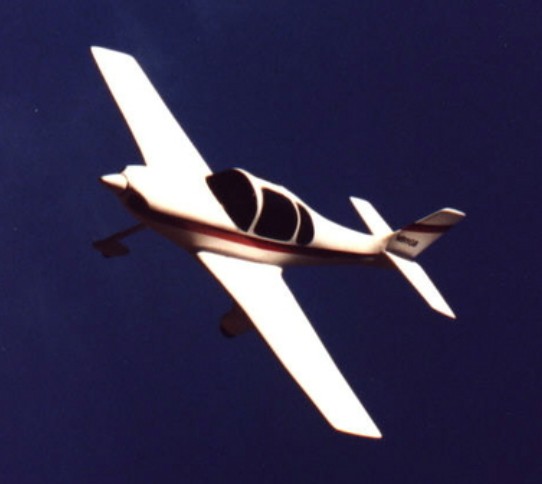
The Marathon is a high performance, 2-place side-by-side plans built airplane with fixed tricyle landing gear. Constructed primarily of wood and fiberglass covering, the Marathon cruises at about 185 mph range on 150hp and has a range of over 900 miles. Engines range from 150 to 180hp.

The builder has the choice of carrying all the fuel in the wing, or sleek tip tanks can be installed.

Complete landing gear assemblies and other finished components were available from Mirage Aircraft. Six construction videos are also available.

The complete set of plans, videos, and construction manual guide you through the project, teaching you the skills as you go.

The Marathon is patterned after the Celerity, which was designed by Larry Burton.

Engine: Lycoming O-320, 150 hp
Cruise: 185 mph
Range: 900 miles
HP range: 150-180
Wingspan: 25ft
Length: 21 ft 10in

Mirage Aircraft Celerity

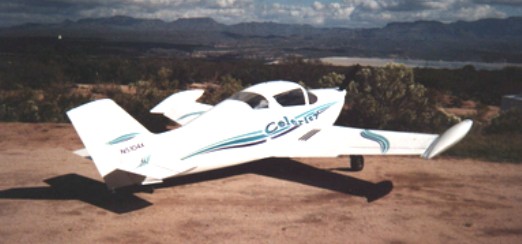
The Celerity was designed by Larry Burton, who flew the prototype in 1985 and won an Oshkosh workmanship award that same year. The prototype has accumulated over 900 hours. It is designed to be built by the average person, with average skills, at low cost, yet perform as well as the most expensive kit airplanes in it’s class.

The Celerity is a high performance, 2-place side-by-side plans built airplane with fully retractable landing gear, including the tail wheel. It can also be built as the “Marathon” with fixed tricycle gear. Designed for builders with average skills, both aircraft are constructed from wood with fiberglass covering. Six construction videos were available. Celerity cruises in the 200 mph range on 150 to 180 hp and has an operating range of more than 750 miles with fuel reserve. The builder has the choice of carrying all the fuel in the wing, or sleek tip tanks can be installed.

Complete landing gear assemblies and other finished components were available from Mirage Aircraft.

Engine: Lycoming O-320, 160 hp
HP range: 150-180
Height: 5.5 ft
Length: 21 ft 10 in
Wing span: 25 ft
Wing area: 100 sq.ft
Weight empty: 1169 lb
Gross: 1800 lb
Fuel cap: 44 USG
Speed max: 220 mph
Cruise: 205 mph
Range: 1000 sm
Stall: 50 mph
ROC: 1800 fpm
Take-off dist: 800 ft
Landing dist: 1000 ft
Service ceiling: 20,000 ft
Seats: 2
Landing gear: retractable tail wheel

Mills Special

Mills Special (N520ET c/n JM-12)

This original design high wing light plane was designed by Jerry Mills, who started the construction in 1978. After the death of designer the construction was continued by Edward J. Thomason and James Smith of Calhoun, Georgia, USA. Registered N520ET on May 9, 1994, the aircraft was first flown a year later, May 20, 1995. The one-of-a-kind single-seat aircraft, nicknamed Puddle Jumper, has a 150 hp Lycoming O-320-E2D engine, and features a mixed steel/aluminium (fuselage) and wood/fabric (wings) construction. On July 28, 2005, the aircraft was registered to Jack Hurdle of Senoia, Gerogia.