Brazil
Companhia Nacional de Navegagao Costiera, founded at llha do Viana, Rio de Janeiro, in late 1930s to manufacture Muniz-designed M-7 and M-9 biplane trainers; basically an Army aircraft workshop. In early 1940s renamed Fabrica Brasileira de Avioes.
Aircraft
National Aero Manufacturing Corporation
Phillipines
Until 1982 a subsidiary of the Philippines Aerospace Development Corporation, which began assembly and license-manufacture of MBB BO 105 helicopters in 1974. Later that year a contract was signed with Britten- Norman for the assembly and eventual manufacture of the BN-2A Islander, and for the development and marketing of an amphibious version. Assembly of Islanders began in 1976 from sets of parts from the UK. In 1978 a four-seat utility aircraft was developed in conjunction with the Philippine Government’s National Sciences Development Board.
1982 closure.
Nash Petrel / Procter Aircraft Associates Petrel
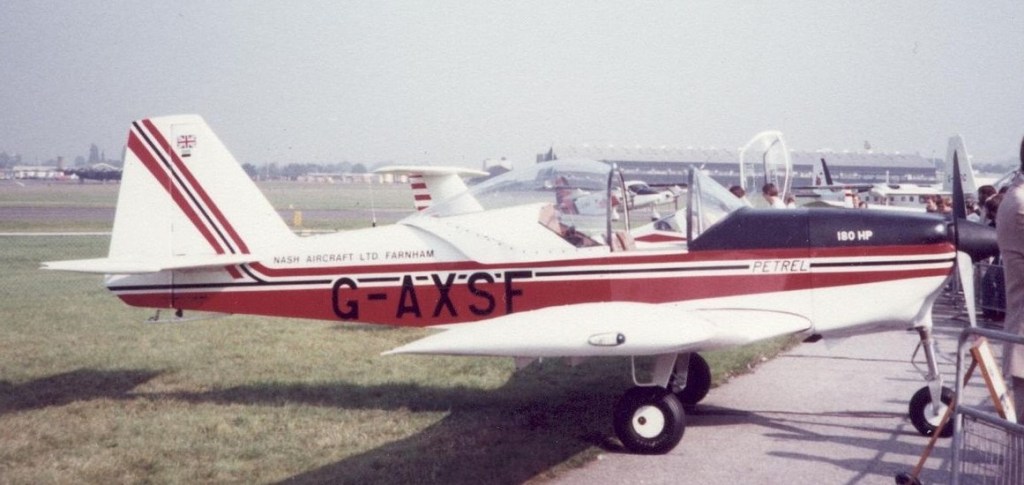
The Nash Petrel also known as the Procter Petrel is a two-seat aerobatic or glider tug aircraft. It was designed for amateur production by Procter Aircraft Associates of Camberley, Surrey, England.
Based on the earlier Mitchell-Procter Kittiwake design, the Petrel is an all-metal low-wing cantilever monoplane of conventional design powered by a 130 hp Rolls-Royce Continental O-240-A piston engine. By the time the aircraft first flew on 8 November 1980, Procter had changed ownership and had been renamed Nash Aircraft Ltd.
Only two aircraft were built, the prototype registered G-AXSF and one built by apprentices at the British Aircraft Corporation factory at Preston in 1973, registered G-BACA. G-BACA had a serious fault with the landing gear and only flew 15 hours before being grounded. The prototype still exists but without a current certificate of airworthiness. It is presently fitted with a Lycoming O-360-A3A engine.
Powerplant: 1 × Avco Lycoming O-320-D2A, 89 kW (119 hp)
Wingspan: 8.94 m (29 ft 4 in)
Wing area: 12.63 m2 (135.9 sq ft)
Aspect ratio: 6.6:1
Airfoil: NACA 3415
Length: 6.22 m (20 ft 5 in)
Height: 2.23 m (7 ft 4 in)
Empty weight: 540 kg (1,190 lb)
Max takeoff weight: 762 kg (1,680 lb)
Fuel capacity: 104.5 L (27.6 US gal; 23.0 imp gal)
Maximum speed: 210 km/h (130 mph, 110 kn)
Cruise speed: 195 km/h (121 mph, 105 kn)
Stall speed: 74 km/h (46 mph, 40 kn) (flaps down)
Rate of climb: 5.6 m/s (1,100 ft/min)
Crew: 2
Nash Aircraft Ltd
UK
Developed the Petrel two-seat touring, training and glider tug lightplane, first flown 1980.
Nardi FN.315
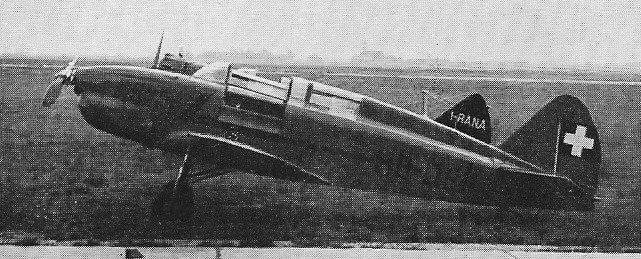
As a 1938 development of the FN305, there were also 25 F.N.315 intermediate trainers with the 172-kW (230-hp) Hirth HM 508D inline, a revised canopy, a new tail unit, flaps and increased dihedral on the outer wing panels.
The F.N.315 was also produced with the Alfa Romeo 115-1 of 185 hp.
The F.N.315 was exported to six countries, and a light-attack version was flown experimentally.
Engine: Hirth HM 508, 172 kW (230 hp).
Wingspan: 27 ft 9 in
Wing area: 129.12 sq.ft
Length: 22 ft 11 in
Height: 6 ft 10.5 in
Empty weight: 1562 lb
Loaded weight: 2255 lb
Max speed: 239 mph at 8200 ft
Cruise: 220 mph at 11,480 ft
Time to 13,120ft: 6 min 40 sec
Cruise range: 590 mi
Nardi FN.305
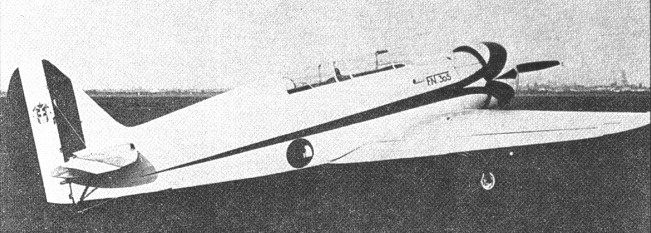
First flown in January 1935, the F.N.305 training, touring and sporting aeroplane had single or tandem seating under a large glasshouse canopy and, with a 149-kW (200-hp) Fiat A.70S radial, attained a fair level of performance thanks to its retractable landing gear. Several one-off variants were produced before Piaggio started building the F.N.305A two-seat version with the Alfa-Romeo 115 inline. The type was used by the Italian air force as a tighter trainer and liaison aeroplane. Between 1937 and 1943 production totalled 258 including small numbers of the F.N.305B and F.N.305C single-seaters with open and enclosed cockpits respectively.
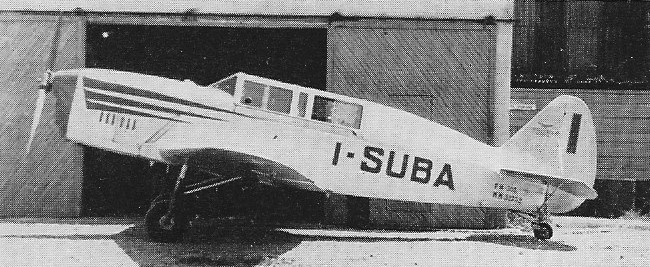
An experimental version, the F.N.305-D, established s long-distance record by flying from Rome to Addis Ababa.
F.N.305
Wingspan: 27 ft 9 in
Wing area: 129.12 sq.ft
Length: 22 ft 11 in
Height: 6 ft 10.5 in
Empty weight: 1320 lb
Loaded weight: 1980 lb
Max speed: 211 mph
Cruise: 189 mph
Service ceiling: 22,950 ft
Range: 435 mi
F.N.305A
Powerplant: l x Alfa-Romeo 115-1, 142kW (190 hp)
Span: 8.47m (27ft 9.5in)
Length: 7m (22 ft 11.5 in)
Armament: 1 or 2 x 7.7-mm (0.303-in) mg
Max T/O weight: 900kg (1,9841b)
Max speed: 193 mph
Operational range: 311 miles.
Nardi
Nardi Sa Per Costruzioni Aeronautiche
Established in Milan in 1933 by three brothers. Nardi’s first aircraft was the F.N.305 tandem two-seat lightplane, which flew in 1935 and was intended as a fighter-trainer. A1938 successor, the F.N.315, was exported to six countries, and a light-attack version was flown experimentally.
The first postwar product was the F.N.333 amphibian, a three/four-seat twin-boom design later acquired by SIAI-Marchetti and marketed from 1962 as the Riviera, and in America as the North Star amphibian.
Narahara No.5 Ohtori Nisei-go
While the Narahara No.4 Ohtori-go was touring Japan with demonstration flights by Shimo, the Narahara No.5 Ohtori Nisei-go (meaning Ohtori the 2nd) was built. It was almost identical to the No.4 but was powered by a 70hp Gnome rotary engine and had a strengthened undercarriage. This aeroplane was completed in June 1913 and made exhibition flights at Ibaragi, Toyama, Ishikawa and Niigata from June to September that year.
Sanji Narahara eventually retired completely from aviation at his family’s insistence. His aviation activities were first taken over by Einosuke Shirato who then began manufacturing aeroplanes under his own name and provided flying training at Inage beach. In addition to Shirato’s activities, Otojiro Itoh also became known for his aviation endeavours, and between the two, a new era of civil aviation began in 1913 stemming from Narahara’s works and now centred at the Shirato/ltoh Airfields.
Narahara 4 Ohtori-go
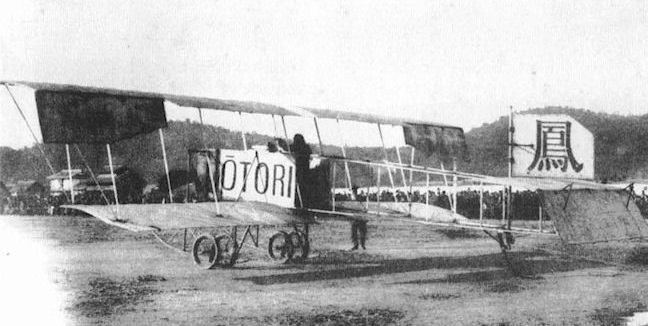
In the autumn of 1911, Narahara’s group was joined by Shuhei Iwamoto, later a professor of Tokyo University, and Kiyoshi Shiga, BSc. By March 1912 they had created the Narahara No.4 Aeroplane with the help of Saken Kawabe, Otojiro Itoh and Ginjiro Goto, themselves to become notable in aviation. The aeroplane was built at the Orient Aeroplane Company (Toyo Hikoki Shokai), having its office in Kyobashi, Tokyo. The factory was then located at Fukagawa (near or at Susaki Airfield) and final assembly was made at Tokorozawa where it was to be flown. It received the name of Ohtori-go, after a champion sumo-wrestler, Ohtori, at the request of the sponsor who supported the project.
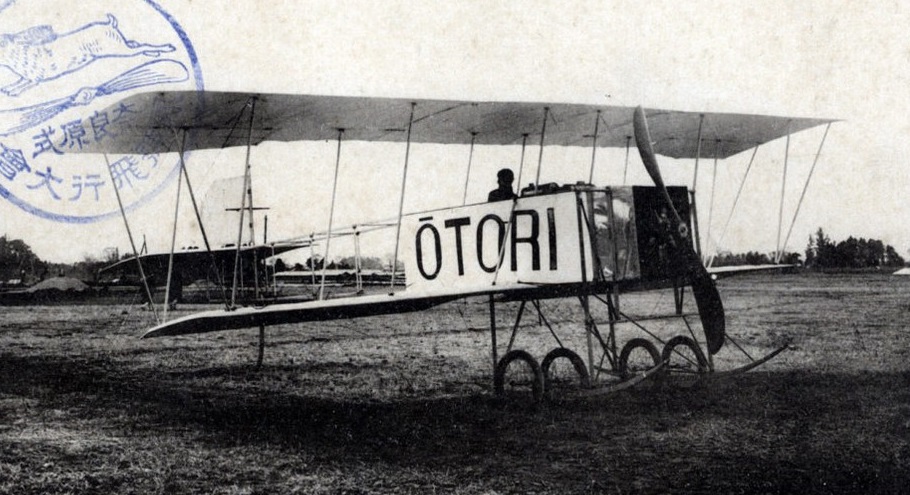
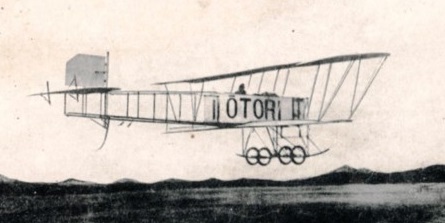
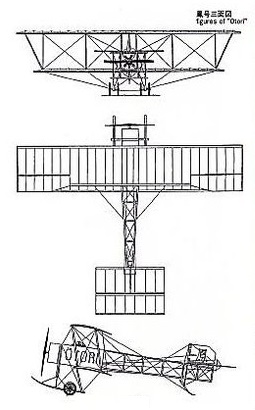
A single-engine tractor training biplane with wooden structure with fabric covering. The pupil and instructor were in an open cockpit.
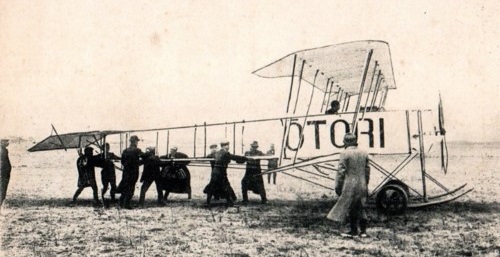
The aeroplane performed well and was taken on exhibition tours, with flights at major cities throughout Japan to demonstrate what was referred to as their ‘Japanese-made civil aeroplane’. Since there were no airfields in Japan at this time, flights were made from race tracks or military parade grounds of such relatively small size that landings and take offs were very near the spectators. During the first of these exhibition flights on 13 April, 1912, at Kawasaki Race Track, Kanagawa Prefecture, a failing engine caused the aeroplane to land short, allowing a wingtip to strike a school boy, breaking his arm.
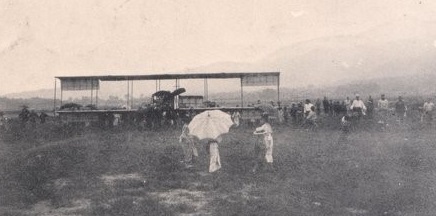
The aeroplane was again demonstrated on 11 and 12 May for His Highness the Crown Prince (later Emperor Taisho) and his three sons (one to later become Emperor Showa [Hirohito]) along with Field Marshal Aritomo Yamagata and many other high-ranking officers at the Aoyama Military Parade Grounds. These demonstrations brought Narahara an award by the Imperial House, the first distinction given to someone involved in Japanese civil aviation.
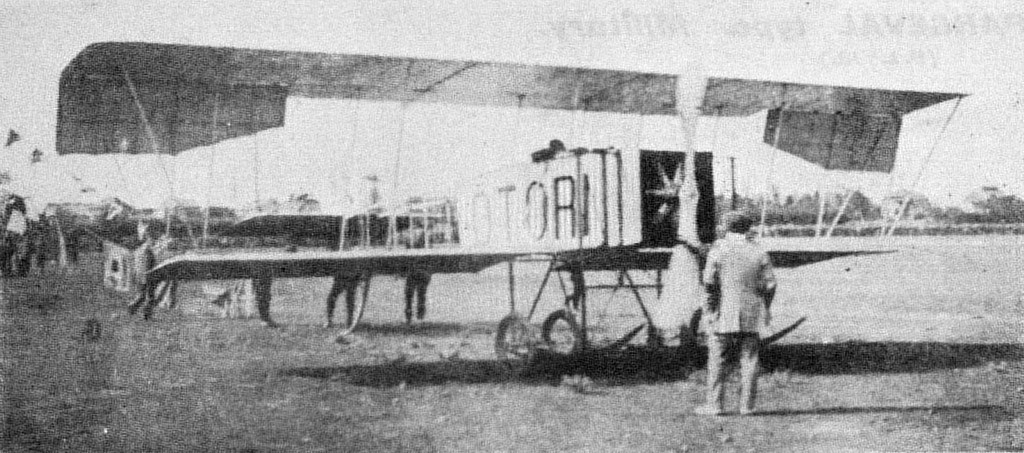
The last exhibition flight by the Ohtori No.4 was in Seoul, Korea, on 3 and 4 April, 1913.
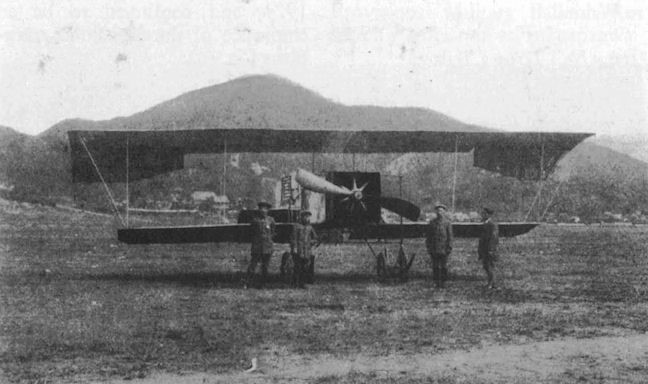
Engine: 50hp Gnome
Propeller: two-bladed wooden
Span, upper: 11.40m (37ft 5in)
Span, lower: 9.30m (30ft 6in)
Wing area: 39sq m (419.8sq ft)
Length: 7m (22ft 11.5in)
Height: 2.80m (9ft 2.25in)
Empty weight 470kg (1,036lb)
Maximum speed 38kt (44mph)
Narahara No.1
Around 1910, retired Japanese Navy engineer Sanji Narahara, who had studied munitions at the Imperial University, built an airframe for himself and on May 5, 1911, made a successful flight with a French-made engine installed.

