Nestler built one example of the Monosoupape Gnome-powered Nestler Scout to the design of Monsieur Boudot. It was destroyed at Hendon in 1917.
Aircraft
Nestler Ltd
Became established in the British aircraft industry before First World War by obtaining an agency for Sanchez-Besa aircraft. Subcontractor for components in war. Built one example of the Monosoupape Gnome-powered Nestler Scout to the design of Monsieur Boudot. It was destroyed at Hendon in 1917 and no further aircraft were constructed.
Nesterov-Sokolov Glider
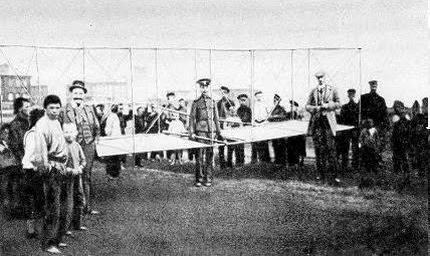
A Russian hang glider built circa 1911 by (later to become well-known aviator) Nesterov, working with Sokolov.
Nessunov Ju-87B-2

Russian registered RA-0565G is an approximately 75% scale Ju-87B-2 owned by Vladimir Nessunov and first flown on June 20, 2000.
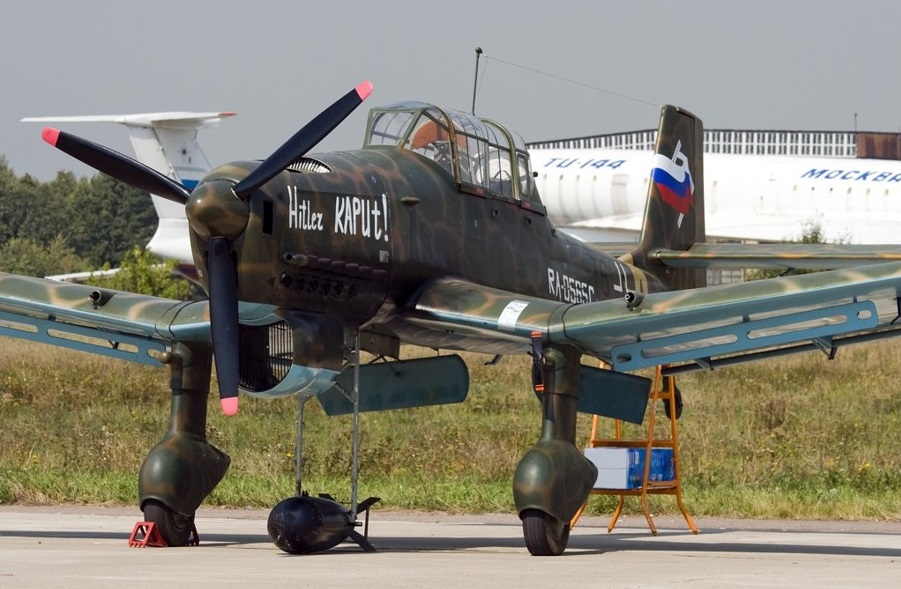
This machine is apparently stationed at the Kubinka test base and is flown by the Kublinka Aeroclub there.
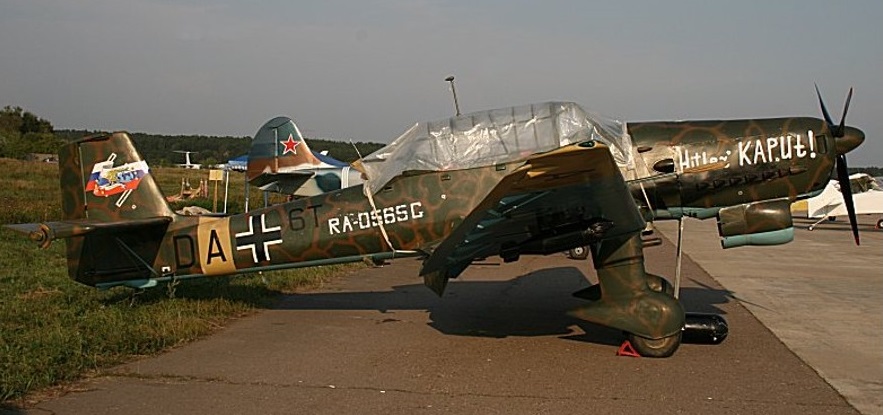
Engine: 210Hp Walter (LOM) M337.
Wingspan: 14.94 m
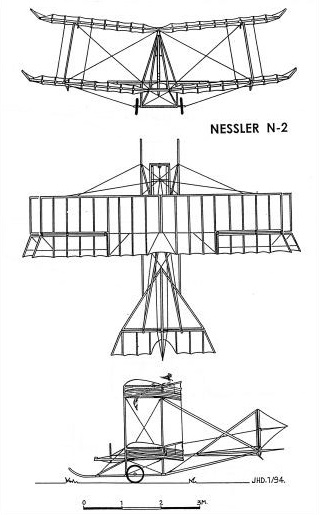
Nessler N-2
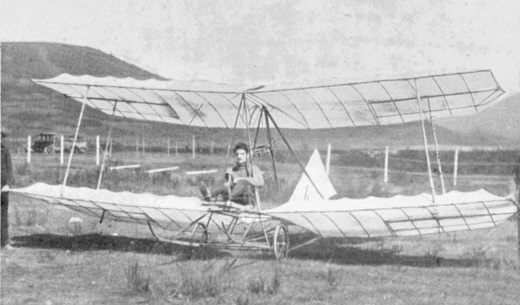
Built in 1922 by Eric Nessler in France, it arrived at Camp Mouillard on August 5, 1922. By August 15, the machine is ready and performs a few small flights on the plain with a maximum duration of 8 seconds. On August 17, it fell on the front, breaking the landing gear, seat and tail. It flew again on August 24 with a flight of 17 seconds over the Toupe plateau but was slightly damaged on landing.
On August 27, departing from the summit of Combegrasse, towards Aydat, in no wind, some jumps on the slope were made before final takeoff but a flight of 1 min 3 sec was made. During this flight, the aircraft succeeded in gaining height.
Span: 6.66 m
Length: 5.6 m
Height: 2.5 m
Aspect: 5
Wing area: 18 m2
Wing profile: R.A.F. 53
Empty weight: 72 kg
Maximum weight: 128 kg
Wing loading: 7.11 kg/m2
No. of seats: 1
Nesmith Cougar / Cougar Comet / Chigger / Landoll’s Skydoll
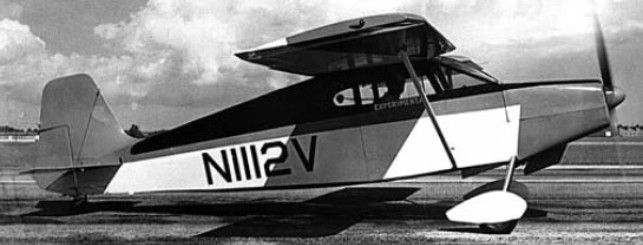
The design, by Robert Nesmith, is a conventional high-wing, strut-braced monoplane with fixed tailwheel undercarriage. The pilot and a single passenger were seated side-by-side with dual controls. The fuselage and empennage were of welded steel-tube construction, while the wings were of wood, and the whole aircraft was fabric-covered. Continental engines of C75, C85 and C90 can be used.
The first, N75282, first flew in March 1957.
With a redline speed of 195 mph, the Cougar maintains a brisk cruise of 120 to 165 mph, depending on choice of engine which can range form 65 hp to 125 hp. Landing approach is done at 80 mph and touchdown is around 70.
The original Cougar design was marketed by Nesmith himself. The design was modified by Leonard Eaves for an EAA design contest in 1963, principally for the purpose of including folding wings. When the modified Cougar won an Experimental Aircraft Association (EAA) design competition in 1963 that organization took over selling plans. Rights to the design were eventually purchased by Acro Sport.
The aircraft can be towed to and from the airport on its own landing gear.
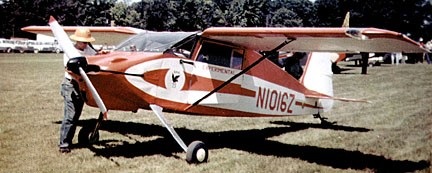
The aircraft shape was influenced by the Beechcraft Staggerwing and Wittman Tailwind. The name came from the college of Nesmith’s daughter, the University of Houston, whose athletic mascot is a cougar.

Variants:
Nesmith Cougar
The original design for home building
Nesmith Cougar Comet
Cougar modified with a 125hp Lycoming O-290D.
Nesmith Chigger & Landoll’s Skydoll
One example was built with folding wings and Culver Cadet landing gear, called the “Chigger”. Another example built with folding wings with automatic control latching.
Variation:
Eaves Cougar 1
Engine: Lycoming O-235, 115-hp (86 kW)
Wingspan: 20 ft 6 in (6.25 m)
Wing area: 83 sq.ft (7.71 sq.m)
Aspect ratio: 5.06
Length: 18 ft 11 in (5.77 m)
Height: 5 ft 6 in (1.68 m)
Empty weight: 624 lb (283 kg)
Gross weight: 1,250 lb (567 kg)
Fuel capacity 25 USG
Maximum speed: 195 mph (314 km/h)
Cruise 166 mph
Stall 53 mph
Climb rate 1300 fpm
Service ceiling: 13,000 ft (3,950 m)
Takeoff run 450 ft
Landing roll 350 ft
Range: 750 miles (1,200 km)
Seats: 2
Engine: Continental C-85, 80 hp
Speed max: 195 mph
Cruise: 135 mph
Range: 600 sm
Stall: 53 mph
ROC: 1000 fpm
Take-off dist: 800 ft
Landing dist: 700 ft
Service ceiling: 16,000 ft
HP range: 65-125
Fuel cap: 25 USG
Weight empty: 624 lb
Gross: 1250 lb
Height: 5.5 ft.
Length: 18.9 ft
Wing span: 20.5 ft
Wing area: 82.5 sq.ft
Seats: 2
Landing gear: tail wheel
Nesmith, Robert E.
Houston TX.
USA
Builder of the Nesmith Cougar circa 1957
Némethy Flugrad / Flying wheel
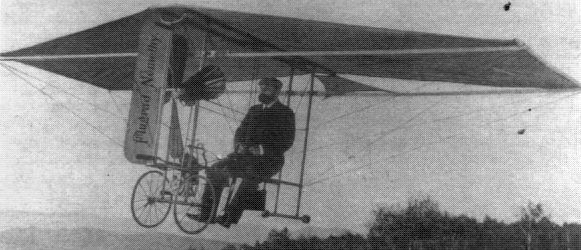
Designed and built by Emil von Némethy at his factory in Arad, Hungary (now in Romania). The construction of his Flugrad (“flying wheel”) started sometime in 1899 yet wasn’t completed until 1901. A second machine appeared in 1903 – pictured in a 1907 Scientific American article – and in 1910 produced a third and final original design. Némethy soon after however, gave up his experiments once his Anzani motor was damaged and he’d run out of money.
Némethy, Emil von
Emil Némethy, 1867 – 1943, was a pioneer aviator of Hungary (listed in Jane’s as Austria, as in the Austro-Hungarian Empire of the time). He is credited with early use of steel tubular structures for aircraft. Also, the Némethy Equation is one of the first mathematical means of calculating with precision the mass-lifting capability of aeroplanes.
Nemeth Umbrellaplane / Roundwing
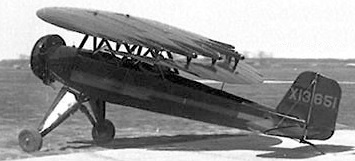
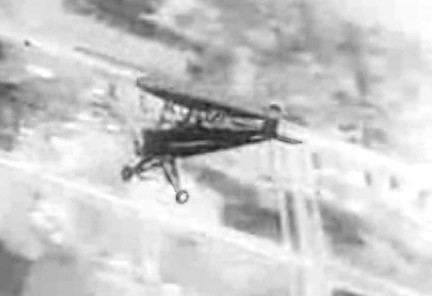
Initial experiments by Nemeth with rotating wingforms go back to 1929. In 1934 Nemeth designed, and students at Miami University (OH) built the Umbrellaplane / Roundwing.
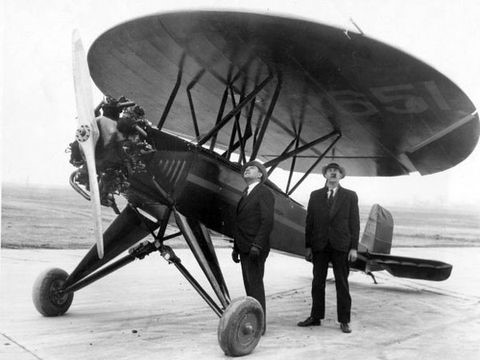
A two place monoplane featuring a circular wing on a lengthened Alliance Argo fuselage for STOL performance, to test circular wing configuration.
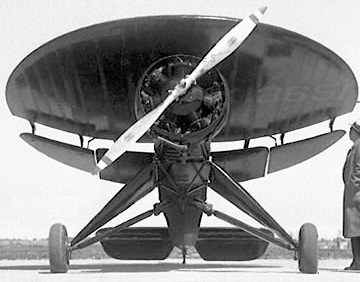
The sole example, NX13651, was powered by a 90hp Lambert, later repowered with a 120hp Warner Scarab, and later reworked as a divided wing. Name has been seen spelled Nuneth.
Wingspan: 16’0″
Length: 20’0″
Max speed: 120 mph
Cruise speed: 95-100 mph
Stall: 20-25 mph
Seats: 2

