In 1935 R.B.C.Noorduyn, experienced from the US Fokker company, went to Canada and organised the Noorduyn Aviation Company at Longue Pointe, Quebec.
Noorduyn designed and manufactured the Norseman eight/ten-seat cargo-transport aircraft, which first flew in 1935 and was delivered to the RCAF and the USAF; with the latter service it was designated C-64A. Norsemans were especially popular as bushplanes in the northern regions of Canada and with civilian operators in northern Europe.
The infant company’s elation over the initial acceptance of its new airplane was soon eclipsed by the emergencies of war. The Noorduyn factory became a natural for con¬version to production of North American Har¬vard (AT 6) trainers the Norseman and the Harvard both used the Pratt & Whitney R 1340. Although Norsemans converted into military airplanes continued in production, the emphasis was on the Harvards. From a staff of 150 employees, World War II changed the company almost traumati¬cally.
The Canadian Car & Foundry Company acquired Noorduyn’s assets in 1946 and produced an improved Norseman Mark V until 1950.
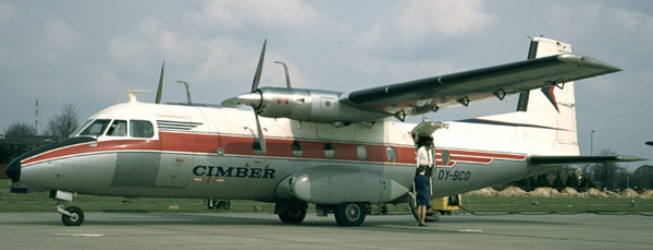
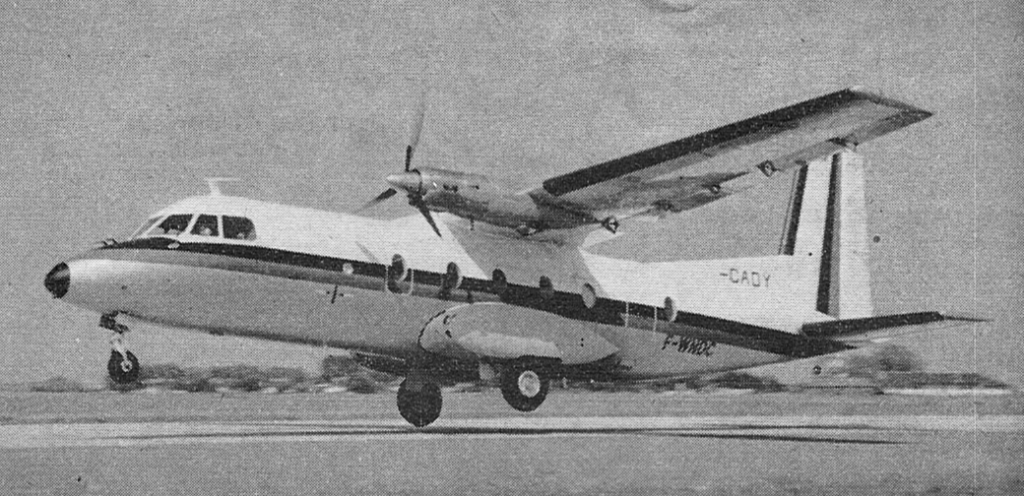
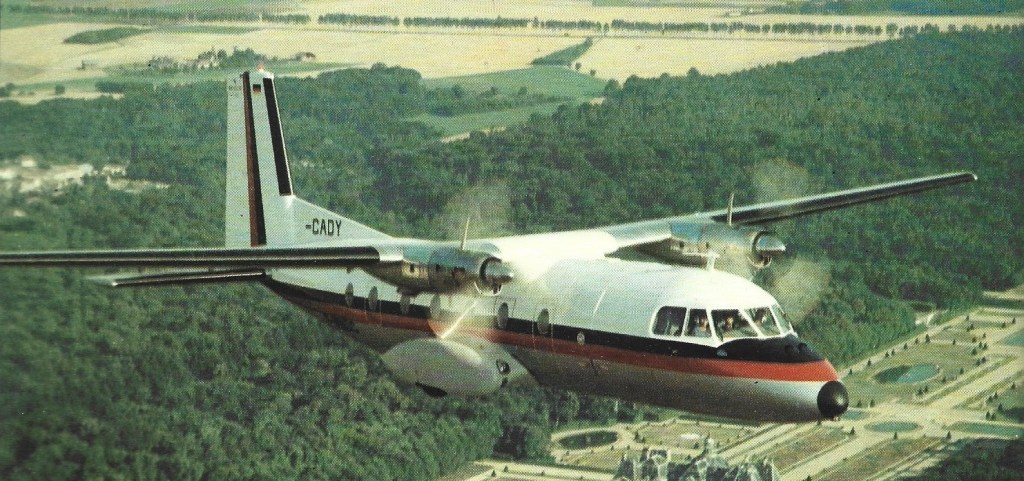
Ten MH260 with its rectangular section fuselage were built by Nord Aviation as the Nord 260. In 1961 started a significant redesign of the Nord 260. This resulted in the Nord 262 that had a redesigned fuselage with a circular cross section, pressurisation and more powerful powerplants. On 24 December 1962, this pressurised Nord 262 made its first flight.
The first production aircraft, F WKVA, flew in time to be exhibited at the Paris Aero Show in June 1963.
Air Inter, the French domestic airline, was expected to be the first operator of the Nord 262 pressurized version of the Nord 260.
The first Nord 262 for Climber Air – 1967
On 1 January 1970, the main three French nationalised aircraft companies – Sud-Aviation, Nord Aviation and the missile manufacturing company, SEREB – were merged into Aérospatiale. As a result of this merger the Nord 262 became a product of Aérospatiale. The Nord 262 became the Aerospatiale Fregate turboprop.
The 262A was powered by two Turbomeca Bastan VIC. The 262B designation was for the first four production aircraft. Aerospatiale developed the improved 262C Fregate, with more powerful Bastan VII engines and new wingtips that increased wingspan by 2 ft 3.5 in (0.70m). The generally similar military 262D Fregate or Frigate D was produced.
In 1964 Lake Central Airlines was buying eight Nord 262 to replace DC-3s in its fleet, with an option of eight additional.
When production ended in 1976, a total of 110 Nord 262 were built.
Mohawk Air Services, a subsidiary of Allegheny Airlines Inc., Washington D.C., was formed to control a conversion program for the Mohawk 298, UACL PT-6A-45-powered Nord 262 airliner, being undertaken by Frakes Aviation Inc. The first example flew on January 7,1975.
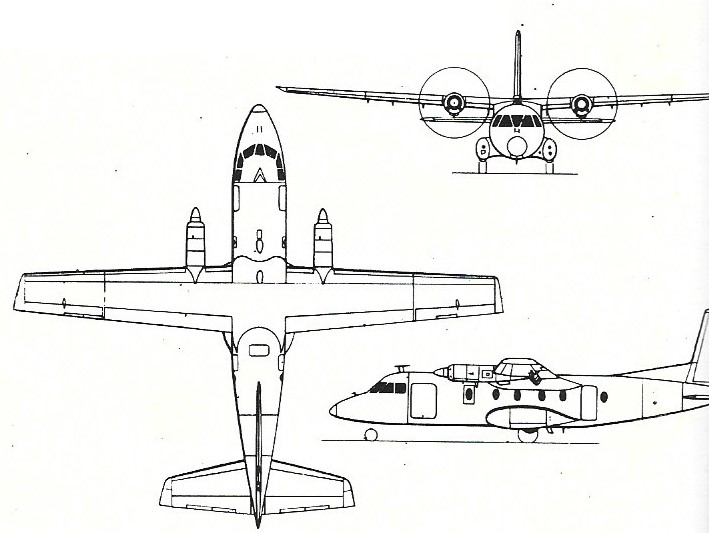
N.262A Engines: 2 x Turbomeca Bastan VIC, 1080 shp / 805 ekW Wingspan: 71 ft 10.25 in / 21.90 m Wing area: 592.03 sq.ft / 55.00 sq.m Length: 63 ft 3 in / 19.28 m Height: 20 ft 4 in / 6.20 m Empty operating weight: 15,498 lb / 7030 kg MTOW: 23,369 lb / 16,600 kg Max speed: 239 mph / 385 kph Cruise: 233 mph / 375 kph Service ceiling: 23.500 ft / 7165 m Range no res: 864 mi / 1390 km Crew: 2 Passenger capacity: 29
Nord N 262 D Frégate Engine: 2 x Turboméca Bastan VIII A, 1341 shp Length: 63.255 ft / 19.28 m Height: 20.374 ft / 6.21 m Wingspan: 71.85 ft / 21.9 m Max take off weight: 23373.0 lb / 10600.0 kg Max. speed: 226 kts / 418 km/h Service ceiling: 26247 ft / 8000 m Range: 567 nm / 1050 km Crew: 2 Payload: 29 pax
Fregate Engines: 1045shp Max cruise: 225 mph Econ cruise: 192mph Stall: 80mph Fuel cap: 3530lb Service ceiling: 25,750 ft SE service ceiling: 13,500ft ROC: 1160fpm SE ROC: 500fpm Min field length: 2575ft Payload with full fuel: 4209 lb Max range: 965sm Max payload: 5867 lb Pressurisation diff: 4.2psi Seats: 29 Gross wt: 22,100 lb Equipped empty wt: 14,555 lb Useful load: 7545 lb
Development of a 17-seat light commuter airliner, known as the M.H.250 Super Broussard started in 1957. The prototype of the MH250, powered by two Pratt & Whitney Wasp-1830 piston engines, flew first on 20 May 1959. It was soon realised that turboprops should be employed and further development resulted in the MH260 with enlarged fuselage and powered by Turboméca Bastan turboprops. In October 1959, Avions Max Holste entered into a co-production arrangement with Nord Aviation so that the new aircraft could be manufactured. The prototype of the M.H.260, the F-WJDV, flew on 29 July 1960. Ten MH260 with its rectangular section fuselage were built by Nord Aviation as the Nord 260. In 1961 started a significant redesign of the Nord 260. This resulted in the Nord 262.
Air Inter, the French domestic airline, was expected to be the first operator of the Nord 262 pressurized version of the Nord 260, formerly known as the Super Broussard. Four Nord 262s were ordered by Air Inter.
Production of the Nord 260 was virtually complete in 1963, having totalled ten in addition to the prototype F WJDV. The first eight of the production batch were registered as follows: No. 1 F-WJSN trials aircraft No. 2 F BKRB Nord demonstrator No. 3 F BKRH Air Inter trials, 1963 No. 4 F BKSS Air Inter trials, 1963 No. 5 LN LMB Leased to Wideroe No. 6 F BLGP No. 7 F BLHN No. 8 LN LME Leased to Wideroe
Engine: Potez 4D.32, 240 hp Span, 31 ft 2 in (9.5 m) Length, 26 ft 8 in (8.12 m) Wing area, 175 sq.ft (16.26 sq.m)
Engine: Potez 4D 34B, 260 hp Max speed, 161 mph (260 kph) Cruise, 146 mph (235 kph) at 7,545 ft (2425 m) Initial climb, 1,180 fpm. (6 m/sec) Normal range, 620 mls (998 km) at 7,545 ft (2 425 m) Empty weight, 1,896 lb (860 kg) Loaded weight, 2,690 lb (1220 kg) Span, 31 ft 2 in (9.5 m) Length, 26 ft 8 in (8.12 m) Wing area, 175 sq.ft (16.26 sq.m)
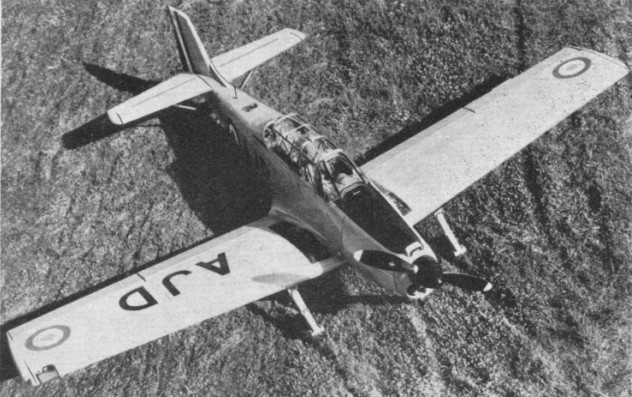
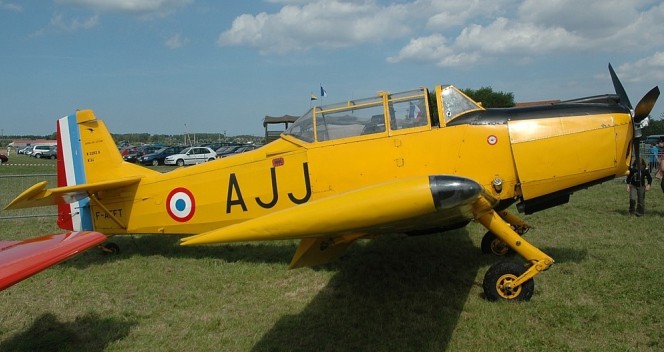
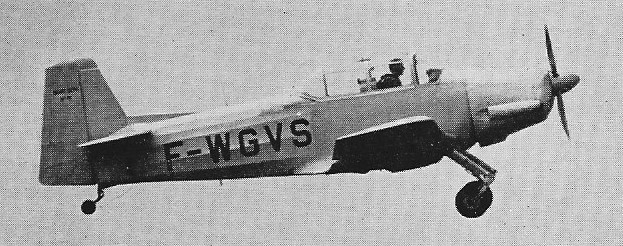
The N.3201 was designed for an official competition for a tandem two-seat primary trainer for the government-sponsored flying schools.
The N.3201 first flew on 22 June 1954, powered by a 170 hp SNECMA-Regnier engine.
The N.3200 prototype first flew on 10 September 1954, powered by a 260 hp Salmson-Argus 8AS-03 engine.
Apart from the engine installed, both models are identical,
N.3200 Engine: Salmson-Argus 8AS-03, 260 hp Wingspan: 32 ft 1.5 in Length: 26 ft 2.5 in Height: 10 ft 2.75 in
N.3201 Engine: SNECMA-Regnier, 170 hp Wingspan: 32 ft 1.5 in Length: 26 ft 2.5 in Height: 10 ft 2.75 in Empty weight: 1742 lb Loaded weight: 2405 lb Max speed: 150 mph at SL Cruise: 124 mph ROC: 984 fpm Endurance: 2 hr
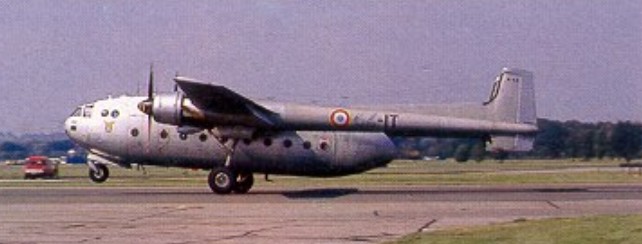
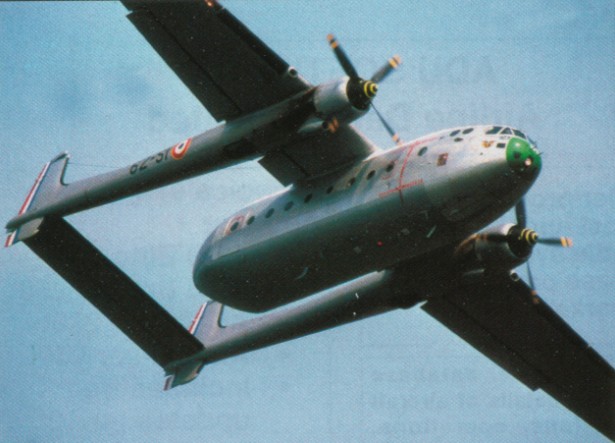
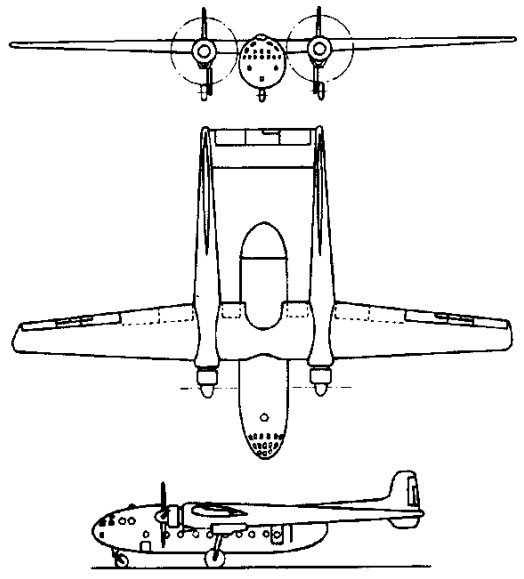
Designed as a military transport for service with the French air force, the Nord 2500 Noratlas prototype (F-WFKL) was flown for the first time on 10 September 1949. Of similar twin-boom configuration to the Fairchild C-82 and C-119 Flying Boxcar, the prototype was powered by two 1212kW SNECMA-built Gnome-Rhone 14R radial engines. This was followed by two N 2501 prototypes which introduced the powerplant intended for production aircraft, comprising two 1521kW SNECMA-built Bristol Hercules 739 radial engines, and the first of these (F- WFRG) was flown on 28 November 1950.
Satisfactory testing led to the initiation of production, and the Noratlas became standard equipment in the air forces of France, West Germany and Israel, providing valuable long-term service. Operated normally by a crew of four or five, the Noratlas has the capacity for 7.5 tons of cargo, or can accommodate 45 troops (or passengers in civil use), 36 fully-equipped paratroopers, or 18 stretchers and medical attendants when used for casualty evacuation. The German Luftwaffe received a total of 186 of these transports, 25 built by Nord and the balance produced under licence in Germany by the Flugzeugbau Nord. When production ended in October 1961, French and German sources had built a total of 425 Noratlas aircraft in several versions, and the type remained in service until the late 1980s.
Nord 2501 Engines: 2 x SNECMA Hercules 730, 1521kW / 2012 hp Max take-off weight: 21000 kg / 46297 lb Empty weight: 13075 kg / 28826 lb Wingspan: 32.5 m / 106 ft 8 in Length: 21.95 m / 72 ft 0 in Height: 6.0 m / 19 ft 8 in Wing area: 101.2 sq.m / 1089.31 sq ft Max. speed: 238 kts / 440 km/h / 273 mph Service ceiling: 7500 m / 24600 ft Range: 3000 km / 1864 miles Crew: 4-5 Passengers: 45 Payload: 8458kg
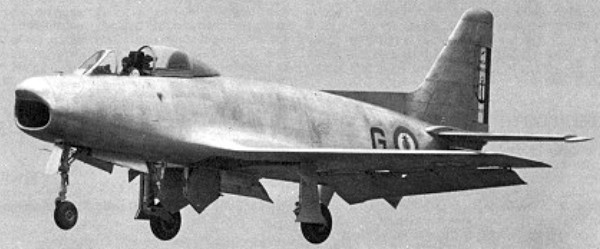
In June 1946, the Service Technique Aeronautique issued a preliminary requirement for a shipboard fighter armed with three 20mm or 30mm cannon and capable of carrying two 500kg bombs or eight 90mm rockets. Responding to this requirement, the SNCA du Nord tendered the Nord 2200, designed by a team led by Messrs Coroller, Dupin and Buret, in competition with the Aerocentre NC 1080 and the Arsenal VG 90.
Powered by a 2268kg Hispano- Suiza Nene 102 turbojet and featuring a 24 degree sweptback laminar-flow wing with large Fowler-type flaps, the Nord 2200 was first flown on 16 December 1949, and was fitted with neither wing folding nor armament. On 24 June 1950, the sole prototype was damaged and the opportunity was taken to fit a servo control system, introduce redesigned and larger vertical tail surfaces, and make provision for an AI radar scanner over the engine air intake. Flight testing was resumed on 24 May 1951, but in 1952 the decision was taken by the Aeronavale to adopt the de Havilland Sea Venom to meet its shipboard fighter requirement. Nevertheless, flight testing of the Nord 2200 continued until June 1954.
Max take-off weight: 7890 kg / 17395 lb Empty weight: 4830 kg / 10648 lb Wingspan: 12.00 m / 39 ft 4 in Length: 13.90 m / 46 ft 7 in Height: 4.80 m / 16 ft 9 in Wing area: 31.60 sq.m / 340.14 sq ft Max. speed: 936 km/h / 582 mph
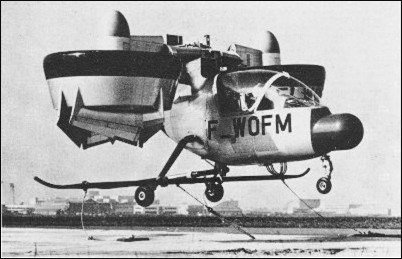
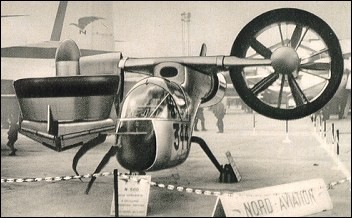
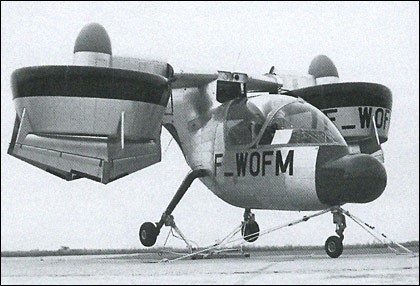
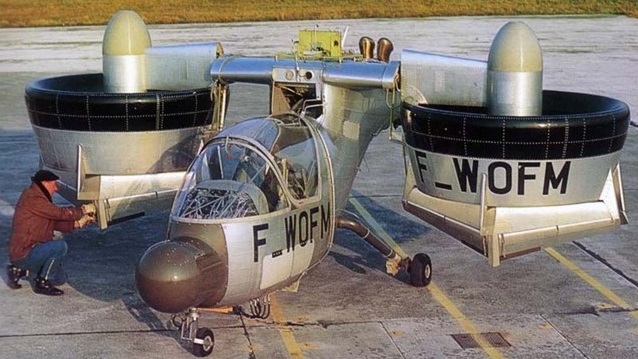
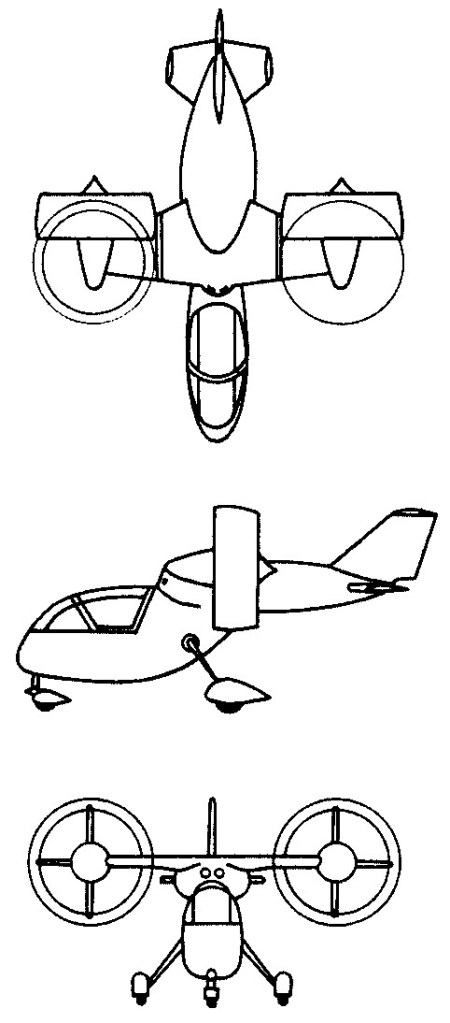
The Nord 500 was a single seat, company funded research aircraft. Its mission was to evaluate principles of the Tilt Duct propulsion concept for VTOL aircraft. The enclosed cabin contained an ejection seat. Two 317hp Allison T63-A-5A (or Allison T63-A5T, or 250-C18, depending on the source) turboshaft engines were located side by side in the rear part of the fuselage. They drove two 1.5m diameter props through interconnected shafts. Moveable vanes in the propeller slipstream controlled the duct positions aerodynamically. There were no other mechanical controls for rotating the ducts. The ducts tilted, along with a short section of wing. During hover, control in roll was by differential thrust, while control in pitch was by collective tilting of the ducts. There was no provision for attitude control of the fuselage because the ducts pivoted freely. The intended top speed was 218 miles per hour.
The first prototype was completed in Spring 1967 and was used for mechanical and ground tests. The second prototype made its first tethered flight during July 1968.
Nord merged with the Aerospatiale Corporation in about 1970, and the aircraft became known as the Aerospatiale N 500. Although a more sophisticated and more powerful version was in planning, all efforts on the Nord 500 appear to have stopped by 1971.
Nord-500 Engine: 2 x Allison T-63-A-5A turboshaft, 233kW Wingspan: 6.1m Length: 6.6m Height: 3.1m Max take-off weight: 1200kg Max speed: 350km/h
Under the designation Nord 1601, Nord designed a single-seat twin turbojet-powered aircraft to investigate the aerodynamic capability and efficiency of swept wings and related high-lift devices. A cantilever mid-wing monoplane with 33° of sweepback on the wing leading edges, the N 1601 had a wing incorporating ailerons, spoilers, leading-edge slats and trailing-edge flaps. The configuration included swept tail surfaces, and there were retractable tricycle landing gear and two 1814kg thrust Rolls-Royce Derwent 5 turbojet engines in underslung wing-mounted nacelles on each side of the fuselage. The pilot was accommodated on a Martin-Baker ejector seat in a cockpit enclosed by a jettisonable canopy. The aircraft was first flown on 24 January 1950, and the research programme of the 12.46m span N 1601, which had a maximum speed of 1000km/h and a ceiling of 12000m, provided valuable design information. An all-weather fighter version of this aircraft was allocated the project number N 1600 but was not built.
Nord 1601 Engines: 2 x Rolls-Royce Derwent 5 turbojets, 1814kg Wingspan: 12.46 m / 41 ft 11 in Max. speed: 1000 km/h / 621 mph Ceiling: 12000 m / 39350 ft
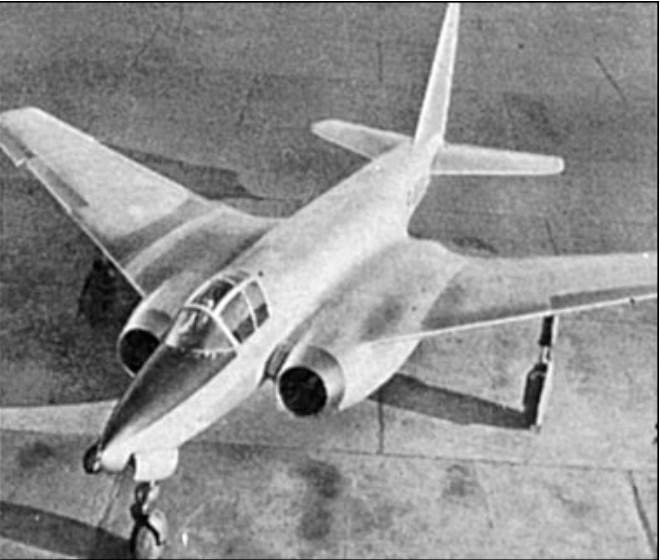
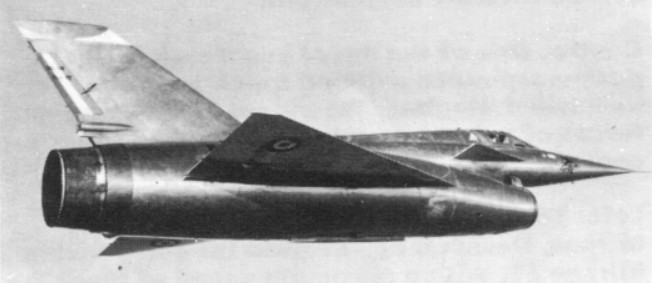
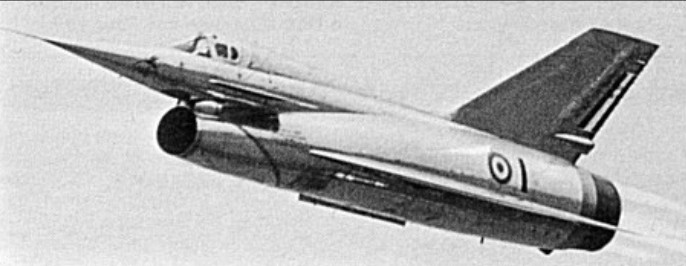
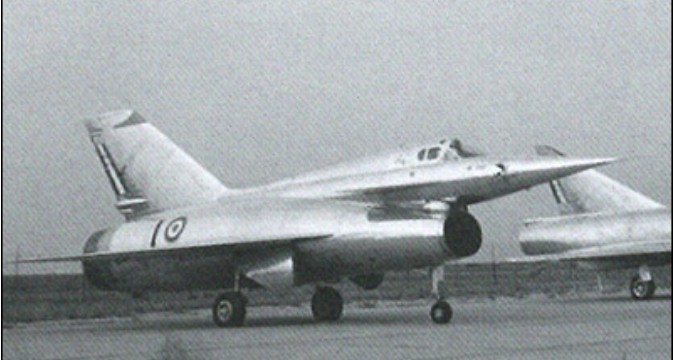
The Gerfaut lB and Gerfaut II prototypes paved the way for the N.1500 Griffon prototype of interceptor potential. After early tests of the Gerfaut la, Nord designed and built the Nord 1500-01 Griffon I research aircraft, which was intended to flight-test a combined turbojet-ramjet power unit. A delta wing aircraft with 60 degrees of sweepback on the leading edge, the N 1500 had elevons for control in pitch and roll. Thus the tail unit comprised only swept vertical surfaces, and fixed foreplanes were mounted on each side of the forward fuselage.
This flew on 20 September 1955 with a 4100kg thrust SNECMA Atar 101G21 afterburning turbojet, but was soon fitted with the planned combination powerplant comprising a 3800kg thrust Atar 101F turbojet and a Nord ramjet to produce the Griffon II and achieved Mach 1.85 in 1957. This was capable of supersonic performance on its ramjet, but was not developed into an operational type.
At the completion of initial testing the airframe was modified to accept a 3500kg thrust Atar 101E3 turbojet within the ducting of an integral ramjet of Nord design, the turbojet being located just forward of the ramjet burners. Then redesignated N 1500-02 Griffon II, it was flown first on 23 January 1957, completing more than 200 test flights before the Nord research programme ended in 1959.
27 October 1958 pilot Andre Turcat set closed circuit speed record of 1,638 kmh. On 25 February 1959 it set a 1018 mph, world speed record over a 100 km closed course and 13 October 1949 saw 1448 mph at 50,000 ft.
Some testing was carried out under USAF research contract.