J.O.Noury
Canada
Built the Noury T-65 Noranda in 1947. The Noury Aircraft company, prototype and all rights were sold to Canadian Car and Foundry Co but development was abandoned.
J.O.Noury
Canada
Built the Noury T-65 Noranda in 1947. The Noury Aircraft company, prototype and all rights were sold to Canadian Car and Foundry Co but development was abandoned.
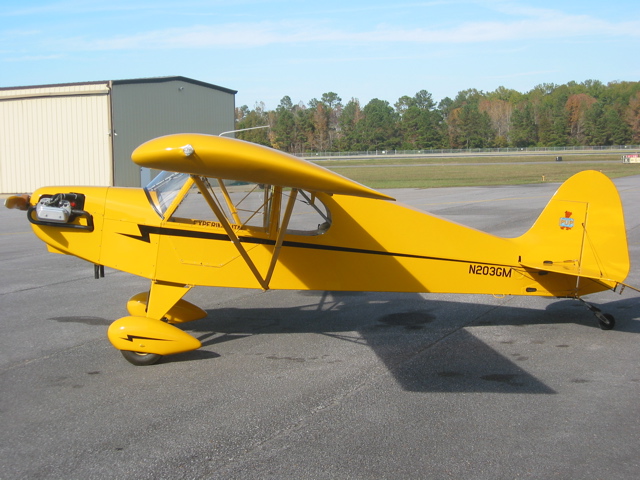
Bob Counts developed the single-seat N-3 Pup in the mid-’80s as what might be termed the third generation of ultralights. The Pup was among the first ultralights to resemble a general aviation aircraft, the Piper J-3 Cub in this case. Like several innovative ultralights, the N-3 Pup won a Best New Design award at its first Sun ’n Fun appearance.
The original N-3 Pup being a ¾ scale Super Cub replica. Centre mounted joy stick, rudder pedals, tailwheel steerable through rudder pedals. The N3 Pup has a welded chromemoly steel fuselage and a two-cylinder horizontally-opposed Global engine to add to its air of authenticity. By 1995 marketed as the Preceptor Aircraft Corp Pup from 1230 Shepard St, Hendersonville, NC 28792, USA.
The N-3 Pup can be ordered with folding wings. In less than ten minutes you can fold your wings and take your pup home with you, or unfold them and go flying. The N-3 Pup is a real joy to fly with easy, docile handling. The N-3 Pup built as a bare minimum plane will meet the FAR 103 requirement.
The N-3 Pup was followed by Counts’ larger, souped up version of the N-3, the Super Pup. Empty weight (450 pounds) and flight speeds take it out of the ultralight category. The Super Pup has folding wings, short takeoff and landings and a reliable 4 stroke engine. Wing sub-kits come with ailerons, all hardware, brackets, fittings, fuel tanks, ribs, skins, spars and lift struts. No fabric.
Fuselage sub-kits come with stabilizers, elevators, rudder, landing gear, seat cusions, control systems, all glass, blank instrument panel, wheels and brakes, tailwheel, stringer formers, shock struts, brackets, fittings, firewall and all hardware and necessary accessories. No fabric.
Firewall forward package comes with engine, exhaust stacks, intake manifolds, carb heat, engine mount, prop, carburetor and hardware Engine prices will vary depending on model, Horsepower and electrical option.
The two place Ultra Pup features folding wings, roomier cabin, and electric starting, which all called for a redesigned fuselage. The CG was shifted to accommodate the extra weight up front. Instead of adding weight in the tail, they used heaver-gauge tubing at strategic locations. Thus, we achieved the desired CG shift by adding strength, not just dead weight. Building smarter safer aircraft for all to enjoy has always been the “Preceptor Way”.
Wing sub-kits come with ailerons, all hardware, brackets, fittings, fuel tanks, ribs, skins, spars and lift struts. No fabric.
Fuselage sub-kits come with stabilizers, elevators, rudder, landing gear, seats cusions, control systems, all glass, blank instrument panel, wheels and brakes, tailwheel, stringer formers, shock struts, brackets, fittings, firewall, all hardware and necessary accessories. No fabric.
Firewall forward package comes with engine, exhaust stacks, intake manifolds, carb heat, engine mount, prop, carburetor and hardware. Engine prices will vary depending on model, Horsepower and electrical option.
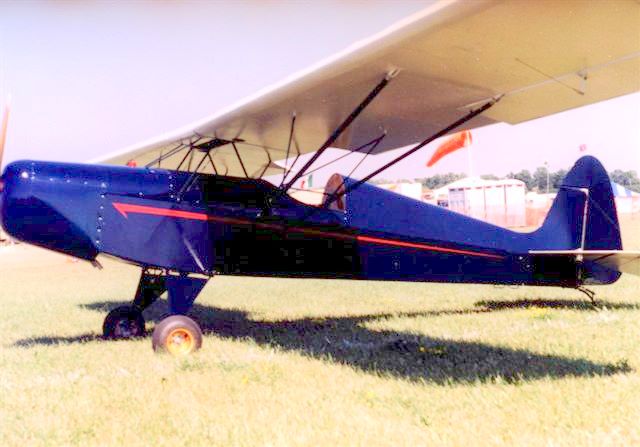
The LSA Stinger uses the same fuselage as the N-3 with front fuselage wider, cabin structure deleted and combing added. The (1995) US$6700.00 kitset came complete with paint and ready to assemble. Skis and floats are optional. Preceptor has taken the same fuselage as used on the time proven N-3 Pup, made the front of the fuselage wider, left off the cabin structure, added a combing and have come up with one of the cutest and nicest flying little open cockpit parasols going. The Stinger brings back the joy of owning and flying an open cockpit airplane that has performance that will keep you smiling. A real beauty that looks and feels like an antique racer of the good old days.
Initially produced by Nostalgair, N-3 kits were subsequently made by Mosler Motors, which eventually sold kit production rights back to Counts. A company named TEC took over engine production from Mosler, but it quit making engines in 1991. At that point, Preceptor began assembling VW-based engines of various strengths. The 70-hp version remains the recommended engine for the Super Pup. Wing and fuselage kits may be bought separately, but one can save $1400 if they’re purchased together. A firewall-forward package for $7600 is for the 70-hp Preceptor VW-based engine that claims a 1400-fpm climb rate. Bob Counts’ son Duwayne runs Preceptor Aircraft by 1995, marketing the Cubs.
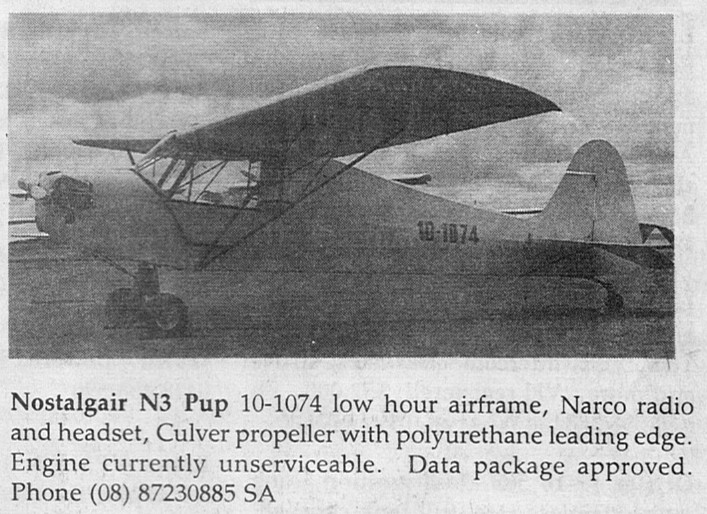
N-3 Pup
Engine: Global (920cc) 25hp
Empty wt: 248 lbs
Wing span: 30’
Wing area: 123 sq.ft
Height: 5’
Length: 16’6”
Fuel cap: 5 USG
Construction: Aluminium, Wood, Steel
Max wt: 535 lbs
Stall speed: 27 mph
Max speed: 63 mph
Vne: 95 mph
Climb rate: 600 fpm @ 45 mph
Design limit: +6, -3g
Glide ratio: 12-1
Wing loading: 4.35 lbs/sq.ft
Power loading: 21.4 lbs/hp.
N-3 Pup
Engine: TEC, 40 hp
Speed max: 63 mph
Cruise: 60 mph
Range: 150 sm
Stall: 27 mph
ROC: 500 fpm
Take-off dist: 150 ft
Landing dist: 150 ft
Service ceiling: 10,000 ft
HP range: 40-75
Fuel cap: 5 USG
Weight empty: 250 lbs
Gross: 650 lbs
Height: 5 ft
Length: 16.5 ft
Wing span: 30.5 ft
Wing area: 120 sq.ft
Seats: 1
Landing gear: tail wheel
N3 Pup
Engine: 1037 cc Hummel Half VW, 37 HP
Horsepower: 37-50
Propeller: 54 x 22
Overall Length: 16 ft 6 in
Height: 5 ft
Wingspan: 30 ft 6 in
Wing Area: 120 sq.ft
Wing Loading: 3.76 lb.sq.ft
Empty Weight: 254 lb
Gross Weight: 535 lb
Useful Load: 281 lb
Fuel Capacity: 5 USGallons
Best Speed: 63 mph
Cruise Speed: 60 mph
Stall Speed @ Gross w/Full Flaps: 27 mph
Service Ceiling: 10,000 ft
Takeoff Distance: 150 ft
Landing Distance: 150 ft
Rate of Climb (gross): 600 fpm
Fuel burn: 1.8 USgph
Ultimate “G” Loading: +10.0 – 3.0
Cabin Width: 22.75 in
Seats: 1
Landing Gear: FG (Tailwheel)
Complete Kit Cost (2009): US$ 11,700
Less engine, instruments, fabric, prop
Stinger
Engine: TEC 4 stroke, 50 hp
HP range: 35-60
Speed max: 90 mph
Cruise: 80 mph
Stall: 27 mph
Take-off dist: 100 ft
Landing dist: 150 ft
Fuel cap: 10 USG
Weight empty: 350 lbs
Gross: 650 lbs
Height: 5 ft
Length: 17 ft
Wing span: 30.5 ft
Wing area: 122 sq.ft
Seats: 1
Landing gear: tail wheel
Cockpit width: 22.75 in
Stinger
Engine: 1600 cc VW, 50 HP
Propeller: 58 x 28
Overall Length: 17 ft 3 in
Height: 5 ft 6 in
Wingspan: 30 ft 6 in
Wing Area: 120 sq.ft
Wing Loading: 4 lb/sq.ft
Empty Weight: 400 lb
Gross Weight: 660 lb
Useful Load: 260 lb
Fuel Capacity: 10 USGallons (Option for 14 USGallons)
Best Speed: 90 mph
Cruise Speed: 80 mph
Stall Speed @ Gross w/Full Flaps: 35 mph
Service Ceiling: 10,000 ft
Takeoff Distance: 300 ft
Landing Distance: 300 ft
Rate of Climb (gross): 1000 fpm
Fuel burn: 3.5 USGallons Per Hour
Cabin Width: 22.75 in
Ultimate “G” Loading: +5.0 – 3.0
Landing Gear: FG (Tailwheel)
Seats: 1
Super Pup
Engine: VW, 50 hp
HP range: 50-75
Speed max: 115 mph
Cruise: 95 mph
Range: 300 sm
Stall: 35 mph
ROC: 1500 fpm
Take-off dist: 150 ft
Landing dist: 150 ft
Service ceiling: 12,000 ft
Fuel cap: 12 USG
Weight empty: 350 lbs
Gross: 1000 lbs
Height: 5.5 ft
Length: 17.25 ft
Wing span: 30.5 ft
Wing area: 122 sq.ft
Seats: 1
Landing gear: tail wheel
Super Pup
Engine: 2180 cc VW Conversion 70 HP
Horsepower: 50 – 80
Propeller: 62 x 28
Overall Length: 17 ft 3 in
Height: 5 ft 6 in
Wingspan: 30 ft 6 in
Wing Area: 120 sq.ft
Wing Loading: 6.99 lb/sq.ft
Empty Weight: 450 lb
Gross Weight: 1100 lb
Useful Weight: 650 lb
Fuel Capacity:14 + USGallons
Best Speed: 110 mph
Cruise Speed: 90 mph
Stall Speed @ Gross w/Full Flaps: 35 mph
Service Ceiling: 12,000 ft
Takeoff Distance: 300 ft
Landing Distance: 300 ft
Rate of Climb (gross): 1400 fpm
Maximum Range Fuel Burns: 4.0 USgph
Landing Gear: FG (Tailwheel)
Seats: 1
Cabin Width: 22.75 in
Ultimate “G” Loading: +6.0 – 3.0
Complete Kit Cost (2009): US$ 15,900
Less engine, instruments, fabric, prop
Ultra Pup
Engine: TEC 4 stroke, 60 hp
HP range: 60-80
Speed max: 115 mph
Cruise: 90 mph
Range: 390 sm
Stall: 37 mph
ROC: 1500 fpm
Take-off dist: 200 ft
Landing dist: 200 ft
Service ceiling: 12,000 ft.
Fuel cap: 14 USG
Weight empty: 450 lbs
Gross: 1000 lbs
Height: 5.5 ft
Length: 17.25 ft
Wing span: 30.5 ft
Wing area: 120 sq.ft
Seats: 2
Landing gear: tail wheel.
Ultra Pup
Engine: 2180 cc VW Conversion
Propeller: 62 x 28
Horsepower: 60 – 80
Overall Length: 17 ft 3 in
Height: 5 ft 6 in
Wingspan: 30 ft 6 in
Wing Area: 120 sq.ft
Wing Loading: 6.99 lb/sq.ft
Empty Weight: 450 lb
Gross Weight: 1100 lb
Useful Weight: 650 lb
Fuel Capacity: 14 + USGallons
Top Speed: 115 mph
Cruise Speed (75% power): 80 mph
Stall Speed @ Gross w/Full Flaps: 35 mph
Service Ceiling: 12,000 ft
Takeoff Distance: 300 ft
Landing Distance: 300 ft
Rate of Climb (gross): 1400 fpm
Maximun Range: Up to 350 Miles
Cabin Width: 24.75 in
Ultimate “G” Loading: +6.0 – 3.0
Landing Gear: FG (Tailwheel)
Seats: 2 – Tandem
Complete Kit Cost (2009): US$ 17,295
Less engine, instruments, fabric, prop
A powered version of the Waco CG-4 Glider with two Franklin 6AC-298-N3 engines.
The 1926 Loomis Special was a redesign by C G Taylor of another plane for barnstormer Jack Loomis (Taylor’s flight instructor). With a steel tube fuselage, Clark-Y wing, and two place cabin under a monoplane wing. Registered N2594 c/n 2, powered by a 120hp Anzani, it crashed in August 1927, and rebuilt as a four place open cockpit with a 135hp Hallett and reregistered N2954.
Engne: 120hp Anzani
Wingspan: 40’0″
Length: 24′
Pre-1928 a three-place JN-4D was rebuilt as 285=3035 c/n 1.
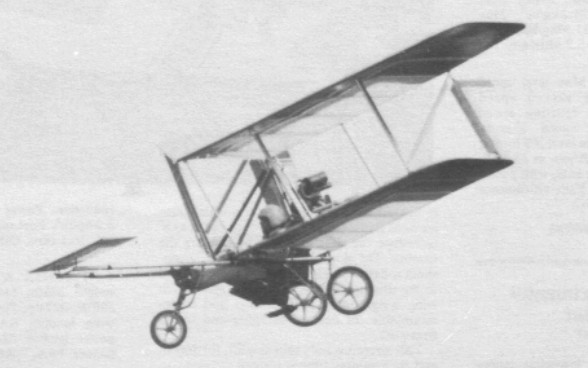
Single seat single engined biplane with two-axis control. Wings have swept back leading and trailing edges, and constant chord; no tail, canard wing. Pitch control by fully flying canard; yaw control by tip rudders between wings; no separate roll control; control inputs through stick for pitch and pedals for yaw. Wings braced by struts and transverse X cables; wing profile; double surface. Undercarriage has three wheels in tricycle formation; glass fibre suspension on main wheels. Push-right go left nosewheel steering independent from yaw control. Brake on nosewheel. Aluminium tube framework, without pod. Engine mounted between wings driving pusher propeller.
Shown at Sun ‘n’ Fun in March 1983 at Lakeland, Florida, the Viking is a variation on the famous Easy Riser theme.Whereas UFM of Kentucky has fitted the Easy Riser with a conventional tail giving rise to the Aeroplane (a 1983 model), Northstar had preferred a canard of variable incidence, thus acting as an elevator, for its Viking.
Designed for cross countries, it gives its pilot comfort and a large speed range. Its Kawasaki TA440 is equipped with an electric start, making it necessary to have a 12 V battery on board. The fuel tank is moulded into the seat back, whose structure is of glass fibre, and other nice touches include a twin blade ground adjustable variable-pitch propeller and a rudder bar which is adjustable according to the height of the pilot. Northstar supplies its Viking in kit form requiring 75 100 h for assembly at an introductory price (March 1983) of $5395. The kit does not require any special tools, assembly being largely with pop rivets.
Engine: Kawasaki TA440, 38.5hp at 6000rpm
Propeller 60 in / 1.52 m ground adjustable) inch
Micro V belt reduction, ratio 2.25/1
Max static thrust 235 lb, 107 kg
Power per unit area 0.22 hp/sq.ft, 2.4 hp/sq.m
Fuel capacity 5.0 US gal, 4.2 Imp gal, 18.9 litre
Wing span 32.0 ft, 9.75 m
Total area of main wings 170 sq.ft, 15.8 sq.m
Nosewheel diameter overall 16 inch, 41 cm
Main wheels diameter overall 20 inch, 51 cm
Empty weight 244 lb, 11.1kg
Max take off weight 502 lb, 228 kg
Payload 258 lb, 117 kg
Max wing loading 2.95 lb/sq.ft, 14.4 kg/sq.m
Max power loading 13.0 lb/hp, 5.9kg/hp
Load factors +5.0, 3.0 design
Max level speed 54 mph, 87 kph
Never exceed speed 55 mph, 88 kph
Max cruising speed 45 mph, 72 kph
Stalling speed 23 mph, 37 kph
Max climb rate at sea level 800 ft/min, 4.1 m/s
Best glide ratio with power off 7/1

The Northrop Special was built by Russ Northrop in 1952. Powered by an 85hp Continental C-85, he inverted gull-wing midget racer was competed into 1955, then was sold as N33N.
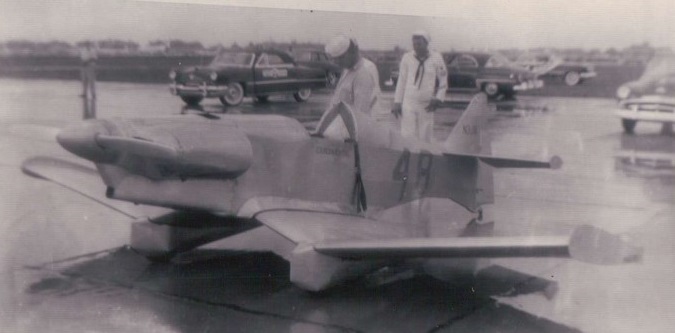
It is sometimes credited to Northrop Aviation, but there was no connection, and the spelling of Russell’s name is seen both ways.
Russell Northrup/Northrop and James R Williams,
Rochester NY.
USA
The spelling of Russell’s name is seen both ways.
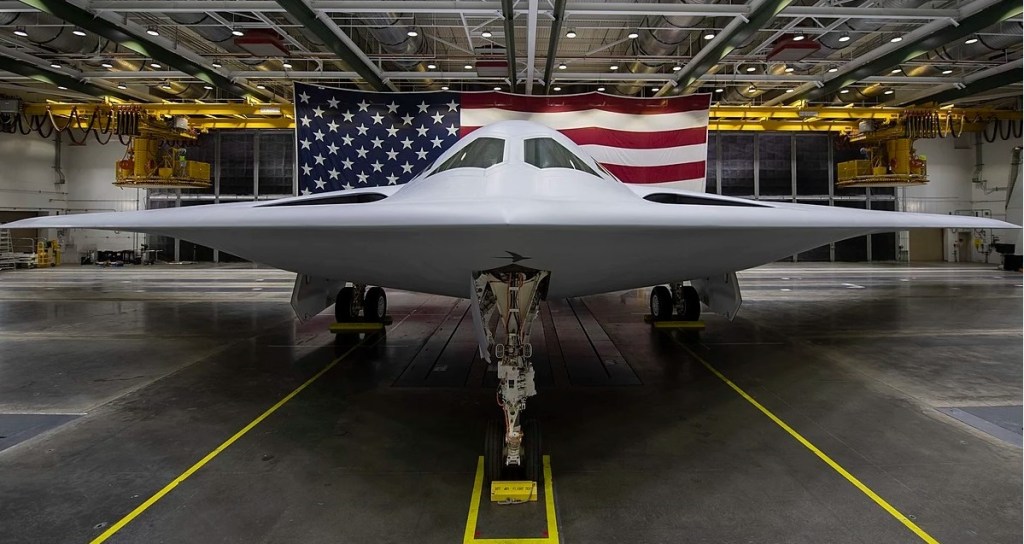
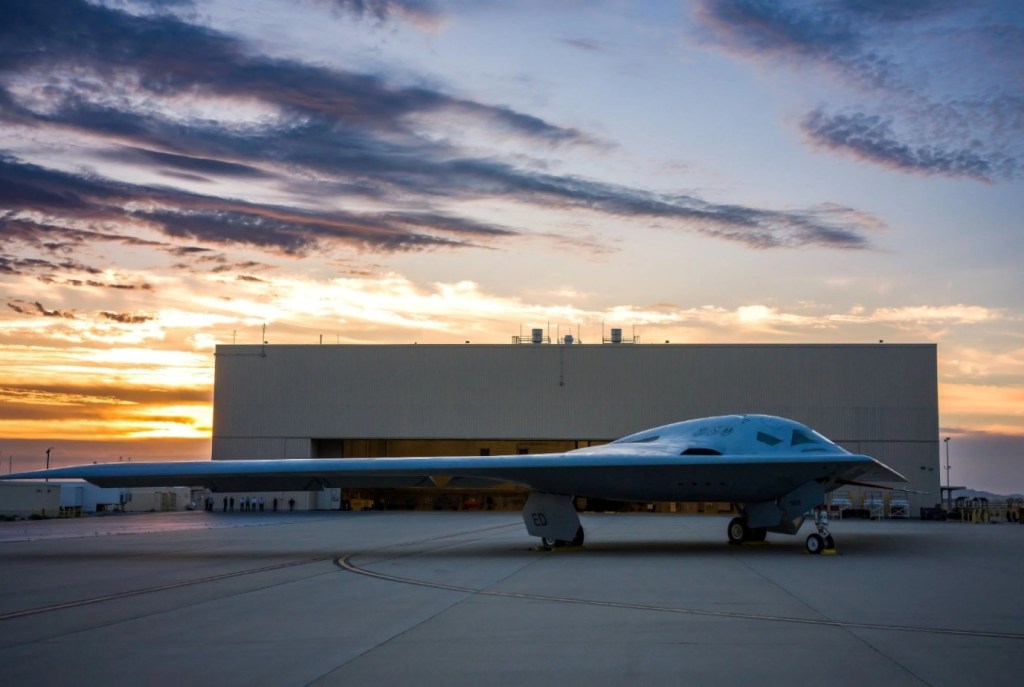
The Northrop Grumman B-21 Raider is an American strategic bomber under developed for the United States Air Force (USAF) by Northrop Grumman. As part of the Long Range Strike Bomber (LRS-B) program, it is a long-range, stealth intercontinental strategic bomber for the USAF, able to deliver conventional and thermonuclear weapons.
The classified Long Range Strike Bomber (LRS-B) program began in 2011, and the Air Force issued a request for proposal to develop a LRS-B aircraft in July 2014. A development contract was awarded to Northrop Grumman in October 2015. Boeing and Lockheed Martin, who submitted losing bids for the project, filed bid protests; in October 2016, the Government Accountability Office (GAO) rejected the challenges and sustained the USAF’s decision to award the LRS-B contract to Northrop Grumman. The GAO report revealed that cost was the deciding factor in selecting Northrop Grumman over the Boeing-Lockheed Martin team.
In March 2016, the USAF announced seven tier-one suppliers for the program: Pratt & Whitney, BAE Systems, Spirit AeroSystems, Orbital ATK, Rockwell Collins, GKN Aerospace, and Janicki Industries.
Many aspects of the B-21 program are highly classified; the program is designated as a special access program. The Congressional Research Service noted in a report that the B-21’s technical details and specifications, such as speed, enabling systems, “size, required stealth, structure, number and type of engines, projected weapons, and onboard sensors remain classified” although some information about various other aspects of the program have been made public since 2015. A 2015 media report said that the Air Force wanted the bomber to also function as an intelligence collection platform, battle manager, and interceptor aircraft. In 2016, then–Secretary of the Air Force Deborah Lee James said that the B-21 would be a “fifth-generation global precision attack platform” with networked sensor-shoot capability. Northrop Grumman described the B-21 at its 2022 “unveiling” as “the world’s first sixth-generation aircraft.”
The F-35 program manager Chris Bogdan said the B-21’s engines would be similar enough to the F-35’s Pratt & Whitney F135 engine to reduce its cost.
In January 2020, Air Force officials released new B-21 renderings and Northrop Grumman, showing the distinctive flush and blended inlets and the two-wheel main landing gear design. The drawing appeared to show a smaller, lighter aircraft than the B-2.
The program completed its critical design review in December 2018.
In September 2022, the USAF announced that the B-21 was to be unveiled in early December 2022 in Palmdale, California. The bomber was first shown to the public at a 2 December 2022 ceremony at Northrop Grumman’s production facilities in Palmdale, California. At the unveiling, Northrop CEO Kathy Warden said that the B-21 is designed with modular, open systems architecture to allow easy upgrades, and potentially, the ability to export components to foreign buyers. Warden said that the B-21’s internal operations were “extremely advanced compared to the B-2” and that the B-21 was slightly smaller than the B-2, with a longer range.
While the potential for an uncrewed flight was not mentioned during the ceremony, a US Air Force spokeswoman said the aircraft was “provisioned for the possibility, but there has been no decision to fly without a crew”.
At the 2016 Air Warfare Symposium, Air Force officials announced that the LRS-B would be formally designated “B-21” because the aircraft would be the 21st century’s first bomber. In September 2016, Air Force officials announced that the B-21 would be named “Raider” in honor of the Doolittle Raiders. The then-remaining survivor of the Doolittle Raiders, retired Lt. Col. Richard E. Cole, was present at the naming ceremony at the Air Force Association conference.
The head of the Air Force Global Strike Command said he expected the service would place an initial order for 100 B-21s and build up to a full fleet of 175 to 200. Two USAF studies suggested that Air Force could increase its initial purchase from 80-to-100 to 145 aircraft. Initial operating capability (IOC) was expected to be reached by 2030.

Assembly of the B-21 takes place at the United States Air Force Plant 42 near Palmdale, California, at the same facility Northrop Grumman used during the 1980s and 1990s to build B-2 bombers. In January 2017, Northrop Grumman was awarded a $35.8 million contract modification for a large coatings facility at Plant 42, to be completed by the end of 2019; the contract announcement did not specifically mention B-21, but the facility was likely meant for B-21 stealth coating. Because the program is classified, officials released very little information about it. By the summer of 2019 it was reported that construction of the first unit was underway. In early 2021, several media outlets reported that as completion of the first B-21 approached, construction on the second unit had begun.
By February 2022, six B-21s were under construction. The first B-21 was moved to a calibration facility the following month. About 5,000 Northrop Grumman employees worked on the program as of December 2022.
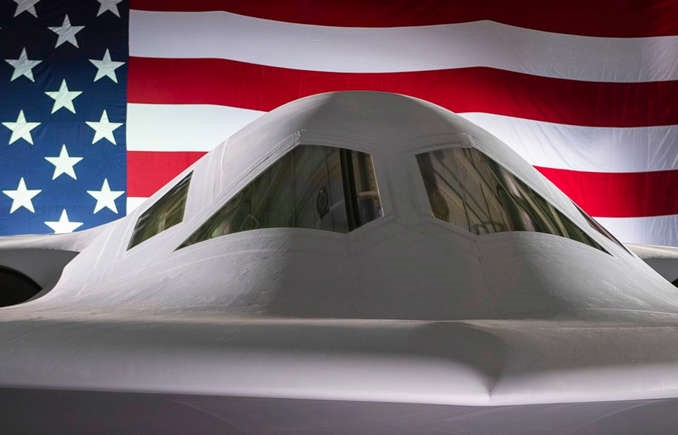
As of 2022, the B-21 was expected to enter service by 2026 or 2027. It is to complement and eventually replace the Northrop Grumman B-2 Spirit, but not the Boeing B-52 Stratofortress bombers.
In December 2022, the cost of a B-21 aircraft was estimated to be US$700 million; at the time, Air Force officials estimated that the cost to develop, purchase, and operate a fleet of 100 B-21s over a 30-year period would be at least $203 billion.
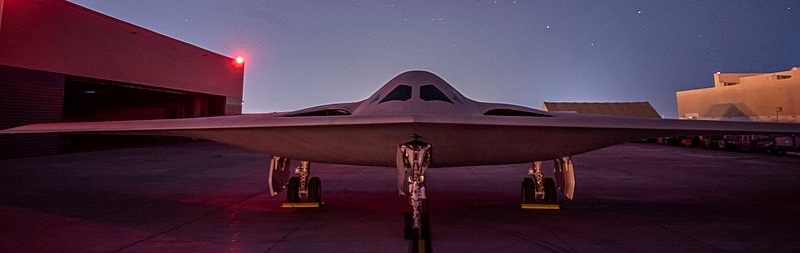
Maintenance and sustainment of the B-21 will be coordinated by Tinker Air Force Base, Oklahoma, while Edwards Air Force Base, California, will lead testing and evaluation. In March 2019, Ellsworth was selected as the base to host the first operational B-21 unit and the first training unit.
In May 2022, the USAF announced that they expected first flight of the B-21 to take place in 2023.
The new bomber has stayed on cost and on schedule. The Air Force has set a $500 million ceiling for the unit cost in 2010 dollars; in 2019, Northrop said the Air Force’s target cost would be just over $600 million, accounting for inflation.
The first new B-21s will be based out of Ellsworth Air Force Base in South Dakota, and formal training will be conducted there as well. Maintenance and sustainment will be handled at Tinker Air Force Base in Oklahoma, while testing and evaluation is being performed at Edwards Air Force Base in California.
B-21, also known as Cerberus, achieved its first flight to Edwards Air Force Base on November 10, 2023.

The consortium of Northrop Grumman and its subsidiary, Scaled Composites, along with BAE Systems, was among the most favoured teams to win the competition to replace hundreds of T-38 Talon trainers for the USAF under the T-X program.
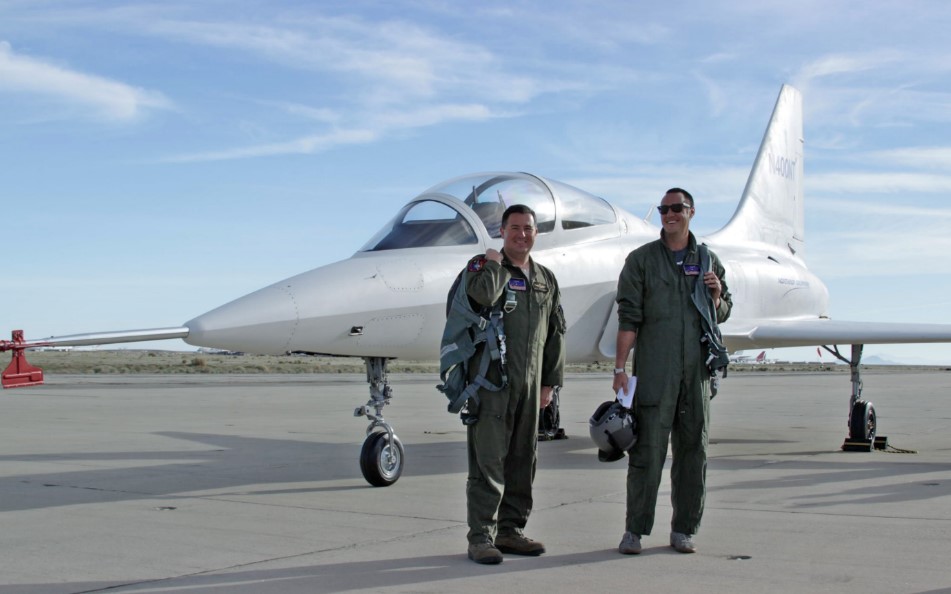
The Northrop Grumman and their teammates were progressing well with their T-X entrant, which received the in-house name Model 400. The jet was first spotted at Mojave Air And Space Port, where Scaled Composites calls home, in late August of 2016. The company made no comment on the prototype even as low quality photos of it taxiing hit the web. Not too long after it took to the skies, but still the only indication from Northrop Grumman that it existed was them stating that the Model 400 prototype would be officially unveiled in early 2017.
Originally, Northrop Grumman intended to run with an updated version of BAE System’s Hawk T2 trainer, but that idea was axed when it was clear that the 40-plus-year-old design would not meet the USAF’s performance requirements. Following this change in strategy, Northrop Grumman’s design process became especially secretive—although it was widely known that Scaled Composites, acquired by Northrop Grumman in 2007, would be heavily involved.
Dubbed the Model 400, the aircraft looks like a modernized, composite hybrid of the T-38 Talon and the F-20 Tigershark. It packs a single F404-GE-102D engine, a derivative of the same engine used in the F/A-18A/D, the JAS-39A/D (Volvo RM12), the F-117A, and India’s Tejas light fighter—as well as Lockheed’s T-X competitor, the T-50A.
The engine/airframe appears to lack an expanding nozzle usually indicative of an afterburning capability.
Ultimately, this design can potentially be pitched as an entirely new aircraft while still leveraging Northrop’s hugely successful T-38 Talon lineage.
Just around the time that the company was supposed to officially unveil their exciting new T-X contender, one that had been flying for some time at that, the company canned its participation in the T-X program entirely. The move was startling to say the least, with Northrop Grumman not only giving up the possible opportunity to build at least 350 new tactical jets—an opportunity that is becoming increasingly rare—but also giving up on 50 plus years of pilot training heritage.
A statement by Northrop Grumman reads:
“Northrop Grumman and its principal teammate BAE Systems have carefully examined the U.S. Air Force’s T-X Trainer requirements and acquisition strategy as stated in the final request for proposals issued on Dec. 30, 2016. The companies have decided not to submit a proposal for the T-X Trainer program, as it would not be in the best interest of the companies and their shareholders.”

