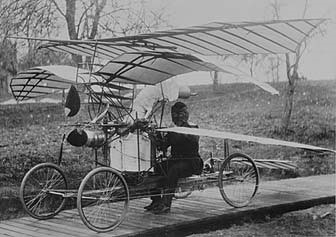
Nyberg Flugan / Fly

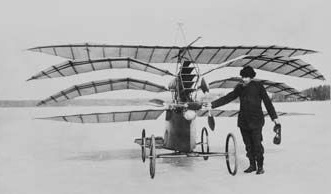
Carl Richard Nyberg (1858-1939) was a Swedish industrialist and the inventor of a successful blowtorch. He began work on this flying test-bed in 1897, with tests and alterations to the design of Flugan (The Fly) going on until around 1910. It had a wingspan of 5 meters, and the surface area of the wings was 13 m². It was powered by a steam engine heated by four of his blowtorches, producing 10 hp at 2000 rpm. The weight of the engine was 18 kg, giving a very good power-to-weight ratio for its time. The total weight of the plane was 80 kg, so the failure to fly was more related to poor propeller and wing technology. The challenge photo was probably taken in 1903 or later, when he started testing on the ice of the Baltic at his home on Lidingö outside Stockholm, rather than tethered around a circular board track in his garden.

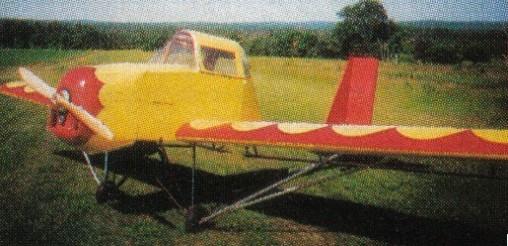
NWT Spruce Coupe

Fits Rotax or Kawasaki engines, and two wing lengths were available.

Top speed: 75 mph
Cruise: 60 mph
Stall: 35mph
Range: 80 sm
Rate of climb: 1200 fpm
Takeoff dist: 75 ft
Landing dist: 100 ft
Engine: Zenoah, 42 hp
HP range: 22-50
Fuel capacity: 6 USG
Empty weight: 300 lb
Gross weight: 600 lb
Height: 6 ft 3 in
Length: 16.9 ft
Wing span: 22 ft
Wing area: 88 sq.ft
Seats: 1
Landing gear: tailwheel

NuVenture

2009: 4184 W. Kelley • Fresno, CA 93722, USA.

NuVenture was formed for the express purpose of preserving and promoting the Questair designed Venture Model 20.
NuVenture has four immediate goals:

  1. To continue the availability of this very fine airframe kit to the amateur aircraft builder. Continental engines and McCauley propellers will continue to be available to builders on an OEM basis.
  2. To continue the availability of replacement parts to current owners and builders of the Venture Model 20. While no specific support is envisioned for the Questair Spirit, parts common to both the Venture and the Spirit should be available.
  3. To seek proper solutions to mechanical discrepancies which have surfaced in the years since the Venture Model 20 was introduced. These solutions will involve appropriate engineering and extensive testing.
  4. To provide for construction information assistance to current and future builders.

NuVenture is headquartered at 4184 W. Kelley in Fresno, California, 93722. The company factory and warehouse are currently located in Visalia, California. It contains the original Questair fabriaction equipment as well as the tooling required to produce the aluminum and steel parts of the airframe. There is currently enough inventory to construct several complete airframes.

Nurtanio NU-85 / NU-90 Belalang

NU-90 Belalang

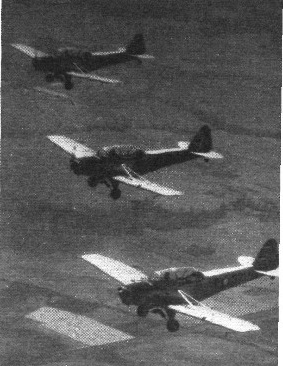
This aircraft is a low-wing conversion of the Piper Cub L-4J.
The prototype, designated NU-85, flew on April 17, 1958, and proved to be such an improvement over the original L-4J that the Indonesian Air Force was having all its L-4Js converted into Belalangs, with the production designation NU-90.
The programme was started in 1959 and the NU-90 became the standard primary trainer at the Air Force Flying School.

Engine: Continental C90-12F, 90 hp
Span: 31 ft l in
Length: 25 ft 3 in
Height: 6 ft 8 in
Wing area: 161.5 sq.ft
Gross weight: l,500 lb
Empty weight: l,038 lb
Max speed: 115 mph
Cruising speed: 90 mph
Max rate of climb at SL: 600 ft/min
Service ceilmg: 12,000 ft
TO run: 500 ft
Landing run: 400 ft
Range: 350 miles

Nurtanio NU-25 Kunang / NU-35 Kunang / Lipnur NU-25 Kunang / NU-35 Kunang

NU-25 Kunang

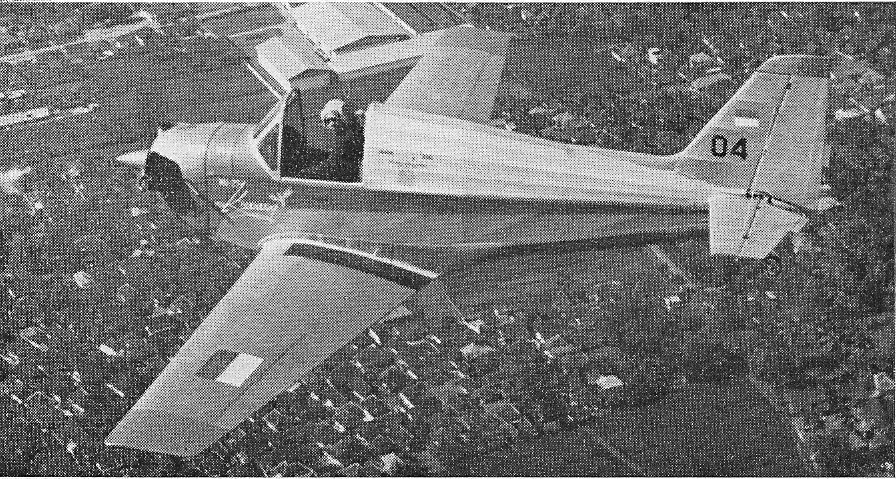
Development of the original NU-25 Kunang was started in 1957, to provide Indonesian flying clubs with an economical single-seat ultra-light trainer.
The original tapered wing, with fixed slots, was replaced by a constant-chord wing of 25 percent greater area during 1960. At the same time, the Volkswagen engine has been uprated from 25 to 35 h.p. and a cockpit canopy has been fitted. Now designated NU-35, the Kunang is of conventional wooden construction, with fabric covering.

NU-35 Kunang
Engine: Volkswagen, 35 hp
Span: 23 ft ll in
Height: 5 ft 11 in
Wing area: 102.6 sq.ft
Gross weight: 743 1b
Empty weight: 504 lb
Cruising speed: 80 mph
Max rate of climb at SL: 300 ft/min

Nurtanio Sikumbang

In 1953, the Indonesian Air Force began the development of a series of light combat and training aircraft at its research, development and production depot near Bandung.

The first was a single-seat light ground support aircraft named the Sikumbang, of which two prototypes were built.

NUD NU D.38

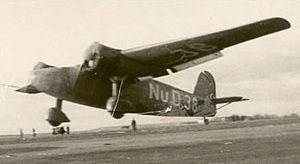
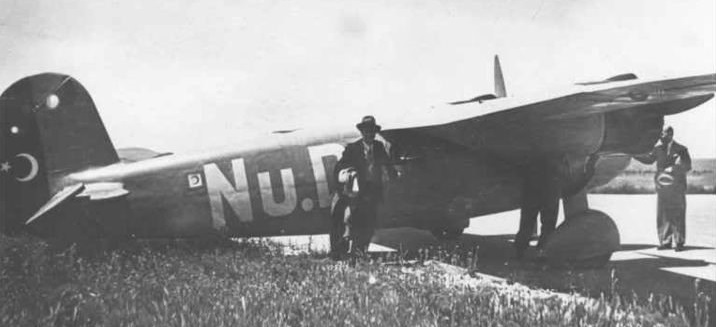
The Nuri Demirağ Nu.D.38 was a Turkish light civil transport, with twin engines and seating for four passengers, built in the early 1940s. Only one was constructed and flown.

Design work on the Nu.D.38 twin engine light transport began about 1938 and the aircraft was largely completed by 1941, but the first flight was delayed until 1944. Turkey remained neutral through most of World War II, only entering the war in 1945, after the first flight.

The Nu.D.38, manufactured by Nuri Demirağ in Istanbul, was a high cantilever wing aircraft. The wing, of tapered plan and all aluminium alloy stressed skin construction had a built up main spar and a secondary spar. There were pairs of split flaps inboard of the fabric covered ailerons. The fixed surfaces of the tail unit were also aluminium alloy structures with stressed metal skin. The tailplane, set at the top of the fuselage, was strut-braced from below. Control surfaces were fabric covered, with trim tabs.

The fuselage of the Nu.D.38 was an oval cross-section aluminium alloy monocoque, with stressed skin over frames and longitudinal stringers. The crew sat side by side at dual controls in a cabin with side access doors. The passenger compartment seated four, each with their own window, and was accessed through a starboard side door. There was a compartment for luggage or mail in the nose.

The Nu.D.38 was powered by two 160 hp (120 kW) Bramo Sh 14-A4 radial engines, mounted to the main wing spar on steel frames. It had a fixed, conventional undercarriage. A main shock absorber leg was attached to each of the steel engine frames, braced rearwards by a short auxiliary strut. Legs and wheels were enclosed in fairings.

The Nu.D.38 was first flown on 11 February 1944. No further aircraft were produced.

Gallery

Engines: 2 × Siemens-Halske (Bramo) Sh 14-A4, 120 kW (160 hp) each
Propellers: 2-bladed
Wingspan: 13.56 m (44 ft 6 in)
Wing area: 22.34 sq.m (240.5 sq ft)
Length: 8.30 m (27 ft 3 in)
Height: 2.20 m (7 ft 3 in)
Empty weight: 1,108 kg (2,443 lb)
Gross weight: 1,850 kg (4,079 lb)
Maximum speed: 271 km/h (168 mph; 146 kn) at sea level
Cruise speed: 250 km/h (155 mph; 135 kn)
Service ceiling: 6,650 m (21,820 ft)
Rate of climb: 3.40 m/s (669 ft/min) to 4,000m (13,120 ft)
Crew: 2
Capacity: 4 passengers
NUD NU D.36

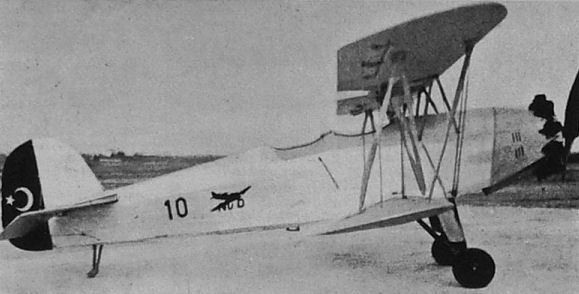
The Nuri Demirağ Nu D.36 was a 1930s Turkish two-seat training biplane built by the Nuri Demirağ Aircraft Works in Istanbul for the Turkish military.

The Nu D.36 is an unequal-span single-bay staggered biplane with a fixed conventional landing gear with a tailskid. It was powered by a 150 hp (112 kW) Walter Gemma I nine-cylinder radial engine. It had two open tandem cockpits for the pilot and trainee.

Engine: 1 × Walter Gemma I, 110 kW (150 hp)
Propeller: 2-bladed fixed pitch wooden propeller
Wingspan: 9.74 m (31 ft 11 in)
Wing area: 21.8 sq.m (235 sq ft)
Length: 7.3 m (23 ft 11 in)
Height: 2.44 m (8 ft 0 in)
Empty weight: 650 kg (1,433 lb)
Max takeoff weight: 1,000 kg (2,205 lb)
Maximum speed: 182 km/h (113 mph; 98 kn)
Range: 500 km (311 mi; 270 nmi)
Endurance: 3 hours 30 minutes
Service ceiling: 3,350 m (10,990 ft)
Time to altitude: 500 m (1,600 ft) in 2 minutes; 1,500 m (4,900 ft) in 10 minutes
Crew: 2

Noury T-65 Noranda

The T-65 Noranda two seat light cabin monoplane was designed by J.O. Noury of Noury Aircraft Ltd.

Mixed construction is employed, with fabric covering, and dual controls are fitted.

Soon after competition of the prototype in 1947, the Noury Aircraft company was purchased by the Canadian Car and Foundry Co and development was abandoned.

Engine: Continental C65, 65 hp
Wingspan: 33 ft
Length: 23 ft 6 in
Height: 7 ft
Empty weight: 810 lb
Loaded weight: 1380 lb
Max speed: 110 mph
Cruise: 95 mph