One Aircraft One Aircraft

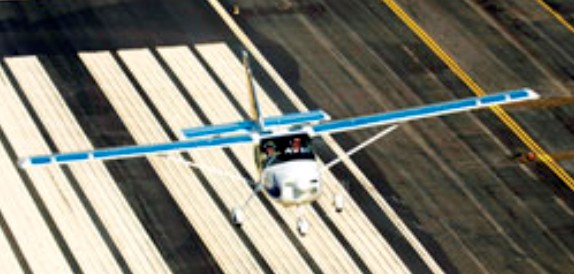
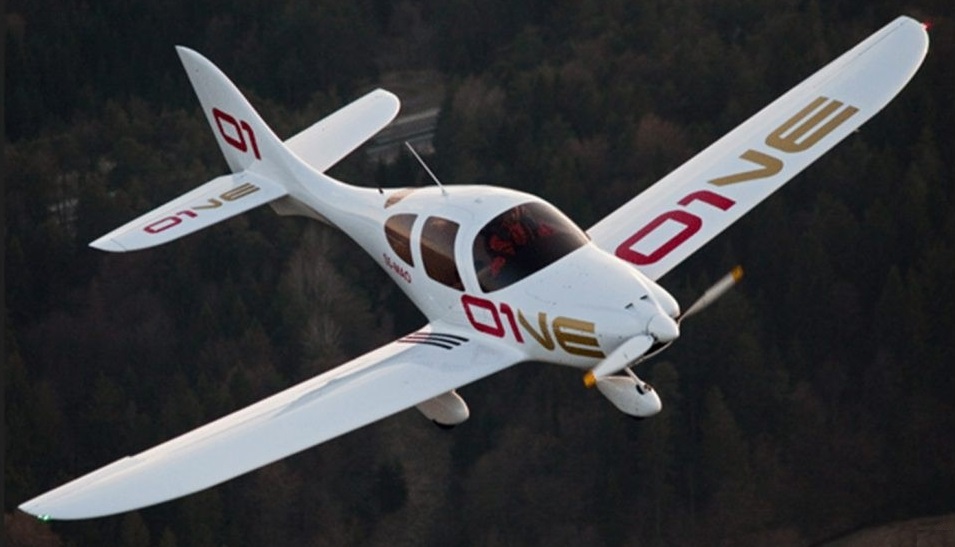
The One Aircraft is a 2 + 1 light sporting aircraft produced in Slovenia, the company One Aircraft being set up in 2014.

The aircraft was designed as a joint venture in Slovakia by two companies C2P DOO and KPS Pro DOO, the former carrying out design and the latter supplying metal parts.

Construction is all composite, with a Kevlar roll cage. The aircraft is said to have an endurance of up to nine hours and is fitted with adjustable rudder pedals and adjustable seats. The rear seat can be used as baggage space or for a small person or child up to 90 kg (198 lb).

Production of the aircraft takes place in the town of Grosuplje in central Slovenia, the Company having the ability to produce up to 40 aircraft per year. The Company has also announced that its engineers were in 2015 working on a hybrid variant, this model having an electric engine between the Rotax engine flange and the propeller flange to add an additional 35 kw of power for take-off and climb. The electric engine would be used in the event of an engine failure, providing up to 12 minutes endurance. The batteries are fitted in the wing and under the seats, a regulator being installed on the firewall.

Production was scheduled to commence in 2017.

Engine: Rotax 912ULS2, 75 kw (100 hp)
Wingspan: 9.65 m (31 ft 6 in)
Length: 6.97 m (18 ft 7 in)
Height: 2.2 m (6 ft 8 in)
Never exceed speed: 256 km/h (159 mph)
Max speed: 239 km/h (149 mph)
Cruising speed: 222 km/h (138 mph)
Range: 1,600 km (994 miles)
Take-off run: 125 m (410 ft)
Landing run: 350 m (1,148 ft)
Service ceiling: 4,500 m (14,760 ft)
Rate of climb: 305 m/min (1,000 ft/min)
Fuel capacity: 135 litres (30 Imp gals)
Empty weight: 340 kg (750 lb)
Useful load: 260 kg (573 lb )
Loaded: weight 600 kg (1,322 lb)

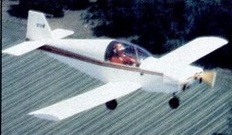
One Aircraft

One Aircraft was set up in Slovenia, in 2014, to “design the ultimate, safe, affordable, attractive and top performance sport-family aircraft with 2 + 1 seating configuration that would fit in existing LSA and CS LSA (2-seat configuration) category as well as future ELA1 and other emerging categories.” The driving force behind the Company and the design of the aircraft was Iztok Salamon.

Omni-Weld Questor /Questor Aircraft Questor / Nostalgair Questor

N701W c/n 0Q-1

Designed by Robert Counts an initially developed by Omni-Weld Co around the 37 hp Global Tool GMT four-stroke engine that was also under development at the time, the Questor was aimed at the market for light homebuilt aircraft and a prototype first flew in 1983 with a 30 hp Cuyuna T330 two-stroke engine. It later received the GMT engine.

Development was taken over by Questor Aircraft and finally by Nostalgair.

Only the prototype was completed. It was first registered in 1983 as N701W c/n 0Q-1.

The Questor weighed 270 lb, cruised at 120 mph on 37 hp, burning less than 2 USG/hr.

Ownership was to Francis V Leszczynski of Miami, FL, US.

The certificate expired on 30 September 2011.

OMF Symphony 160

2005 Symphony 160

Base price 2009: $139,900
IFR-equipped price 2009: $154,900

Engine: Lycoming O-320-D2A, 160 hp@SL
TBO: 2000 hr
Fuel type: 100/100LL
Propeller: MT fixed pitch / 73 in
Landing gear: Tri./Fixed
Max ramp weight: 2150 lb
Gross weight: 2150 lb
Max landing weight: 2150 lb
Empty weight, std: 1450 lb
Max useful load: 700 lb
Payload, full std. fuel: 500 lb
Usable fuel, std: 29.1 USgals
Wingspan: 35 ft
Overall length: 22.84 ft
Height: 9.25 ft
Wing area: 128.4 sq. ft
Wing loading: 16.7 lbs./sq. ft
Power loading: 13.4 lbs./hp
Seating capacity: 2
Cabin doors: 2
Cabin height: 44.8 in
Baggage capacity: 165 lb
Cruise speed, 8500 ft 75% power @ 8,000 ft: 128 kt
Cruise speed, 65% power @ 10,000 ft: 123 kt
Cruise speed, 55% power @ 12,000 ft: 119 kt
Max range (w/ reserve) 75% power: 300 nm
Max range (w/ reserve) 65% power: 360 nm
Fuel consumption 75% power: 8.5 USgph
Fuel consumption 65% power: 7.4 USgph
Fuel consumption 55% power: 6.2 USgph
Vs: 60 kt
Vso: 51 kt
Best rate of climb (SL): 780 fpm
Service ceiling MSL: 16,400 ft
Takeoff ground roll: 982 ft
Takeoff over 50-ft. obstacle: 1309 ft
Landing ground roll: 715 ft
Landing over 50-ft. obstacle: 1827 ft

OMAREAL Casmuniz 52 / Cassio Minuz Casmuniz 52

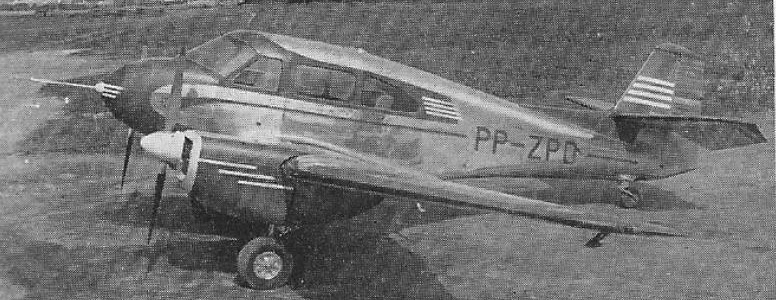
Designed to operate from small airfields, the Casmuniz 52 sive-seat cabin monoplane is the first all-metal twin designed in Brazil.

The prototype was designed and completed in 1952 by Cassio Minuz S.A. of Sao Paulo, and eighty per cent of the skin is made of uniformed or single-curvature aluminium sheet panels to facilitate replacement in any locality of limited resources. It was first flown in April 1952.

Oficina de Manutenco e Recuperaceo de Avioes Ltda, the Brazilian maintenance and overhaul facility based at Sao Paulo, acquired manufacturing rights to the Casmuniz 52 and sole prototype in 1955. OMAREAL took over the flight testing of the sole prototype, but no production ensued.

Engine: 2 x Continental E185, 185 hp
Max speed: 200 mph
Cruise: 165 mph
Range: 700 mi
Seats: 4-5

OMAREAL / Oficina de Manutenco e Recuperaceo de Avioes Ltda

Brasil
Oficina de Manutenco e Recuperaceo de Avioes Ltda, the Brazilian maintenance and overhaul facility based at Sao Paulo, acquired manufacturing rights to the Casmuniz 52 twin-engined five-seat lightplane in 1955. Designed and built by Cassio Muniz SA, the Casmuniz 52 was intended for easy construction from single-curvature metal to facilitate field repair in bush operations. OMAREAL took over the flight testing of the sole prototype, but no production ensued.

OMAC 1 / Laser 300

OMAC-1

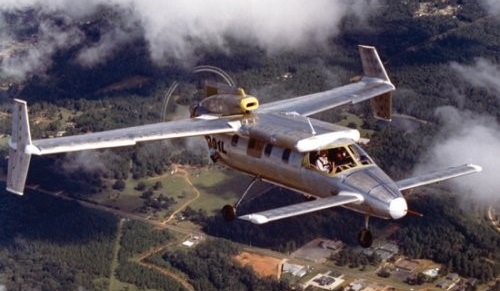
OMAC Inc. was founded in 1977 in Reno, Nevada, by Carl Parise and Larry Heuberger. The name stood for “Old Man’s Aircraft Company”.

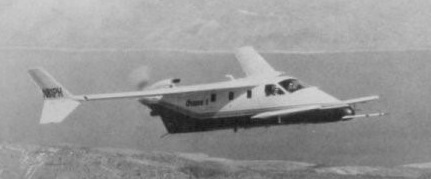
The OMAC-1 was a 6-8 seat canard pusher business aircraft introduced in 1981. Two prototypes were built: the first one (apparently unregistered) was powered by a 700 hp Avco Lycoming LTP 101-700A-1 pusher engine and first flew on Dec. 11, 1981.

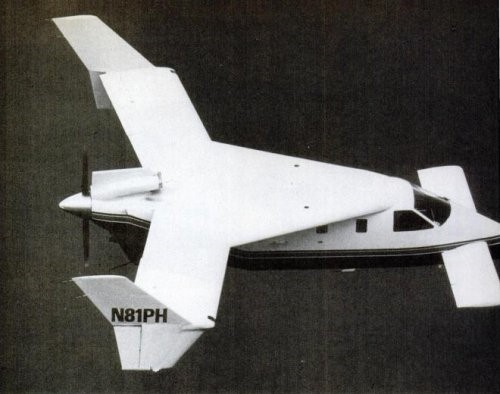
The second prototype N81PH served as testbed for improved Laser 300 version. used a 700 hp Garrett TPE331-9 and flew on February 19, 1983. It was 30 ft. long and had a wingspan of 35 ft.

OMAC-1

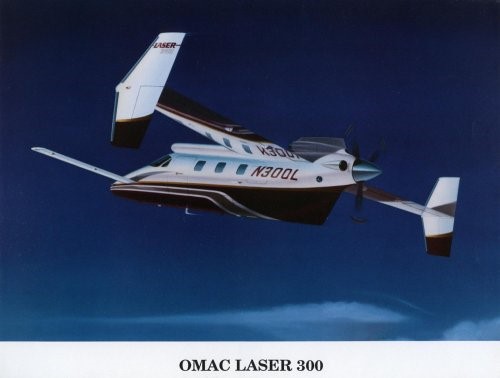
The OMAC company moved in 1985 to Albany in Georgia and worked an improved production version, the Laser 300 [N301L] which first flew on July 29, 1988 (pictures showing an aircraft registered “N300L” are only promotional artist’s views).

The aircraft apparently failed to attract any orders and was no longer heard of. Further development halted soon after owing to funding difficulties.

OMAC Inc

USA
Established at Reno in 1977 to produce OMAC 1 business aircraft with pusher turboprop engine (first flown 1981). Second prototype served as testbed for improved Laser 300 version; production prototype flew July 1988, but further development halted soon after owing to funding difficulties.

Old Rhinebaek Hanriot V

The Old Rhinebeck Aerodrome has a reproduction 1910 Hanriot constructed by Cole Palen, Mike Lockhart, and Andy Keefe with the aid of drawings published in Flight during the winter of 1974 in Florida. It had originally been powered by a 1910, two-cycle, water-cooled Elbridge Featherweight engine, but it had later been retrofitted with a more capable, water-cooled, 50-hp Franklin after it had sustained connecting rod damage. Because of its lower weight, it often resulted in a nose-high pitch which had to be elevator-counteracted during flight, although its increased horsepower produced more sprightly performance than the original engined-version had offered.

The aircraft, initially demonstrating stability problems, was subsequently modified and first performed in the 1976 Hammondsport Air Show. Demonstrating its handling characteristics much further afield, it partook, along with the Curtiss Model D and the Sopwith Camel, of the 2003 Australian International Air Show in Geelong, flying circuits round Avalon Airport 11,000-foot runway.