A high-wing cabin monoplane
An improved version was later built by Nieva.
Aircraft
Companhia Aeronautica Paulista
Brazil
Companhia Aeronautica Paulista formed at Sao Paulo shortly after the Second World War to produce CAP 1 Planalto low-wing advanced trainer, CAP 4 Paulistinha high-wing cabin monoplane, and similar CAP 5 Carioca. The second was the most successful; improved version later built by Nieva. Company came under control of IPT in late 1940s.
Paulic T3B-1 / XT3-B
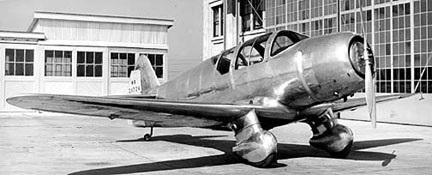
The four-seat Paulic XT3-B NX21726 was originally built in 1939 as a joint project of John W. Thorp and Rudy Paulic. A side-by-side trainer planned for Boeing School of Aeronautics in Oakland, where both Paulic and Thorp worked.
It was dismantled after several test flights and stored until July 1958, when it was redesigned and rebuilt by Paulic as four-place retractable-gear T-3B-1 with a 190hp Lycoming O-435 engine and re-registered NX6497C.

XT3-B NX21726
Engine: 125hp Warner Scarab
Wingspan: 33’0″
Length: 23’6″
Useful load: 1060 lb
Max speed: 144 mph
Cruise: 122 mph
Stall: 58 mph
seats: 2
T-3B-1 NX6497C
Engine: 190 hp Lycoming O-435-A
Span: 32 ft 11 in
Length: 22 ft
Wing area: 132 sq.ft
AUW: 2500 lb
Useful load: 1100 lb
Max speed: 170 mph
Cruise: 155 mph
ROC: 1200 fpm
Range: 800 mi
Seats: 4
Paulic
Rudy & Louis Paulic
Oakland, Burbank,
and Gardena CA.
USA
Built the XT3-B / T-3B-1 with John Thorp in 1939, rebuilt in 1950.
Paulat Hydro-Aero Monoplane
As Paulat did not succeed in obtaining the required second Hilz engine for his seaplane, he designed the light 1912 Hydro-Aero Monoplane – suited for one Hilz engine – and completed in June 1912 as a landplane. This machine crashed on June 6, 1912.
Paulat was called under arms during the Balkan War (1912-1913), but once returning, decided to end his aeronautical work due to his financial difficulties.
Paulat Hydro-Aero

Ion Paulat built the first Romanian seaplane in 1911. As the Ministry of War provide no assistance to him, Paulat had difficulties obtaining an engine to power the aeroplane. In the end – through friendly help in order to conduct a flight test – he obtained one of the two 55 hp Hilz engines needed. With one engine the machine flew in early November 1911, making a jump of 10 meters at a height of 35 centimetres.
As Paulat did not succeed in obtaining the required second Hilz engine, he designed the light 1912 Hydro-Aero Monoplane – suited for one Hilz engine
Paulat, Ion
Ion Paulat (1873-1954), born at Cioara, near Braila, Romania, was a sailor who at Galati built the first Romanian seaplane.
Paulat was called under arms during the Balkan War (1912-1913), but once returning, decided to end his aeronautical work due to his financial difficulties.
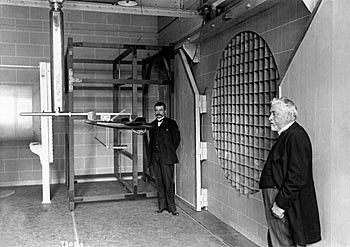
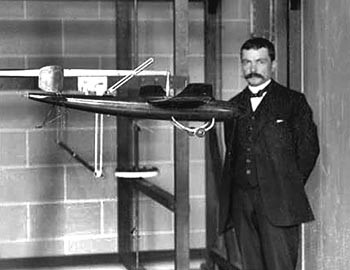
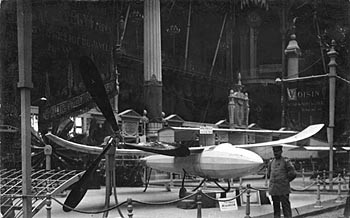
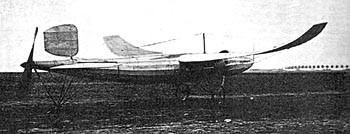
Paulhan-Tatin Aéro Torpille No 1
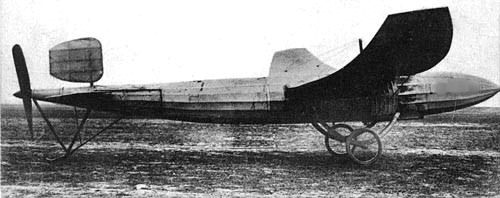
Powered by a 50 hp Gnôme; the “Torpedo” was designed by Victor Tatin with Luis Paulhan being a sponsor of its 1911 construction.
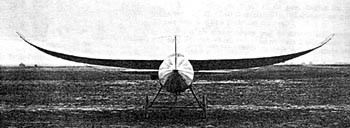
The Aero-Torpille sported arched wings, a streamlined monocoque fuselage with a Gnome rotary engine buried within, its power delivered to a tail-mounted pusher propeller by a lengthy shaft.
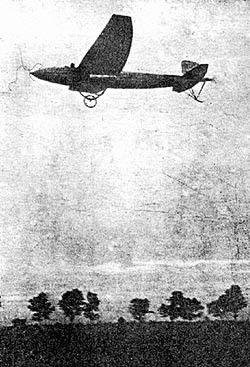

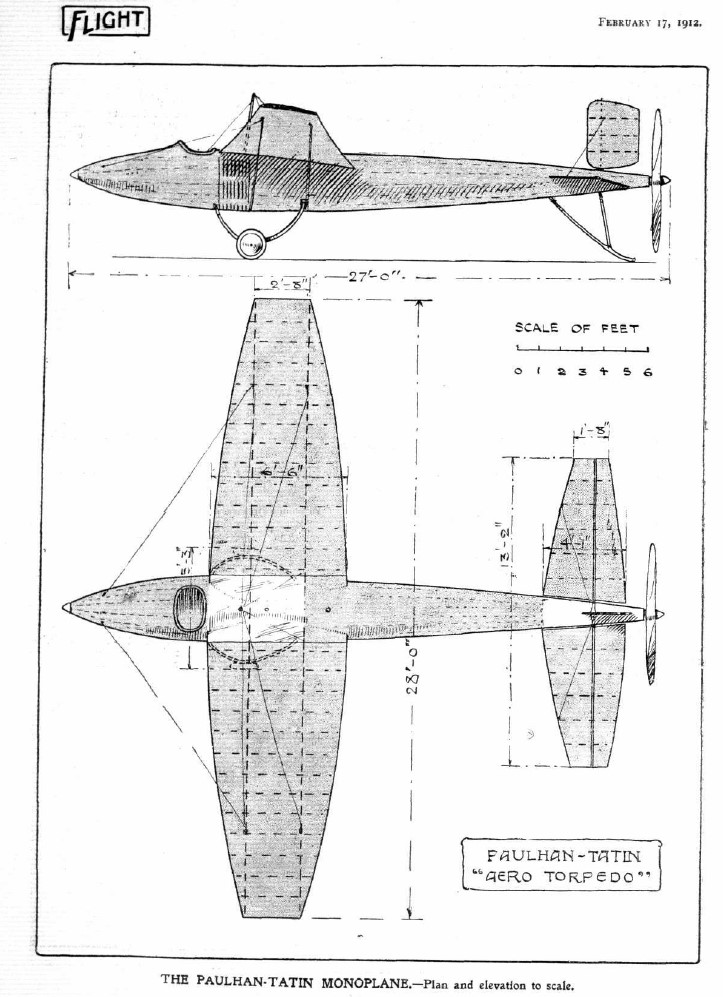
Span: 28’3″
Length: 28’3″
Weight: 790 lb empty
Paulhan-Peyret glider
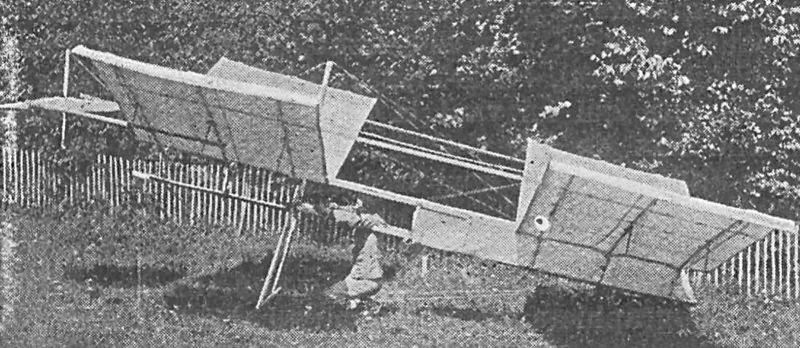
This circa 1905-1908 Langley-type tandem wing glider was one of several built by the famous pilot (and slightly less famous designer) Louis Paulhan and Louis Peyret during the former’s military service as “aérostier” at Chalais-Meudon.
Paulhan 1911 biplane
The 1911 Paulhan, biplane designed and built by Louis Paulhan in France, was easily folded for transport.

