A two-seat kit bush- plane
Aircraft
Performance Engineering
USA
Offers kits to build Mountain Goat two-seat bush- plane.
Performance Aircraft Inc
USA
First flew in 1996 the Ackland Legend two-seat composites monoplane, available in kit form.
1997: 2901 W. 151 St, Ste C Olathe, KS 66062, USA.
Pereira GP-5
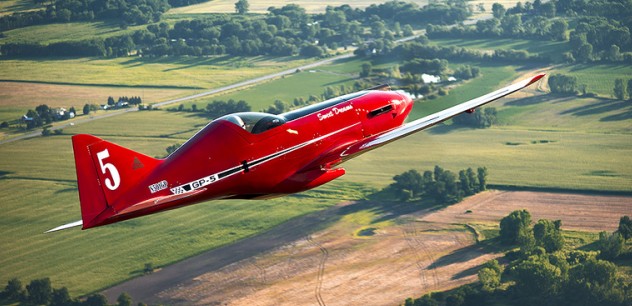
On 12 April 2014 Lee Behel set out from Mojave Airport to break two records, the 3,000m climb and the 3k speed run. Flying his V-8 powered George Pereira designed GP-5, he managed to reach 3,000 meters (or 9,842 feet), in exactly two minutes along with achieving a top speed of 372mph on a flat 3k run to take the records.

Pereira GP-4
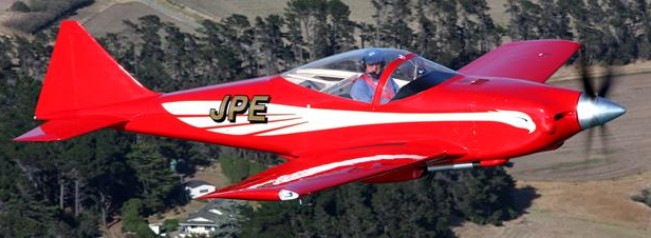
A high performance, low wing, side-by-side two-seater, of all wood construction. The GP4 is the latest in a series of four aircraft designed by George Pereira.
The GP-4 prototype was finished in April, 1984. Extensive flight tests were completed in time to compete for awards at the 1984 EAA Convention in Oshkosh, Wisconsin. That year at Oshkosh, the GP-4 won both the Grand Champion Custom Built and the Outstanding New Design awards. It is a high performance cross-country type aircraft designed to extract the most speed from the power available. Airfoil selection and drag reduction were primary considerations. The construction is of wood with foam and fiberglass utilized in the cowling and fairing areas. Design strength at full gross is 8G’s positive and 6G’s negative obtained by using a massive, one-piece main spar. The GP-4 aircraft has a manual landing gear retracting system but there is a separate set of plans for a hydraulic landing gear.
Osprey Aircraft also marketed as plans and kits is the Osprey GP-4.
GP-4
Engine: Lycoming IO-360-A1A
Wing Span: 24′
Wing Area: 104 sq ft
Wing Load (full gross): 19.09 lbs/sq ft
Span Loading: 80.45 lbs/sq ft
Length: 21′ 6″
Aspect Ratio: 5.54 to 1
Dihedral: 5 Degrees
Fuel: 54 USGallons
Service Ceiling: 20,000 +
Vmax: 255 mph
Cruise Speed 75%: 240 mph true
V s1 (stall clean): 70 mph
V s0 (indg config): 62 mph
Gross wt: 2000 lb
Empty Weight: 1,260 lb
Useful Load: 740 lb
Baggage: 10.5 sq ft – 75 lbs
Wheel Track: 8′
Wing Airfoil: Laminar 63 Series
Range at 75%: 1,100 mi, 240 mph
Take Off Distance: 600 ft
Landing Distance: 1,200 ft
Climb Rate @ MSL: 2,200 fpm
Seats: 2
Cabin width: 40 in
Landing gear: retractable nose wheel
GP-4
Engine: Subaru EG33 6 Cyl
Prop: 4 blade elect CS prop.
Cruise: 150Kt @ 35 lts/hr
Fuel capacity: 200 lt.
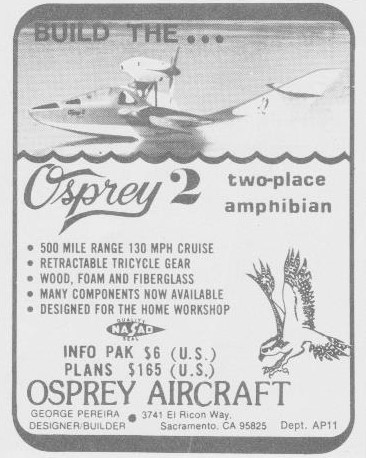
Pereira GP-3 Osprey 2
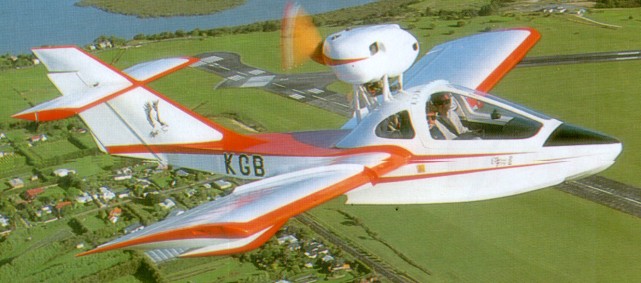
Design and construction of the two place Osprey 2 amphibian began early in 1972 following development of a military version, the U.S. Navy X-28A Air Skimmer, for civil police use in Southeast Asia. The designer, George Pereira, evolved a unique construction technique for the single-place Osprey I by coating the underside of the all-wood fuselage structure with polyurethane foam, later sculptured to the desired shape and covered with several protective layers of fiberglass bonded with resin. The result is a light, strong structure able to resist the shock of hard water landings.
The pusher engine is a Lycoming O-320 flat-four of 160 hp mounted on a pedestal so the prop wash blows directly over the cruciform tail surfaces. Wings are of all-wood construction with a single box spar, while the landing gear for use on land is of the retractable tricycle type. The wings just outboard of the main gear are removable for towing and home storage.
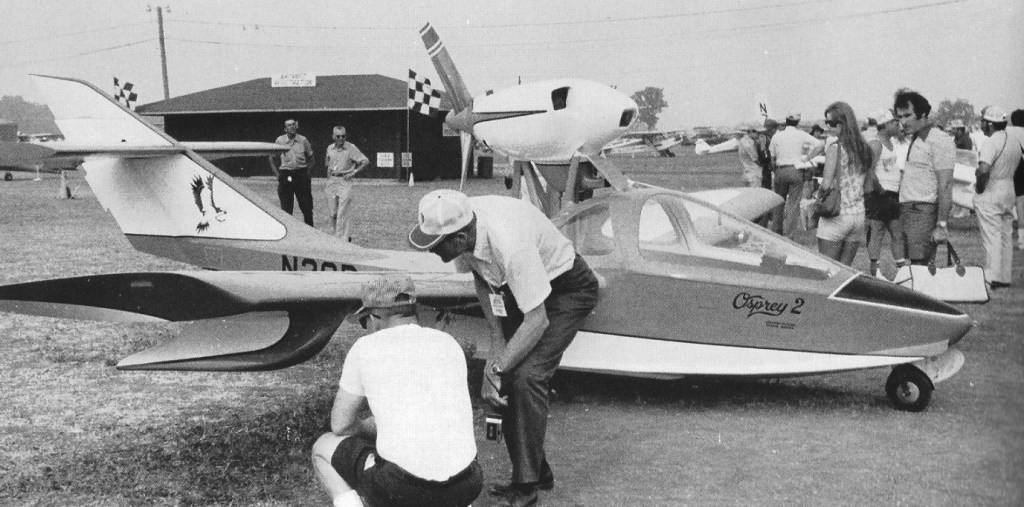
The Osprey 2 was designed to be built, in its entirety, in a workshop with no molds required, and first flew in 1973.
Detailed construction plans are available. They consist of 46 sheets, drawn with amateur builder in mind, plus step-by-step, photo illustrated, construction manual. Price 1982: $3,690 (Excludes engine, propeller, Instruments and paint). Units delivered to June 1981: 500.
Seats: 2
Engine: Lycoming 150-160 hp
Length: 21 ft
Cabin Width: 43 in
Wing Span: 26 ft
Wing Area: 130 sq ft
Wing Load (full gross): 10.09 lbs/sq ft
Span Loading: 80.45 lbs/sq ft
Aspect Ratio: 5.2
Dihedral: 5 Degrees
Gross Weight: 1,560 lb
Empty Weight: 960 lb
Useful Load: 420 lb
Fuel: 32 USG
Baggage: 10.5 sq ft – 75 lbs
Wheel Track: 8′
Wing Airfoil: 23012
Range at 75%: 500 +
Takeoff run (land): 300 ft
Takeoff run (water) 520 ft
Landing roll 600 ft
Climb Rate @ MSL: 1,200 fpm
Service Ceiling: 20,000 +
Vmax: 150 mph
Cruise Speed 75%: 130 mph true
V s1 (stall clean): 65 mph
V s0 (indg config): 60 mph
Pereira Osprey I / X-28
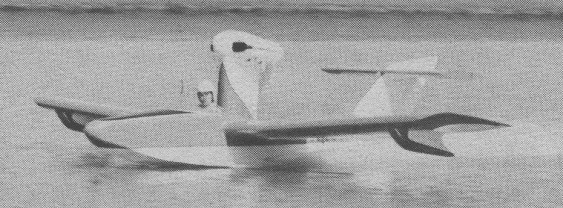
The Osprey 1 is a single-seat flying boat designed and built by George Pereira in 1970. First flown on 12 August 1970 it is built from fir and pine, with the vertical fin an integral part of the structure. The hull is skinned with mahogany plywood and glassed. The steel-tube pylon mount for the engine is bolted to the wing center section. A simple wing-folding mechanism holds the wings in position with the same steel pin which locks them in the ex¬tended position. Power is provided by a 90-hp Continental.
N3337 was re-named X-28 158786 when the US Navy commissioned the Naval Air Development Center to do a study for reconnaissance flights in the Mekong Delta during the Viet Nam war. The aircraft was evaluated with three other entries and selected for production in South East Asia. George was asked to help set up production; however, the war ended before production plans were finalized. The X-28A is on display in the Kalamazoo Aviation History Museum.
The Osprey 1 was designed with folding or removable outboard wings and launched from a boat type trailer. It is very light weight (600 lb), and 90 hp gives remarkable water and climb performance.
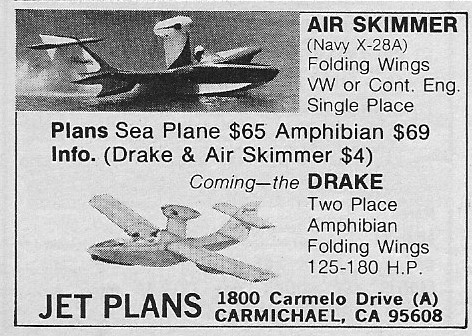
Complete plans (including the trailer) were available for $150 U.S. plus $20 U.S. for overseas.
Engine: Continental C-90-12, 90 hp
Length: 17’ 9”
Wingspan: 24’ 9”
Height: 5’ 3”
Wing area: 103 sq.ft
Empty: 600 lb
MTOW: 900 lb
Fuel capacity 16 USG
Maximum speed: 135 mph
Top level speed: 120 mph
Cruise 105 mph
Stall 55 mph
Range: 370 miles
Service ceiling: 17,994 ft
Rate of climb: ft/min 2,200
Takeoff run: 200 ft
Wing loading: lb/sq.m 9 sq. ft.
Crew: 1
Pereira
1980-96: George Pereira, 3741 EI Ricon, Sacramento, CA 95825, USA.
Osprey Aircraft also marketed as plans and kits.
Peregrine Flight International
Minden NV.
USA
Circa 1994 built Bede BD-5 variant
Parsival I
The Billing biplane was crashed on 4 October 1911 by N.S. Percival, who rebuilt it as the Percival Parseval I at the end of 1911-1912.

