Perman Parasol

This aircraft started off as a Mignet HM.14 Pou du Ciel (Flying Flea), and as such, was registered as G-ADZG (C of R 6568) on 16.12.35 with the c/no EGP/SS/56. However, the registration G-ADZG was not taken up.

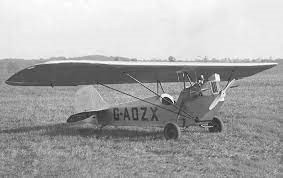
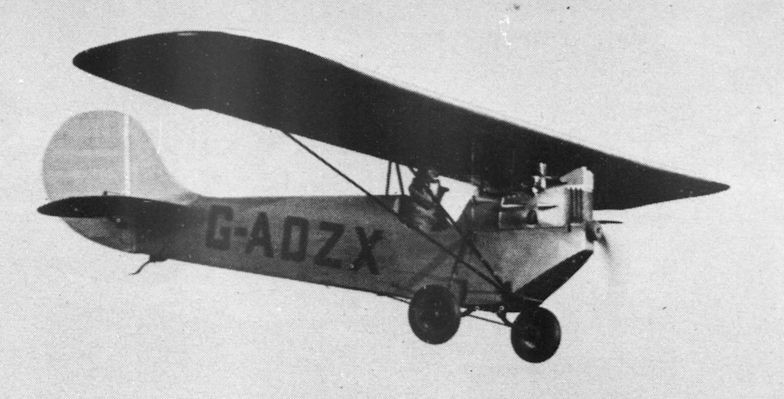
In 1936, together with Frank William Broughton, Perman developed a project for a small airplane called the Perman Parasol. Instead, the basic Flying Flea airframe was heavily modified and redesigned, and the aircraft was first registered (C of R 6593) on 2.5.36 as G-ADZX to E.G. Perman & Co, Gravesend Airport, Gravesend, Kent. The aircraft was described to the Air Ministry (per the aircraft’s record card) as a “Perman Parasol”. The Perman Parasol was a single seat ultra light monoplane, designed and built by E.S. Penman & Co Ltd. of London.

It was a single-seat parasol strut-wing monoplane powered by a Perman-Ford (Perman Poupower) engine with a claimed power of 32 hp with a two-bladed wooden propeller.

One only – G-ADZX – flew for the first time 23.5.36 (at Gravesend), powered by a 30 hp Perman-Ford engine, and flown by Mr A E Clouston.

Sold on for £175 and re-registered (C of R 6593) 13.10.36 to Airworthiness Ltd., Gravesend Airpoprt, Gravesend, Kent. According to the aircraft record card, they re-named the aircraft as a “Brown Pigeon” (“formerlly called Parasol”)

On the night of 31 July 1937, fire broke out in one of the hangars at Gravesend Airport. By the time it was extinguished, no fewer than five aircraft had been destroyed or damaged beyond economic repairThese were Blackburn Bluebird G-EBRF, two Robinson Redwings, G-ABDO and G-ABOK, DH60M Moth G-AAUH — and the one and only Perman Parasol, G-ADZX.

The blaze has been described elsewhere as “a firefighting exercise”. A local newspaper reported that “an aeroplane’s petrol tank exploded in a mysterious fire”. The airfield was also known as London East.

Written off (destroyed) by or on 31.7.37 when burnt out in a hangar fire at Gravesend Airport, Gravesend, Kent. Registration G-ADZX formally cancelled by the Air Ministry 31.12.38 due to “destruction or permanent withdrawl from use of aircraft”. The aircraft record card also noted “Census 1938”, which indicates that the cancellation was as a result on the Air Ministry’s 1938 Census into all surviving British-registered civilian aircraft.

The Perman Parasol was developed into the Perman Grasshopper.

Engine: Perman-Ford, 32 hp
Wingspan: 7.80 m
Wing area: 11.60 sq.m
Length: 4.75 m
Height: 1.80 m
Empty weight: 192 kg
Maximum takeoff weight: 272 kg
Maximum speed: 120 km/h
Cruise speed: 109 km/h
Range: 450 km
Crew: 1
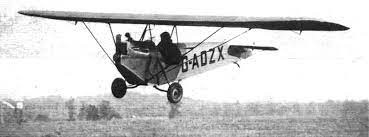
Perman Grasshopper / Broughton-Blayney Brawney

The rights to the Perman Grasshopper, a development of the Perman Parasol, were taken over by Broughton-Blayney and marketed as the Broughton-Blayney Brawney.

A single-seat parasol monoplane, three Broughton-Blayney Brawney were built at Hanworth;
G-AENM c/n BB/50 – written off 21 March 1937
G-AERF c/n BB/51 – written off 6 June 1937
G-AERG c/n BB/52 – withdrawn from use in 1937

Broughton-Blayney Brawney
Engine: Carden Ford
Wingspan: 25.06 ft
Length: 15.06 ft

Perman, E.G.

During 1935, E. G. Perman advertised Mignet’s Pou-du-Ciel in aviation magazines and even went as far as proposing the formation of a Flea Constructors’ Club.

There was a link between the firm of E. G. Perman & Co of Brownlow House, 50-51 High Holborn, London WC1, and F. W. Broughton who later went on to design the trio of Broughton-Blayney Brawney single-seaters.

That Perman began in aviation building Fleas is well-documented and the business can be traced back to 24 Brownlow Mews, Guilford Street off Gray’s Inn Road. It was to this address which Flea G-ADOV was registered on 1 October 1935, to G. A. Puttnam, described as “trading as E. G. Perman & Co”. The same attribution goes to G-ADPW later the same month. The following January we find G-ADPV, this time registered to Perman & Co alone, as were G-ADPX and ’PY. Then there is a gap until G-AECM.

Appleby (1912-84) had formed the G. A. Puttnam company as Flea builders in March 1936. Where the name Puttman came from is unknown. His other directors were Martin Payne (formerly with Sir John Carden), Samuel W. Soden and his wife Gertrude, described as furriers, and Dr Harold A. Tracey, a medical practitioner. The firm went on to advertise “the PAC Pou […] fitted with the Carden Aero engine”, trumpeting how, “every machine made by PAC is test flown and passed by Stephen V. Appleby”. The price, with Carden-Ford engine, was £175 and hire-purchase terms were available. It advertised its Flea extensively, an added expense for the fledgling company.

Less than six months later, we find the firm was put up for sale as a going concern. Martin Payne had died suddenly after major surgery and without his financial backing the business could not continue.

With 3,000 sq ft of office and manufacturing space — which, an advertisement tells us, was centrally heated — the asking price was £1,000.

Whether or not the outfit was sold is not recorded. In its brief life, Puttnam had built some five aircraft at its Hornsey Road premises. Appleby now went on to share his time between a job at Heston Airport and Edward Dixon Abbott’s business, bespoke coachbuilders at Wrecclesham. Through its connection with Baynes, the Abbott company also made gliders including the Farnham Sailplane. It later teamed up with Baynes as Abbott-Baynes Sailplanes to build the famous Scud series of small gliders.

Perman simply disappears off the aviation radar after 1936.

Perl Penetrator PG-130

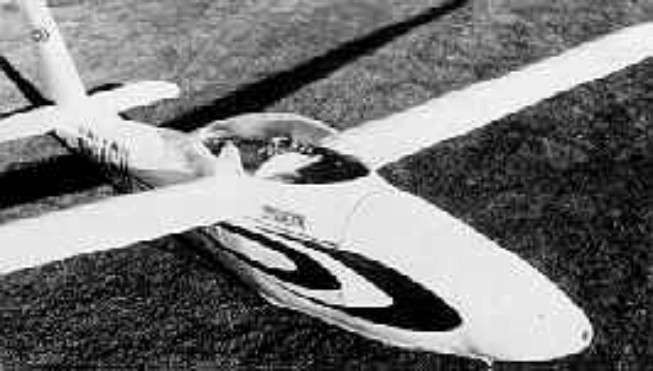
Designed and built be Harry Perl, the Penetrator first flew in 1953. Built from wood and fabric, it has an all-moving tail, styrofoam-filled wing leading edges, and airbrakes. It originally had a skid with jettisonable take-off dolly, but was subsequently fitted with a fixed wheel. The sole example now belongs to the National Soaring Museum.

Wing span: 14.63 m / 48 ft
Wing area: 12.07 sq.m / 130 sq.ft
Empty Weight: 218 kg / 480 lb
Payload: 90 kg / 200 lb
Gross Weight: 308 kg / 680 lb
Wing Load: 25.51 kg/sq.m / 5.23 lb/sq.ft
L/DMax: 33 84 kph / 45 kt / 52 mph
MinSink: 0.64 m/s / 2.1 fps / 1.24 kt
Seats: 1
Aspect ratio: 17.75
Airfoil: Go 549

Perkins & Lock New Horizon

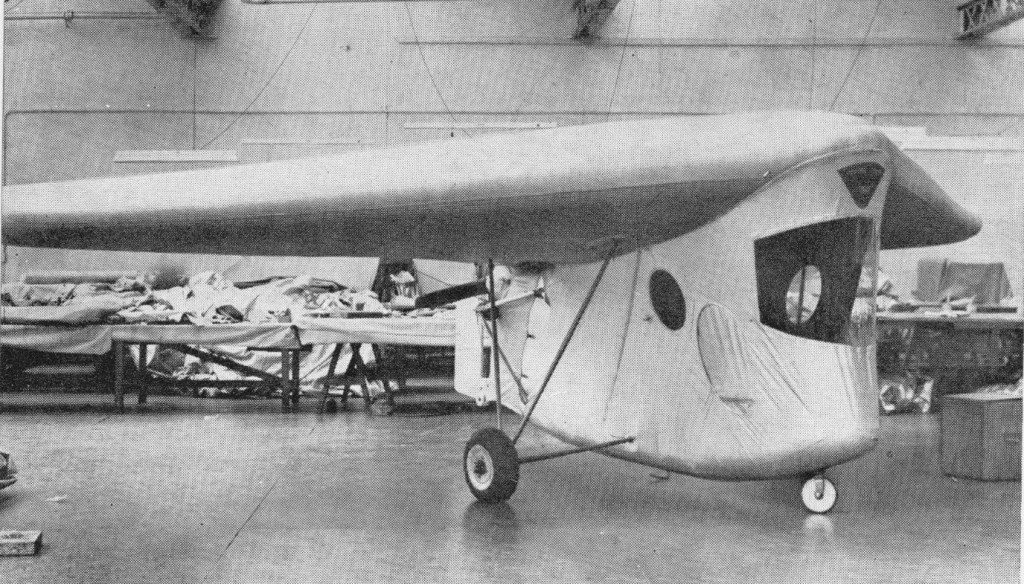
Designed and built by D. Perkins and A. Lock in 1958, the New Horizon was a tail-less, parasol wing monoplane, with a pusher propellor and tricycle undercarriage. It featured an inflatable wing.

Man-powered, it was unsuccessful in flight trials inside the Cardington airship hanger.

Development of the inflatable wing concept did lead to the ‘Reluctant Phoenix’.

Perkins Reluctant Phoenix

After gaining experience with his ‘New Horizon’, D. Perkins went on to design a tail-less delta inflatable man powered aircraft which he called ‘Reluctant Phoenix’.

It first flew inside the Cardington balloon hanger on 18 July 1966 and went on to make 97 similar flights, all of which were only in ground effect.

Wing span: 27.00 ft
Wing area: 250 sq.ft

Peris JN-1 / Povey JN-1

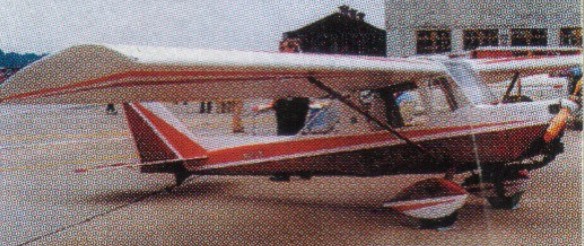
Construction Wood, Foam, Fiberglass
Plans cost $68.00. Est. Bldg. Time 800 hrs.

Engine: Kawasaki 440, 38 hp
Height: 5.16 ft
Length: 17.33 ft
Wing span: 30 ft
Wing area: 140 sq.ft
Weight empty: 320 lbs
Gross: 600 lbs
Fuel cap: 5 USG
Speed max: 65 mph
Cruise: 60 mph
Range: 110 sm
Stall: 28 mph
ROC: 600 fpm
Take-off dist: 250 ft
Landing dist: 250 ft
Service ceiling: 10,000 ft
HP range: 38-50
Seats: 1
Landing gear: tail wheel