
Monoplane designed by Alfred Pietschker who died flying it on 15 November, 1911.
Monoplane designed by Alfred Pietschker who died flying it on 15 November, 1911.
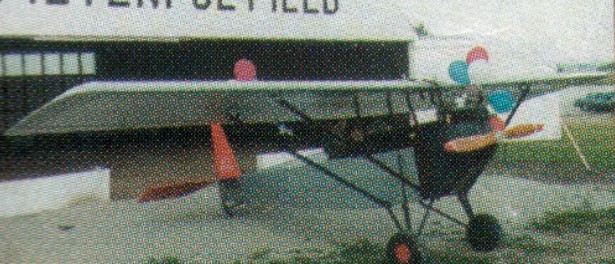
The 1931 Sky Scout was a slightly smaller version than Air Camper. The prototype was N10718.
In the late 1990s the two seat Air Camper and single seat Sky Scout designs are very much alive, with numerous examples still flying.
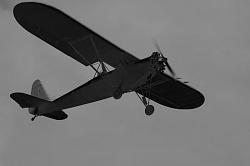
This Sky Scout was started by a 17 year old Alan Mogg, of Sydney, in 1936, but was not completed and flown until December 1940, mainly due to having to comply with the then Civil Aviation Board’s requirements. It was fitted with a Salmson AD9 engine which required the extended mount to bring the Cof G into limits and no doubt, brought about the larger fin and rudder.
Engine: Ford Model T, 20 hp
HP range: 20-40
Height: 6.5 ft
Length: 16.2 ft
Wing span: 27.25 ft
Wing area: 135 sq.ft
Fuel cap: 6 USG
Speed max: 62 mph
Cruise: 55 mph
Stall: 35 mph
ROC: 200 fpm
Take-off dist: 150 ft
Landing dist: 250 ft
Weight empty: 520 lb
Seats: 1
Landing gear: tail wheel

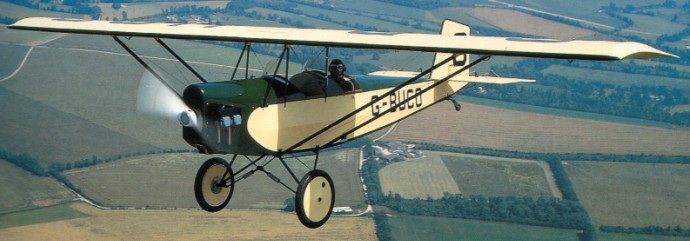
This popular design took to the air for the first time on May 29, 1929, from the rural Minnesota town of Cherry Grove. The brainchild of Bernard Harold Pietenpol, a self ¬taught mechanic and experimenter. It is a high wing two seat tandem open cockpit monoplane. The first, N12937, first flew on 20 April 1933.
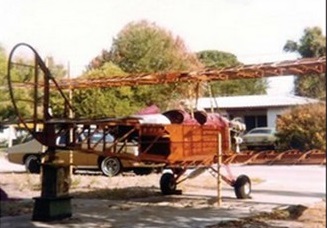
The do-it-yourself craze was just getting started as a Depression-born phenomenon when the Air Camper replaced the earlier primary glider as aviation’s favorite backyard building project. It was in 1930 that Modern Mechanics magazine featured the Ford Model A engine as the perfect powerplant for the little homebuilt. The two-seater open-cockpit monoplane is said to land like a Luscombe and handle like a J-3 Cub. In the late 1990s the two seat Air Camper and single seat Sky Scout designs are very much alive, with numerous examples still flying. Modern Air Campers are powered by Corvair, Lycom¬ing or Continental engines.
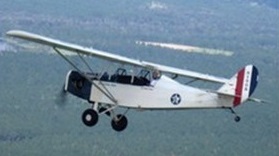
Ultralight Replica:
RagWing RW1 Ultra-Piet
Engine: Ford Model A, 40 hp
HP range: 40-125
Height: 6.5 ft
Length: 17.8 ft
Wing span: 29.5 ft
Wing area: 147.5 sq.ft
Weight empty: 620 lb
Gross: 1020 lb
Fuel cap: 18 USG
VNE: 90 kt / 104 mph / 167 kmh
Speed max: 90 mph
Cruise: 75 mph
Stall: 40 mph
ROC: 500 fpm
Take-off dist: 400 ft
Landing dist: 300 ft
Seats: 2
Landing gear: tail wheel
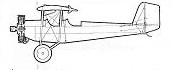
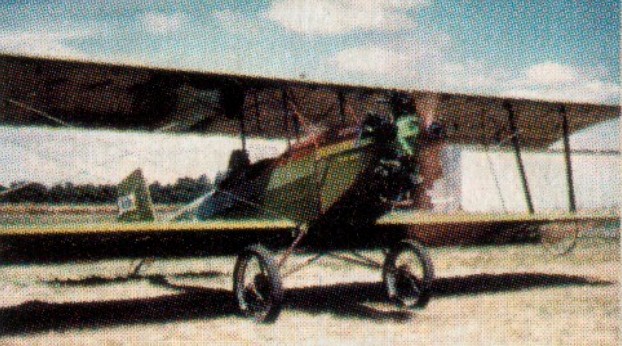
A biplane adaptation of the stock Air Camper. Designed by Chad Wille.
Engine: Continental O-300, 145 hp
HP range: 85-200
Height: 7 ft
Length: 19.5 ft
Wing span: 29.5 ft
Wing area: 250 sq.ft
Weight empty: 900 lb
Gross: 1400 lb
Fuel cap: 15 USG
Speed max: 105 mph
Cruise: 85 mph
Range: 150 sm
Stall: 36 mph
ROC: 1000 fpm
Take-off dist: 250 ft
Landing dist: 200 ft
Seats: 2
Landing gear: tail wheel
Bernard H Pietenpol built two early single-place, open cockpit biplanes, one powered by a 50hp Gnôme rotary engine and the second, in 1923, powered with a Ford Model T.
1980: B.H. Pietenpol, Spring Valley, MN 55975, USA
1995: 1604 Meadow Circle S.E., Rochester, MN 55904-5251, USA.
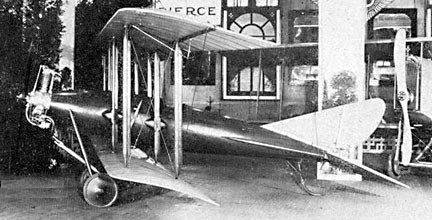
The 1916 Pierce Aeroplane Co Sporting Tractor single seat open cockpit biplane had an underslung lower wing and monocoque fuselage.
Engine: Lawrance L-4, 40hp
Wingspan: 26’0″
Length: 20’0″
Useful load: 250 lb
Seats: 1
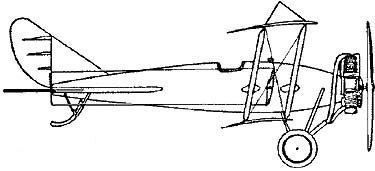
S S (Samuel) Pierce Aeroplane Co,
Southhampton NY.
USA
Built the Sporting Tractor in 1916.
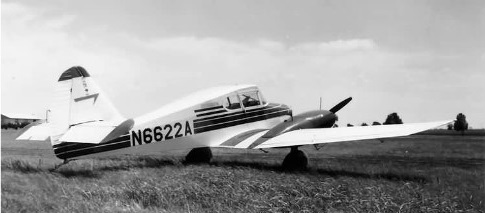
The Langley 2-4, aka Langley Monoplane or Langley Twin twin-engine utility aircraft built in the United States in 1940. The aircraft was designed to make use of non-strategic materials in its construction and thereby avoid any shortages brought about by war. Two prototypes were constructed, one with 65 hp (49 kW) engines, and another with 90 hp (67 kW) engines. The second machine was purchased by the United States Navy and evaluated as the XNL-1, but the navy did not order the type.
The XNL-1 was sold as war surplus. The Langley was landing in Oklahoma in 1965 and after touch down the brakes locked flipping the airplane over and damaging the fuselage beyond economical repair.
John Pierce and Hurley Boehler had a Stinson 108 fuselage in their hangar without wings, so they decided to purchase the Langley and, following the accident, its wings, engine nacelles, and main undercarriage were mated to a Stinson 108 fuselage to create a one-of-a-kind homebuilt aircraft named the Pierce Arrow, model U-2, serial number 1.
Construction of the airplane occurred at Harvey Young Airport, Tulsa, Oklahoma. Several old timers including John Pierce, Hurley Boehler and Jerry Hinds participated. The name came from Hurley Boehler who said “call it a Pierce Arrow.” Then Jerry Hinds, who was present, said “you two guys are crazy.” From this conversation came the type (Pierce Arrow) and the model (U-2 as an abbreviation for “you two”).
The Stinson 108 fuselage had the original Franklin engine removed and a nose cover added along with a new windshield.
The airplane was licensed in the experimental category as amateur built. FAA records for the airplane shows the approval for flight was issued on July 8, 1966. At this time the airplane was powered by the original engines installed on the Langley Twin, Franklin 90 Hp engines driving Flottorp 70KA54 fixed pitch props.
Toward the end of 1967 the engines were replaced with Lycoming O-290-D engines (115 Hp) driving Sensenich M74DM props. About 1980, the airplane was re-engined, this time with Lycoming O-320 engines driving McCauley 74-64 props.
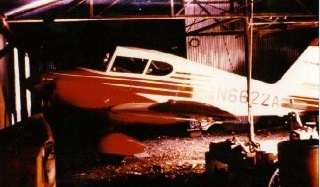
One big draw back was the small fuel tanks of the Langley twin, only 17 USgallons each. To extend the range when flying cross country Jerry Hinds often shut down one engine. As fuel drained he would then restart the engine then shutdown the other engine.Normal cruise was 150 MPH, rate of climb was 2,000 FPM, service ceiling 18,000, and single engine best rate of climb 750 FPM.
FAA records show that it changed registered owners 6 times, with John Pierce being the registered owner twice.
One owner is listed on some forms but apparently it was never actually registered to Joe Kennison as there is no bill of sale or registration in his name. Jerry Hinds purchased the airplane in June 1981 and he was the last registered
owner on the FAA records. At the time Jerry purchased the airplane it had 551 hours flying time.
Jerry Hinds sold the airplane about 1986). He traded the Pierce Arrow for a Swift to an individual in Aerococa, New Mexico. Apparently the new owner never actually registered the airplane.
The Pierce Arrow was flown in formation with a Pitts Special, named “Foxy Lady,” owned and flown by Mike, a friend of Jerry Hinds. Jerry and Mike flew the pair in airshows in addition to a Swift Jerry owned.
This airplane appeared on the April 1974 cover of Plane and Pilot magazine.
The last information was the airplane was owned by Jimi Genzling of New Mexico.
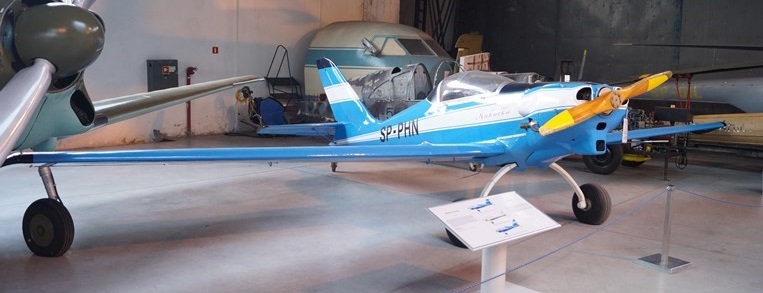
Eugeniusz Pieniazek was well-known pilot in aviation circles in 1960s Poland, he flew gliders in Polish aviation exhibitions in Sweden, but then the Polish security service tried to recruit him. When he wouldn’t cooperate, they started a file on him and refused to grant him permission to fly. He lost his job and his passport — but, crucially, not his pilot’s license.
Using a Continental aircraft engine and parts from different gliders — the tail from a Foka, the wings from a Swallow — he began assembling an aircraft in his 7-year-old daughter’s bedroom in their apartment in Leszno, about 200 miles west of Warsaw. The tail extended into the hallway.
As each component was completed, he lowered it out his first-floor window and then took it to a nearby hangar for storage and assembly. The wooden plane, which his daughter named the Kukulka, or Cuckoo, wasn’t even that secret. It was the first self-constructed plane registered with Polish authorities, and the national media picked up the story.
After 26 months, the Cuckoo was airworthy. Pieniazek flew it on short trips around Poland for months. In that time, he trained 44 other pilots in the Cuckoo, including several women.
On September 13, 1971, Poland’s borders were difficult to cross. Once airborne, Pieniazek opted to fly due south across Hungary to what was then Yugoslavia. Even though it too was under communist rule, Marshall Tito had broken with Stalin and the Soviet Union in 1948, and since then the country had more or less gone its own non-aligned way. But that route meant flying across the eastern end of Czechoslovakia (now Slovakia) as well as Hungary, both part of the Eastern Bloc. Nevertheless, Pieniazek set off in the middle of a storm and never turned back.
Pieniazek’s supporters didn’t know for months whether he’d made it or not, and the country mourned what they assumed was the loss of their pilot hero. In fact, by flying low under the radar and following railway lines — his main navigational tool was a road map — he had managed to land safely just inside the Yugoslav border in the town of Subotica (now in Serbia) after a four-hour flight.
Without a passport, he immediately was arrested and thrown in prison. The Yugoslavian authorities apparently never informed Poland that they’d taken their do-it-yourself airman prisoner. Seven months went by. Then, one day, the warden simply told Pieniazek to leave (Yugoslav officials held onto the Cuckoo). The airman was taken to the Austrian border, where he managed to successfully apply for asylum in Sweden.
Once in Sweden, Pieniazek spent two years arranging for his family to join him. After some time he was able to retrieve Kukulka. Pieniazek drove to Yugoslavia, paid for two years of hangar storage fees and towed the Cuckoo back to Sweden behind their Volkswagen Beetle with the plane’s wings tied on top. The plane sat at the airport for 17 years before restoration and registration had her back in flight condition.
Eventually, both the Cuckoo and Pieniazek ended up back in Poland. After the end of communist rule in Poland, in 1989, Pieniazek returned home to Leszno, where he founded the Experimental Aviation Association and continued to build planes
In 2005 the Cuckoo took up residence at Krakow’s Museum of Aviation.
Eugeniusz Pieniazek was well-known pilot in aviation circles in 1960s Poland, he flew gliders in Polish aviation exhibitions in Sweden, but then the Polish security service tried to recruit him. When he wouldn’t cooperate, they started a file on him and refused to grant him permission to fly. He lost his job and his passport — but, crucially, not his pilot’s license.
Using a Continental aircraft engine and parts from different gliders he assembled a wooden plane, which his daughter named the Kukulka, or Cuckoo, in their apartment in Leszno, about 200 miles west of Warsaw. This wasn’t a secret. It was the first self-constructed plane registered with Polish authorities.
On September 13, 1971, Pieniazek flew south in the middle of a storm across Hungary to what was then Yugoslavia. Even though it too was under communist rule, Marshall Tito had broken with Stalin and the Soviet Union in 1948, and since then the country had more or less gone its own non-aligned way.
Pieniazek’s supporters didn’t know for months whether he’d made it or not, and the country mourned what they assumed was the loss of their pilot hero. In fact, by flying low under the radar and following railway lines — his main navigational tool was a road map — he had managed to land safely just inside the Yugoslav border in the town of Subotica (now in Serbia) after a four-hour flight.
Without a passport, he was immediately arrested and thrown in prison. The Yugoslavian authorities apparently never informed Poland that they’d taken their do-it-yourself airman prisoner.
Seven months went by. Then, one day, the warden simply told Pieniazek to leave (Yugoslav officials held onto the Cuckoo). The airman was taken to the Austrian border, where he managed to successfully apply for asylum in Sweden, leveraging the contacts he’d made there doing air shows a decade earlier.
Once in Sweden, Pieniazek spent two years arranging for his family to join him. As a precautionary measure, two years before escaping, he’d divorced his wife out of fear for her safety, and that meant she was free to enter a sham marriage with a Swede and emigrate with their daughter to join Pieniazek.
Pieniazek became a political refugee in Sweden, but after some time he was able to retrieve Kukulka. Pieniazek drove to Yugoslavia, paid for two years of hangar storage fees and towed the Cuckoo back to Sweden behind their Volkswagen Beetle with the plane’s wings tied on top. The plane sat at the airport for 17 years before restoration and registration had her back in flight condition.
After the end of communist rule in Poland, in 1989, Pieniazek returned home to Leszno in Poland, where he founded the Experimental Aviation Association and continued to build planes, barely remembered for his place in Polish history, until his exploits were featured in a 1998 Polish documentary. Then, in 2005, he was the subject of an episode in a national TV series titled Great Escapes. That same year the Cuckoo took up residence at the Krakow’s Museum of Aviation, where it is still displayed.

