The acquisition by Potez in 1933 of Chantiers Aero-Maritimes de la Seine (CAMS) brought increased interest in the development of maritime aircraft, and the Potez (CAMS) 141 was designed to meet an official requirement for a maritime reconnaissance flying-boat. A large-span monoplane wing was carried on a faired superstructure above the hull, to which it was braced on each side by large N-struts. A stabilising float was strut-mounted beneath each wing, and the two-step all-metal hull carried at the rear a twin fin-and-rudder tail unit. Carrying a crew of nine to 12, the 41m span Potez 141 was powered by four 694kW Hispano-Suiza 12Y-26/27 Vee engines in wing-mounted nacelles. First flown on 21 January 1938, successful testing led to large orders, but changing policies and the development of World War II meant that no production aircraft were built.
Max take-off weight: 25900 kg / 57100 lb Max. speed: 320 km/h / 199 mph Bomb load: 1500kg
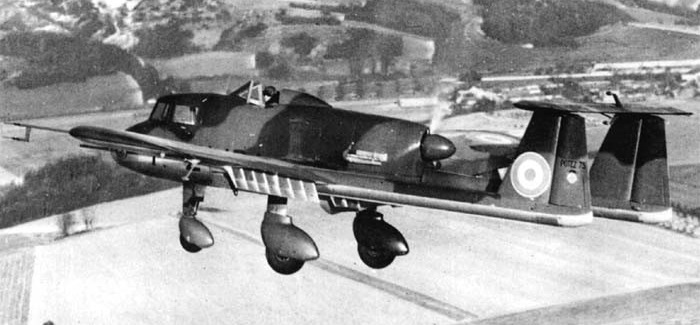
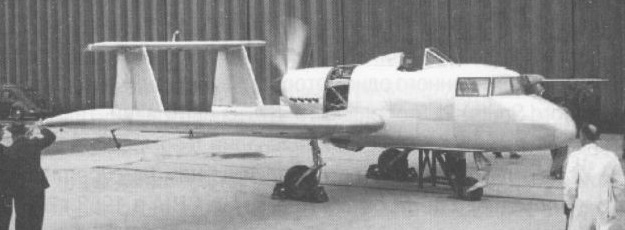
In 1953 Potez produced the Potez 75 single-engine twin-boom ground-attack aircraft, built by SNCAN. A contract for 500 for the French Army was awarded in 1956, but was cancelled later because of military cutbacks.
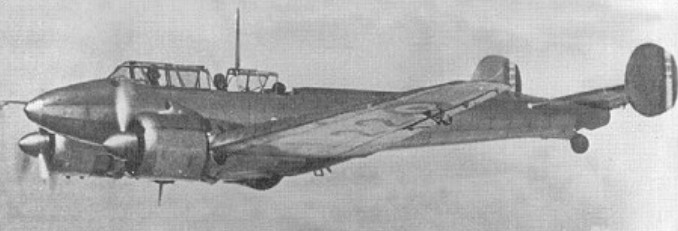
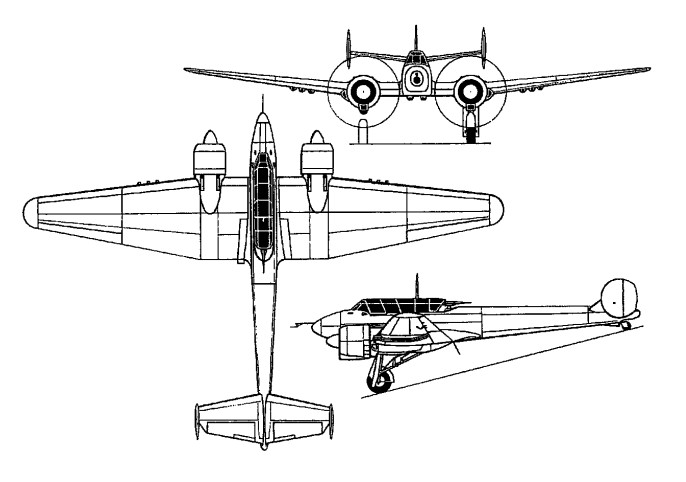
The Potez 63 was built originally to a 1934 French Air Ministry programme calling for a ‘Multiplace legere de Defense’, literally a light multi-seat defensive aircraft. In practice the specification called for an aircraft to perform the three roles of fighter control (three-seat C3); daylight interception (two-seat C2); and night-fighter (two-seat Cn2). The Potez 630 was a twin engine, monoplane, fully metallic three-seater with efficient aerodynamic lines and twin tailplanes. The long glasshouse hosted the pilot, an observer or commander who was only aboard if the mission required it, and a rear gunner who manned a single flexible light machine gun.
The Potez 63.01 first prototype flew on 25 April 1936. It was an all-metal stressed-skin cantilever monoplane with two 432-kW (1580-hp) Hispano-Suiza 14AB10/11 radials, and a retractable landing gear.
French re-equipment policies were blurred by lack of purpose (being confused by the likely form of warfare being studied by Germany), with the result that orders for development aircraft included four-general purpose two/three-seat day/night fighters, three two-seat night-fighters, one light bomber, one reconnaissance aircraft and one close-support aircraft.
Ten further prototypes were tested (including use of the Gnome-Rhone 14 radial) before production orders were placed in 1937 for 80 Potez 630s (two 432kW Hispano-Suiza 14 radials) and 80 Potez 631 C3 fighters (Gnome-Rhone 14 Mars radials). The production in three main streams was started by the nationalised SCAN organisation.
Fifty additional Potez 631s were ordered in 1938 of which 20 were diverted to Finland (these aircraft did not arrive in Finland). A typical feature of the 630 and 631 was the frontal armament, which originally consisted of two 20 mm Hispano-Suiza HS.404 cannons in gondolas under the fuselage, though sometimes one of the cannons was replaced by a MAC 1934. Later in their career, 631s received four similar light machine guns in gondolas under the outer wings, though it was theoretically possible to fit six.
The heavy fighter stream included the Potez 630 (82 with Hispano-Suiza engines) and Potez 631 (202 with Gnome¬-Rhone engines). The light bomber stream included the Potez 633 (71 mostly for export but mainly retained by France) and Potez 637 (60 for reconnaissance). The tactical reconnaissance and army co-operation stream included the Potez 63.11 (925 aircraft) and a number of experimental fighters and dive-bombers.
Dissatisfied with its strategic reconnaissance aircraft such as the troublesome Bloch MB.131, the Armée de l’Air ordered the development of a derivative of the Potez 631 heavy fighter for this role. The observer was to be housed in a gondola under the fuselage. While particularly uncomfortable, this arrangement resulted in a Potez 637 that retained most of the qualities of the 631. 60 examples were ordered in August 1938 and delivered. Unlike many contemporary French aircraft, production of the Potez aircraft was reasonably prompt and the first deliveries were effected before the end of 1938. The 63 had been designed with mass production in mind and as a result, one Potez 630 was cheaper and faster to manufacture than one Morane-Saulnier M.S.406. As production tempo increased, a number of derivatives and experimental models were also developed and produced with exceptional rapidity.
The Potez 633 B2 was a light bomber version with a partially glazed nose, 40 of which were ordered by Romania and others by Greece. In the event only 21 of the Romanian aircraft were delivered, the rest retained by France. The Potez 637 A3 was a three-seat reconnaissance version with a ventral gondola for the observer, 60 of which were built.
The Armée de l’Air was desperate to re-equip its army cooperation units which had particularly antiquated equipment, but since the development of the Potez 637, had completely changed its mind about how the observer position should be arranged. Potez was therefore required to develop a variant that, while retaining the wings, engines and tail surfaces of the 631, hosted the observer in a more conventional nose glasshouse. Because the pilot needed to be seated above the observer, the Potez 63.11’s fuselage was taller, which resulted in top speed degradation and reduced manoeuvrability. As a result the final production version, the Potez 63.11 proved very vulnerable, despite being protected with some armour and a basic self-sealing coating over the fuel tanks.
As a secondary light bomber capability was part of the requirements (though it was rarely if ever used), the fuselage accommodated a tiny bomb bay, carrying up to eight 10kg-class bombs. This bomb bay was replaced by an additional fuel tank on late examples. Additionally, two 50kg-class bombs could be carried on hardpoints under the inner wings. Frontal armament was originally one, then three MAC 1934s under the nose, and many 63.11s were equipped with additional MAC 1934 guns in wing gondolas as the 631s. The first Potez 63.11 No.1 and second No.2 prototypes first flew in December 1938, and no less than 1,365 examples were on order in September 1939, of which 730 were delivered.
Potez 63-11s were delivered from November 1939 and served with 40 GAO (observation Groupes) and 13 reconnaissance Groupes by May 1940.
Although a night-fighter prototype had flown in March 1937 as the Potez 631-0, relatively little importance was placed on the Potez 631 night-fighter, and it was not until June 1938 that production orders totalling 207 were confirmed.
The Ilmavoimat / Maavoimat evaluation team looked at a number of diferent variants of the Potez 630 in early 1938. There report indicated that all members of the family (possibly except the Potez 63.11) shared pleasant flying characteristics. They were well designed for easy maintenance and could be fitted with a heavy armament for the time (up to 12 light machine guns for the Potez 63.11 design that was being worked on). Although not heavily built they seemed capable of absorbing considerable battle damage. Unfortunately the Potez 63 family, like many French aircraft of the time, simply did not have sufficiently powerful engines to endow them with an adequate performance. However, while the aircraft was considered reasonably good, it by no stretch met the STOL Observation / Medical Evac requirements of the aircraft that was being looked for.
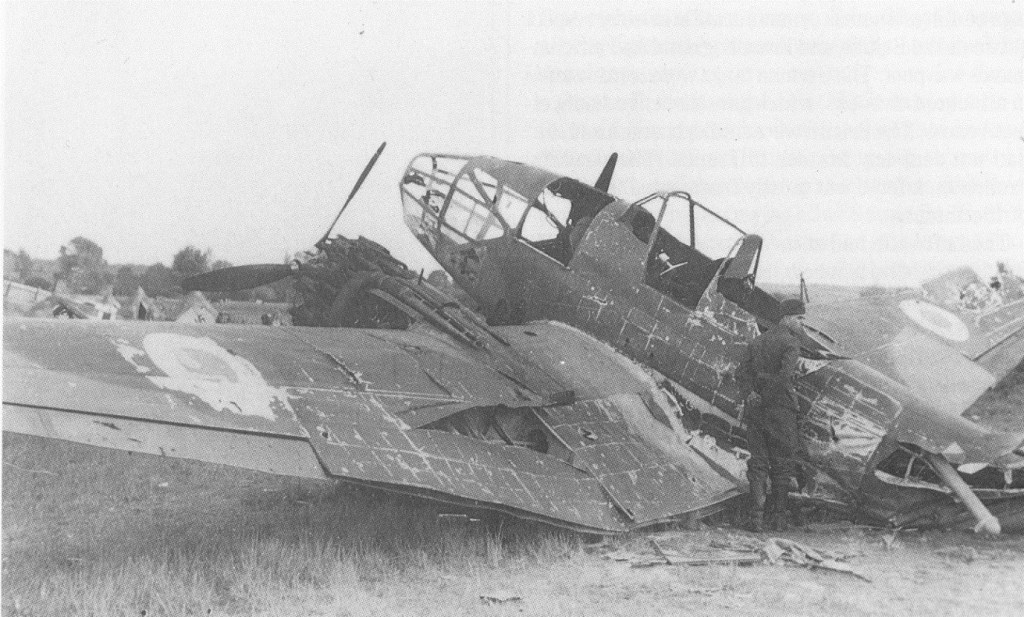
By 1 April 1939 the Armee de l’Air had taken delivery of 88 aircraft, of which 20 were in service; in May two night-fighter units, Groupes de Chasse de Nuit GCN III/l and II/4, and one day fighter unit, GC II/8, were equipped with about 30 aircraft; four other Potez 631s were serving at Djibouti. At the outbreak of war a total of 206 aircraft had been delivered, and the type had also joined GCN 1/13 and GCN 11/13, as well as seven escadres de chasse. Some aircraft were later transferred to the Aeronavale. When the German attack opened in the West the various Potez 631 units were in constant action both by day and night, although lack of radar prevented much success during the hours of darkness. In the first 11 days of the campaign Aeronavale’s Flotille F 1C shot down 12 German aircraft for the loss of eight, but the Armee de l’Air night-fighter units were ordered to assume day ground-attack duties, losing heavily to enemy flak. Moreover, losses were exceptionally heavy to Allied guns and fighters as a result of the Potez 631’s superficial similarity to the German Messerschmitt Bf 110; it has been estimated that as many as 30 of the French aircraft were shot down in error. In all, Potez 631 night-fighters destroyed a total of 29 German aircraft in the Battle of France, but for a loss of 93 of their own number. Of the remainder about 110 were in the Free French Zone (Vichy France) at the time of the armistice, but their number dwindled quickly because of a chronic lack of spares, although ECN 3/13 moved to Tunisia with a small number of Potez 631s in June 1941.
Potez 63
Armament comprised two forward-firing and one rear-mounted 7.7mm machine-guns. Potez 637s equipped five reconnaissance Groupes and during the battle for France suffered heavy losses.
After the outbreak of the Winter War, 20 Potez 631s were ordered diverted to Finland. These aircraft arrived in mid-April 1940, having been flown to the UK where they were picked up by Ilmavoimat Ferry Pilots and flown via Norway and Sweden to Finland. In Ilmavoimat service, they were found to be underpowered and slower than many of the Soviet bombers, as well as undergunned. A rush project was undertaken to replace the engines with the Finnish-built and more powerful Hispano-Suiza 12Y’s, and every one of the aircraft was fitted with two nose-mounted 20mm cannon and four machine guns under the wings. In addition, the internal bomb bay was replaced with an additional fuel tank to extend the range.
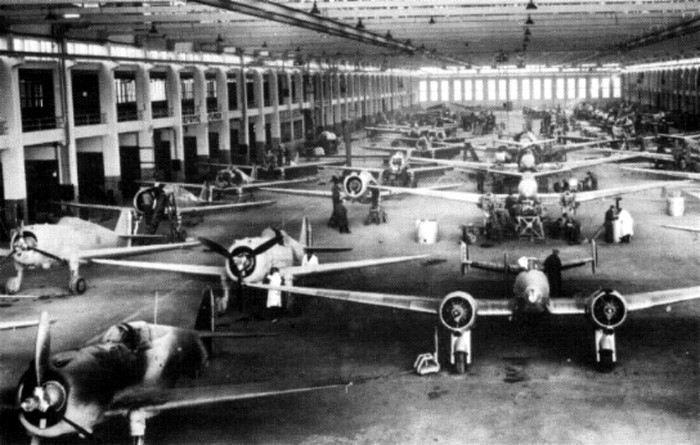
Ilmavoimat Potez 631’s undergoing modifications at the Veljekset Karhumäki factory at Tampere, May 1940.
The aircraft finally entered service in August 1940, by which time the war was almost over. The Ilmavoimat went on to use them in the night-fighter role that the French had intended them for. They were not particularly successful in this role and were retired from active service and used as trainers from 1941.
A total of 748 examples were built.
John Garric recreated an example of the long extinct Potez 63-11 twin-engined reconnaissance aircraft.
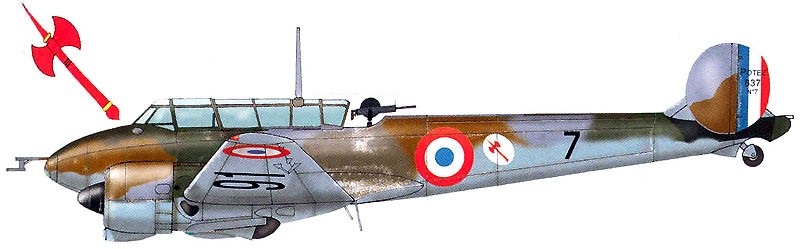
Potez 637 A no (C591 de la lère Esc. Du G..II/3 January 1940
Potez 63.01 Engines: 2 x Hispano-Suiza l4Hbs, 1580 hp.
Potez 630 Engines: 2 x Hispano-Suiza 14AB, 725 hp Max speed: 273 mph / 440 kph ROC: 1800 fpm / 550 m/min Service ceiling: 32,800 ft / 10,000 m Empty weight: 5730 lb / 2600 kg Span: 52 ft 6 in / 16 m Length: 36 ft 4 in / 11.07 m Height: 11 ft 9.75 in / 3.6 m Seats: 2-3
Potez 631 three-seat heavy fighter and night-fighter Powerplant: 2 x Gnome-Rhone 14M-4/5or 14M-6/7, 522kW (700 hp) Span: 52 ft 6 in / 16 m Length: 36 ft 4 in / 11.07 m Height: 11 ft 9.75 in / 3.6 m Empty weight: 5730 lb / 2600 kg Max loaded weight: 8235 lb / 3735 kg Max speed: 275 mph at 14,765ft ROC: 1800 fpm / 550 m/min Service ceiling: 32,800 ft / 10,000 m Operational range: 758 miles. Armament: 2×20-mm Hispano¬Suiza cannon and 1 or 5 x 7.5-mm (0.295-in) MAC mg Seats: 2-3
Potez 633 Engines: 2 x Gnome-Rhone 14M, 700 hp Span: 52 ft 6 in / 16 m Length: 36 ft 4 in / 11.07 m Height: 11 ft 9.75 in / 3.6 m Empty weight: 5730 lb / 2600 kg Max loaded weight: 9285 lb / 4210 kg Max speed: 273 mph / 440 kph ROC: 1800 fpm / 550 m/min Service ceiling: 26,250 ft / 8000 m Seats: 2
Potez 637 Engines: two Gnome-Rhône 14M, 700 hp Span: 52 ft 6 in / 16 m Length: 36 ft 4 in / 11.07 m Height: 11 ft 9.75 in / 3.6 m Empty weight: 6390 lb / 2900 kg Max loaded weight: 9285 lb / 4210 kg Max speed: 267 mph / 430 kph ROC: 1800 fpm / 550 m/min Range: 932 miles Service ceiling: 26,250 ft / 8000 m Armament: 1x fixed, forward-firing 7.5 mm MAC 1934 machine gun, 1x fixed, rearward-firing 7.5 mm MAC 1934 machine gun, 1x flexible, rearward-firing 7.5 mm MAC 1934 machine gun Bombload: 4x 50 kg (110 lb) Crew: 3
Potez 63.11 Engines: 2 x Gnome-Rhone 14M, 700 hp Span: 52 ft 6 in / 16 m Length: 36 ft 1 in / 11 m Height: 11 ft 9.75 in / 3.6 m Empty weight: 6912 lb / 3205 kg Max loaded weight: 9987 lb / 4530 kg Max speed: 264 mph / 425 kph ROC: 1800 fpm / 550 m/min Service ceiling: 26,250 ft / 8000 m Seats: 3
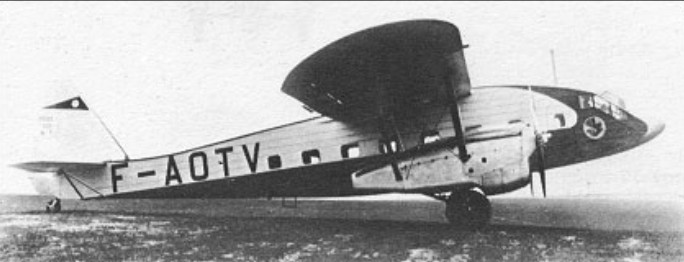
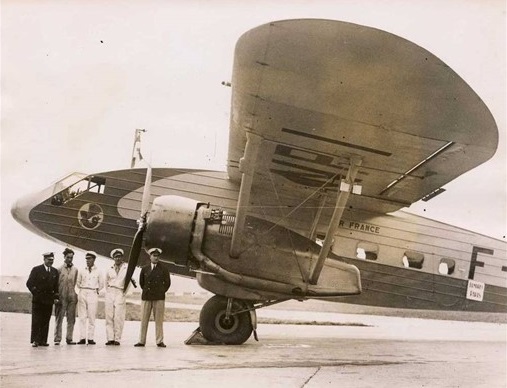
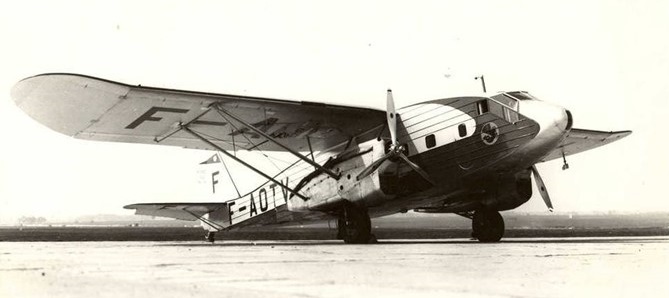
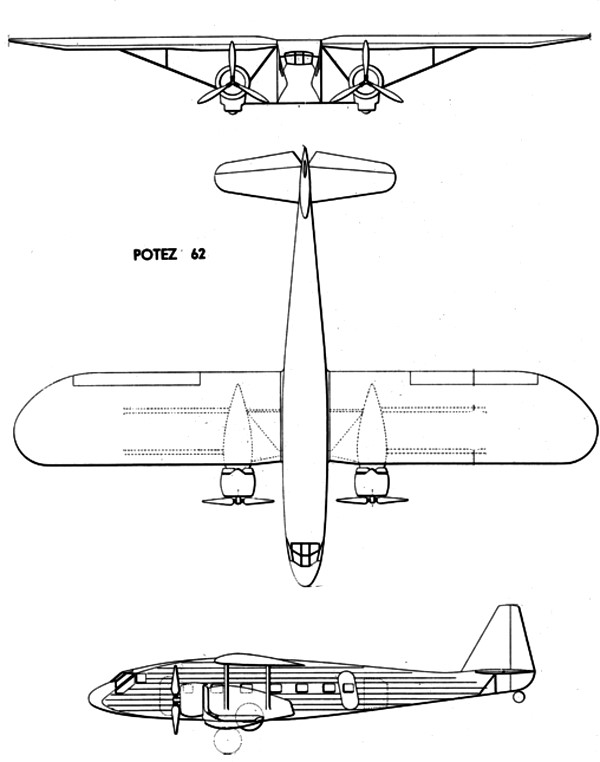
The prototype Potez 62 civil airliner, based on the military Potez 54, made its maiden flight on 28 January 1935. It retained the strut-braced high-set wing of the Potez 54, which was married to a redesigned fuselage. Pilot and co-pilot were seated side-by-side in a control cabin with, to their rear, two cabins accommodating up to 16 passengers. Undercarriage was retracting, but there were no flaps, which the large wing area with thick airfoil made unnecessary, at the expense of speed.
The wooden fuselage had a composite coating, whereas the wings were covered with fabric and the leading edge was made out of metal. The aircraft was propelled by two Gnôme & Rhône radial engines whose 14 cylinders produced some 870 hp. The engines were mounted in two side cradles, fixed to the fuselage and to the wings.
The Potez 621 ordered by Air France, flown later in 1935, introduced 537kW Hispano-Suiza 12Xrs Vee engines and 2 degrees sweepback on the wings. These were used on routes inside South America. By late 1936, many Potez 62s were employed on routes to Europe and the Far East, as the aircraft was robust and reliable, albeit slow. It remained in service until the Second World War, and one was used by the Free French Air Force.
Production totalled 23, four of the 14 machines built as Potez 62s later being converted to Potez 621 standard, and in 1937 nine Potez 62s were re-engined with 671kW Gnome-Rhone 14N16/17 radials.
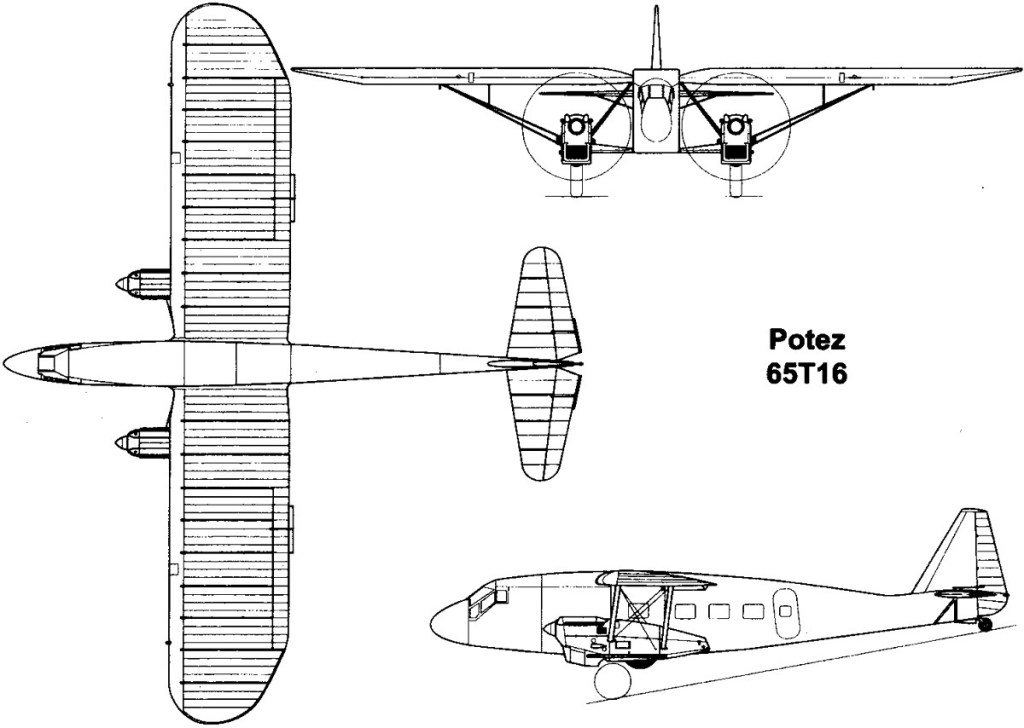
The type interested the Armee de I’Air, which ordered a troop transport version, the Potez 65 or Potez 650 TT, which had accommodation for a crew of three plus 14 fully-equipped troops or, if equipped as an ambulance, with provision for six stretchers, four seated patients and one medical attendant.
The Potez 650 only received relatively minor modifications: Hispano-Suiza 12X liquid-cooled inline engines instead of the Gnome-Rhône 14K radials, a less sophisticated cabin with accommodation for 14 paratroopers and their equipment (one squad) or 10 wounded (for the medevac role), and a larger door system for bulky loading (transport role). The first paradrop from a Potez 650 occurred on May 1937.
Two orders totalling 15 aircraft were received by Potez, the first of them being delivered in late 1935. Powered by 537kW Hispano-Suiza 12 Xirs I or HS 12Xbrs l/grs I engines, and with a maximum take-off weight higher than that of the Potez 62, the military version had maximum speed reduced to 300km/h.
The French military high-command did not have grandiose plans for paratroopers, which did not fit well with its essentially defensive doctrine of the pre-World War II era. Because of this, only two paratrooper companies were formed, and never reached full theoretical strength, and only 15 Potez 650s were manufactured. They were not sufficient in numbers even for such a small number of men, so the big Farman 224 airliner which had just been refused by Air France was pressed into military service.
A combat mission was planned as part of the Allied entry in the Netherlands in the case of a German attack, but the plan was cancelled, and eventually no combat paradrops took place in 1939-1940.
After the armistice, paratrooper units were officially disbanded, although training jumps were performed from time to time in North Africa. The Potez 650s were transferred to a military transport unit. When Free French and British forces attacked the French protectorates of Syria and Lebanon in mid-1941, the Vichy government established an airbridge to resupply its troops in the middle east. Potez 650s took a significant share of the work, alongside converted bombers (Farman 223.3s) and airliners (Dewoitine 338s).
In 1937, the Romanians acquired one civil Potez 62, which was operated until 1944. In late 1936, the Romanian Air Force expressed interest in acquiring foreign military aircraft. The Potez 650 was selected, but Romania required Gnome-Rhône 14K engines to be fitted like originally on the Potez 62, since a license to manufacture these engines had already been acquired by Industria Aeronautică Română. Six examples of this new variant, designated Potez 651 were ordered in 1937, although it seems only four were operationally used. These aircraft were actively involved at the initial stage of the war against the Soviet Union in 1941-1942. Originally ordered as bombers, the Romanian Potez 651s were relegated to transport duties during World War II. Three examples were still in service in May 1944.
Potez 62-1
Operators were Air France, the Free French Air Force, and LARES of Romania.
Potez 62 Engines: 2 x Gnome-Rhone 14Kirs Mistral Major, 870 hp / 649kW Wingspan: 22.45 m / 74 ft 8 in Wing area: 76.0 sq.m / 818.06 sq ft Length: 17.32 m / 57 ft 10 in Height: 3.9 m / 13 ft 10 in Max take-off weight: 7500 kg / 16535 lb Empty weight: 4,000 kg (8,800 lb) Loaded weight: 4895 kg / 10792 lb Max. speed: 325 km/h / 202 mph Cruise speed: 280 km/h (151 knots, 174 mph) at 2,000 m (7,500 ft) Service ceiling: 7500 m / 24600 ft Range: 1000 km / 621 miles / 540 nmi Crew: 3 Capacity: 14-16 passengers
Potez 620 Engines: 2 x PD Gnome-Rhone 14Kirs, 820 hp Wingspan: 22.45 m Wing area: 76.00 sq.m Length: 17.32 m Height: 3.90 m Empty weight: 4895 kg Normal takeoff weight: 7500 kg Maximum speed: 325 km / h Cruising speed: 280 km / h Practical range: 1000 km Service ceiling: 7400 m Crew: 2 Payload: 16 passengers
Potez 650 Engines: 1 × Hispano-Suiza 12Xgrs1 liquid-cooled V-12 piston engine, 540 kW (720 hp) (right hand rotation) 1 × Hispano-Suiza 12Xhrs1 liquid-cooled V-12 piston engine, 540 kW (720 hp) (left hand rotation) Wingspan: 22.45 m (73 ft 8 in) Wing area: 76 sq.m (820 sq ft) Length: 17.32 m (56 ft 10 in) Height: 3.9 m (12 ft 10 in) Max takeoff weight: 7,500 kg (16,535 lb) Empty weight: 4,632 kg (10,212 lb) Maximum speed: 300 km/h (186 mph; 162 kn) at 2,000 m (6,600 ft) Cruising speed: 250 km/h (155 mph; 135 kn) at 2,000 m (6,600 ft) Range: 1,200 km (746 mi; 648 nmi)
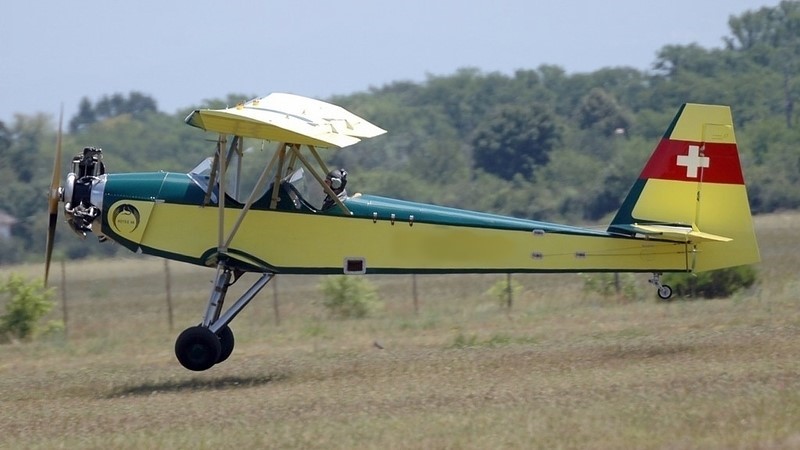
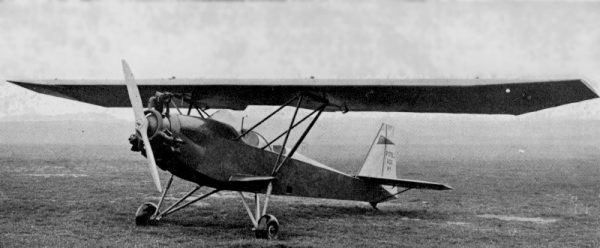
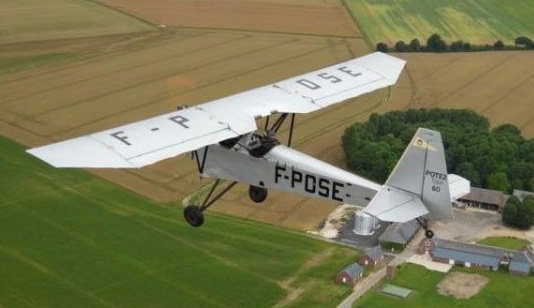
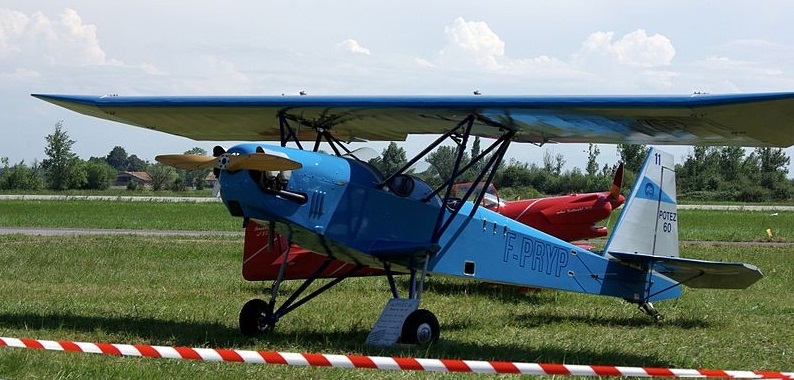
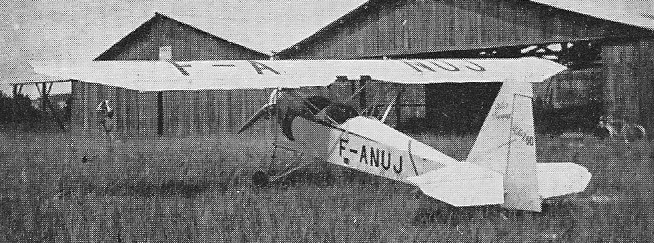
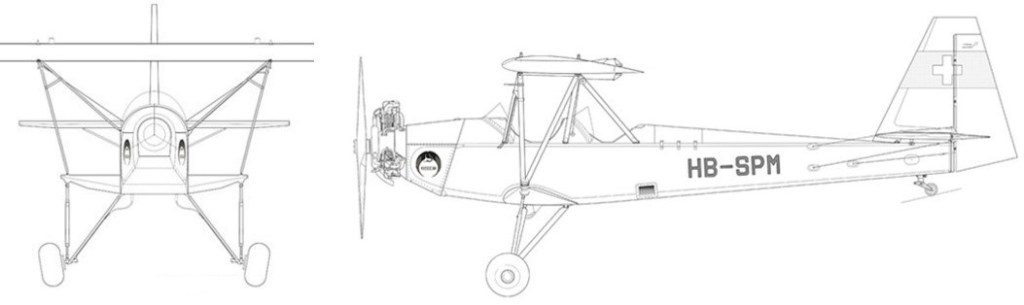
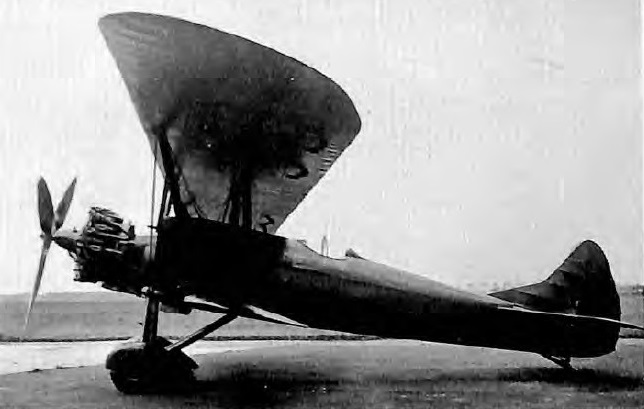
The Potez 60 sometimes named the Sauterelle (“Grasshopper”) is a French 1930s parasol-wing open-cockpit trainer. The Potez 60 is essentially made of wood and covered in linen.
The fuselage is made up of two plywood side panels, assembled on frames. Wooden fins allow the attachment of fairly wide track landing gear, in order to reduce the risk of a “wooden horse” by inexperienced pilots and to facilitate access to the front station.
The construction of the wing is in three panels around two wooden spars, mounted on tubular steel masts. Some Potez 60s had slats mounted on the leading edge. The empennage is wooden too; its size and shape have been slightly modified from the prototype.
The undercarriage is made of steel tubing with Potez or Messier type rubber dampers or its equivalent. Some aircraft had no brakes, others had cable brakes.
It had a wide-track tailwheel landing gear and is powered by a 45 kW (60 hp) Potez 3B uncowled radial engine.
The Potez 3B engine fitted to the Potez 60 was “one half” of the 6Ba fitted to the Potez 43. As a result, these engines have many parts in common. The 3B engine proved to be reliable, but it requires quite intensive maintenance, especially of the rocker arms, whose lubrication system is quite special.
Potez 60 is n° 6184, registered F-AOSE on August 11, 1936
Test pilot René Labouchère took off the Potez 60 for the first time in Méaulte on August 8, 1934. In December, the aircraft was presented in Villacoublay by Georges Detré to the STIAé, the powerful state body mandated to control any French aircraft. Detré gave a brilliant presentation, meant to demonstrate the aircraft’s docility and ease of piloting.
One additional machine was modified in 1948 to take a 75 hp Minie 4DC-30 engine and was referred to as the Potez 60/48.
An order for 250 was placed by the French government, but deliveries stopped after 155 aircraft were produced. On the first models, even the propeller was made by Potez – the Potez 121. Afterwards, several other brands were approved.
Powerplant: 1 × Potez 3B radial engine, 45 kW (60 hp) Wingspan: 10 m (32 ft 9.75 in) Empty weight: 629 lb Length: 22 ft 10 in Height: 7 ft 8 in Loaded weight: 1232 lb Maximum speed: 145 km/h (90 mph, 78 kn) Time to 1640 ft: 3 min 45 sec Ceiling: 3000 m / 9840 ft Range: 720 km / 404 mi Crew: 2
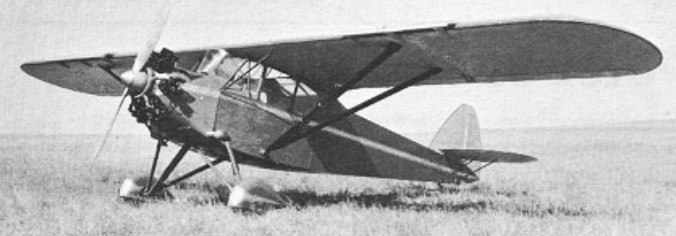
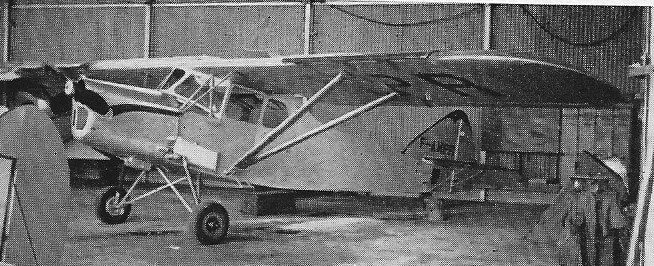
Ultimate development in the series of high-wing monoplane tourers which began with the Potez 36, the Potez 58 prototype first flew in September 1934. Like its immediate predecessor, the Potez 43, it had accommodation for a pilot and two passengers. The wing retained its Vee-strut bracing, leading-edge slats and folding capability, but the wing root was enlarged, the fuselage and tail unit design further refined, and the divided landing gear strengthened and equipped with spatted wheel fairings as standard.
Potez 584 Engine: de Havilland Gipsy Major, 120 hp Seats: 3
Potez 585 Engine: 1 x Potez 6Ba radial piston engine, 97kW Max take-off weight: 906 kg / 1997 lb Loaded weight: 515 kg / 1135 lb Wingspan: 11.3 m / 37 ft 1 in Length: 7.44 m / 24 ft 5 in Height: 2.36 m / 8 ft 9 in Wing area: 19.0 sq.m / 204.51 sq ft Max. speed: 190 km/h / 118 mph Cruise speed: 160 km/h / 99 mph Range: 750 km / 466 miles
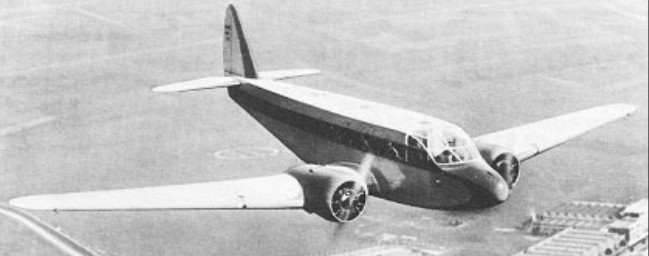
Designed by Louis Coroller as an executive transport, the prototype Potez 56 made its first flight on 18 June 1934. Largely of wood construction, the Potez 56 was a cantilever low-wing monoplane with a wing section based on that of the Potez 53 racer, and with a single fin and rudder. It had exceptionally clean lines, the main landing gear units retracting backwards into the nacelles of the two Potez 9Ab radial engines. There was accommodation for a crew of two in an enclosed cockpit, with a cabin for six passengers. Early tests confirmed that the Potez 56 had good flight qualities and was remarkably stable.
Series production included at least three Potez 561 aircraft, with variable-pitch propellers to improve take-off, aerodynamically refined engine nacelles and revised cockpit windows.
Military versions followed, for use in the carrierborne liaison, general utility, target tug, and twin-engine pilot training roles. Total production of all versions, military and civil, was 72, the final examples being two Potez 568 P.3 aircraft, the last of a batch that was completed at the time of the June 1940 armistice with Germany.
Potez 560 Engines: 2 x Potez 9Ab radial, 138kW Max take-off weight: 2980 kg / 6570 lb Loaded weight: 1910 kg / 4211 lb Wingspan: 16.0 m / 53 ft 6 in Length: 11.84 m / 39 ft 10 in Height: 4.6 m / 15 ft 1 in Wing area: 33.0 sq.m / 355.21 sq ft Max. speed: 270 km/h / 168 mph Ceiling: 6000 m / 19700 ft Range: 650 km / 404 miles
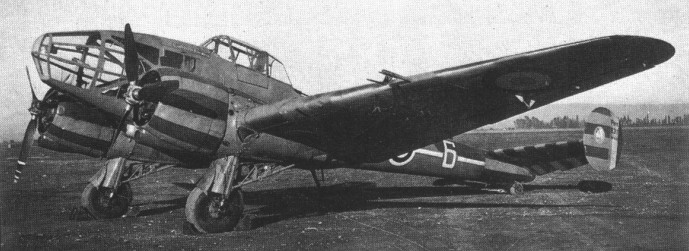
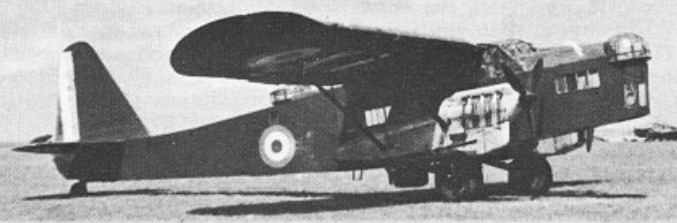
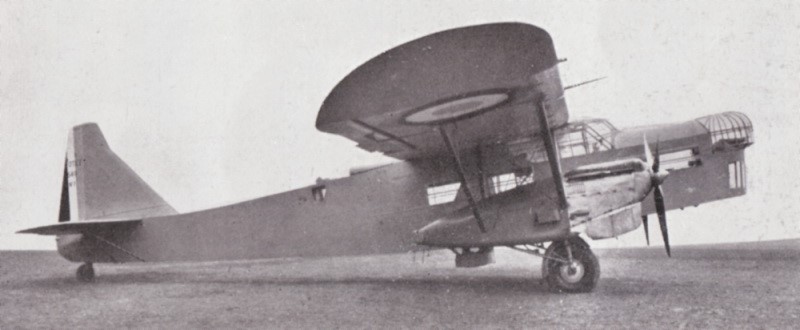
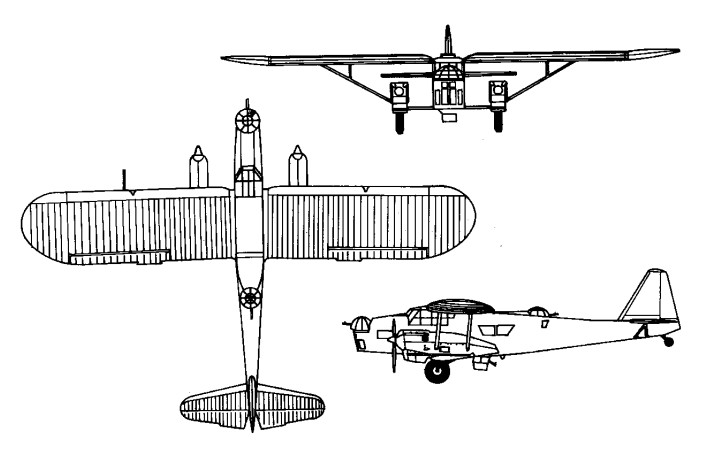
This two-engine aircraft was built as a private venture by the French Potez company to fulfill a 1932 specification for a new reconnaissance bomber. Designed by Louis Coroller, designated the Potez 54, it was intended as a four-seat aircraft capable of performing duties such as bomber, transport and long-range reconnaissance. The Potez 54 was a high-wing monoplane, of mixed wood and metal covering over a steel tube frame. The prototype had twin fins and rudders, and was powered by two 515 kW (690 hp) Hispano-Suiza 12Xbrs V-12 engines in streamlined nacelles, which were connected to the fuselage by stub wings. The main landing gear units retracted into the nacelles, and auxiliary bomb racks were mounted beneath the stub wings. There were manually-operated turrets at the nose and dorsal positions, as well as a semi-retractable dustbin-style ventral turret. The main landing gear units retracted into the nacelles, and bomb racks were mounted beneath the stub wings.
The Potez 54 M.4 category prototype flew for the first time on 14 November 1933 and during development, the original tailplane was replaced by a single fin and rudder, and in this form, the type was re-designated the Potez 540 and delivered to the Armee de I’Air on 25 November 1934.
Parallel with the Potez 540 were developed the Potez 541 prototype, powered by Gnome-Rhone 14Kdrs radials, and the Potez 542 with 537kW Lorraine Petrel engines.
All versions had defensive armament of manually-operated nose and dorsal turrets and a semi-retractable ventral ‘dustbin’ position; radio, oxygen, night and blind flying equipment were standard, and reconnaissance cameras could be carried.
A total of 192 Potez 540s were built.
The French Government declared on 25 July 1936 that it would not send arms to Spain, but its Air Minister, Pierre Cot, secretly permitted a consignment of aircraft to be dispatched. At the end of July, about 70 aircraft were sent across the border to Barcelona, including Potez 54 bombers and Dewoitine 371 fighters.
In early 1938, the Ilmavoimat / Maavoimat test team evaluated the Potez 540. Given the role that the aircraft was expected to fill, the evaluation was cursory and simply confirmed that the aircraft was completely unsuited to the intended role and should not be considered further. In point of fact, the evaluation team were highly annoyed that the French would even put the aircraft forward for consideration given the obvious unsuitability when evaluated against the requirements the Ilmavoimat had provided.
Their first combat was in the Spanish Civil War, where they were employed by the Spanish Republicans. In the late 1930s, these aircraft were becoming obsolete so they were withdrawn from reconnaissance and bombing duties and were relegated to French transport units. They were also employed as paratrooper training and transport aircraft. By September 1939 and the beginning of World War II, they had been largely transferred to the French colonies in North Africa, where they continued to function in transport and paratrooper service. Their role in even these secondary assignments was problematic given their poor defensive armament and vulnerability to modern enemy fighters. Following the French capitulation to Germany in June 1940, those Potez 540s still flying served the Vichy French Air Force mainly in the French overseas colonies. Most of these machines were retired or destroyed by late 1943
Potez 540 Engine: 2 x Hispano-Suiza 12Xirs / Xjrs, 515kW / 690 hp Max take-off weight: 5950 kg / 13118 lb Loaded weight: 3785 kg / 8345 lb Wingspan: 22.1 m / 73 ft 6 in Length: 16.2 m / 53 ft 2 in Height: 3.88 m / 13 ft 9 in Wing area: 76.0 sq.m / 818.06 sq ft Max. speed: 310 km/h / 193 mph Ceiling: 5182 m / 17000 ft Range: 1250 km / 777 miles Armament: 3 x 7.5mm MAC 1934 machine-guns Bomb load: 4 x 225kg or 10 x 55kg Crew: 4-7
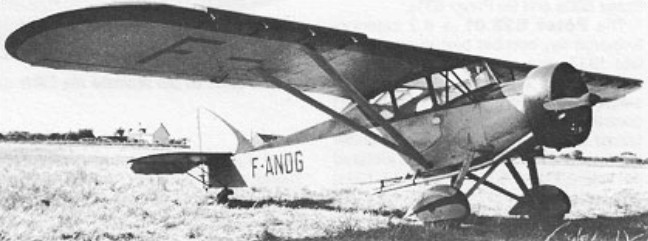
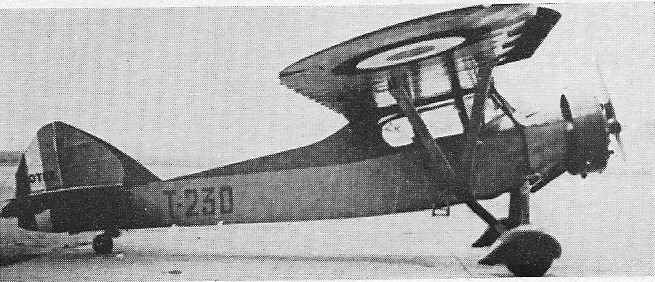
The success of the Potez 36 tourer led to development of the refined Potez 43, the prototype making its first flight in June 1932. It retained the strut-braced high wing which had characterised the P.36, but the span of the leading-edge slats was reduced to equal that of the ailerons and a refined fuselage was introduced with cabin accommodation for three. There was provision for wheel spats and the tail unit was revised.
The prototype and early production aircraft were powered by the Potez 6Ac engine, but later variants relied mainly on the Renault 4. Total production was 161, including a number built specifically for the Armee de I’Air for liaison and training.
Potez 431
Potez 431 Engine: 1 x Potez 6Ac, 100 hp Wingspan: 37 ft Wing area: 204 sq.ft Length: 24 ft 5 in Height: 7 ft 9 in Empty weight: 1030 lb Loaded weight: 1850 lb Max speed: 106 mph Cruise: 92 mph
Potez 434 Engine: 1 x de Havilland Gipsy Major, 120 hp
Potez 435 Engine: 1 x Renault 4 Pdi, 120 hp
Potez 436 Engine: 1 x Renault 4 POI, 140 hp
Potez 437 Engine: 1 x Renault 4 Pdi, 120 hp
Potez 438 Engine: 1 x Renault 4Pdi inline, 89kW Max take-off weight: 840 kg / 1852 lb Loaded weight: 560 kg / 1235 lb Wingspan: 11.30 m / 37 ft 1 in Length: 7.65 m / 25 ft 1 in Height: 2.36 m / 8 ft 9 in Wing area: 18.0 sq.m / 193.75 sq ft Max. speed: 170 km/h / 106 mph Ceiling: 5000 m / 16400 ft Range: 700 km / 435 miles