single-seater fighter (12 copies – serial production in 1940)
Aircraft
Rogožarski SIM-X / SEA-JEEP / SI-GIP

Aircraft SIM X was designed by Sima Milutinovic at the beginning of the 1936, drawing on the positive experiences of his previous SIM-II and SIM-VIII. The Rogozarski SIM-X (Serbian: Рогожарски СИМ-X) was a 1936s Yugoslav Sports and tourist plane and for basic training of military pilots. It was designed and built at the Rogožarski factory in Belgrade.
The prototype aircraft was built at Rogožarski from August until the end of the 1936. The first test flight took place on 1936. The SIM X had parasol monoplane with one engine, a wooden two blade propeller, with two crew members in tandem. The aircraft was registered YU-PDY.
While the plane was designed for three types of engine mounting: Walter NZR 120 hp, Siemens 110 hp and Gypsy Major 120 hp: the production incorporated a Walter NZR 120 hp air-cooled radial with reduction gear which was produced locally by Vlajković in Belgrade. The plane was mostly wooden construction, the fuselage of elliptical cross-section made entirely of wood covered with plywood, and the wings made of wood covered with cloth, with rounded ends. On each side, the wings are supported by a pair of inclined struts from the fuselage. The fuel tank was located in the central part between the wings. Landing gear was fixed, no axles, completely made of steel pipe.
A trainer single-engine two-seater plane for the initial training (21 units, 1937)
The Rogožarski SEA-JEEP was a modification of SIM X with Gypsy Major engine (1 converted SIM-X, 1940)
A second Rogožarski SEA-JEEP was a modified SIM-X plane for a school night flying (1 converted SIM-X 1941)
Variants:
Rogozarski SIM-X First variant with Walter NZR engines 120 hp, 21 built (1) prototype 1936 (10 airplane) 1937 and (10 airplane) 1938
Rogozarski SI-GIP
Second variant with Gipsy Major engines 132 hp, 1 built (conversion) in 1940.
Rogozarski SIM-Xa
Third variant instrument flight aircraft with Walter NZR engines 120 hp, 1 built (conversion) in 1941.
Engine: 1 × Walter NZR 6-cylinder radial, 89 kW (120 hp)
Propellers: 2-bladed Crew: 2
Wingspan: 10.00 m (32 ft 10 in)
Wing area: 18.50 sq.m (199.1 sq ft)
Length: 6.96 m (22 ft 10 in)
Height: 2.70 m (8 ft 10 in)
Empty weight: 543 kg (1,197 lb)
Gross weight: 785 kg (1,731 lb)
Maximum speed: 202 km/h (126 mph; 109 kn)
Cruising speed: 168 km/h (104 mph; 91 kn)
Minimum control speed: 72 km/h (45 mph; 39 kn)
Range: 560 km (348 mi; 302 nmi)
Service ceiling: 5,500 m (18,045 ft)
Rate of climb: 4.17 m/s (821 ft/min)
Rogožarski SIM-VI
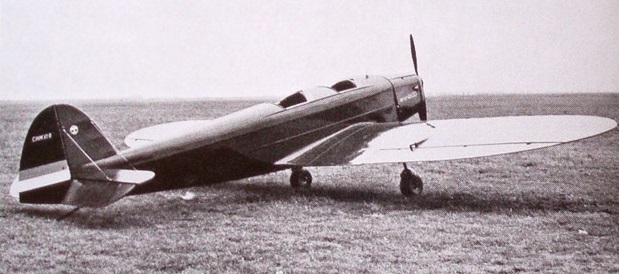
The Rogožarski SIM-VI (Serbian Cyrillic:Рогожарски СИМ-VI) was designed by engineer Sima Milutinović in the early 1930s as an inexpensive trainer plane that would enable expansion of sports aviation. It was a single-engined, two-seat, low wing aircraft designed as trainer in Yugoslav before World War II. It was designed and built at the Rogožarski factory in Belgrade.
The project was in suspension until 1936, when a prototype was constructed, and the maiden flight was made in 1937. The aircraft was a low wing monoplane of fabric-covered wooden structure. A four cylinder 50 hp / 35 kW Walter Mikron engine drove a two-bladed wooden propeller. The plane had tandem seating and was intended for civilian use, for the training of sports pilots, demonstration flights and travel. The wings were of thin profile, only 6% of trapezoidal shape with rounded ends. On each side, the wings were stretched with molded wire ties.
Immediately after completing the flight tests of aircraft SIM-VI, engineer Milutinovic undertook the repair of the shortcomings he had observed, so that by the end of the 1937 Rogozarski had a new variant of this airplane which was designated SIM-VI-a. It had a more powerful engine Walter Mikron II 44 kW (60 hp). An increase in engine power required strengthening of the basic structure which Milutinovic used to make general improvements to the aircraft. Wing relative thickness was increased from 6% to 15% which strengthened the wings, and resulting in the removal of wire ties. Now the wings were covered with cardboard to the half swing instead of cloth which resulted in an improved overall stiffness of the aircraft. This also enabled the landing gear and aerodynamic characteristics of new aircraft to be upgraded, while the weight was only slightly increased.
After successful testing and registration (YU-PDX) the SIM-VI was bought by the Central Administration of the Aero Club, which used the it at airshows and for the training of sport pilots. The aircraft did not enter serial production because it could not be used at smaller and under-equipped airports that existed in central Serbia.
Flight tests that were carried out at the Zemun airfield proved that the SIM-VI-a had slightly better performance than its predecessor, and was able to perform basic stunts. After being granted a navigation license the plane was registered under civil designation YU-PEZ and it was bought by Aero Club’s Central Administration. The plane was used until the beginning of the war in 1941 at air shows, sports competitions and for pilot training.
Pilot and engineer Arsenijevic, piloted this plane at the competition Little Entente states in 1938. during the competition the plane flew some 3,274 km (2,034.37 miles) achieving an average speed of 151.01 km/h (93.83 mph). Pilots who flew the plane felt that the plane was agile and easy to operate and fly, but despite good features and relatively low cost, SIM-VI did not go into serial production it could not win over the traditional empirical approach (a robust and powerful aircraft is a good aircraft). Right before the outbreak of war, the aircraft was included into the Yugoslav Royal Air Force, deployed as a signalling plane but was destroyed during the bombing of Lazarevac airfield on 7 April 1941.
Engine: 1 × Walter Mikron, 37 kW (50 hp)
Propeller: 2-bladed
Wingspan: 9.50 m (31 ft 2 in)
Wing area: 15.00 m2 (161.5 sq ft)
Length: 7.05 m (23 ft 2 in)
Gross weight: 500 kg (1,102 lb)
Empty weight: 300 kg (661 lb)
Maximum speed: 120 km/h (75 mph; 65 kn) 150 km/h (93 mph) at sea level
Cruising speed: 60 km/h (37 mph; 32 kn)
Range: 450 km (280 mi; 243 nmi)
Service ceiling: 4,000 m (13,123 ft)
Crew: 2
Rogožarski Fizir FN / Zmaj Fizir FN
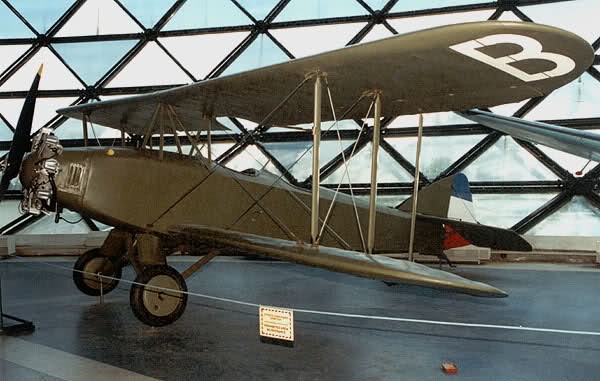
The Fizir FN (Физир ФН in Serbian) was a plane designed by Croatian Rudi Fizir for primary training in Yugoslavia before World War II.
Fizir FN was single-engine two-seat, trainer biplane with one pair of struts on each side. The wings are rounded at the ends of the flaps had been located on the lower and upper wings.
The first prototype Fizir FN (Fizir teaching) was designed and manufactured in 1929.
Fizir in Petrovaradin did not have the capacity for industrial production of aircraft, their area of work was the design and prototyping. It was built at the Zmaj Zemun and Rogožarski factory in Belgrade, and Albatros in Sremska Mitrovica.
Forty examples were built.
Variants:
Fizir FN – Mercedes – Mercedes 88 kW
Fizir FN – Walter – Walter NZ-120 88 kW
Fizir FN – Walter-Mars 106 kW
Seaplane nicknamed “Little Fizir” or “Fizir Mars”.
Zmaj Fizir FN
Engine: 1 × Walter NZ-120, 88 kW (118 hp)
Propeller: 2-blade
Wingspan: 11.20 m (36 ft 9 in)
Wing area: 32.50 sq.m (349.8 sq ft)
Length: 8.80 m (28 ft 10 in)
Height: 3.10 m (10 ft 2 in)
Empty weight: 820 kg (1,808 lb)
Gross weight: 1,426 kg (3,144 lb)
Maximum speed: 120 km/h (75 mph; 65 kn) 140 at sea level
Range: 540 km (336 mi; 292 nmi)
Service ceiling: 6,500 m (21,325 ft)
Crew: 2
Rogožarski PVT
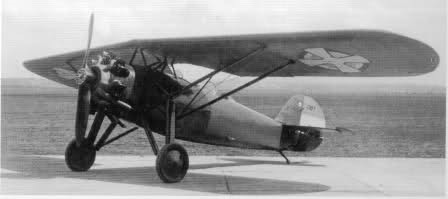
The Rogozarski PVT (Рогожарски ПВТ in Serbian, translated as Rogozarski PWT in German and as Rogojarsky PVT in some older English sources) was a single-engined, two-seat parasol winged aircraft designed as an advanced and fighter trainer in Yugoslavia before World War II.
In about 1933 the Rogozarski team of Rudolf Fizir, Sima Milutinović, Kosta Sivčev and Adem Biščević designed the PVT, a training aircraft with tandem open cockpits in an oval wooden monocoque fuselage. Its wooden, canvas covered wings were swept and parasol mounted well above the fuselage with pairs of lift struts to the lower fuselage and a central inverted V cabane. They carried long narrow chord ailerons, with prominent spades well clear of the upper surfaces
Sixty-one were built between 1935 and 1941, serving with the Yugoslav Royal Air Force until the fall of Yugoslavia in 1941. After that, some PVTs were used by the newly formed Croatian Air Force, sometimes as ground attack aircraft.
One PVT was converted to a PVT-H interim seaplane trainer. Three new PVT-H were built in 1937.
Engine: 1 × Gnôme-Rhône 7K, 310 kW (420 hp)
Wingspan: 11.20 m (36 ft 9 in)
Wing area: 22.1 sq.m (238 sq ft)
Length: 8.54 m (28 ft 0 in)
Height: 2.81 m (9 ft 3 in)
Empty weight: 967 kg (2,132 lb)
Gross weight: 1,213 kg (2,674 lb)
Maximum speed: 240 km/h (150 mph; 130 kn) at sea level
Service ceiling: 7,000 m (22,966 ft)
Rate of climb: 6.54 m/s (1,287 ft/min) to 2,000 m (6,562 ft)
Crew: 2
Rogožarski SIM-VIII
sports travel airplane (3 planes, 1931)
Rogožarski
Prva Srpska Fabrika Aeroplana Živojin Rogožarski AD
Yugoslavia
First aircraft factory in Yugoslavia, established in 1925 for construction of military types under license. PSFA produced indigenous Rogozarski two-seat reconnaissance biplane in early 1930s, powered by Walter Castor engine. Series of aircraft for Yugoslav Air Force followed, but the Rogozarski factory was destroyed in Second World War. In 1946 the remnants of the Rogozarski, Ikarus, and Zmaj companies were brought into the government aircraft factories and resumed production.
Four out of five Yugoslav aircraft plants were in close proximity to each other, built in and around Belgrade: Ikarus, Rogožarski, Zmaj and Utva. The fifth one was DFA (Državna Fabrika Aviona – State Aircraft Factory) which was located in Kraljevo.
Rogers Sea Hawk
The 1929 Rogers Sea Hawk flying boat first flew in January 1929, piloted by George Rommell.
Engine: 150hp Curtiss C-6 pusher
Wingspan: 40’0″
Length: 31’6″
Useful load: 1045 lb
Max speed: 90 mph
Cruise: 72 mph
Stall: 42 mph
Range: 500 mi
Seats: 4
Rogers Sea Eagle RBX

Designed by Harry Rogers, as a close copy of the Curtiss F, the 1929 Rogers Sea Eagle RBX flying boat was first powered by a 150hp Hisso A engine, and priced at $12,500. Only the one, NX/NC9735, was built, receiving ATC 274.
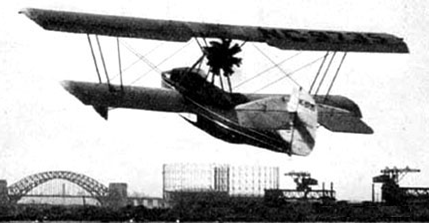
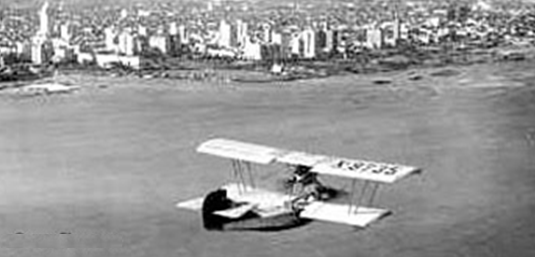
Sea Eagle RBX
Engine: 225hp Wright J-6 pusher
Wingspan: 40’0″
Length: 32’0″
Useful load: 1034 lb
Max speed: 105 mph
Cruise: 85 mph
Stall: 43 mph
Range: 270 mi
Seats: 4
Undercarriage: flying boat
Rogers, Harry
c.1925 (Harry) Rogers Air Lines
Garden City NY & Miami FL.
USA
1928: Rogers Aeronautical Mfg Co
Roosevelt Field
Long Island NY.
USA
Flying boat builder

