Rohr Aircraft Corporation

USA
Based at Chula Vista, California, was aircraft component subcontractor in Second World War. Built M.0.1 two-seat tail-first (canard) monoplane in 1946.

(Fred H) Rohr Aircraft Corp, Chula Vista CA. 1940

Fred H Rohr was the person who designed and built the fuel tanks for Lindbergh’s NYP Ryan.
In 1945, ten conversins of Consolidated PB2Y-3 with turrets removed, side hatch added, for 44 passengers, for Naval Air Transport Service were completed as PB2Y-3R.

In 1974, Rohr Chairman Burt Raynes resolved to move Rohr into the light airplane market by summoning Walt Mooney as designer and project manager to come up with a quantum leap in light aircraft technology. Mooney selected the best people Rohr had, including key players Bill Chana, Bob Fronius, Mike Voydisch, and Don Westergren, and built three airframes; two flying prototypes and a static tester, plus 1/10- and 1/2-scale models for feasibility tests. By the time the project ended (for reasons having nothing to do with the merits of the airplane), one prototype had accumulated 23 hours in the air.

Rogožarski AŽR

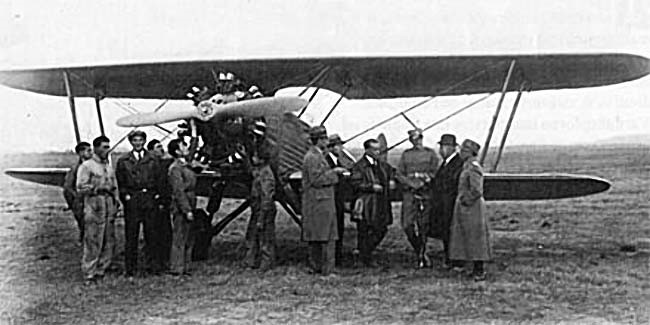
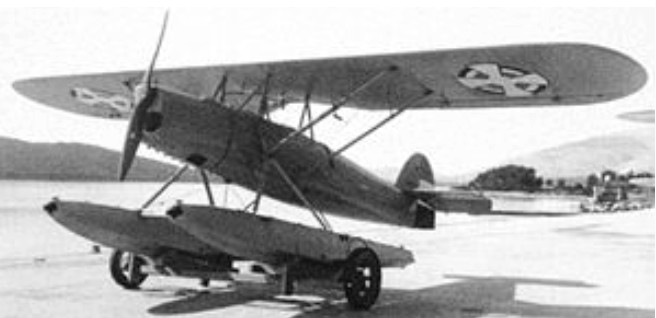
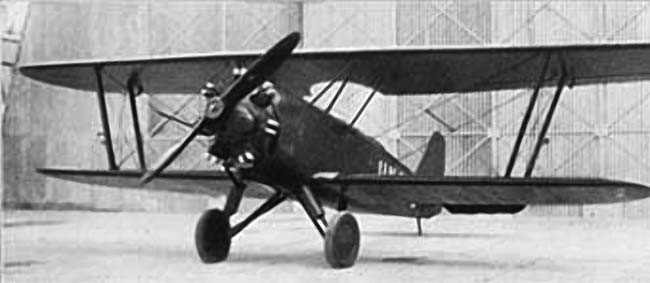
The Rogožarski AŽR (Serbian Cyrillic: Рогожарски АЖР) was a single-engined, two-seat biplane aircraft designed as a trainer in Yugoslavia before World War II. It was designed by Viljem Šuster and built at the Rogožarski factory in Belgrade.

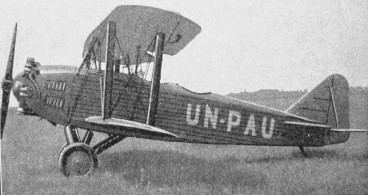
The aircraft was a biplane with the lower wing smaller than the upper. It was equipped with a seven-cylinder Walter Castor air-cooled radial engine of 240 hp and a wooden double-bladed propeller. The plane had dual controls, the two crew (pilot and flight instructor), sat one behind the other. It was to be employed as an intermediate trainer, replacing the outdated Hansa-Brandenburg C.I. The fuselage, which was of rectangular cross-section, was made of wood and covered with plywood. The wings had rounded ends, each was connected by a pair of metal struts and wire tensioners. Construction of the wing involved the use of wood covered with canvas. The landing gear was fixed and had no axle.

The first flight was conducted by a factory test pilot on November 5, 1930 and after the completion of factory tests, was handed over to the Yugoslav Royal Air Force Commission for testing.

The AZR was planned to replace the obsolete Hansa Brandenburg aircraft in the future. However, the flight characteristics were lower than the requirements, and they refused mass production.

The aircraft was only used in 1931 for advertising purposes, demonstration flights and participation in air shows. It also competed in the King’s Cup and the like; AZR still hoped to come to some arrangement with the military. This did not happen, Rogozarski withdrew from aircraft design, the prototype was registered as a civilian plane and used by the factory. It received the civil registration UN-PAU. In the meantime, the economic situation was such that the AŽR was standing in its hangar, waiting for better days; despite bank loans, there was a distinct lack of orders and the company went bankrupt in 1933.

Circumstances improved in the summer of 1934 when the Yugoslav Air Force bought the AZR and the fortunes of the factory improved, becoming a shareholder company. The AŽR was used as a trainer until 1937.

Engine: 1 × Walter Castor 7-cyl radial, 176 kW (236 hp)
Propellers: 2-bladed
Wingspan: 10.55 m (34 ft 7 in)
Wing area: 27.00 sq.m (290.6 sq ft)
Length: 7.55 m (24 ft 9 in)
Height: 3.05 m (10 ft 0 in)
Empty weight: 859 kg (1,894 lb)
Gross weight: 1,433 kg (3,159 lb)
Maximum speed: 215 km / h
Cruising speed: 185 km / h
Range: 745 km (463 mi; 402 nmi)
Service ceiling: 5,320 m (17,450 ft)
Rate of climb: 4.78 m/s (941 ft/min)
Crew: 2

Rogožarski SIM-II

Engine: Siemens Sh 14, 82 kW (110 hp)
Propeller: 2-blade
Wingspan: 12.40 m (40 ft 8 in)
Wing area: 21.70 sqm (233.6 sq ft)
Length: 7.80 m (25 ft 7 in)
Height: 2.68 m (8 ft 10 in)
Empty weight: 520 kg (1,146 lb)
Gross weight: 770 kg (1,698 lb)
Maximum speed: 105 km/h (65 mph; 57 kn) 148 km/h at sea level
Range: 750 km (466 mi; 405 nmi)
Service ceiling: 5,000 m (16,404 ft)
Crew: 2

Rogožarski SIM-XV / R-313

In connection with the growing danger of war in the second half of the thirties Yugoslavia started to carry out intensive work on designing new types of modern combat aircraft. Specifically, multi-purpose aircraft, which can be used as a light bomber, ground-attack aircraft and tactical explorer. Work to meet these requirements was begun by Ikarus and Rogožarskij.

In 1937 Rogožarski (Prva srpska fabrika aeroplana Rogožarski – Прва српска фабрика аероплана Живојин Рогожарски А. Д.) established a working group of engineer to proceed the project of a light twin-engine battle aircraft, designated R-313.

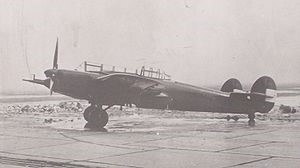
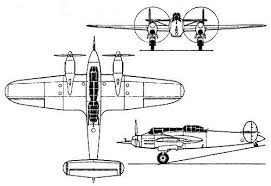
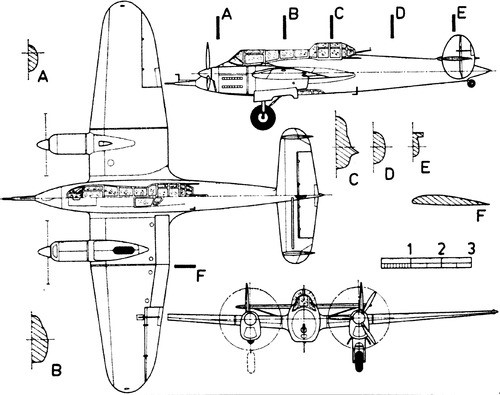
The Rogozarski R-313 (Рогожарски Р-313 in Serbian), originally called SIM-XV, was a two-seater twin-engined monoplane fighter/light bomber/reconnaissance aircraft. It was powered by two in-line Walter Sagitta IIR engines, both fitted with a compressor; each was capable of 493 hp. The inner fuel tank held 680 litres. The elliptical, wooden fuselage was covered in plywood which was also used to ‘skin’ the round-tipped, trapezoidal wings. The engine nacelles also housed the landing gear. The tail-wheel was, like the main landing gear, retractable. The fuel tank was located in the centre section between the wings. The reconnaissance variant of this aircraft was due to be equipped with a camera, a radio, a fixed 20mm cannon and a single FN 7.9mm machine gun, flexibly mounted. As a light bomber, the plane would carry four 106 kg ‘Stankovic’ bombs inside the fuselage. It was designed and built at the Rogozarski factory in Belgrade.

Construction of the prototype began in 1938 and completed at the end of next year. According to various sources, the first flight of the R-313 took place either at the end of 1939 or in July 1940. A total of 25 aircraft were planned, both reconnaissance and light bomber versions. In any case, the Sturmovik for the most part justified the hopes of the Air Force, whose specialists noted only the insufficient power of the engines. The engineers responded to the military’s wishes, presenting soon the variants of the R-313 with Daimler-Benz DB-601 and Rolls-Royce Merlin engines. Both versions brought the aircraft to the level of foreign aircraft, but because of the German invasion of a number of European countries, deliveries of foreign-made engines became not possible.

The prototype became part of 603 training squadron which was located at Grab, near Trebinje during the April war. It was damaged and abandoned attempting to take-off from Grab on 12 April 1941. A month later, the Germans took control and sold the machine to the Croats who had taken over the ‘Ikarus’ factory. They renamed the aircraft “Независни” (“Independent”); after repairs, a test flight was carried out on 19 May 1942. Sabotage was then detected, so serious that further repairs could not be carried out. Thus ended the plane which was popular in literature as the “Yugoslav moskito” Although it was designed and built long before its legendary counterpart.

Crew: 2
Engines: 2 × Walter Sagitta I-SR, 368 kW (493 hp) each
Propellers: 3-bladed Ratier
Wingspan: 13.00 m (42 ft 8 in)
Wing area: 26.40 m2 (284.2 sq ft)
Length: 11.00 m (36 ft 1 in)
Height: 2.68 m (8 ft 10 in)
Empty weight: 2,950 kg (6,504 lb)
Gross weight: 4,270 kg (9,414 lb)
Maximum speed SL: 376 km/h (234 mph; 203 kn)
Maximum speed 4000m/13,123ft: 460 km/h / 286 mph
Range: 1,000 km (621 mi; 540 nmi)
Service ceiling: 8,000 m (26,000 ft)
Rate of climb: 8.33 m/s (1,640 ft/min)
Time to 3000m / 10,000 ft: 5,7 min
Armament: 1x 20 mm (Oerlikon FF) HS-404 cannon, 1x flexible 7,92 mm Browning FN machine gun
Bombload: 400 kg / 882 lb
Rogožarski Brucoš

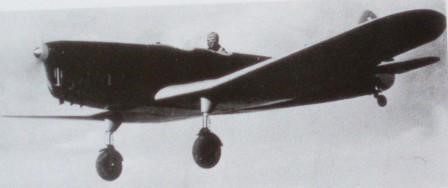
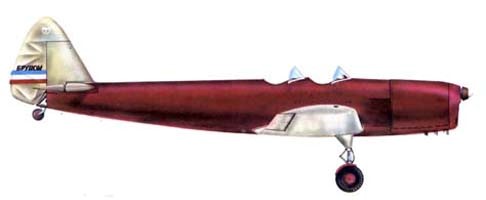
The Rogožarski Brucoš (Freshman, Serbian Cyrillic: Рогожарски Бруцош) was a single-engine, two-seat, low wing monoplane aircraft designed as a trainer in Yugoslavia in 1940. It was designed and built in the Rogožarski aircraft factory in Belgrade. Only one prototype was built.

Engine: 1 × de Havilland Gipsy Major I, 96 kW (129 hp)
Propeller: 2-bladed
Wingspan: 10.00 m (32 ft 10 in)
Wing area: 16.00 sq.m (172.2 sq ft)
Length: 8.10 m (26 ft 7 in)
Height: 3.10 m (10 ft 2 in)
Empty weight: 615 kg (1,356 lb)
Gross weight: 872 kg (1,922 lb)
Maximum speed: 185 km/h (115 mph; 100 kn) 210 km/h at sea level
Range: 840 km (522 mi; 454 nmi)
Service ceiling: 4,000 m (13,123 ft)
Rate of climb: 2.54 m/s (500 ft/min)
Crew: 2

Rogožarski SIM-XII / Рогожарски СИМ-XII-Х

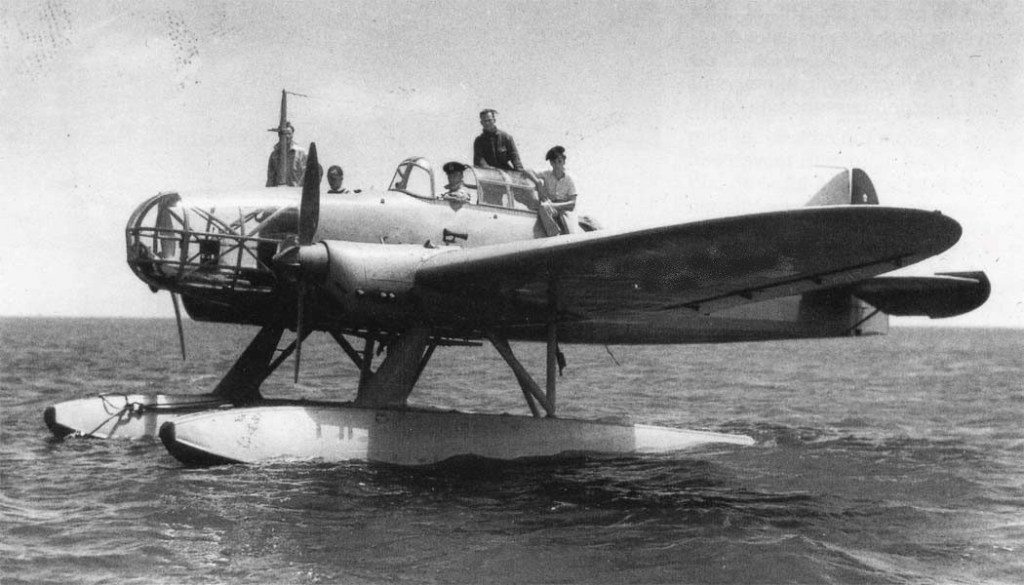
Rogožarski SIM-XII-H (left) and SIM-XIV-H (right) (Kumbor 1938)

The Yugoslav Royal Air Force turned to the Rogožarski factory for seaplane pilot trainers in 1937. A requirement was the seaplane would match the characteristics of the SIM-X. Since it was not possible to adapt existing SIM-X for installation of EDO floats, chief designed Sima Milutinović fitted the new, larger plane with a more powerful Walter Major 6 190 hp engine. At the end of 1937 the prototype was ready for testing. The first flight was conducted on February 7, 1938, by test pilot Ivan Koroša in at Divulje. After the flight tests had achieved satisfactory results, the first batch of aircraft was ordered, which were delivered in mid-1939.

The SIM-XII-H two-seat plane, with engine Walter Major 6 (190 hp), was of predominantly wooden construction, with an elliptical cross-section of fuselage entirely made of wood and covered with plywood. The wings were wood covered with fabric, with rounded ends. On each side, the wings are supported by a pair of inclined struts attached to the fuselage. The fuel tank was located in the central section between the wings. The first series of aircraft had two EDO Model 47 floats installed.

Nine were built in total.

The Royal Maritime Navy signed a contract with the Rogožarski factory on July 15, 1940 for a second series of these plane (4 aircraft) with these seaplanes equipped for instrument, or, “blind” flying. Rogožarski delivered these aircraft in five months but without floats as the delivery from Canada was delayed for several months. With agreement reached between the Rogozarski factory an the Navy command, the design and development of domestic aircraft floats was launched, unfortunately this project did not reach completion due to the outbreak of April war . In the pre-war period two SIM-XII-H aircraft were in accidents both in Boka Kotorska in 1940. Both aircraft were designated for disposal, so the Navy Command requested approval to install the floats from these planes onto new aircraft (onto the 2nd series of SIM-XII-H) considering that these planes were equipped with instruments for instrumental (“blind”) flying. When the approval was given, the floats were installed into new planes, so the aircraft in the second series in use before the war broke out.

The type was retired in 1941.

Rogožarski SIM-XII-H
Engine: 1 × Walter Major 6, 6-cylinder line, 140 kW (190 hp)
Propellers: 2-bladed
Length: 7.50 m (24 ft 7 in)
Wingspan: 11.00 m (36 ft 1 in)
Height: 2.96 m (9 ft 9 in)
Wing area: 2,050 m2 (22,100 sq ft)
Empty weight: 635 kg (1,400 lb)
Gross weight: 920 kg (2,028 lb)
Maximum speed: 208 km/h (129 mph; 112 kn) at sea level
Range: 840 km (522 mi; 454 nmi)
Crew: 2

Rogožarski SIM XI

The Rogožarski management observed that the SIM-X characteristics were very close to an acrobatic plane. It was decided to make some modifications to make an acrobatic plane. Sima Milutinovic designed reinforcements, reducing the wing area, and more powerful engines during 1937.

The Rogozarski SIM-XI (Serbian: Рогожарски СИМ-XI) was a single engined, one crew, high wing monoplane, designed and built at the Rogožarski factory in Belgrade.

The test flying was conducted by factory test pilot Captain Milan Bjelanovic by the end of January 1938. Factory tests were carried out until 12 March, then tests the experiment group of the Yugoslav Royal Air Force. The plane got excellent grades and and the YAF bought the prototype SIM-XI. This was the first Yugoslav aerobatic aircraft.

Engine: 1 × Siemens Sh14a, 110 kW (150 hp)
Propeller: 2-blade
Wingspan: 9.40 m (30 ft 10 in)
Wing area: 17.30 sq.m (186.2 sq ft)
Length: 7.16 m (23 ft 6 in)
Height: 2.70 m (8 ft 10 in)
Empty weight: 540 kg (1,190 lb)
Gross weight: 680 kg (1,499 lb)
Maximum speed: 191 km/h (119 mph; 103 kn)
Cruising speed: 168 km/h (104 mph; 91 kn)
Minimum control speed: 88 km/h (55 mph; 48 kn)
Range: 825 km (513 mi; 445 nmi)
Service ceiling: 5,500 m (18,045 ft)
Rate of climb: 4.87 m/s (959 ft/min)
Crew: 1