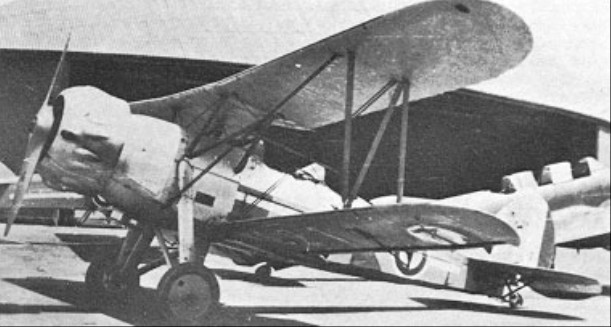
Romano Ro 80 / Ro 82

The Romano R-80.01 first prototype was a private venture by Etienne Romano, and was designed to provide an aerobatic two-seat biplane for company pilot Lemoigne to demonstrate at air shows. Tested in early 1935, it was also flown with great success by Michel Detroyat. Its design features included the provision of ailerons on both wings, robust divided landing gear, and a 179kW Lorraine 7Me radial engine in a NACA cowling. After testing also by the official STAe, the R80.01 then gave many aerobatic shows with Lemoigne at the controls.

In response to official suggestions, R-80.02 with the more powerful Salmson 9Aba engine was first flown in March 1936 and exhibited at the Paris Salon de I’Aeronautique of that same year. It incorporated changes already made on the aerobatic prototype, including ailerons on the lower wings only and a fin of increased area. Intended as a two-seat dual-control intermediate trainer, it was soon redesignated R-82.01. Two further protoypes were built, both of them being sold to private owners, one of them the well-known aviatrix Lucienne Saby.

Meanwhile, Romano had become part of the nationalised SNCASE and Michel Detroyat became Inspector of Flying Equipment for all the nationalised companies. On the latter’s urging, large orders were placed by the state for R-82 trainers for the Armee de I’Air. In the event, the total of production aircraft was 147, to which was added a further 30 ordered in 1937 by the Aeronavale. Series trainers featured a number of refinements and some simplifications, the principal external change being the introduction of a long-chord engine cowling.
By 1 August 1939 70 R-82s had been taken on charge, and all 177 series aircraft had been delivered by May 1940. The R-82 have excellent service with the Armee de I’Air and Aeronavale, largely equipping the Centres d’lnstruction and Ecoles de Pilotage.

In February 1938 two R-82s were purchased by a French intermediary company and ferried to Spain, where they were used for training and liaison duties by the Republican government fighting the Nationalist forces. It is uncertain whether these were new aircraft or machines taken from Armee de I’Air contracts.

R-82
Engine: 1 x Salmson 9Aba radial piston engine, 209kW
Wingspan: 9.88 m / 32 ft 5 in
Length: 7.82 m / 26 ft 8 in
Height: 3.34 m / 11 ft 11 in
Wing area: 23.72 sq.m / 255.32 sq ft
Max take-off weight: 1328 kg / 2928 lb
Loaded weight: 918 kg / 2024 lb
Max. speed: 240 km/h / 149 mph
Ceiling: 6500 m / 21350 ft
Range: 660 km / 410 miles
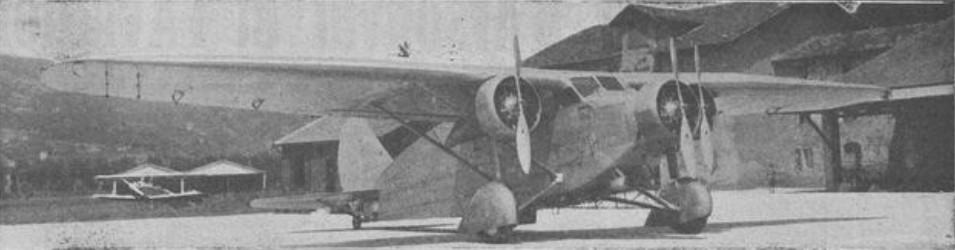
Romano R.16 / 160

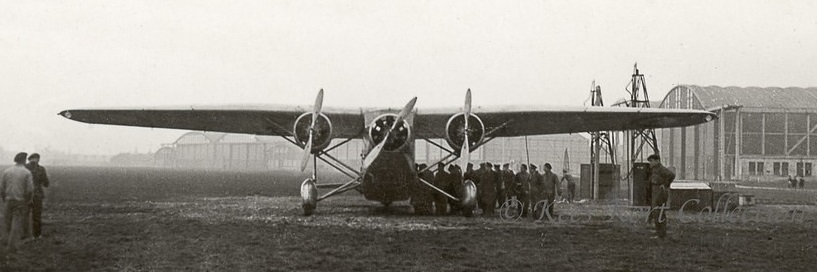
In 1930 the Direection Générale Technique issued a programme for an aircraft to operate in the French Colonies. It was to have three Lorraine 9N Algol engines and an all-metal structure, capable of reconnaissance, observation, policing and bombing as well as medical evacuations or general transport. The Romano R.16 was one of nine prototypes built to this programme.

Despite the all-metal requirement, the Romano R16 initially flew with a wing of mixed construction which was originally built for the rather similar Romano R.6 civil passenger aircraft. It is not known if the intended wing, all-metal and expected to be lighter, ever replaced it. On each side the high wing was in two parts, with a rectangular inner section attached to the top of the fuselage. The outer panels were straight tapered to rounded tips. The wing had two wooden box spars and spruce ribs and was entirely plywood covered. The centre section, over 40% of the span, was braced at its outer ends with a pair of parallel steel wing struts between the wing spars and the lower fuselage longerons, so that the R.16’s wing was a semi-cantilever one. High aspect ratio ailerons occupied the whole outer panel trailing edge and camber changing flaps filled those of the centre section.

The R.16 was powered by three 220 kW (300 hp) Lorraine 9N Algol nine cylinder radial engines enclosed by long chord NACA-type cowlings. One was in the nose of the fuselage and the other were mounted under the wing centre section from the forward wing struts, aided by bracing struts rising inwards to the wing root and short vertical struts to the forward spar. Long nacelles behind the outer engines tapered to the rear wing strut.

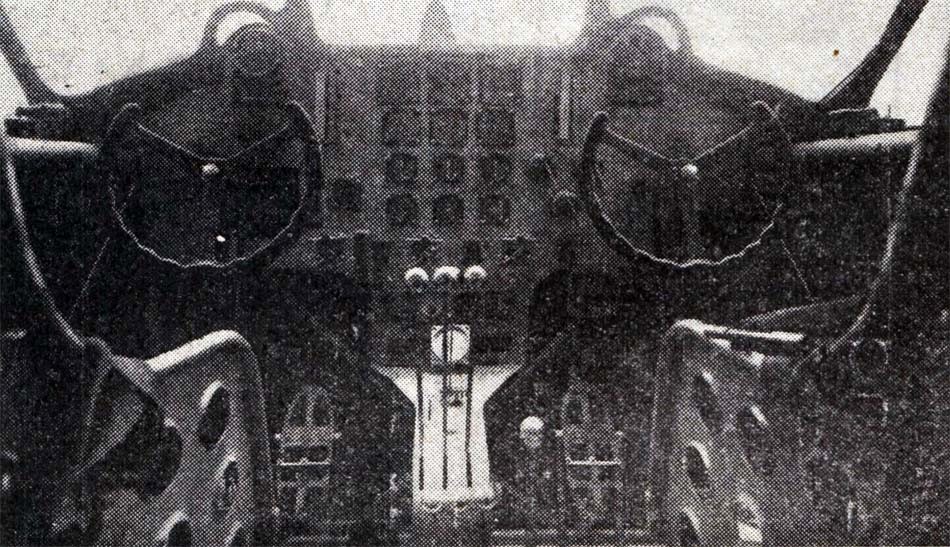
Structurally the R.16’s fuselage was built around steel tube longerons, giving it a simple rectangular cross-section. The pilots’ enclosed cabin was below and just ahead of the wing leading edge, fitted with side-by-side seating and dual controls. Behind them there was a generous cabin, accessed via a large port side door. Aft of the cabin, just behind the trailing edge was a dorsal gunner’s position. At the rear the fixed surfaces were approximately triangular and carried a balanced rudder and elevators, also balanced. Each tailplane was braced on the vertex of a V-strut from the lower fuselage. The tail surfaces were steel tube structures with fabric covering.

The colonial aircraft were expected to have to use basic or unprepared strips, so needed a robust undercarriage. The R.16 had large 1,150 mm (45 in) diameter wheels, independently mounted and fitted with brakes that could be use for steering, enclosed under large fairings. Each wheel was on a cranked steel half axle from the lower fuselage with a trailing recoil strut and a vertical oleo leg to the engine mounting.

The R.16 flew for the first time in February 1933. By May the initial development tests at Romano’s Cannes factory were complete. It then went to Villacoublay for its official tests, which were completed by early September.

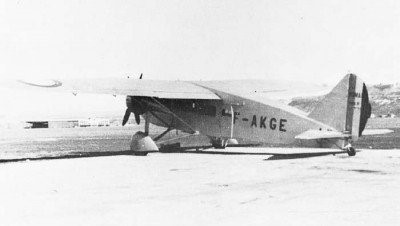
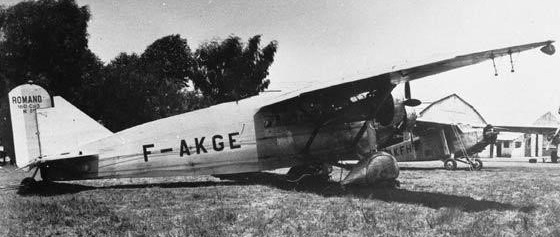
The Colonial trimotor contract was awarded to the Bloch MB.120, so no more R.16s were built. The sole example appeared in the prototypes section of the French civil aircraft register as F-AKGE, with the type name Romano 160 and was used by the Commander of the 5th Aerial Region of French North Africa as his personal transport. A photograph taken at Cannes in 1937 shows that by then it had been adapted to carry passengers, the cabin now lit by long, continuous windows on each side. It also had a revised vertical tail with an unbalanced rudder.

Romano R.16
Powerplant: 3 × Lorraine 9Na Algol, 220 kW (300 hp) each
Propellers: 2-bladed Ratier
Wingspan: 21.60 m (70 ft 10 in)
Wing area: 70 m2 (750 sq ft)
Length: 13.90 m (45 ft 7 in)
Height: 4.05 m (13 ft 3 in)
Empty weight: 3,138 kg (6,918 lb)
Gross weight: 5,200 kg (11,464 lb)
Fuel capacity: 415 l (91 imp gal; 110 US gal)
Maximum speed: 230 km/h (140 mph, 120 kn) at ground level
Cruising speed: 195 km / h
Landing speed: 81 km/h (50 mph; 44 kn)
Range: 1,200 km (750 mi, 650 nmi)
Service ceiling: 2,400 m (7,880 ft) theoretical
Time to altitude: 13 min 5 sec to 3,000 m (9,800 ft)
Take-off distance: 150 m (490 ft)
Crew: Three

Romano R.15

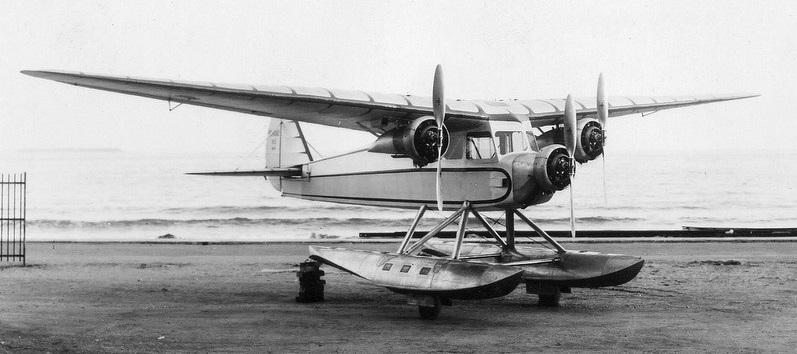
The R.15 was a high-wing floatplane of all-metal construction built in France by Romano. The pilot and passenger were seated in an enclosed cabin. It first flew in 1933 and showed good flight characteristics, but failed to win orders from the civil aviation industry.

Powerplant: 1 × Salmson 9Aer, 56 kW (75 hp)
Wingspan: 14.45 m (47 ft 5 in)
Length: 9.06 m (29 ft 9 in)
Height: 3.47 m (11 ft 5 in)
Wing area: 26.30 m2 (283.1 sq ft)
Empty weight: 928 kg (2,046 lb)
Gross weight: 1,268 kg (2,795 lb)
Maximum speed: 186 km/h (116 mph, 100 kn)
Cruise speed: 160 km/h (99 mph, 86 kn)
Range: 500 km (310 mi, 270 nmi)
Service ceiling: 6,500 m (21,300 ft)
Crew: 2

Romano R-6

The Romano R.6 was a transport aircraft built by Romano in France in the early 1930s. It was a three engine, high wing monoplane transport of all-metal construction.

First flying on 20 December 1932, only the one was built.

A longer wing-span colonial police transport was also built as the Romano R.16.

Engines: 3 × Gnome & Rhône 7Kb, 220 kW (300 hp) each
Propellers: 2-bladed Ratier
Wingspan: 19.64 m (64 ft 5 in)
Wing area: 63.00 m2 (678.1 sq ft)
Length: 13.90 m (45 ft 7 in)
Height: 3.27 m (10 ft 9 in)
Empty weight: 3,047 kg (6,717 lb)
Gross weight: 4,473 kg (9,861 lb)
Maximum speed: 216 km/h (134 mph, 117 kn) at ground level
Range: 1,000 km (620 mi, 540 nmi)
Service ceiling: 6,850 m (22,470 ft) theoretical
Crew: Three
Capacity: 8 passengers

Romano R.5

In 1929 the French Air Ministry drew up a programme of military aircraft specifications to meet France’s needs over the next few years. One part called for a reconnaissance and observation seaplane and the R.5 was Romano’s response; at least two other manufacturers also built prototypes, though funding was not yet assured.

The Romano R.5 was an all-metal flying boat. Its parasol wing was built in three parts; its centre section mounted a 480 kW (650 hp) Hispano-Suiza 12Nbr water-cooled V-12 engine in tractor configuration on its leading edge and was braced 1,650 mm (65 in) over the fuselage by parallel pairs of struts from its outer ends to the mid-fuselage. Six short cabane struts braced it centrally. The inner and cantilever outer panels together provided a trapezoidal plan wing out to rounded tips; ailerons occupied most of the outer panels’ trailing edges. Structurally a mixture of steel and duralumin, with dural skinning, the wing was built around two spars; in the centre section these were elaborated into a trellised girder.

Its 15-metre-long (49 ft 3 in), flat-sided hull was built with of dural and with vedal, layers of dural and pure aluminium, for parts in direct contact with sea-water. The V-form underside had a single step under the wing and, further aft, a water rudder. The R.5 had a pair of Dornier-style sponsons, 6.3 m (20 ft 8 in) in span and 2.5 m (8 ft 2 in) at their broadest, mounted on the lower sides of the fuselage instead of wing mounted floats. There were plans to use these to contain retractable wheels to turn the R.5 into an amphibian.

In the nose there was a position for mooring operations, navigation equipment and a machine gun mounting. The pilots’ cabin was ahead of the propeller disc, fully enclosed and with side-by-side seats and dual controls. Behind the wing there were positions for a navigator who also operated the bomb release controls and for a radio and camera operator. Behind them was a dorsal gunner’s position, midway between the trailing edge and the tail. The fuselage became slender to the rear, where the tall fin carried a deep, rounded unbalanced rudder. The R.5’s tapered tailplane was raised out of the spray well up on the fin and supported from below with a pair of parallel struts from the upper fuselage. Its elevators were inset and unbalanced but far enough forward to only require a small central nick for rudder movement.

R-5

The Romano R.5 first flew in September 1932. Soon after, it was delivered to the Forces Aérienne de la Mer along with its competitors, the Amiot 110-S and CAMS 80. Only one was built.

Engine: 1 × Hispano-Suiza 12Nbr, 480 kW (650 hp)
Wingspan: 22.60 m (74 ft 2 in)
Wing area: 67.5 m2 (727 sq ft)
Aspect ratio: 7.6
Length: 16 m (52 ft 6 in)
Height: 4.50 m (14 ft 9 in)
Empty weight: 3051 kg
Gross weight: 4,300 kg (9,480 lb)
Maximum speed: 217 km/h (135 mph, 117 kn) at 1,500 m (4,900 ft)
Cruise: 172 kph
Range: 1,500 km (930 mi, 810 nmi)
Service ceiling: 6,700 m (22,000 ft)
Time to altitude: 6 min 5 sec to 1,500 m (4,900 ft)
Armament: two 7.5-мм Darne machine guns
Bomb load: 200 kg
Crew: Three

Romano

Built R-3 seaplane with Hispano-Suiza engine in early 1920s to carry out research on seaplane floats. Subsequently produced series of aircraft from the R-5 all-metal flying-boat to R-16 general-purpose tri-motor monoplane.

Liore-et-Olivier, Potez, Romano, and SPCA formed SNCASE in 1936.

Romano Romanoplane

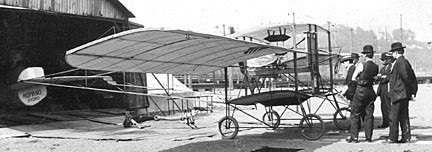
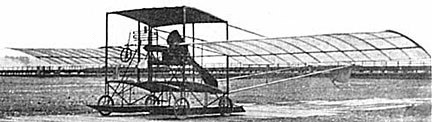
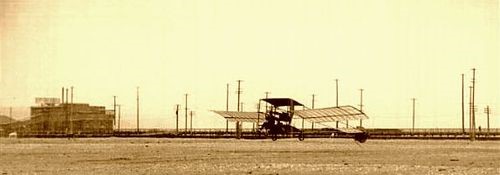
Built by Eugene Joseph Romano in Seattle, Washington, in 1910, the aircraft had a caged centre section designed like a biplane, while it had monoplane wings only.

According to a contemporary newspaper clipping of unknown origin, the Romanoplane had a span of 36 feet and “was flown successfully”.

Wingspan: 36’0″
Length: 36’0″
Seats: 1

Romaero

Intreprinderea De Reparat Material Aeronautice

Romania
Intreprinderea de Reparat Material Aeronautice was the Bucharest unit of the Centrala Industrial Aeronautica Romana, formed by reorganization of the national aircraft industry in 1968. Specialised in the repair and overhaul of aircraft and engines for Tarom and other airlines, and manufactured under license the Britten-Norman BN-2A Islander. Became lAv Bucuresti.

With a lineage that can be traced to 1920 (via companies including IRMA and lAv Bucuresti), this company assembled from British-supplied kits nine BAC One-Eleven airliners as 1-11s, the first appearing in 1982. Work, in 1999, included the manufacture of Britten-Norman BN2 Islanders (some 500 produced over 30 years) and the production of subassembles for Boeing and Galaxy Aerospace.

In January 1999 Britten-Norman of the U.K. received approval from the Board of Directors of Romania’s State Ownership Fund for its tender offer to acquire Romaero.