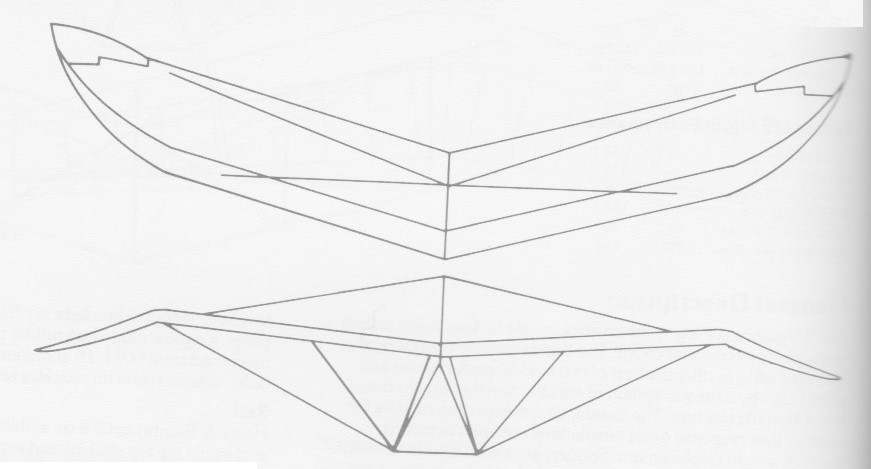
S.E.L.A. 1911 monoplane

In 1909 the pilot Gaudard founded the Société d’Étude pour la Locomotion Aérienne (SELA) in France. G Badini, their designer, built two similar aircraft powered by 55 hp Aviatik engines, one appeared in 1910 at St Cyr, the other, a variant, in 1911. This machine was sponsored by “La Dentelle au Foyer”, a lace-workers’ magazine which later bought a Farman for the Army, christened “La Dentelle de Puy”; the city of Puy was famous for its lace industry.

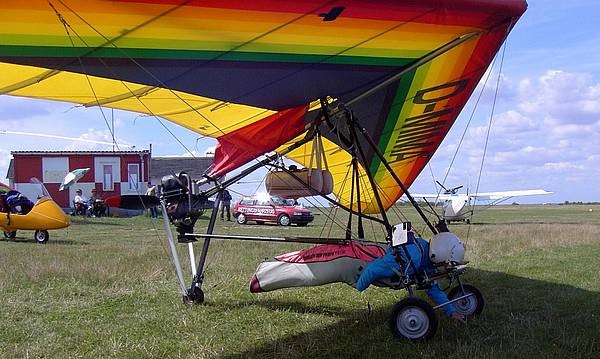
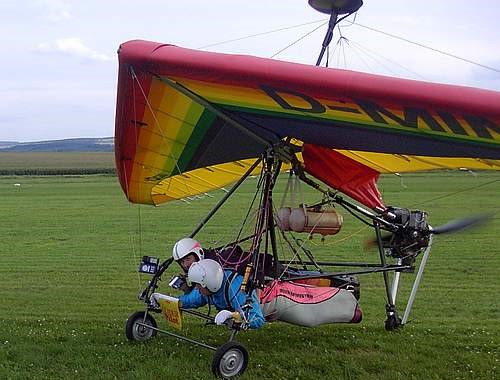
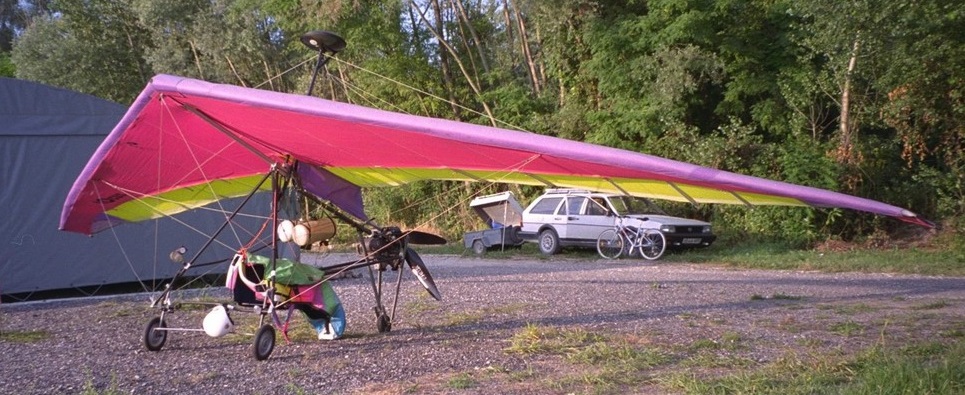
W. Seiffert Mini II / ALF Mini II

The Mini II, which was built by W. Seiffert until 1992, was designed as a minimum: with low engine power. The Mini II was 15,000 DM at that time. The production of the Mini II was discontinued in 1992.

With a hang glider wing (Schönleber Focus 18) power is from a 24 hp König three-cylinder two-stroke engine, with electric start. The battery was originally charged from a solar cell. In practice, however, the sunshine is far from sufficient to always have a full battery.

With the large surface area of the Schönleber Focus (18 square meters) wing, thermal flying is possible.

The Mini II is officially approved for double-seater operation – as the only one yet.

The Mini II is very manoeuvrable thanks to the large wheels on the ground.

The fuel is held in 2 x 12 lt tanks, and the consumption of the three-cylinder engine is about 8 lt/ hour.

ALF (founded in autumn 2010, at the Altes Lager airfield, south of Berlin) has the rights for the construction and distribution of the Mini II and has been working on the successor since 2005. Markus Hanisch has taken over the construction and distribution rights from the DULV and is building the Mini II again in a modern form.

The older, somewhat slow Focus 18 surface (as in the original Mini II) from UL-manufacturer Schönleber is used. In the approval process is the Bautek Bico wing. The development has not yet moved beyond a prototype device.

Engine: König SC 430, 24 hp
Wing: Schönleber Focus
Wing area: 18 sq.m
Climb rate solo: – 4 m/s
Climb rate MAUW: 2 m/s
Price 1987: 15.000 DM
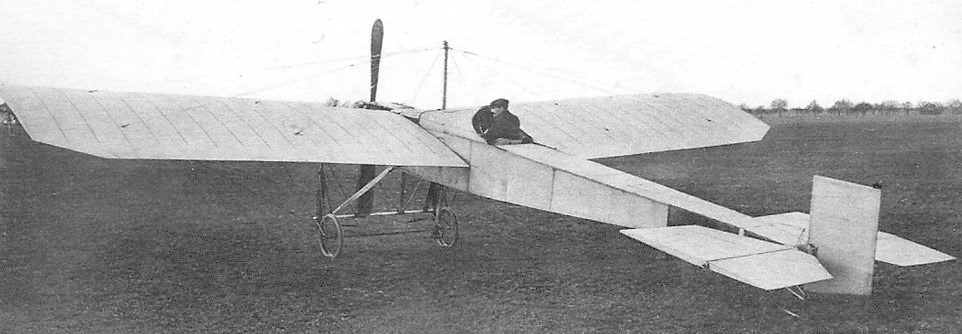
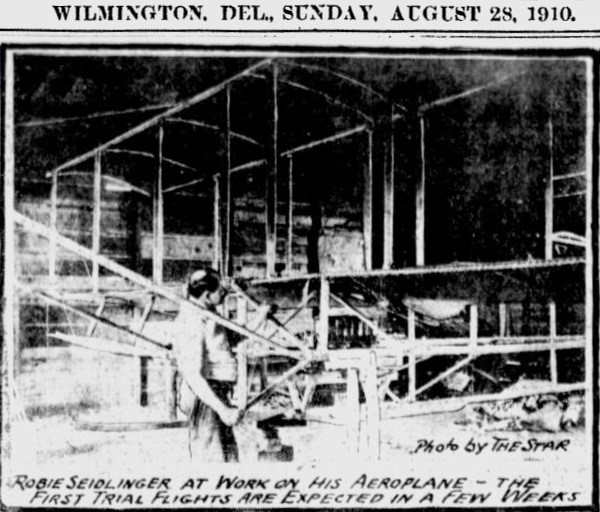
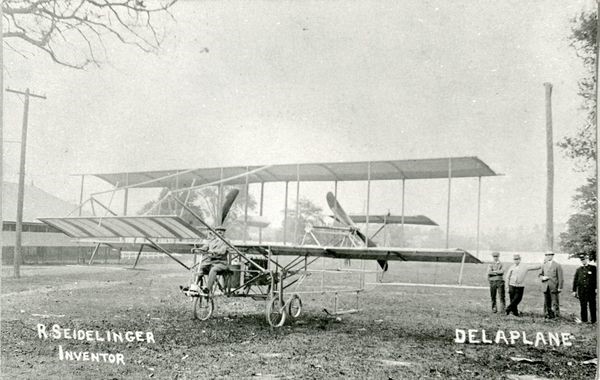
Seidelinger Delaplane

Designed and built by Robie Seidelinger for the Wilmington Aero Club, and flown by Eddie Bloomfield.

According to “Delaware Aviation History” by Frebert, taxi tests in the configuration shown resulted in moving the engine to a position after the wings rather than under the pilot’s seat, and use of a single propeller, as well as shortening the rear fuselage. In this later form it flew 300 yards on October 21, 1910, and made several other fights on the following days. It was destroyed when lightning struck its storage shed.

While built by Seidelinger, it was funded by the Wilmington Aero Club.

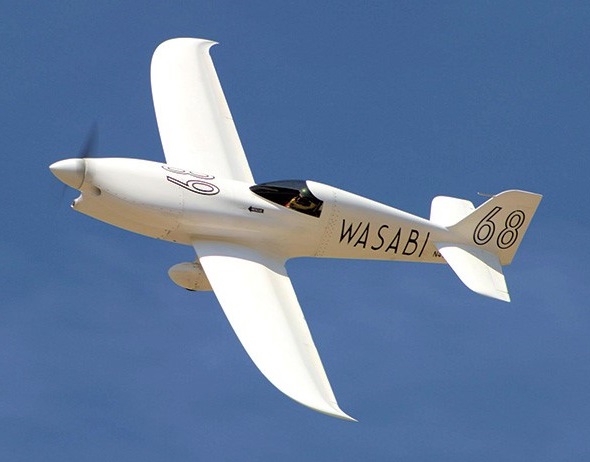
Seguin Siren Wasabi

Looking to move into the gold, Elliot Seguin’s Siren Wasabi reflects the move toward high-aspect-ratio elliptical wings for more speed.

The Wasabi Special is a single place, low-wing, conventional landing gear-equipped racing aircraft.

Formula 1 Cassutt custom wing

The airplane was designed and built at the Mojave Air and Spaceport by Elliot Seguin for racing and record setting.

At the Reno Air Races in 2013 the Wasabi Special achieved 229 mph.

At EAA Airventure Set C1, set a record for MHV to OSH flying non-stop with 5 other experimental aircraft from Mojave.

At Reno Air Races 2014 achieved 235 mph.

Powerplant: 1 × Continental O-200
Propeller: 2-bladed
Crew: 1

Seedwings Sunseed

The 1975 Sunseed is a double surface, diffuser tip flying wing. It has outboard control surfaces. Canted tip wings provide self righting characteristic. It has a fibreglass leading edge with an aluminium trailing edge wedge. Draggons on the wing tips can be operated as glide path control devices to reduce glide angle from 12-1 to 5-1. The wing tip design provides induced drag and tip vortex reduction. The lower wing surface is ribless.

Seedwings Sunseed Article

The airframe is made from 2024-T3 anodised aluminium. Rigging cable is 3/32in 7 x 7 stainless steel aircraft qualiy, vinyl coated. Hardware is all aircraft quality parts. The sail is 1.8oz stabilised dacron and is fitted with zippers and Velcro tapes. There was the option of seated or prone harnesses.

The Sunseed dissembles to a bundle 10 ft long and 1 ft in diameter.

The Sunseed has a stable stance even in steep turns with no tendency to dive or stall.

The run out distance before touchdown is about four times that of a Rogallo. It has a 13.7% airfoil and a load factor of 6G.

Wing span: 32.8 ft
Wing area: 128.5 sq,ft
Aspect ratio: 8.36
Wing sweep: 15˚
Weight: 50 lb
Pilot weight: 125-180 lb
Takeoff speed: 15 mph
Stall speed: 16 mph
Max speed: 40 mph
Best glide ratio (L/D): 12-1
Best L/D speed: 25 mph
Min sink: 275 fpm