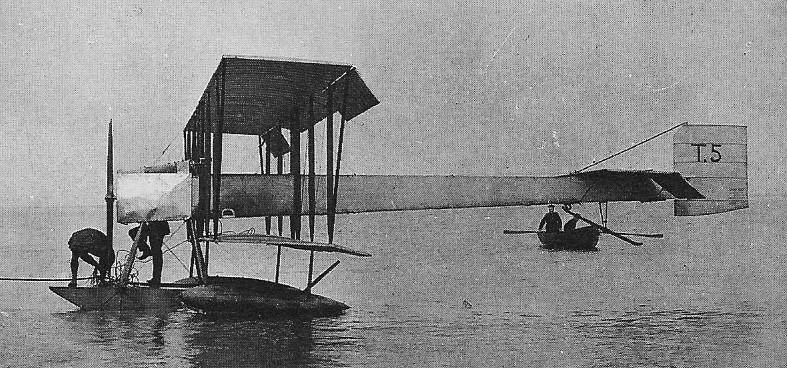
Short T.5 / S.45 / S.48 / S.49 / S.50

S.45

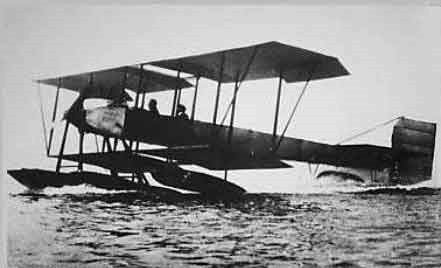
The Short S.45 — also known as the Short T.5 after its naval serial number — was a training biplane built for Britain’s Royal Navy by Short Brothers in 1912. It was the forerunner of another three identical aircraft (designated S.48, S.49, and S.50 by Shorts) delivered to the Royal Navy and Royal Flying Corps during 1912 and 1913. The Royal Naval Air Service was still operating the type when World War I broke out in 1914.

The design was similar to that of the Short S.36, a sporting biplane built for Frank McClean which he lent to the Navy Flying School, Eastchurch. Cdr Charles Rumney Samson and Capt Eugene Gerrard test-flew the aircraft early in 1912. The pleasing performance of the S.36 led to an order by the Admiralty for two aircraft of similar configuration, but differed in the engine fitted. in March that year. Shorts delivered these as the S.41 and the S.45.

The S.45 was an unequal-span two-bay biplane with a fuselage of square-cross section with the two seats in tandem in open cockpits . The wire-braced wings were unstaggered, and the fuselage was mounted partway between them. Ailerons were fitted only to the upper wing. The tail was cruciform in shape and the undercarriage was designed to be interchangeable to allow the S.45 to be flown as a seaplane or landplane. The machine was powered by a single rotary engine in the nose, turning a two-blade propeller. In seaplane configuration, the undercarriage consisted of a single broad pontoon mounted beneath the fuselage, with airbags on short struts under each wing. A third airbag was later fitted under the tail to keep it out of the water while the aircraft was under tow.

The S.45 flew for the first time on 24 May 1912 as a landplane with Lt Spencer Grey at the controls, and was accepted for Navy service with the serial number T.5 (“T” signifying “tractor”). Together with the S.41, the aircraft participated in the Naval Review at Portsmouth in July. It was soon joined in service by the S.48 (serial 413), which Capt Gerrard delivered to the Central Flying School at Upavon on 10 October. Although evaluated by Capt John Salmond as underpowered, it flew regularly until damaged beyond repair in a landing accident on 3 December when it stalled on approach.

Meanwhile, the S.45 underwent considerable modification, including a new engine cowling, a built-up coaming around the cockpits, revised ailerons, and upper wings of greater span. The wing extensions were braced with a kingpost and wires. Its serial was changed from “T.5” to simply “5” when army and navy aircraft serials were merged into one system in late 1912. In 1913, the S.45 was stationed at Carlingnose, near Rosyth, where it suffered a landing accident and capsized on 4 October.

At the start of 1913, the Central Flying School received two further examples of the type: Capt Gerrard delivered the S.50 (serial 424) on 17 February and the S.49 (serial 423) on 22 February. Not long after, these aircraft disappeared from the records when their serial numbers were reassigned to two Royal Aircraft Factory B.E.8s. Eventually, stripped of their engines and identities, the War Office declared the two airframes to be surplus to requirements, and transferred them to the Admiralty in August 1914. In Royal Naval Air Service hands, the aircraft were re-engined with 100-hp (75-kW) Clerget rotary engines and assigned serial numbers 1268 and 1279. The RNAS operated them at the Navy Flying School and they remained in service at the outbreak of World War I.

S.45
Powerplant: 1 × Gnome Gamma, 70 hp (52 kW)
Wingspan: 42 ft 0 in (12.80 m)
Wing area: 450 sq ft (42 m2)
Length: 35 ft 6 in (10.82 m)
Empty weight: 1,080 lb (490 kg)
Gross weight: 1,500 lb (680 kg)
Maximum speed: 60 mph (97 km/h, 52 kn)
Endurance: 5 hr
Crew: two, pilot and instructor
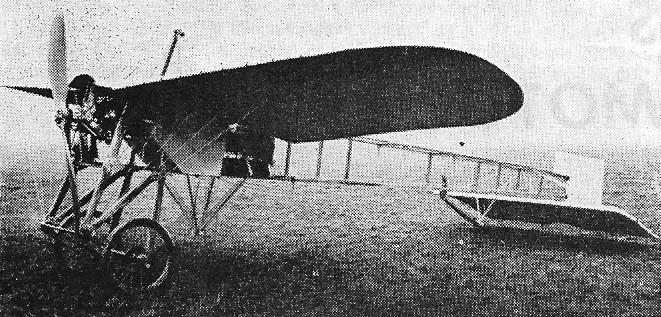
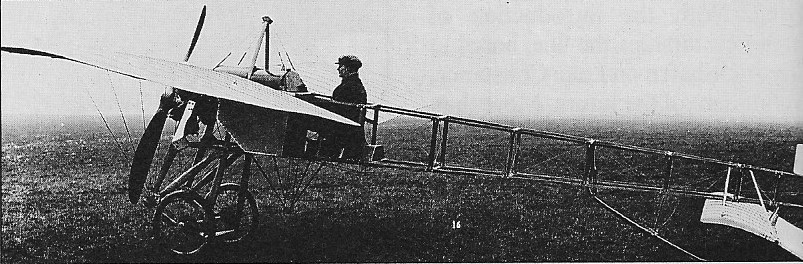
Short 1911 Monoplane

The single-seat Short Monoplane was designed and built at Eastchurch in 1911.

Looking like the earlier Bleriot types, the Short brothers stressed their monoplane to withstand hard use.

Commander C.R. Samson, RN, undertook the first flights in February 1912.

Engine: Gnome, 50 hp
Propeller: two blade Chauviere
Span: 29 ft 3 in
Length: 25 ft
Max speed: 60-65 mph

Short S.41 Hydro-Aeroplane

Prototype pilot C.R.Samson

The original version of the S.41 was converted to a landplane and flown by Cdr R. Samson – also the pilot of its maiden flight – during the Army manoeuvres of September 1912. Built at Eastchurch, Isle of Sheppey.

With its floats restored, it started flying from the temporary seaplane station at Carlingnose on October 2nd 1912. In January 1913 it underwent an overhaul during which the centre section gap was covered.

In September 1913 it was overhauled again and the aircraft emerged completely different in shape, fitted with folding wings of greater span and a new rudder. In 1914 it was refitted with a 140 hp Gnôme and assigned to the Eastchurch flying school. In 1915 the S.41 was sent to the Aegean theatre and in 1916 was spotted at Inbros.

It was not included in the March 1916 list of naval aircraft and may have been destroyed prior to that month.

Engine: 100 hp Gnome
Max speed: 60 mph
Endurance: 5 hr

Short SD3.360 / 360

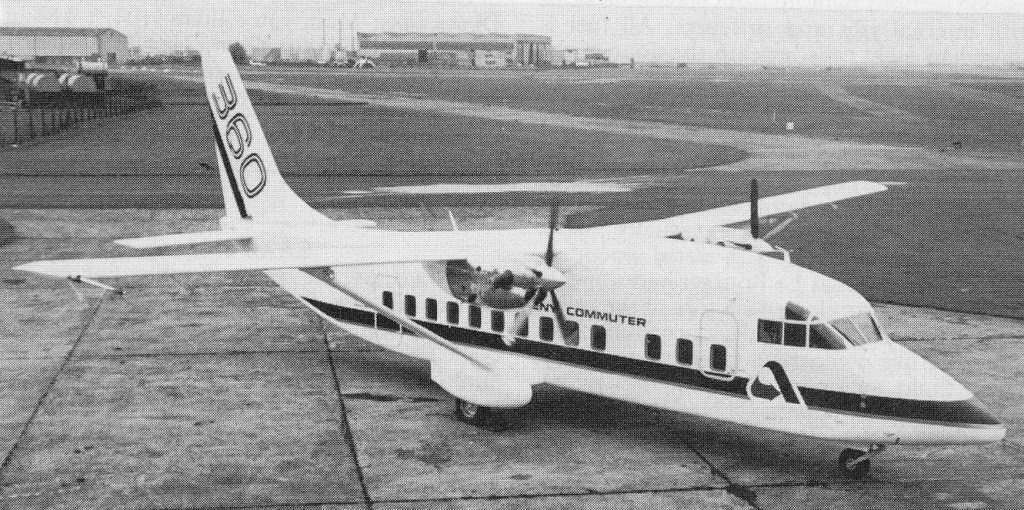
The 360 is a growth development of the 330 with more power, and a three foot stretch ahead of the wing and a redesigned rear fuselage and tail surfaces. An extra six seats (in two rows) were accommodated by stretching the cabin and deleting the 330’s rear loading ramp, and the tail arrangement was changed to a conventional single fin.

Short SD3.360 / 360 Article

The prototype 360 flew on 1 June 1981 and the type entered service in December 1982. First introduced with Pratt & Whitney Canada PT6A-45R engines, the Shorts 360-300 version has 1,424 shp (1062 kW) PT6A-67R turboprops with six-bladed propellers and other refinements to produce about 18 per cent more thrust at take-off.

164 examples were sold up until 1991.

SD3.60
Engines: 2 x P&W PT6-65AR, 1403 shp
Props: Hartzell 5-blade, 111-in
Seats: 36
Length: 70.9 ft
Height: 23.7 ft
Wingspan: 74.7 ft
Wing area: 453 sq.ft
Wing aspect ratio: 12.3
Maximum ramp weight: 25,800 lb
Maximum takeoff weight: 25,700 lb
Standard empty weight: 16,600 lb
Maximum useful load: 9200 lb
Maximum landing weight: 25,400 lb
Wing loading: 56.7 lbs/sq.ft
Power loading: 9.7 lbs/hp
Maximum usable fuel: 3840 lb
Best rate of climb: 1010 fpm
Service ceiling: 20,000 ft
Maximum speed: 211 kt
Normal cruise @ 7,000ft: 160 kt
Fuel flow @ normal cruise: 975 pph
Endurance at normal cruise: 3.4 hr
Stalling speed clean: 94 kt
Stalling speed gear/flaps down: 78 kt
Turbulent-air penetration speed: 158 kt

Short 360-300
Engines: 2 x Pratt & Whitney PT6A-67R turboprops, 1062kW / 1,424 shp
Prop: 6 blade
Max take-off weight: 12290 kg / 27095 lb
Wingspan: 22.8 m / 75 ft 10 in
Length: 21.58 m / 71 ft 10 in
Height: 7.27 m / 24 ft 10 in
Wing area: 42.18 sq.m / 454.02 sq ft
Cruise speed: 400 km/h / 249 mph
Range w/max.payload: 745 km / 463 miles

Short SD3-30 / 330 / C-23 Sherpa

330-200

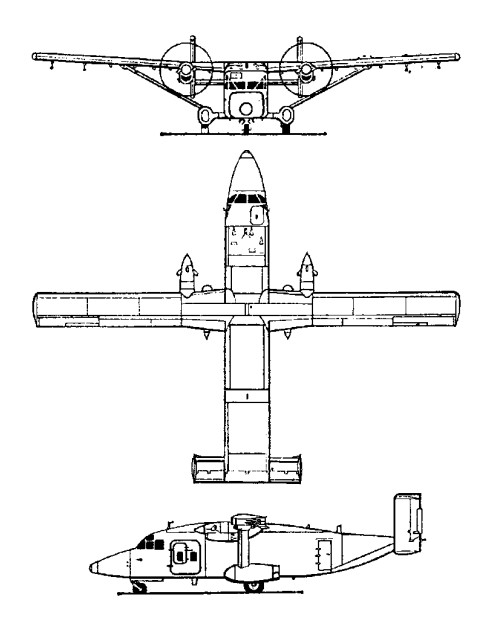
The prototype of the Shorts SD3-30 30-passenger unpressurized commuter airliner; later redesignated Shorts 330, was derived from the smaller Skyvan, with a fuselage stretched to accommodate 30 passengers while retaining the Skyvan’s twin tail fin, but including a semi-retractable undercarriage.

Short SD3-30 / 330 Article

The Short SD3-30 prototype (G-BSBH), a 30-passenger airliner powered by twin turboprop engines, was flown for the first time at Belfast, Northern Ireland on 22 August 1974, and the first entered service with the Canadian airline Time Air on 24 August 1976, although the first order had been placed by Command Airways of Pouglikeepsie, New York.

Versions available included the standard 330-200, the Sherpa civil freighter, and the 330-UTT utility tactical transport.

The USAF operated 18 twin-turboprop Sherpa/330-UTT from Zweibrucken in West Germany, providing a distribution service for high-priority spares in Europe. Designated C-23A, the aircraft were ordered in March 1984 to fulfil the European Distribution System Aircraft (EDSA) requirement. Two Sherpas were delivered in November 1984, and the remaining 16 by the end of 1985.

The C-23A is a freighter version of the Shorts 330-200, retaining many features of the civilian model including the forward freight door. An hydraulically operated rear cargo door/ramp is incorporated in the Sherpa, thus allowing through loading. Up to seven C08 or four LD3 cargo containers or two half-ton vehicles can be accommodated, and utility passenger operations may also be undertaken. The C-23A first flew on August 6, 1984, and is powered by two 893kW Pratt & Whitney Canada PYT6A-45R turboprops.

Designated C-23B, the first of 10 Shorts Super Sherpas for the US Army National Guard made its first flight in 1990. The aircraft are similar to the 18 C-23A Sherpas used by the US Air Force, but have more powerful Pratt & Whitney Canada PT6A-65AR turboprops, strengthened wings, five-bladed propellers and air-operable rear freight doors for supply dropping.

Lacking the rear loading ramp of the Sherpa, the Shorts 330-UTT (Utility Tactical Trans¬port) can carry a maximum payload of 3,630kg. Typical loads include 33 troops, 30 paratroops, or 15 stretchers. Range with 30 fully armed troops is greater than 1,100km. Two inward opening rear side doors are provided for para¬dropping. Customers for the 330-UTT include the Royal Thai Army and Royal Thai Police.

Nearly 100 had been delivered by 1990, and a total of 141 Short 330s were built before production ended in 1992.

Gallery

SD3-30
Engines: 2 x P&WAC PT6A-45, 1120 hp
Seats: 33
Wing loading: 48.6 lb/sq.ft
Pwr loading: 9.8 lb/hp
Max TO wt: 22,000 lb
Operating wt: 14,230 lb
Equipped useful load: 7770 lb
Payload max fuel: 3930 lb
Range max fuel/cruise: 690 nm/3.5 hr
Range max fuel / range: 785 nm/ 5.5 hr
Service ceiling: 18,500 ft
Max cruise: 190 kt
Max range cruise: 144 kt
Vmc: 77 kt
Stall: 73-89 kt
1.3 Vso: 95 kt
ROC: 1130 fpm
SE ROC: 210 fpm @ 101 kt
SE Service ceiling: 9500 ft
Min field length: 3650 ft
Fuel cap: 3840 lb

SD3.30
Engines: 2 x P&W PT6A-45A, 1156 shp
Props: Hartzell 5-blade, 111-in
Seats: 30
Length: 58 ft
Height: 16.2 ft
Wingspan: 78.6 ft
Wing area: 453 sq.ft
Wing aspect ratio: 12.3
Maximum ramp weight: 22,500 lb
Maximum takeoff weight: 22,400 lb
Standard empty weight: 14,700 lb
Maximum useful load: 7800 lb
Zero-fuel weight: 21,140 lb
Maximum landing weight: 22,100 lb
Wing loading: 49.5 lbs/sq.ft
Power loading: 9.7 lbs/hp
Maximum usable fuel: 3840 lb
Best rate of climb: 1070 fpm
Certificated ceiling: 19,000 ft
Maximum single-engine rate of climb: 210 fpm @ 105 kt
Single-engine climb gradient: 120 ft/nm
Single-engine ceiling: 6750 ft
Maximum speed: 204 kt
Normal cruise @ 10,000ft: 197 kt
Fuel flow @ normal cruise: 890 pph
Endurance at normal cruise: 3.9 hr
Stalling speed clean: 89 kt
Stalling speed gear/flaps down: 74 kt
Turbulent-air penetration speed: 157 kt

330/UTT
Engine: 2 x P&WAC PT6A turboprop
Installed pwr: 1785 kW
Span: 22.8 m
Length: 17.7 m
Wing area: 42.1 sq.m
Empty wt: 6445 kg
MTOW: 11,160 kg
Payload: 3630 kg
Cruise speed: 372 kph
Initial ROC: 360 m / min
Ceiling: 6100 m
T/O run: 415 m
Ldg run: 235 m
Fuel internal: 2546 lt
Range/payload: 1390 km with 2330 kg
Capacity: 33 pax

C-23A Sherpa
Engine: 2 x P&WAC PT6A
Installed pwr: 1785 kW
Span: 22.8 m
Length: 17.7 m
Wing area: 42.1 sq.m
MTOW: 10,390 kg
Payload: 3175 kg
Cruise speed: 350 kph
Initial ROC: 360 m / min
Ceiling: 6100 m
T/O run (to 15m): 1036 m
Ldg run (from 15m): 1225 m
Fuel internal: 2032 lt
Range/payload: 1240 km with 2270 kg
Capacity: 33 pax

C-23A
Engines: 2 x Pratt Whitney PT6A-45R turboprops, 900kW
Max take-off weight: 10390 kg / 22906 lb
Loaded weight: 6680 kg / 14727 lb
Payload: 3175kg / 7000 lb
Wingspan: 22.76 m / 75 ft 8 in
Length: 17.69 m / 58 ft 0 in
Height: 4.95 m / 16 ft 3 in
Wing area: 42.1 sq.m / 453.16 sq ft
Cruise speed: 352 km/h / 219 mph
Ceiling: 6000 m / 19700 ft
Range w/max.payload: 370-1240 km / 230 – 771 miles
Crew: 3

Short 330 / C-23 Sherpa

Short SC-7 Skyvan

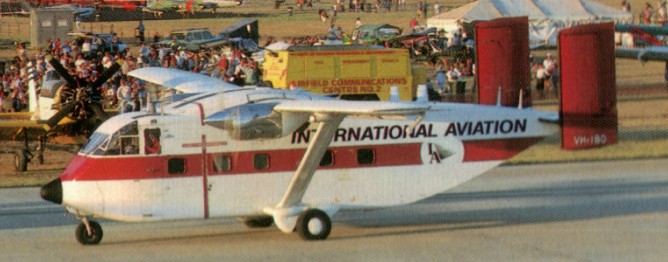
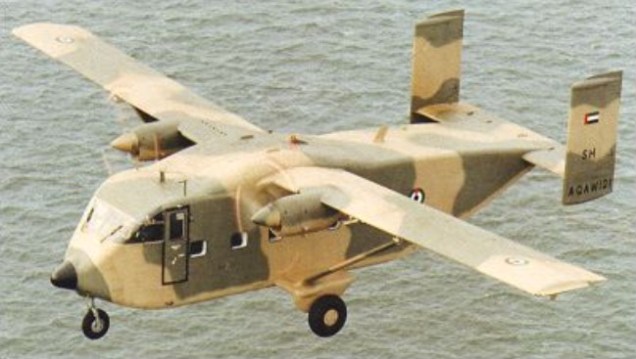
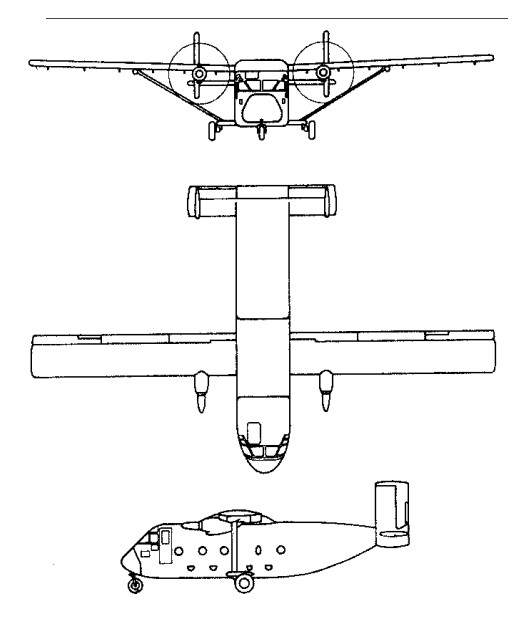
The Skyvan had its origins in the Miles Aerovan, the concept of which was taken on by Short in a radically overhauled design. It was designed to carry an 11 ton payload over 200 miles at 160 m.p.h, with an all up weight of 8,600 lb.

Two prototypes were built at Belfast during 1960 with two 390 bhp Continental GTS IO 520s. It was decided that turboprop power was required, so the prototype and early production (Series 2) examples were ultimately fitted with Astazou II turboprops.

Short Turbo-Skyvan Article

The Short Skyvan (G ASCN), re engined with Turbomeca Astazou turboprops, flew for the first time with its new power plants on October 2, 1963. With Dennis Taylor at the controls the Skyvan was in the air for twenty five minutes on its first flight.

These engines were not ideal for hot-and-high conditions or American customers, so the Series 3 was upgraded to the specified Garrett type.

The Skyliner was a dedicated passenger-carrying version.

The military version of the twin-turboprop Skyvan is the Skyvan 3M-200, which is cleared to an increased maximum take-off weight of 6,804kg for military operations. Powered by two 533kW Garrett TPE331 engines, the prototype Skyvan 3M first flew early in 1970. Troop transport, paradropping, assault transport, SAR, and medevac are among the capabilities of the Skyvan. The Skyvans of the Sultan of Oman’s Air Force have Racal ASR 360 airborne surveillance radars for maritime patrol and SAR duties.

The sole example of the Skyvan sold to the Sharjah Amiri Air Wing was delivered in 1986. It was also the last Skyvan built.

In all, 149 Skyvans were built and sold to commercial freight/passenger ‘bush’ operators and military/paramilitary operators up until 1986.

Gallery

SC-7
Engines: 2 x Garrett TPE 331-2-201A, 715 shp / 533kW
Props: Hartzell 3-blade, 102-in
Seats: 19
Length: 40 ft
Height: 15 ft
Wingspan: 64.8 ft
Wing area: 373 sq.ft
Wing aspect ratio: 11
Maximum ramp weight: 12,500 lb
Maximum takeoff weight: 12,500 lb
Standard empty weight: 7100 lb
Maximum useful load: 5400 lb
Equipped useful load: 3900 lb
Maximum landing weight: 12,500 lb
Wing loading: 33.5 lbs/sq.ft
Power loading: 8.7 lbs/hp
Fuel cap: 2320/3105 lb
Payload max fuel: 795 lb
Range max fuel/cruise: 770nm/4.5hr
Range max fuel /range: 849nm/5.9hr
Best rate of climb: 1640 fpm
Service ceiling: 22,100 ft
Maximum single-engine rate of climb: 450 fpm @ 92 kt
Single-engine ceiling: 12,500 ft
Maximum speed: 176 kt
Normal cruise @ 10,000ft: 169 kt
Fuel flow @ normal cruise: 482 pph
Endurance at normal cruise: 6 hr
Max range cruise: 145 kt
Vmc: 67 kt
Stalling speed clean: 74 kt
Stalling speed gear/flaps down: 55 kt
Turbulent-air penetration speed: 140 kt
Min field length: 1580 ft
1.3 Vso: 78 kt

Skyvan Series 3
Engines: 2 x Garrett TPE331-201 turbo-prop,
Max take-off weight: 5670 kg / 12500 lb
Empty weight: 3500 kg / 7716 lb
Wingspan: 19.79 m / 65 ft 11 in
Length: 12.22 m / 40 ft 1 in
Height: 4.6 m / 15 ft 1 in
Wing area: 34.65 sq.m / 372.97 sq ft
Cruise speed: 325 km/h / 202 mph
Ceiling: 6860 m / 22500 ft
Range w/max.fuel: 1117 km / 694 miles
Range w/max.payload: 450 km / 280 miles
Crew: 2
Passengers: 19

Skyvan 3M-200
Engine: 2 x Garrett TPE331
Installed pwr: 1060 kW
Span: 19.8 m
Length: 12.2 m
Wing area: 35.1 sq.m
Empty wt: 3768 kg
MTOW: 6800 kg
Payload: 2360 kg
Cruise speed: 308 kph
Initial ROC: 470 m / min
Ceiling: 6700 m
T/O run: 290 m
Ldg run: 210 m
Fuel internal: 1330 (+440) lt
Range/payload: 1075 km with 4000 kg
Capacity: 20 pax

Short SC.7 Skyvan

Short SC-5/10 Belfast

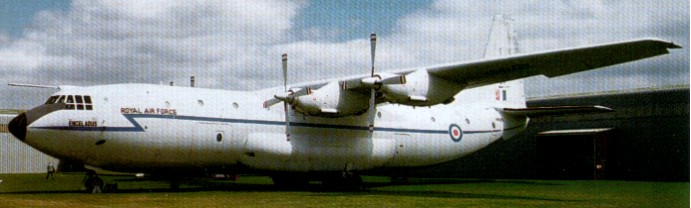
The Shorts Belfast was originally built for the RAF in the 1960s and although the manufacturer initiated a civil certification programme, of which approximately 65% was completed, this was cancelled due to apparent lack of interest displayed by commercial carriers at that time. The development of the Belfast was initially based upon that of the Bristol Britannia the design was for some time dubbed the Britannic, and the RAF finalised a contract for 10 of the type to serve in the strategic, heavy airlift role.

The aircraft eventually utilised only some of the Britannia’s basic wing structure. It was specifically designed for the carriage of heavy freight, including the largest types of guns, vehicles, guided missiles and other loads and had ‘beaver-tail’ rear loading doors capable of permitting the unhindered passage of any load that the fuselage could contain. As a troop transport it could carry 200 men, and was often used to carry helicopters overseas.

Following a development which spanned four years, the first Belfast made its maiden flight on 5 January 1964 and deliveries to the RAF commenced on 20 January 1966, when the first C.Mk l was handed over to No 53 Squadron at Brize Norton.

Shorts SC-5/10 Belfast Article

As a result of defence cuts at the end of 1976, the RAF phased out Belfast operations and, on 23 March 1977, Eurolatin Aviation concluded the purchase of the aircraft. At this stage in their career the Belfasts had flown 23 million nm without incident, averaging 8,000 flying hr/airframe. Of the original 10 aircraft, four were scrapped, one was destined for display with the RAF Museum and TAC HeavyLift had access to the other five.

On obtaining the aircraft, the airline completed an investigation to ascertain the outsanding conditions for Civil Aviation Authority (CAA) approval and following the go ahead decision for certification, they enrolled the aid of Marshalls of Cambridge to provide the design and flight test support for the Belfasts under the organisation’s existing CAA approvals. An independent engineering base at Southend airport was set up to carry out modifications required by the programme and to organise the management, identification, certifying and transport of spares for the fleet.

The Belfast civil certification programme involved a cost of over £4 million and included 120hr of flight testing; 20,000man/hr of design; 25,000man/hr of aircraft engineering; a complete assessment of all aircraft systems; civil certification of the Rolls Royce Tyne engine; production of civil maintenance schedules, flight operating and technical manuals; and design, manufacture and installation of modifications to the radio station, navigation equipment and the aircraft’s compulsory ‘black boxes’, cockpit voice recorder and flight data recorder. Additional tasks were the removal of both the Belfast’s RAF automatic landing system (the type became the first military transport in the World cleared for ‘hands¬off’ autolanding in fully operational conditions), and in flight refuelling equipment.

The dimensions and specifications of the Belfast are impressive and its hold has a volume of 11,000 cu.ft with a cross section minimum of 12ftx 12ft. It is capable of carrying up to 34 tons of freight although at this weight its range is a very limiting 700 800nm, and it has a cruising speed approaching 330mph.

Several aircraft operated with civil Heavylift Cargo Airlines at Stansted in Britain.

Gallery

Short Belfast C 1
Engines: 4 x Rolls Royce Tyne RTy 12 Mk 101 turboprops, 5,730eshp / 4273kW
Length: 136ft 5in / 41.58 m
Height: 47ft / 14.33 m
Wing span: 158ft 10in / 48.4 m
Wing area: 2464.956 sq.ft / 229.0 sq.m
Max take off weight: 230050 lb / 104330.0 kg
Weight empty: 127023.4 lb / 57607.0 kg
Cruise with max payload: 275kts (510km/hr)
Service ceiling: 30003 ft / 9145 m
Cruising altitude: 23950 ft / 7300 m
Range w/max.fuel: 10200 km / 6338 miles
Range w/max.payload: 2000 km / 1243 miles
Max hold width: 16ft 1in
Max payload: 75,000 lb (34,000kg)
Capacity: 200 troops
Crew: 4-5

Short SC.5/10 Belfast

Short SC-1

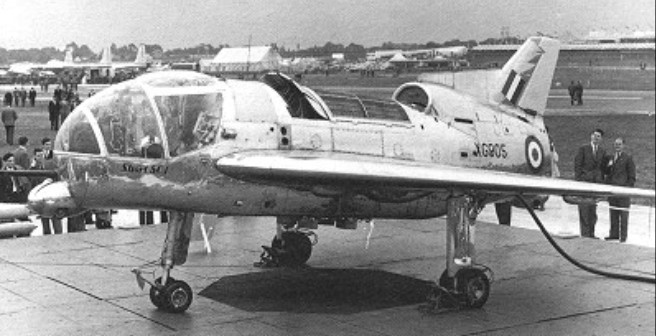
In 1953, the Ministry of Supply issued Specification ER.143 for a research aircraft which could take off vertically by jet lift, then accelerate forward into normal cruising flight.

The SC. 1 was designed to study hover, transition and low-speed flight, and had a fixed landing gear. The Short SC. 1 was powered by four RB.108 lift engines vertically mounted on gimbals in the centre fuselage and one RB.108 cruise engine in the rear for forward flight. Bleeds from the four lift engines powered nose, tail and wing-tip reaction jets for control at low speeds.

The first conventional flight was made on 2 April 1957, first tethered vertical flight was on 26 May 1958, and first free vertical flight was on 25 October 1958. The first transition was on 6 April 1960.

The SC.1 appeared at the Farnborough air show in 1960 and Paris air show in 1961 (for the latter it flew the English Channel both ways).

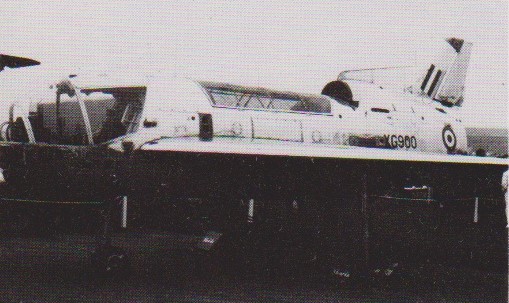
After first flying May 1958, the second Short SC.1 VTOL research aircraft (XG905) crashed at Sydenham airfield, Belfast, on October 2nd, 1960, the pilot, John R. Green, being killed. Equipped with a new auto stabiliser system with which it had begun tests on August 2nd, the SC.1 was hovering at an altitude of 50 ft (15.2 m) when control was lost, the aircraft turning over on hitting the ground. It was rebuilt and the two aircraft continued to fly.

James M. Patton, Jr was a research pilot at NASA Langley, and a guest of the Royal Aircraft Establishment at Bedford in August & September, 1971. He conducted 10 flights in SC-1 XG905 to obtain data pertinent to NASA VTOL research.

One was on display at the Ulster Folk and Transport Museum.

Gallery

Engines: 4 x 965kg Rolls-Royce RB.108 lift engines and 1 x RB.108 cruise engine
Max take-off weight: 3650 kg / 8047 lb
Wingspan: 7.16 m / 24 ft 6 in
Length: 9.10 m / 30 ft 10 in
Max. speed: 396 km/h / 246 mph
Range: 240 km / 149 miles
Crew: 1

Short S.C.1

Short SB.5

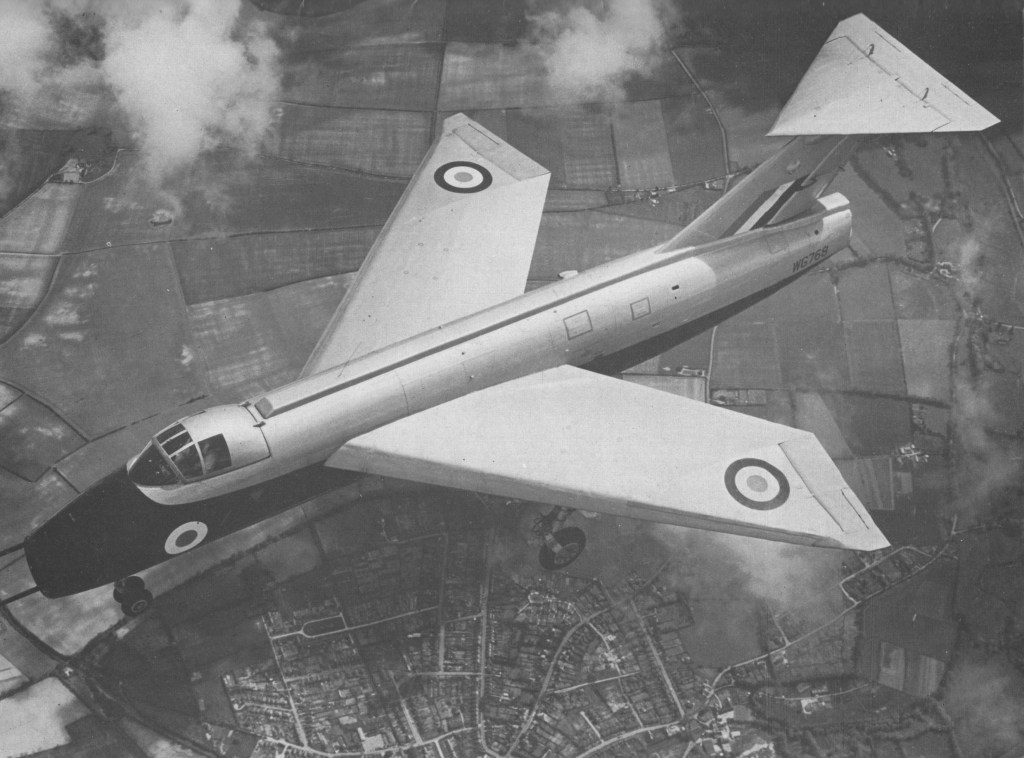
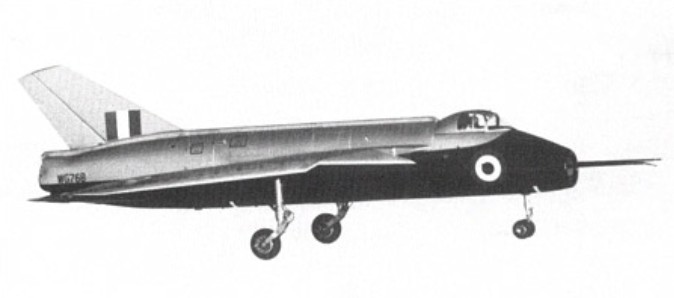
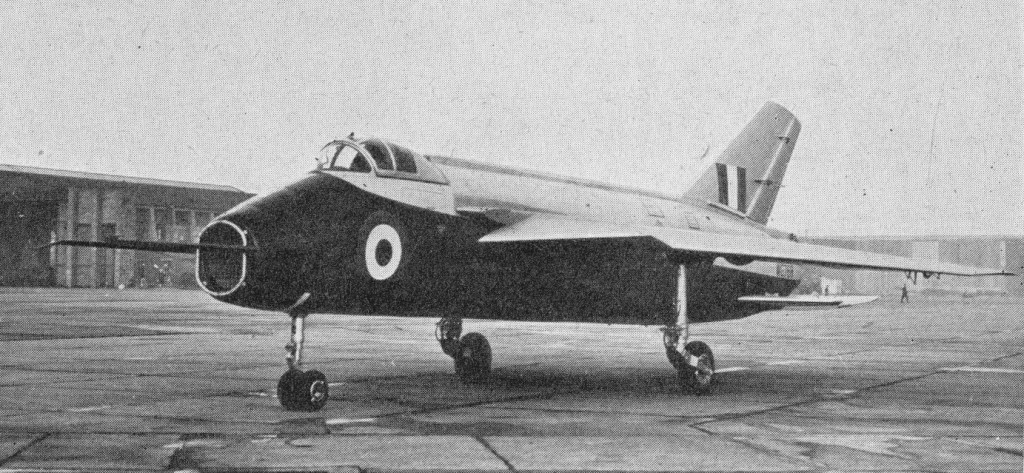
The S.B.5 was a test bed to examine flight characteristics using highly swept wings. The single example S.B.5 (WG768) first flew in December 1952 on the 3500lb (1588-kg) thrust of its Derwent turbojet, and piloted by Roland Beaumont. Though modelled aerodynamically on the Mach 2 English Electric P.l., was intended to investigate the low-speed handling qualities of swept wings. The aeroplane was fitted with wings whose sweep could be adjusted on the ground at angles of 50 degrees for use with a T-tail, 60 degrees for use with a conventional tail or a T-tail, and 69 degrees for use with a T-tail.

Short SB.5 Article

The variable incidence tailplane was later set at the bottom of the fuselage, as on the P.1.

On the S.B.5 wing there is an unusual fixed “droop snoot” on a small portion of the centre section leading edge.

1958 tests included a 69 degree sweepback and a Bristol Orpheus engine.

Gallery

Short SB.5
RR Derwent
Span 30 ft 6 in
Sweep 60 deg
Length 45 ft 9 in