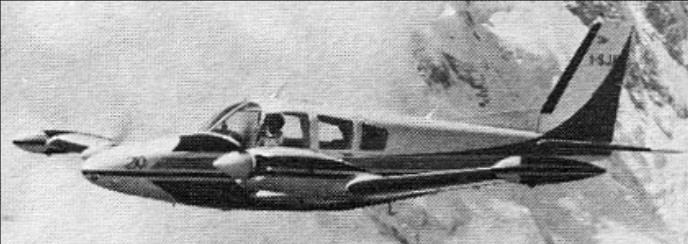
A 1970 six-seat, twin-engined version of the S.205 powered by two 149kW Lycoming TIO-360-As.
Engines: two 149kW Lycoming TIO-360-A
Wingspan: 11.63 m / 38 ft 2 in
Max. speed: 375 km/h / 233 mph
A 1970 six-seat, twin-engined version of the S.205 powered by two 149kW Lycoming TIO-360-As.
Engines: two 149kW Lycoming TIO-360-A
Wingspan: 11.63 m / 38 ft 2 in
Max. speed: 375 km/h / 233 mph
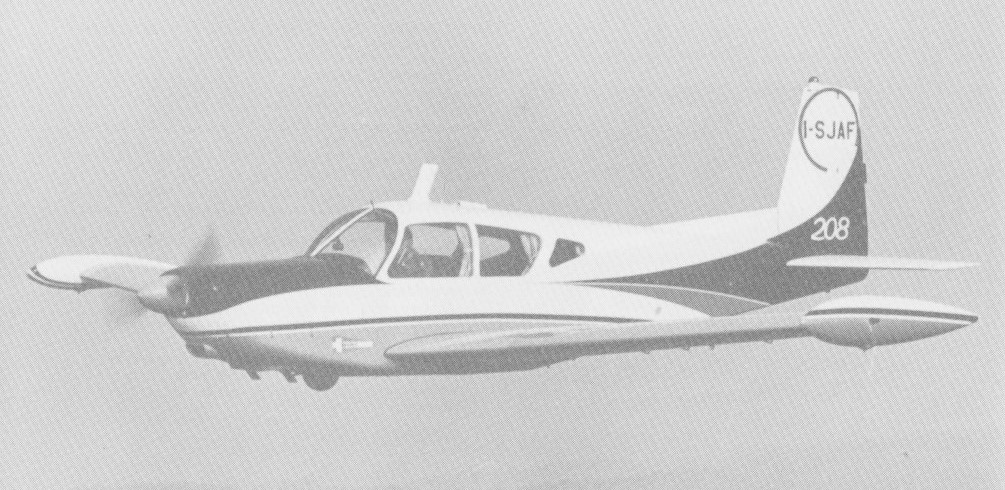
First flying in 1967, in 1968 the S.208 version became available, produced basically as a five-seat, more powerful version of the S.205, with some 60% of its structural components in common.
Savoia-Marchetti S.208 Article
By February 1973, approximately 80 S.208s had been delivered to customers in Europe and Africa, including 44 S.208Ms to the Italian Air Force for liaison and training duties.
A version for general duties, including agricultural and ambulance work, was developed as the S.208AG.
S.208
Engine: Lycoming O-540-E4A5. 260 hp
Wingspan: 35 ft 7.5 in / 10.86 m
Length: 26 ft 3 in / 8.00 m
Empty weight equipped: 1720 lb / 780 kg
MTOW: 3307 lb / 1500 kg
Max cruise: 162 kt / 187 mph / 300 kph
Range, internal fuel: 647 nm / 746 nm / 1200 km
Range Max fuel/tiptanks: 1085 nm / 1250 mi / 2000 km
Seats: 5
Cabin length: 5 ft 10.25 in / 1.78 m
Cabin width: 3 ft 8,25 in / 1.14 m
Cabin height: 4 ft 4 in / 1.32 m
Cabin volume: 88.0 cu/ft / 1.5 cu.m
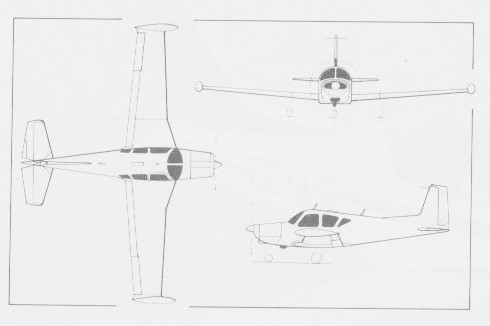
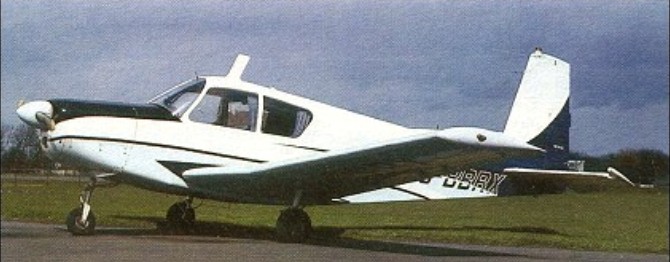
A four-seat development of the SA.202 Bravo, design of the S.205 four-seat all-metal light monoplane was started in March 1964, first flying in 1965, and by April of 1965 three examples had been completed. Each had a 134kW Lycoming engine fitted, but a wide range of versions subsequently became available with different engines and equipment.
Savoia-Marchetti S.205 Article
The S205/22R was never a trainer. It was the retractable version of the 205 with a franklin engine. We also had a 205R which was the same airplane with a Lycoming. The left door was a factory option.
Waco Aircraft Co [2] was founded in 1966 to build Savoia-Marchetti S.205 (as Waco Vela II and Sirius) plus turbosupercharged Taurus derivative
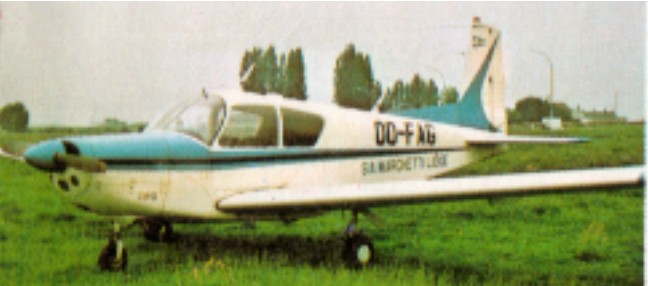
S.205
Max take-off weight: 1350 kg / 2976 lb
Empty weight: 750 kg / 1653 lb
Wingspan: 10.86 m / 36 ft 8 in
Length: 8 m / 26 ft 3 in
Height: 2.89 m / 10 ft 6 in
Wing area: 16.09 sq.m / 173.19 sq ft
Max. speed: 295 km/h / 183 mph
Ceiling: 6200 m / 20350 ft
Range: 1325 km / 823 miles
S.205 18F
Engine: Lycoming O-360-A1A, 180 hp
Undercarriage: fixed
S.205 18R
Engine: Lycoming O-360-A1A, 180 hp
Undercarriage: retractable
S.205 20F
Engine: Lycoming O-360-A1A, 200 hp
Undercarriage: fixed
S.205 20R
Engine: Lycoming O-360-A1A, 200 hp
Undercarriage: retractable
S.205-22/R / Waco S.220 Vela
Engine: Franklin 6A-350-C1, 220 hp
Undercarriage: retractable
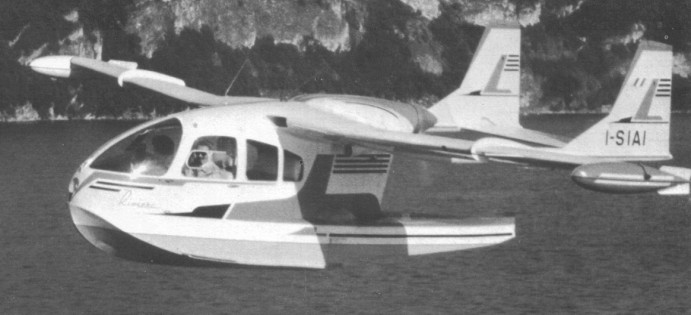
The three-seat prototype of the amphibian FN-333 flying boat, designed and built by Nardi S.A., flew first on 4 December 1952. Two more prototypes were built by Nardi through the decade. In the wake of the second Nardi prototype, Fiat of Italy also built two FN.333 prototypes, but did not continue with the exercise.
The initial prototype had “guitar-pick” style tailfins, and was powered by a Continental engine with 110 kW (145 HP); there had been thought of fixing the floats to the wingtips and then folding the wing downward after water landing, but the idea didn’t survive close examination.
Following the third Nardi prototype, an exclusive manufacturing licence for the FN-333 was obtained by SIAI Marchetti in March 1959. SIAI Marchetti called the aircraft “Riviera”.
SIAI-Marchetti placed a slightly enlarged four-seat variant in production which had flown in prototype form on 8 December 1954. The first of ten pre-production Rivieras was flown in February 1962.
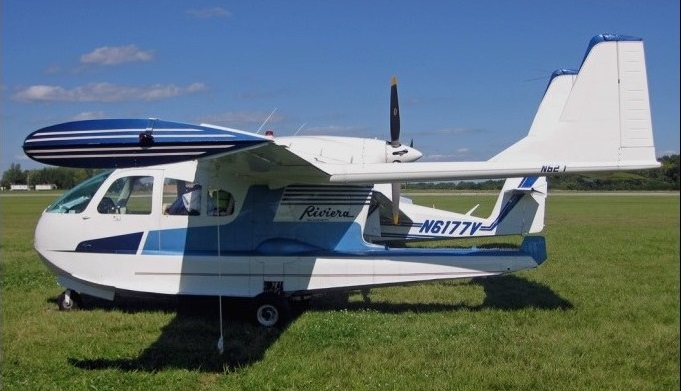
The Riviera used a tricycle landing gear with the nose gear tucking up into the forward hull, the main gear hinging up to be stowed in the fuselage, as well as retractable floats, hinging up to mate with the wingtips, and no wing bracing. The twin tailfins were of trapezoidal configuration and had forward fillets. Powerplant was a Continental IO-470-P air-cooled flat-six engine with fuel injection, providing 185 kW (250 HP) and driving a two-bladed propeller.
Initial production was devoted to fulfilling orders from the USA were sales were handled by the Lane Aircraft Company which purchased the airframes for assembly by Southwest Airmotive. The first four were delivered to the USA bu mid-January 1963 and more than fifty had been sold by the middle of the year.
About 24 Rivieras were built through the 1960s, the exact number being hard to determine because of double-counting of serials.

Engine: 1 x Continental IO-470-P, 185kW
Wingspan: 10.4 m / 34 ft 1 in
Length: 7.4 m / 24 ft 3 in
Height: 3.2 m / 11 ft 6 in
Wing area: 15.0 sq.m / 161.46 sq ft
Empty weight: 1030 kg / 2271 lb
Max take-off weight: 1485 kg / 3274 lb
Max. speed: 285 km/h / 177 mph at SL
Cruise 70%: 264 km/h / 164 mph
Econ cruise: 137 mph
ROC: 1220 fpm
Service ceiling: 5600 m / 18350 ft
Range w/max.fuel: 1300 km / 808 miles
Range w/max.payload: 1000 km / 621 miles
Crew: 4
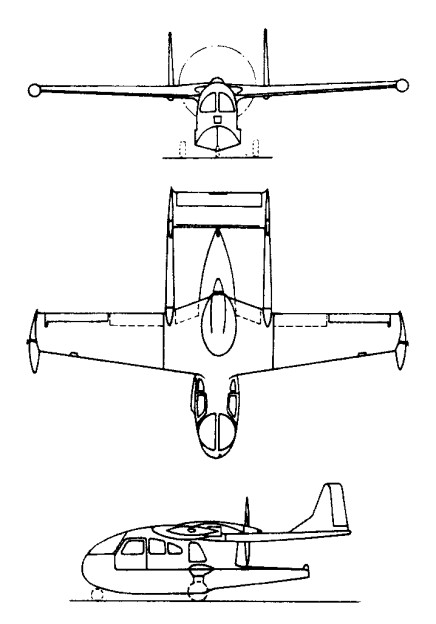
The four-seat twin-turboprop Condor was designed and developed to the prototype stage by General Avia for military duties such as multiengine and weapons training, maritime surveillance, SAR, anti-tank, and ground attack.
Following the first flight in May 1983, SIAI-Marchetti has been responsible for flight testing the F.20TP Condor aircraft, which can be fitted with two stores pylons under each wing. Low-priority development continued for some time.
Societa Idrovolanti Alta Italia
Siai-Marchetti Societa Per Azioni
The original company was founded in 1915 as SIAI (Società Idrovolanti Alta Italia – Seaplane company of Northern Italy). After World War I gained the name Savoia, when it acquired the Società Anonima Costruzioni Aeronautiche Savoia, an Italian aircraft company founded by Umberto Savoia in 1915.
The name Marchetti was added when chief designer Alessandro Marchetti joined the company in 1922. Savoia-Marchetti gained prominence with the successful S.55 flying boat. Savoia-Marchetti became famous for its flying boats and seaplanes, which set numerous endurance and speed records. Favoured by Air Marshal Italo Balbo, the company began rapidly prototyping and developing a number of other aircraft, increasingly focusing on warplanes in the lead-up to World War II. However, most of S.M.’s manufacturing capabilities were destroyed in World War Two. It was renamed SIAI-Marchetti in 1943.
Since 1946 engaged in overhaul and repair work and developed new aircraft. SIAI-Marchetti only survived in postwar Italy by building trucks and railway equipment. However it still struggled with insolvency for 6 years after the war before declaring bankruptcy in 1951.
In 1953, the company reopened. Types have included SA.202 Bravo trainer produced jointly with FFA in Switzerland; S.205 four-seater and S.208 development. First flew SF.250 aerobatic trainer in July 1964; became highly successful SF.260 production aircraft for civil and military use (initials in SF.260 denoted design by Stelio Frati). In 1968 company formed a Vertical Flight Division, but increasing helicopter work became associated with Agusta and Elicotteri Meridionale. SM.1019 light multipurpose high-wing monoplane followed 1969, SF.600 Canguro transport 1979 (recently taken over by VulcanAir), and S211 jet trainer and light attack aircraft 1981.
Agusta, which had acquired 30% of SIAI-Marchetti in 1970, had increased its stake to about 60% by 1973 and reached complete ownership in 1983.
Company taken over by Aermacchi January 1997.

Enrico Luzzatto was a Milan lawyer who owned a typographic industry. After building a couple of planes he formed the “Società Italiana degli Aeroplani” (S.I.A.). In 1913 he designed and built a two-seater, called “Roma”. On May 27, 1913, piloted by Francis Deroy and with a passenger on board, it flew from Milan to Rome in less than six hours, winning the Coppa Ponti. Entered in the first Italian military competition, the “Roma” placed very well in all tests, but an error in flight route between Turin and Milan eliminated it from the competition.
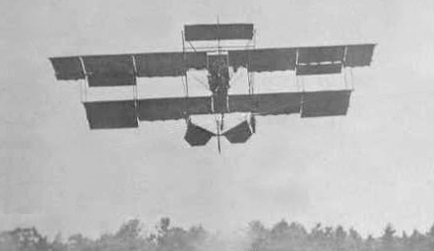
A single place, open biplane was constructed by Tod Shriver & (?) Dietz at Mineola NY., USA, circa 1910. There is a possible, but unresolved, connection with Dietz Paraplane in design or construction.
Shriver-02.jpg
Tod Shriver & (?) Dietz
Mineola NY.
USA
Built a biplane circa 1910.
Showa Hikoki Kogyo Kabushiki Kaisha
Before and during Second World War built the Douglas DC-3 under license. After war was first Japanese aircraft manufacturing company to resume operations, under U.S. Government contracts. Aided in manufacture of NAMC YS-11 Japanese-designed transport.

