TeST TST-7 Junior

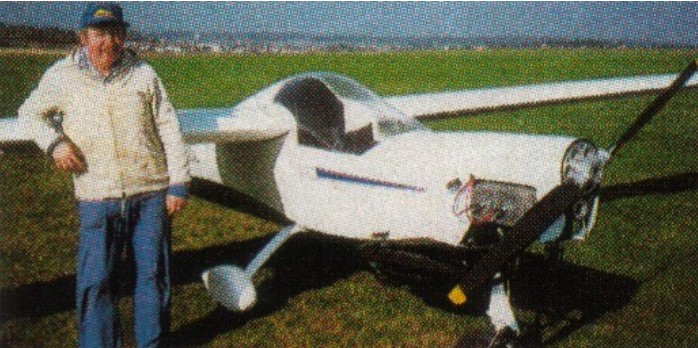
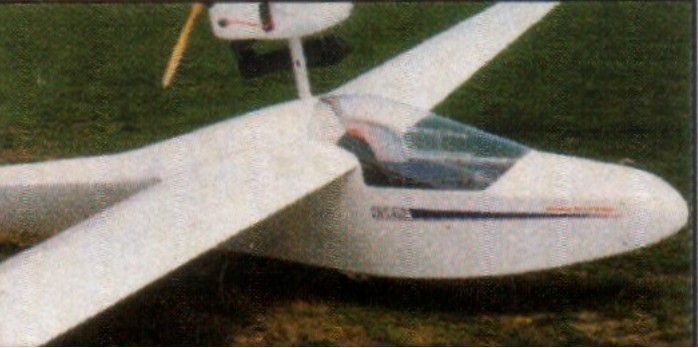
Czech Republic design imported to Canada and sold by Boohemican International. This motorglider is a modified version of the TST-1Alpin. More or less an ALPIN with the engine mounted in the front and a fixed three-wheel undercarraige, first flown in 1995. Ready to fly $16,250. Two to three month delivery date on kits. Plans $325.

Engine used: Czech M-215
Hp/Hp range: 40/40-55
Length: 19.1 ft
Wing span: 40.4 ft
Wing area: 107.6 sq ft
Fuel Capicty: 6 gal
Empty weight: 561 lbs
Gross weight: 990 lbs
Top Speed: 110 mph
Cruise: 70 mph
Stall: 41 mph
Range: 250 s.m
Rate of climb: 900 fpm
Takeoff distance: 600 ft
Landing distance: 400 ft
Service ceiling: 10,000 ft
No. seats: 1
Landing gear: trigear
Bldg materials: CWF
Bldg man hours: 600
No completed and flown: 3
Info package: $10
Kit cost: $9,840

TeST TST-6 Duo

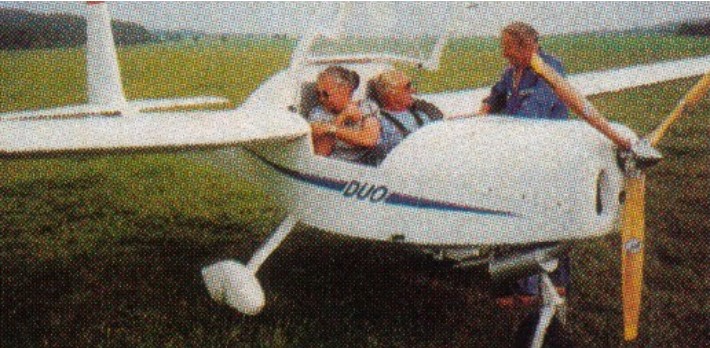
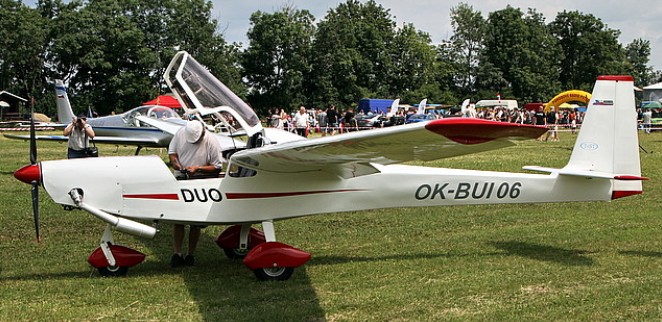
Czech Republic design imported to Canada and sold by Boohemican International. Engine, propeller and instruments are included in kit price. Ready to fly price in 2009 $21,925. Two to three month delivery date on kits. Plans $325.

Two seat motorglider, side-by-side, with Rotax 582 engine in tractor configuration and nose wheel undercarriage. JAR 22 certified, and first flown in 1996.

Engine used: M-215
Hp/Hp range: 43/43-65
Length: 21.1 ft
Wing span: 48 ft
Wing area: 140 sq ft
Fuel Capacity: 10 gal
Empty weight: 561 lbs
Gross weight: 990 lbs
Top Speed: 112 mph
Cruise: 70 mph
Stall: 41 mph
Range: 26 s.m
Rate of climb: 500 fpm
Takeoff distance: 650 ft
Landing distance: 600 ft
Service ceiling: 10,000 ft
No. seats: 2
Landing gear: trigear
Bldg materials: CWF
Bldg man hours: 700
No completed and flown: 4
Info package: $10
Kit cost 2009: $14,875

TeST TST-3 Alpin T

Alpin TM

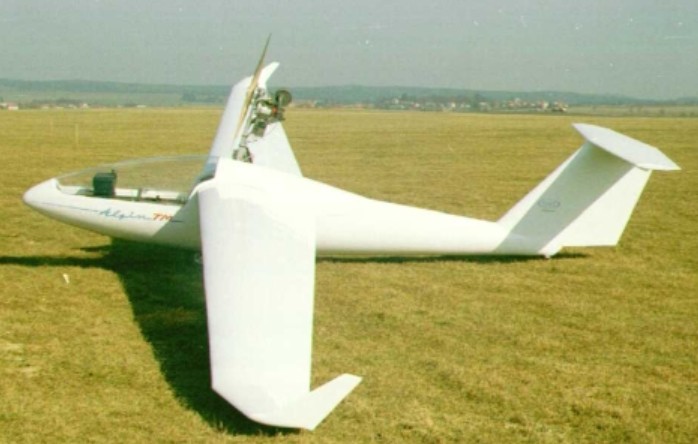
Originally a single seater, World Class performance glider, with “T” tail, nose type tow hook and one wheel undercarriage significant upgraded Alpin, the TST-3 Alpin T kit sailplane has tandem seating for two, with an option for a retractable engine (TST-3 Alpin TM), and with a 44 ft wingspan This aircraft flew several 500 km FAI triangles – in gliding mode (1998).

The TST-3 TL, is a lighter version of the TST-3 T; its pilot broke a series of records in cross-country flights in the 220 kg flying weight category (2001).

JAR 22 certified.

Air Est Services of Marley in France would supply either plans or kits for the TST-1 and would even build a completed sailplane.

TeST TST-1 Alpin

The firm designed its first wooden ultralight glider, the TST-1 Alpin, and tested the prototype in 1993. Despite gliding parameters that could bring smiles today, the glider demonstrated a couple of interesting performance feats – e.g. several 300 km FAI triangles and even a 500 km FAI triangle.

The Aplin is a standard club type with a 40.7 ft wingspan for the novice and average skill pilot.

Air Est Services of Marley in France would supply either plans or kits for the TST-1 and would even build a completed sailplane.

Initial engine options were the Czech built UVMV of 28 hp or a 24 hp Koneig.

The design was imported to Canda and sold by Boohemican International. Certified as European ultralight. In 1997, Ready to fly price $15,250, and a two to three month delivery date on kits. Plans cost $325.

The JAR 22 certified single seater glider / motorglider version has a detachable auxiliary Rotax 447 engine in pusher configuration.

There is a tractor version called the TST 1 Junior.

TeST spol sro

The company TeST was established in 1992 by three enthusiastic, experienced glider pilots. Their initial goal was to design and manufacture ultralight motor gliders and ultralight aircraft.

During the few first years, production was carried out in a hangar in Křižanov. The firm designed its first wooden ultralight glider, the TST-1 Alpin, and tested the prototype in 1993. Despite gliding parameters that could bring smiles today, the glider demonstrated a couple of interesting performance feats – e.g. several 300 km FAI triangles and even a 500 km FAI triangle.

The company rented new production facilities in Velké Meziříčí in 1995 and production capacity grew to 10 aircraft a year. The development and production of new aircraft then continued, featuring mostly wooden construction:

  • TST-7 JUNIOR more or less an ALPIN with the engine mounted in the front and a fixed three-wheel undercarraige (1995)
  • TST-6 DUO, two seat motor glider similar to the JUNIOR (1996)
  • TST-5 VARIANT, an alternative to the DUO with shorter wings (1996)
  • TST-3 ALPIN T, a significantly upgraded ALPIN, also supplied with a retractable engine (TST-3 ALPIN TM). This aircraft flew several 500 km FAI triangles – in gliding mode (1998).

1998:
Zahradni ul.
CZ-59401 Velke Mzirici
Czech Republic

In September 1998, TeST moved to larger facilities in Velká Bíteš allowing production to increase to 25 aircraft a year. The development of new types continued:

  • TST-8 ALPIN DM, a new tandem two seater with a retractable engine (1999)
  • TST-9 JUNIOR, a modernized TST-7 with an elliptical fuselage and T-shaped tailplanes (2000)
  • TST-3 TL, a new lighter version of the TST-3 T; its pilot broke a series of records in cross-country flights in the 220 kg flying weight category (2001).

In order to satisfy increased demand, the company moved again in November 2002, this time to its new facilities in Velké Meziříčí. Development activity began to focus mainly on composite technology. The following aircraft were designed:

  • TST-10 ATLAS M, the first two seater made of composites with a retractable engine opened the new era of technologies based on carbon fiber – also supplied as the motorless TST-10 ATLAS (2002).
  • TST-12, a tandem low-wing plane combining modern features and traditional wooden construction (flown in summer of 2004; built as a prototype only)
  • TST-13 JUNIOR 2005, an all-composite successor to the TST-9; span of 15 m
  • TST-14 BONUS M, a tandem all-composite two seater; production commenced in 2004 TST-14 BONUS.

The newly designed aircraft – the TST-10 ATLAS, TST-13 JUNIOR and TST-14 BONUS – formed the core of the 2009 production program and have brought a great deal of commercial success.

The original wooden construction was replaced by composite technology in 2002. Detraction and retraction of the engine is fully automatic and controlled by an electronic device.

The development and design of the new aircraft is in cooperation with experts from the Faculty of Mechanical Engineering at the VUT University of Technology in Brno and the Light Aircraft Association (LAA ČR), which helps to increase the quality and safety of newly designed aircraft.

The aircraft are designed to meet existing and anticipated standards and regulations in the overall UL category – maximum flying weight of 300 kg (or 322 kg during BRS use) for single seaters or 450 kg (or 472 kg during BRS use) for two seaters. The minimum speed is always under the 65 km/h limit, often conforming to even stricter standards (JAR-22).

2009: K Libusi 4/24
Praque 4 148 00
Czech Republic

In 2009 TeST Aircraft were marketed in North America by Bohemican International, 36 Buchanan Road, St. Cathatires, Ontario L2M 4R6, Canada.

Tessier Biplane

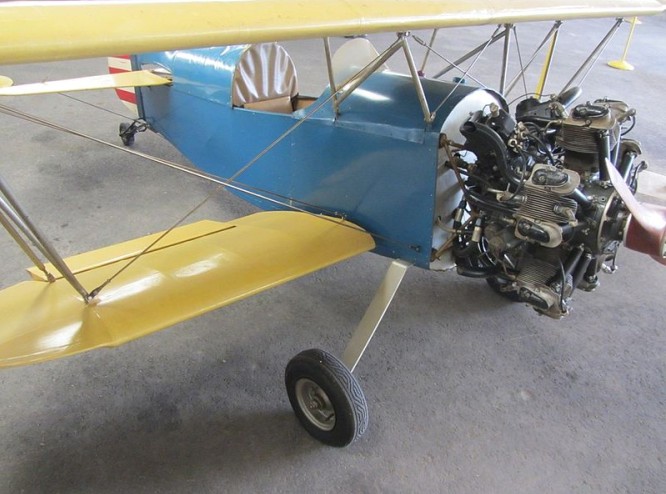
Designed by Rene Tessier and built in 1963, the Tessier Biplane is a single place homebuilt biplane.

The Tessier biplane is a single place tube and fabric construction aircraft with conventional landing gear. The wing spar is wood and ribs are plywood. The original engine was a Volkswagen air-cooled engine which was replaced with a Lawrance L-5 radial engine.

The original Tessier Biplane belongs to the EAA AirVenture Museum, but is neither airworthy nor on display.

Powerplant: 1 × Lawrance L-5 Five cylinder radial
Propeller: 2-bladed
Crew: 1

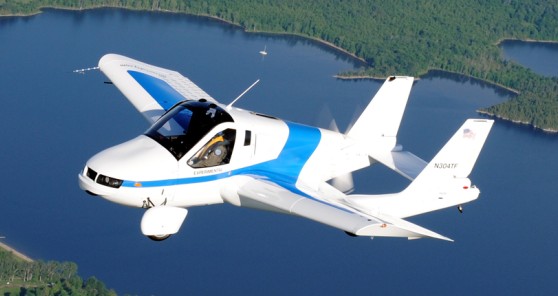
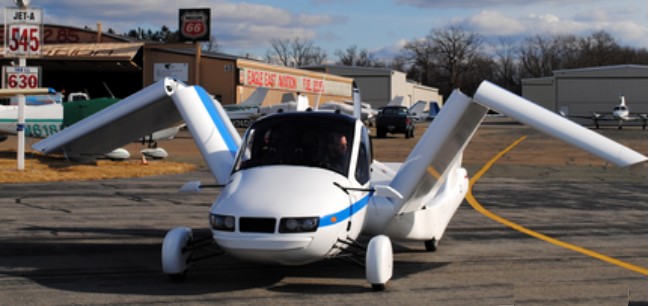
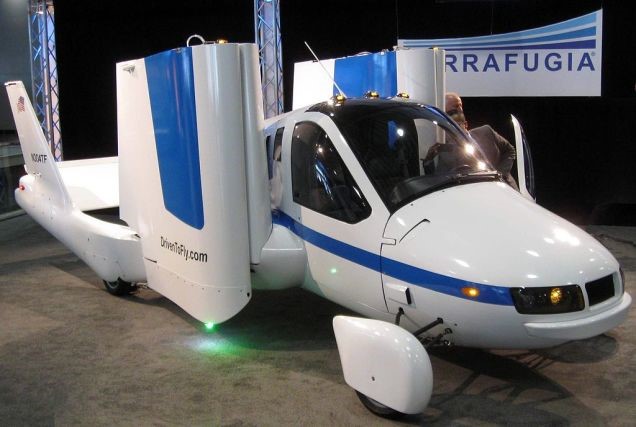
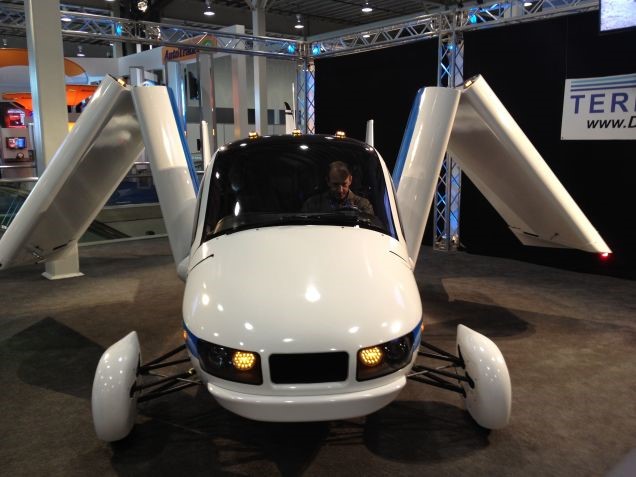
Terrafugia Transition

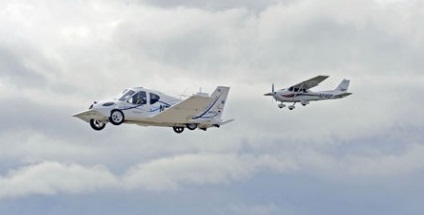
Terrafugia, a New England-based company has introduced the Transition. It’s a street-legal airplane that the company calls “the first step on the road to the practical flying car.”

At first glance, the Transition basically looks like a plane with collapsible wings that make it drive-able on city streets.

The carbon-fiber Terrafugia Transition is in development since 2006, and first flew in 2009.

On the road, it can drive 70 mph (110 kmh) and 93 kn (107 mph / 172 kmh) in the air and have a flight range of 425 nmi (489 miles / 787 km).

Nearing production in 2012, the price was holding at US$279,000 and more than 100 customers were waiting for delivery, possibly in 2014.

The Terrafugia Transition has received exemptions from the NHTSA that make it legal to drive on the road. With polycarbonate windows instead of automotive safety glass and tires not normally considered street legal, it has nevertheless passed muster for both the sky and the highway in terms of weight and safety.

The Terrafugia company had been doing lots of fine tuning since then to attain the proper licensing and exemptions needed to ensure these roadable aircraft are ready for delivery by the end of 2012.

Geely, the company that also owns Volvo, agreed to acquire Terrafugia in 2017. The Terrafugia flying car, created by a handful of MIT grads, received FAA approval in 2016 allowing the transforming car to be certified as a light sport aircraft. The exemption means Terrafugia can create a road- and air-legal vehicle that weighs up to 1,800 pounds.

Terrafugia’s Transition model, the company test vehicle, claims a range of 400 nm at a top speed of about 90 knots. The Transition air/car’s wings fold back to allow the craft to fit in a standard single-car home garage.

The Zhejiang Geely Holding Group confirmed that it is hiring engineers, who must be English-speaking, to help introduce and test-produce prototypes to produce flying cars in China. The company was also seeking contractors to renovate workshops in a passenger car production facility in Hangzhou, Zhejiang province, for the same purpose. Geely said it expects to finish the development of Terrafugia’s first model, TF-1, and launch it in the United States by July 2019.

Gallery

Transition N302TF
Engine: Rotax 912S, 100hp
Wingspan: 27’6″
Length: 19’2″
Useful load: 430 lb
Cruise Speed: 100 mph (160 km/h)
Stall: 51 mph
Range: 410 mi (660 km) plus 30 min. reserve
Mileage on Road: 35 mpg
Seats: 2