Thomas-Morse MB-7 / R-5 / TM-22

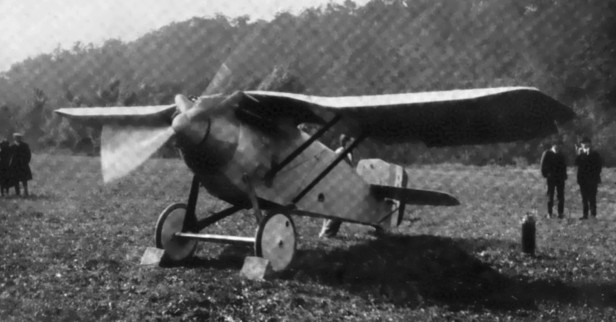
The 1921 Thomas-Morse MB-7 were MB-3 from USAS inventory converted to single-place strut-braced, gulled, high wing monoplanes for USN racers. First flying on 29 September 1922 piloted by Capt Frank O Hunter, two were built as R-5 military entries in the 1921 Pulitzer races; AS64373 / A6070 (dropped out with lubrication problems) and AS64374 / A6071 (destroyed in crash during trial flight). One was reportedly tested with a 400hp Curtiss D-12, both subsequently destroyed in static testing.
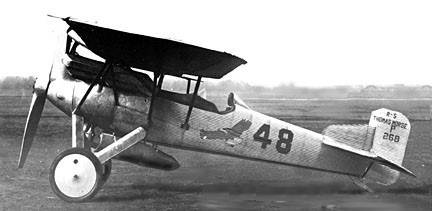
Thomas-Morse TM-22 as R-5 racer

Engine: Wright-Hisso H-3, 400hp / Packard 1A-2025, 585hp
Wingspan: 29’0″
Length: 25’0″
Speed: 155 mph
Seats: 1
Thomas-Morse Aircraft Corp

Formed January 1917 at Ithaca, New York, from merger and recapitalisation of Thomas Brothers Aeroplane Company and Morse Chain Company. Principal products during and after First World War were S-4 single-seat advanced training biplane and its S-5 seaplane version; MB-3 single-seat fighter; R-2 and Fi-5 Pulitzer Trophy racers of 1921-1922 and their unsuccessful MB-9 and MB-10 pursuit/training derivatives. Last aircraft produced were O-19 two-seat observation biplane and O-19-derived XO-932 sesquiplane of 1932.

Development/production of these two continued after Thomas-Morse had been acquired in 1929 by Consolidated Aircraft Corporation.

In 1934 the Thomas-Morse Division was discontinued.

Thomas Brothers Nacelle Pusher

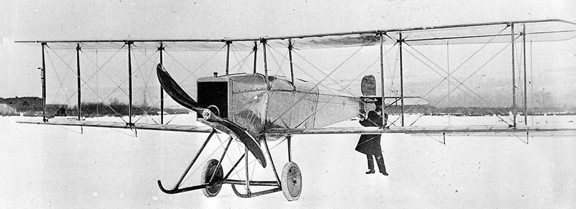
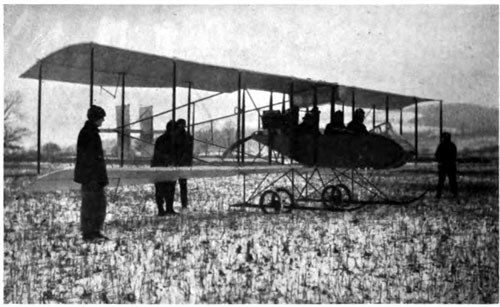
The 1913 Thomas Bros. three-seat nacelle pusher biplane was powered by a 90 hp Austro-Daimler engine. Distinctive are the equal span wings, the nacelle mounted on the wing, the sturdy four-wheel inclusive skids undercarriage and the double rudder. This machine must not be confused with a quite similar single seater nacelle pusher also built by Thomas in 1913. This single seater differed in having unequal span wings and the nacelle that was fitted between the wings.

Span: 37′
Length: 27′

Thomas Brothers TA / TA Hydro

Thomas TA Tractor

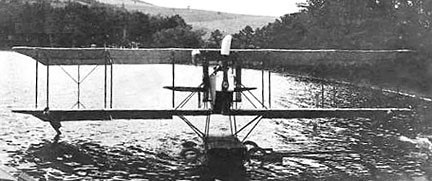
The Thomas TA was the second Thomas product. Fitted with four trailing-edge ailerons, and nacelle fuselage, early seaplane models had tubular wing floats.

At least two TA model were built, plus perhaps others built with varied motors of 65-90hp. The first was the 1910 model with exposed cockpit and interplane ailerons, which set an endurance record of four hours in 1912, piloted by Walter Johnson. One was tested as a single-float tractor version in 1912, but results were inconclusive.

The sole TA Tractor of 1912 had a partially-covered fuselage. It was probably a single-float conversion from a TA, but proved lacking in performance compared to the pusher.

The 1913 TA Hydro was the first all-metal hull in the USA.

TA
Engine: 50-65hp Kirkham pusher
Seats: 2

TA Tractor
Engine: 50hp Kirkham
Wingspan: (upper) 37’0″ (lower) 27’0″
Length: 27’0″
Speed: 58 mph
Seats: 2

TA Hydro
Engine: 90hp Austro-Diamler / 100hp Maximotor
Wingspan: 33’0″
Length: 23’0″
Seats: 1

Thomas Brothers D-2 / D-5 / HS

Thomas D-2

The 1915 D-2 civil trainer was designed by Benjamin D Thomas (no family relation; principal designer for most Thomas and T-Ms) as an improved T-2.

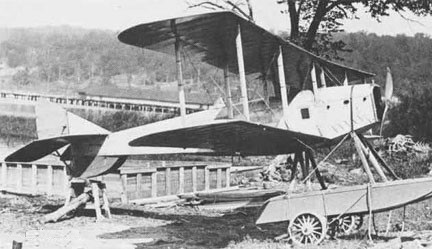
As a two-seat observation biplane, two D-2 were ordered by the US Navy as model HS. Both were involved in crashes before delivery and were rebuilt in 1916 with 48’6″ wing and 135hp Sturtevant for use as trainers as A57 and A58.

Thomas HS

The D-5 of 1916 were re-motored D-2 with 135hp Thomas 8 engines. Two, AS114 and AS115 were used for Army observation.

D-2
Engine: Sturtevant, 135hp
Wingspan: 52’9″
Length: 29’9″
Useful load: 1200 lb
Max speed: 86 mph
Stall: 38 mph
Seats: 2

HS
Engine: Thomas Aeromotor, 135hp
Wingspan: 48’6″
Seats: 2