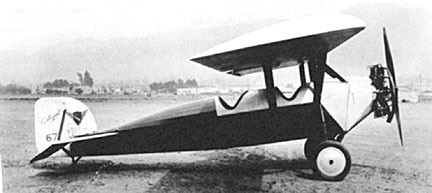
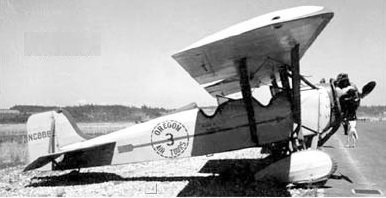
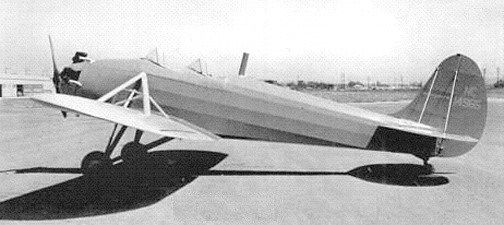
The K-90 Collegiate (ATC 180) built in 1928 was O W Timm’s first company and first commercial plane. The prototype NX/NC887E c/n 102, was initially powered by a 90hp Anzani.
The K-100 had a 130hp Comet [C337] c/n 101.
One each of the K-90 and K-100 were built, priced at $5,500.
One replica Curtiss, N3378 c/n 99, was built by Timm at his home in Eagle Rock, California, in 1927 for Al Wilson, who was killed in this ship at the 1932 Nationals when he lost control in the downwash of an autogyro.
A second, similar pusher was built in 1935 for Paul Mantz for use in the film, “West Point of the Air.”
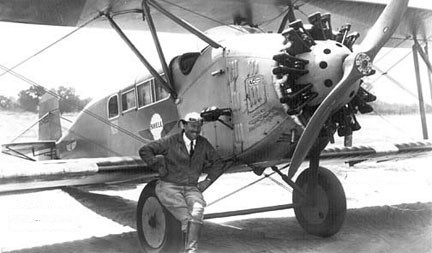
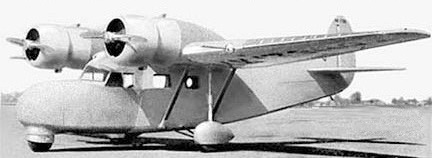
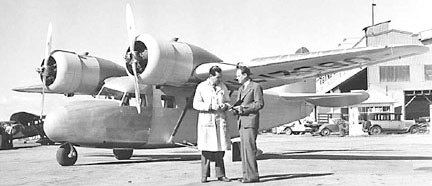
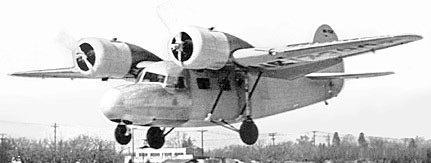
Built in 1928, the sole Timm Coach NX5499 Golden Shell built was purchased by Roscoe Turner and refitted with 715-gallon fuel tanks for an altitude record attempt, but the flight was never made. The design was based on the Argonaut.
Engine: 250hp Menasco-Salmson B-2 Wingspan: 45’0″ Length: 31’9″ Useful load (in test flight): 2530 lb Max speed: 112 mph Cruise: 100 mph Stall: 35 mph Seats: 7
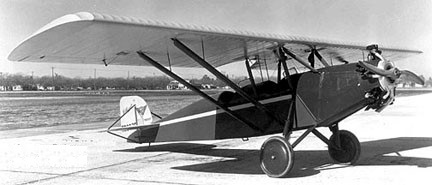
The Aerocraft 2AS of 1938 was a Kinner B-2R Sportwing modified to satisfy USAAC’s requirements for a two-place primary trainer. Orders were not placed, but went to the Fairchild PT-19 instead.
Only the one prototype was built, NC14965 c/n 230.
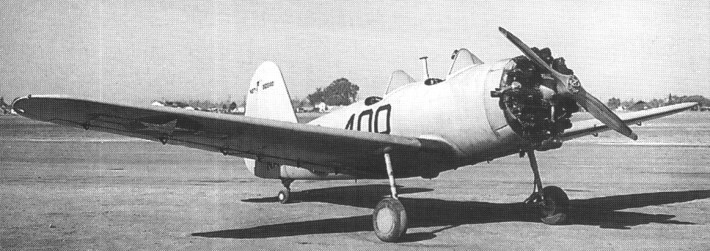
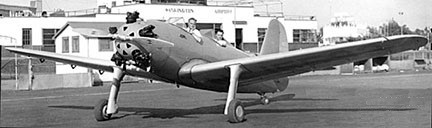
Under the trade name Aeromold, the Timm Aircraft Corporation developed a special form of construction using bonded plywood. To validate the new structural medium and ultimately to provide a commercial outlet, the company produced its private-venture S-160 / PT-160K (747) cantilever low-wing trainer with tandem accommodation in open cockpits and fixed tailwheel landing gear whose main units looked very spartan with their unfaired tubular metal legs. Designed by Otto Timm the sole S-160, NX15593, had an optional cockpit canopy.
Timm S-160 NX15593
Don Mitchell went to the new Timm Aircraft factory in Van Nuys, where he helped with the molding of the fuselage of the S-160, a plastic-bonded wood basic trainer developed for use by the U.S. Navy and U.S. Army Air Corps. Mitchell later assisted the Civil Aeronautics Administration when the time came to perform the static tests of the aircraft. It passed with flying colours and later became, in April 1941, one of the first if not the very first ever plastic-bonded aircraft to receive an American Approved Type Certificate.
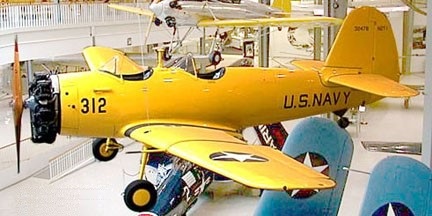
This prototype was developed into the PT-175K (750 2-573) for the civil market, and 262 of a modified variant with the Continental R-670 radial engine were ordered by the US Navy with the designation N2T-1, the aircraft being delivered in three batches during the course of 1943. The one prototype was NX15593 and 262 to the USN as N2T-1 were 41-05875 & 41-05876, 41-32387-32636, and 41-39182-39191.