Tipsy BC / Belfast / Belfair

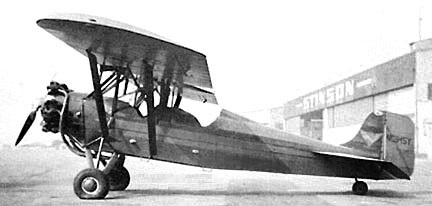
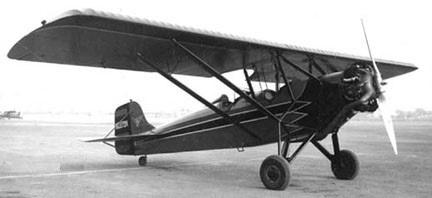
Pre-war products at Gosselies were single-seat S2 and two-seat B or B-2 (open cockpits) and BC (enclosed cabin). B-2 revived post-war as Tipsy Trainer, and BC as Belfair (from Belgian Fairey).

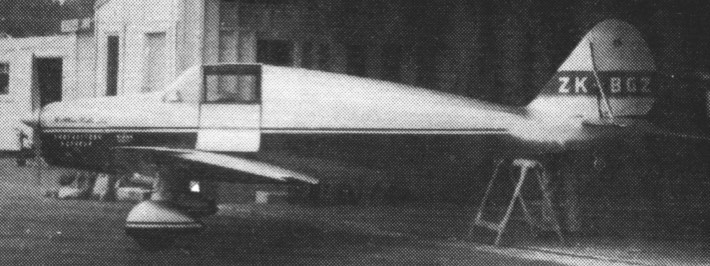
The Tipsy Belfair was derived from the Tipsy B by adding a raised rear fuselage and an enclosed cockpit, and first flew as such in 1939. Production was prevented by the war, but seven were built in the 1940s, three of which were assembled in Yorkshire.
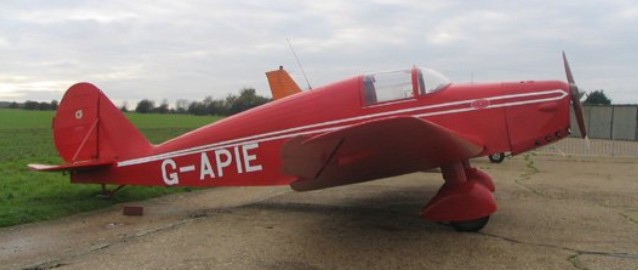
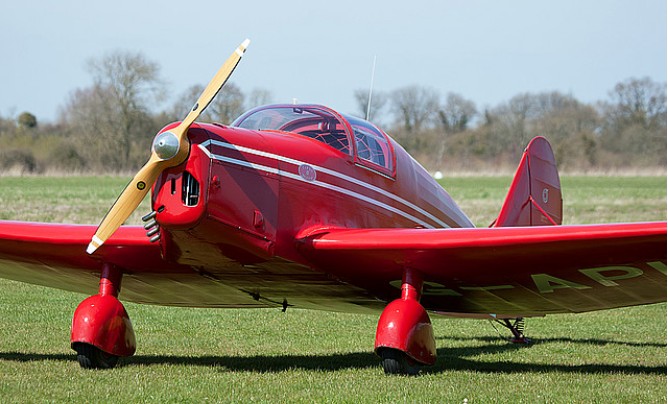
Yorkshire built Belfair, at Seething December 2005
Tipsy Belfair

Belfair
Engine: 62hp Walter Mikron
Wing span: 31 ft 2 in
Length: 21 ft 8 in
Gross weight: 1200 lb
Cruising speed: 100 mph
Range: 300 miles
Tipsy

Tipsy Aircraft Company Ltd.

Belgium
Formed in late 1930s together with Tipsy Aircraft Company Ltd in U.K. to build ultralight aircraft designed by E. O.Tips and previously manufactured by Avions Fairey.

Tipsy Aircraft Company Ltd. was formed 1937 at Hanworth Air Park. Middlesex, to license build Anglo-Belgian lightplanes of E. 0. Tips. Continued production postwar but closed down in 1952.

Pre-war products at Gosselies were single-seat S2 and two-seat B or B-2 (open cockpits) and BC (enclosed cabin). B-2 revived post-war as Tipsy Trainer, and BC as Belfair (from Belgian Fairey), together with new design of Junior in 1946 and Nipper in 1957. Production of Nipper taken over by Cobelavia in 1961, and by Nipper Aircraft Ltd in 1966.

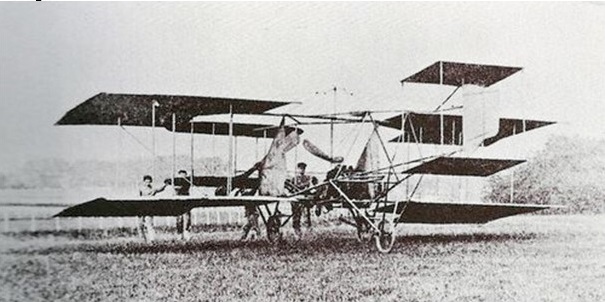
Tips 1908 Biplane

Tips Biplane (second version)

Belgian brothers Maurice and Ernest Tips designed in 1908 a machine that would rise and land vertically while transitioning to and from horizontal flight. Their solution to this challenge opted for a canard type biplane, driven by three-bladed propellers which could be rotated, thus given the need for space, the middle section of the wing was almost completely open. The engine to power this complex design was Belgian-made by the firm Pipe, and construction was done in Etterbeeke (now part of Brussels). The machine was not successful however, and the brothers persevered onward and re-designed their machine – using as many parts as already available – whereas they dropped the idea of starting and landing vertically. The second version of the Tips machine was a biplane which resembled the original quite closely, but fitted with two “fixed” two-bladed propellers. Almost everything else was the same, save the engine of Pipe which was at a later time changed to a 50 hp Gnôme rotary. The machine flew during 1909 and 1910 earning the distinction (with the Pipe engine that is) of being the first Belgian plane of construction (inclusive the engine) to do so.

Timmins Aviation Ltd

Canada
Transport aircraft repair and overhaul works at Montreal International Airport which in early/mid-1960s produced a “general aviation” conversion of the Catalina amphibian. Aircraft and Texaco Sky Service Divisions merged on January 1,1967 with Atlantic Aviation of Wilmington, Delaware, U.S.A.

Timm M-150

Timm M-150 NC279V

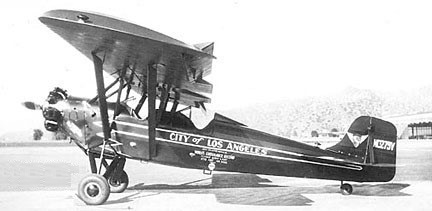
The M-150 Collegiate NX/NC279V of 1930 (2-239) was similar to the K-100, but with a 150hp McClatchie Panther engine. As City of Los Angeles, The M-160 set an endurance record of 378h:48m in flying the equivalent of 27,677 miles over Rosamond Dry Lake CA in 1930.

Timm M-150 City of Los Angeles NC279V

Engine: 150hp McClatchie Panther
Useful load: 706 lb
Max speed: 118 mph
Stall: 35 mph
Range: 500 mi