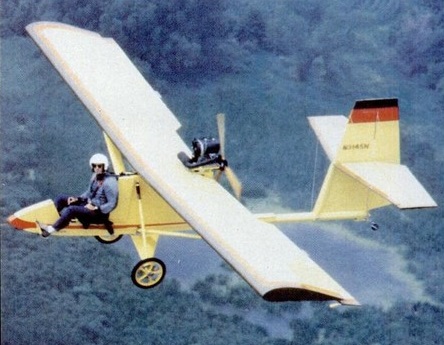
Torva 15 / TA 1 / TA 2 Sprites

Torva 15 Sport

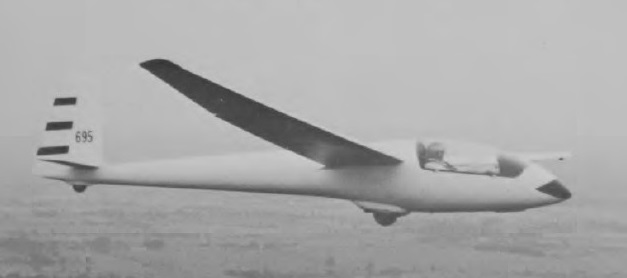
This Standard Class single-seater was designed by John Sellers, who was also responsible for the Slingsby T53, for Torva Sailplanes Ltd of Scarborough, Yorkshire, which company he had formed in September 1969 with Chris Riddell, and it was intended to be a moderately priced type with good performance suitable both for clubs and the private owner and competition pilot, for whom two production versions were to have been marketed.

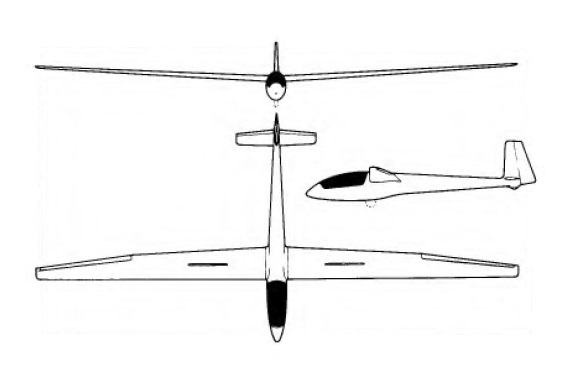
These were the Torva 15 Standard for club use and the Torva 15 Sport for the private owner and contest flying, the latter being fitted with flaps and having a retractable monowheel, while the Standard had provision for up to 130lb of water ballast. The Torva 15 was noteworthy as being the first British designed sailplane to be constructed largely of glass-reinforced plastics (GRP), although the wings have plywood ribs and the fuselage has plywood and foam sandwich frames to support its GRP shell and side longerons. Design work began on 6 October 1969 and construction of the Torva 15 Sport prototype (also known as the Torva TA 1) commenced on 16 March 1970; this first flew on 8 May 1971 in the hands of Chris Riddell. A modified Wortmann aerofoil section was chosen for the cantilever shoulder wings to give a very high lift coefficent for achieving a good rate of climb in weak British thermals, and also to give a low stalling speed for short-field landings. The wings have a GRP spar with ply webs and GRP/balsa shell; both the ailerons and flaps are of GRP with a foam core, the ailerons having variable differential and drooping with the flaps, but being isolated from the latter at the flap full-down position. Light alloy Schempp-Hirth air brakes are also fitted. The fuselage and canopy shape were computer calculated to achieve a good aerodynamic shape and roomy cockpit; the pilot sits under a Suntex lift-off transparent one-piece canopy and has a GQ five-point seat harness. The tail surfaces have GRP/balsa shells and plywood webs, the tailplane being an all-moving surface with a geared anti-balance tab. The retractable rubber-sprung monowheel is located forward of the eg and is manually retracted, with an internal expanding brake; there is also a GRP sprung tailskid with a small wheel.

Only three more Torva 15s were built after the prototype, as the company was forced to close down; these were also known as TA 2 Sprites.

Torva 15 Standard
Span: 15.0 m / 49 ft 2.5 in
Length: 7.11 m / 23 ft 3.25 in
Height: 5 ft 0 in
Wing area: 11.3 sq,m / 121.5 sq.ft
Aspect ratio: 20.0
Empty weight: 238 kg / 525 lb
Max weight: 408 kg / 900 lb
Water ballast: 59 kg / 130 lb
Max speed: 134 mph / 116 kt / 216 km/h (in smooth air)
Max rough air speed: 80 kt / 148 km/h
Stall speed: 35 kt / 65 km/h
Min sinking speed: 0.62 m/sec / 2.03 ft/sec at 50 mph / 43.5 kt / 81 km/h
Best glide ratio: 37:1 at 51 mph / 44 kt / 82 km/h
Torva 15 Sport

Torigai Hyabusa-go

Shigesaburo Torigai with a new-found interest in aviation as a hobby, organized the Nihon Hiko Kenkyukai (Japan Flight Research Association). His ambition was to have an aeroplane of his own. To achieve this, he asked Toyokichi Daiguchi, who was associated with Narahara, for technical assistance in the building of his own aeroplane.

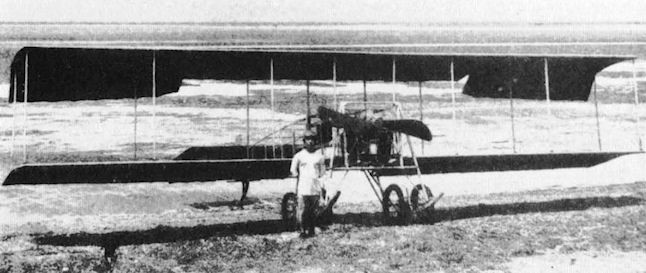
In 1913, to open the project, Torigai purchased a used 45hp Gregoire Gyp engine from Shinzo Morita of Osaka after his flying accident. Torigai completed his aeroplane in April 1913 and called it the Hayabusa-go (Falcon). It was an equal-span three-bay biplane with uncovered fuselage, tractor engine, ailerons on the upper wing and undercarriage comprising two sets of twin wheels and two skids. Otijiro Itoh assisted Shigesaburo Torigai, another Japanese pioneer, in the construction of the Torigai ”Hyabusa-go”.

He flew it for the first time on 3 May, 1913, at Inage, Chiba Prefecture, but at a height of about 20m the aeroplane stalled and crashed. Torigai survived, but the aeroplane was severely damaged.

After repairs by Daiguchi, Torigai took the aeroplane to Hokkaido. While preparing for a flying exhibition at the Tsukisappu Military Drill Grounds on 7 September, 1913, Torigai took off and, on the outskirts of Sapporo, soon crashed once again. Speculation about the cause of this and the earlier accident is that Torigai did not know how to fIy, for there was no record of him having been given formal flying lessons. Torigai escaped serious injury but the aeroplane was badly damaged. The wreckage was saved and eventually transferred to Otojiro Itoh, to help start his flying school at Inage the next year. Itoh made the necessary repairs along with his own modifications and made the aeroplane flyable.

Itoh eventually purchased the Gregoire Gyp engine from Torigai in August 1915 so that it could be installed in his first-built aircraft, the Emi 1 Aeroplane. This is the aeroplane that made the first flight to Tokyo from Inage on 8 January, 1916.

Torigai, Shigesaburo

Shigesaburo Torigai was a manager of an imported automobile sales and repair business in Yuraku-cho, Tokyo. Because of his new-found interest in aviation as a hobby, he organized the Nihon Hiko Kenkyukai (Japan Flight Research Association). Under this name, and to satisfy his own interest in aviation, he voluntarily managed and promoted exhibition programmes for Einosuke Shirato who flew the Narahara No.4 Ohtori-go Aeroplane on tours throughout Japan, and his ambition was to have an aeroplane of his own. To achieve this, he asked Toyokichi Daiguchi, who was associated with Narahara, for technical assistance in the building of his own aeroplane.

Tonini-Bergonzi-Negri Italia-1 / Italia-2

Italia I

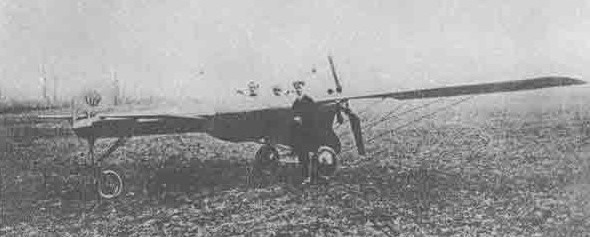
An earlier canard monoplane, the more streamlined Italia-1, was designed for the Italian 1913 trials but became badly damaged by Alessandro Tonini during a landing.

Italia I

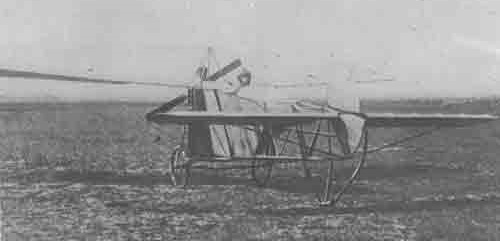
Due to a lack of funds and an underpowered airframe, Tonini shifted to a more “rough” and lighter configuration as a replacement: the Italia-2. According to Tonini’s son, the aircraft never flew.

Italia-2

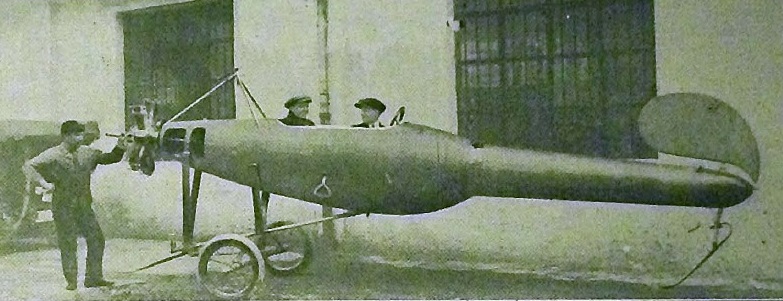
The Tonini-Bergonzi-Negri “Italia II” was a lighter airplane with a smaller engine, and also a canard. This did not take off – the partners experienced serious financial problems because Negri lost the money in cards, and their team broke up.

Italia II

Italia-2
Engine: 35 hp
Span: 6m
Weight: 340 kg

Tonini Monorebus

Tonini Monorebus monoplane of 1911 was designed by Alessandro Tonini, and powered by a REBUS engine. The name of the machine was a contraction of both, becoming Monorebus. Tonini had initiated the firm Officine Mechaniche REBUS in Milan, which specialized in “Aeroplani, Motori per Aeroplani, Costruzioni Aeronautiche and Construzioni Mecchaniche”. After the Monorebus was successfully flown in June 1911, Tonini started designing revolutionary canard machines and later became chief constructor with Nieuport-Macchi.

Tomak SD-4 Viper

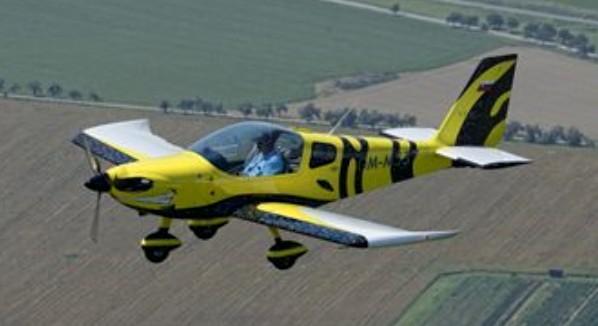
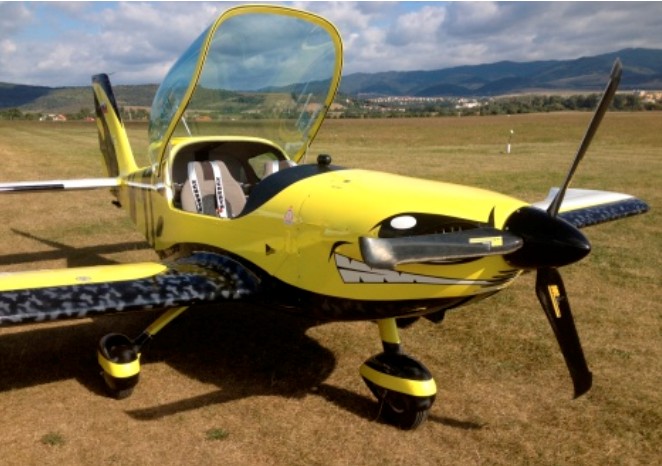
Viper is an all-metal microlight plane designed for sport, recreational flying and glider towing. The control of the aircraft is helped by LCD flight, navigation and communication systems. Viper SD-4 was developed and is made by aviation and mechanical engineering specialists at Tomark s.r.o., based in Slovakia. Modern technologies and CAD systems are used in its manufacture. Individual parts are cut by laser or machined on CNC machines for maximum precision. 2009 Price: 66000 EURO

This aircraft has:
DUC SWIRL Propeller
Ballistic recovery system 600kg
Dynon Flightdeck D180
GPS AVmap Geopilot plus
Garmin SL-40 radio
Garmin GTX 327 Transponder

Engine 4-stroke Rotax 912 ULS, 100 HP
Wing span 8.4 m
Length 6.4 m
Height 2.2 m
Empty Weight: 285 kg / 628 lbs
Maximum take-off weight 472,5 kg
Cruising speed: 108 kt / 124 mph / 200 kmh
Never exceed speed: 130 kt / 149 mph / 240 kmh
Stall speed: 35 kt / 40 mph / 65 kmh
Climb rate: 1200 ft/min / 6 m/s
Ceiling 5,000 m
Take-off distance 150 m / 180 m
Landing distance 140 m / 160 m
Take-off distance (50ft obstacle): 820 ft / 250 m
Landing distance (50ft obstacle): 920 ft / 280 m
Fuel tank volume 70 lt
Range 750 km