The Kaan program, initiated in 2016 with an investment of $1.18 billion, was designed to replace Türkiye’s aging F-16 fleet. Developed with international collaboration from partners such as BAE Systems and Rolls-Royce, the program prioritizes local production and technology ownership. The aircraft incorporates advanced design features, including supercruise capability and reduced radar cross-section, alongside a suite of indigenous munitions such as the Gökdoğan and Bozdoğan air-to-air missiles. The program emphasizes network-enabled warfare capabilities and interoperability with UAVs and other air force assets.
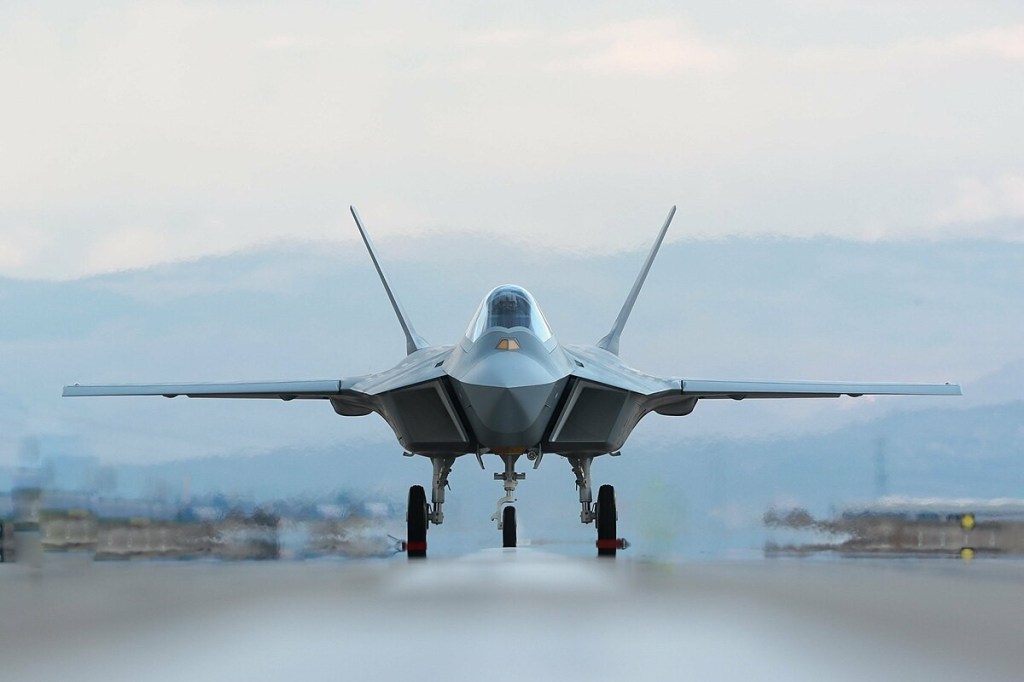
The Kaan, developed by Turkish Aerospace Industries (TAI), is a fifth-generation twin-engine stealth fighter designed for air superiority and multirole operations. It is equipped with advanced AESA radar capable of detecting targets over 100 kilometers away, internal weapon bays to reduce radar visibility, and a payload capacity of more than 6,000 kilograms. Initial models are powered by General Electric F110 engines, with plans to integrate domestically developed engines in later versions. The Kaan is designed to operate with other platforms in the Turkish Air Force, including the F-35A.
The TAI TF Kaan, a fifth-generation stealth fighter jet, achieved its maiden flight on February 21, 2024, with a second successful flight on May 6, 2024.
Engines: General Electric F110 Wingspan: 14 m Length: 21 m Height: 6 m Speed: Mach 1.8 Operating altitude: 55,000 ft Combat range: of approx 1,100 km
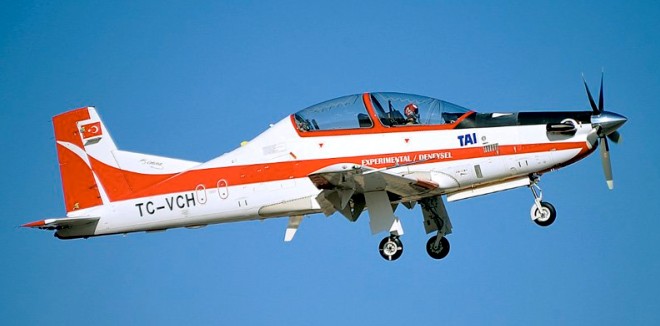
The TAI Hürkuş (Free Bird) is a tandem two-seat, low wing, single engine, turboprop aircraft developed by Turkish Aerospace Industries (TAI) as a new basic trainer and ground attack aircraft for the Turkish Armed Forces.
The aircraft is named after Vecihi Hürkuş, a Turkish aviation pioneer and the first Turkish airplane manufacturer.
The TAI Hürkuş Development Program started with an agreement signed between Turkish Undersecretariat for Defense Industries (Savunma Sanayii Müsteşarlığı (SSM)) and TAI in March 2006. Under the agreement the company was to design, manufacture and complete the civil certification the aircraft to European Aviation Safety Agency CS 23 standards.
HÜRKUŞ Within the framework of the program; two aircraft configurations were to be developed.
HÜRKUŞ-A: Basic version which is to be certified with EASA according to CS-23 requirements. HÜRKUŞ-B: Advanced version with integrated avionics (including HUD, MFDs, and Mission Computer).
By June 2012 the Hürkuş program had consumed one million man-hours with the work of 140 engineers. About a quarter of the Turkish engineers who have worked on Hürkuş are female, as well as two of the three project heads.
The Hürkuş was to be equipped for inverted, day and night flying as well as basic pilot training, instrument flying, navigation training, weapons and formation training. The aircraft has good visibility from both cockpits with a 50 degree down-view angle from the rear cockpit, cabin pressurization (nominal 4.16 psid), Martin-Baker Mk T-16 N 0/0 ejection seats, an on-board oxygen generation system (OBOGS), an Environmental Control System (Vapor Cycle Cooling), an anti-G system, high shock absorbing landing gear for training missions, and Hands On Throttle and Stick (HOTAS). Microtecnica of Turin, Italy was been selected to provide the aircraft’s environmental control system. The Hürkuş has been designed for a 35-year service life with a TAI designed wing airfoil.
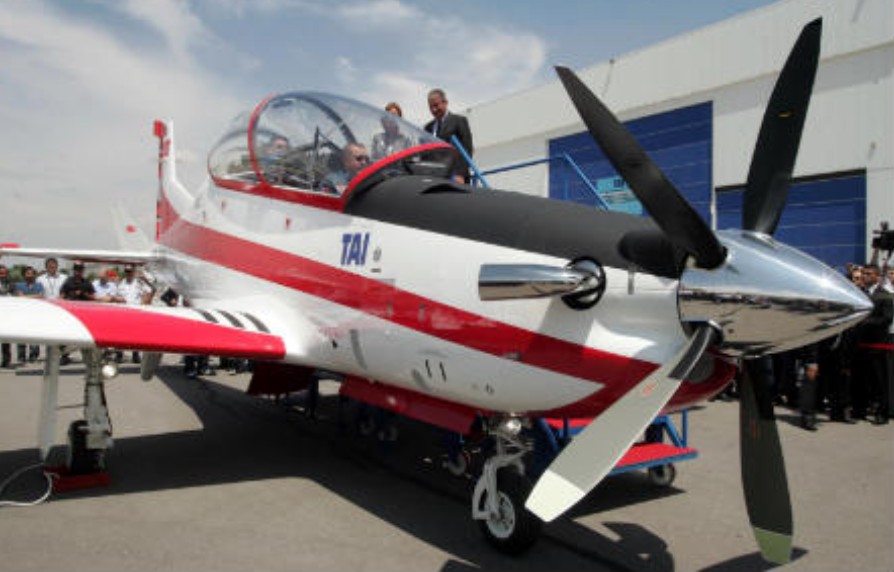
The Hürkuş development program has been subject to delays. In 2007 it was forecast that the first prototype would fly in late-2009 with first delivery, upon completion of the certification process, forecast for 2011. On 27 June 2012, the Hürkuş was officially rolled out at a ceremony held at TAI’s Kazan premises. The forecast date for the first flight was then delayed until later in 2012 and actually occurred on 29 August 2013 when the aircraft flew from the Ankara Akıncı Air Base on a 33-minute flight. The first flight was performed with landing gear down and to a height of 9500 ft.
Stability and control checks in different flight configurations have been conducted in the following flight tests. Landing gear up-down tests, cockpit pressurized tests and system functions pre-checks have been performed. The aircraft has reached 12.500 ft height and 158 knots speed currently.
At an SSIK’s meeting, held on Sept. 26, 2013, in order to meet the 15 new-generation trainer aircraft requirement of TurAF, contract negotiations regarding the serial production of HÜRKUŞ was started with TAI. The negotiations regarding HÜRKUŞ-B contract was on the signing.
Two prototypes were built. Entering service in 2015, 15 were built.
Hürkuş Engine: 1 × Pratt & Whitney Canada PT6A-68T turboprop, 1,200 kW (1,600 shp) Propellers: 5-bladed Hartzell Propeller HC-B5MA-3 Wingspan: 9.96 m (32 ft 8 in) Length: 11.17 m (36 ft 8 in) Height: 3.70 m (12 ft 2 in) Maximum speed: 574 km/h (357 mph; 310 kn) Cruising speed: 463 km/h (288 mph; 250 kn) Stall speed: 143 km/h (89 mph; 77 kn) Range: 1,478 km (918 mi; 798 nmi) at 15000 ft (4572 m) Endurance: 4.25 hours at 15000 ft (4572 m) Service ceiling: 10,577 m (34,701 ft) Rate of climb: 22 m/s (4,300 ft/min) Total Take-Off Distance (@ sea level): 1605 ft (489 m) Total Landing Distance (@ sea level): 1945 ft (593 m) g limits: +7/-3.5 Hardpoints: 4 Seats: 2
Turbay SA was formed in January 1961 to build the proposed T-3B production version and a lengthened fuselage development, the T-4, but no production was achieved.
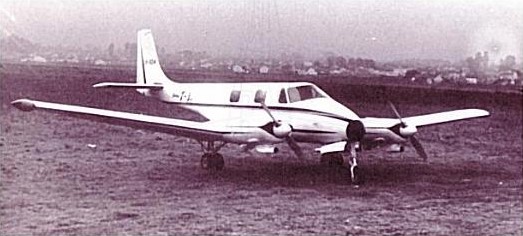
In 1957, the Argentine aircraft designer Alfredo Turbay began work on a twin-engined STOL light transport, the Turbay T-3A, with Turbay S.A. formed at Buenos Aires in January 1961 to build the new design. The T-3A was a low-wing cantilever monoplane of all metal construction. It was powered by two 130 kW (180 hp) Lycoming O-360-A1D engines driving two-bladed propellers, and was fitted with a retractable nosewheel undercarriage.
Alfredo Turbay piloted the T-3A on its first flight on 8 December 1964. Production was planned of the T-3B, which was to be fitted with 190–260 kW (250–350 hp) Lycoming or Continental engines, giving improved performance. These plans did not come to fruition, with the prototype T-3B never completed, and no production occurring.
Powerplants: 2 × Lycoming O-360-A1D, 130 kW (180 hp) each Propellers: 2-blade Hartzell HC-92 zk-2b/8447-12A metal Wingspan: 13.52 m (44 ft 4 in) Wing area: 24.08 m2 (259.2 sq ft) Aspect ratio: 7.5:1 Airfoil: NACA 23024 at root, NACA 4412 at tip Length: 9.40 m (30 ft 10 in) Height: 3.60 m (11 ft 10 in) Empty weight: 1,034 kg (2,280 lb) equipped Max. zero-fuel weight: 1,725 kg (3,803 lb) Max takeoff weight: 1,860 kg (4,101 lb) (MTOW and MLW) Fuel capacity: 360 L (95 US gal; 79 imp gal) in four wing tanks, with provision for 2x 80 L (21 US gal; 18 imp gal) external tanks; 24 L (6 US gal; 5 imp gal) oil Wing loading: 77 kg/m2 (16 lb/sq ft) Power/mass: 0.1442 kW/kg (0.0877 hp/lb) Maximum speed: 318 km/h (198 mph, 172 kn) Econ. Cruise: 230 km/h (140 mph, 120 kn) Max cruise: 255 km/h (158 mph; 138 kn) Stall speed: 85.4 km/h (53.1 mph, 46.1 kn) Never exceed speed: 342 km/h (213 mph, 185 kn) Range: 1,380 km (860 mi, 750 nmi) with maximum payload, zero wind Range: 1,840 km (1,143 mi; 994 nmi) with maximum fuel, zero wind Service ceiling: 7,600 m (24,900 ft) SE Service ceiling: 3,500 m (11,483 ft) Rate of climb: 6.6 m/s (1,300 ft/min) Take-off run: 118 m (387 ft) Take-off distance to 15.25 m (50 ft): 225 m (738 ft) Landing run: 100 m (328 ft) Landing distance from 15 m (49 ft): 180 m (591 ft) Crew: 1 Capacity: 6 passengers / 522 kg (1,151 lb) max. payload / tanks for 800 L (211 US gal; 176 imp gal) chemicals
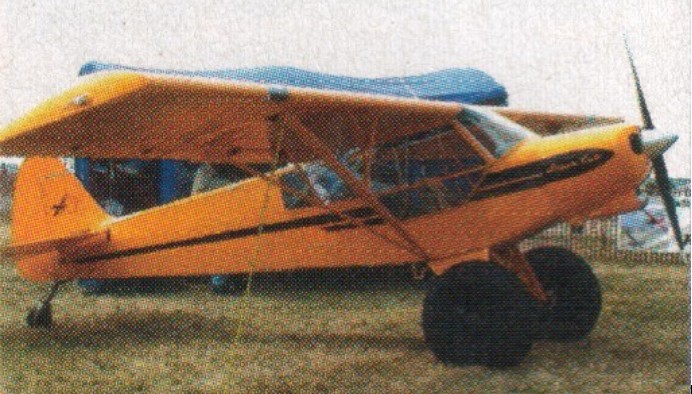
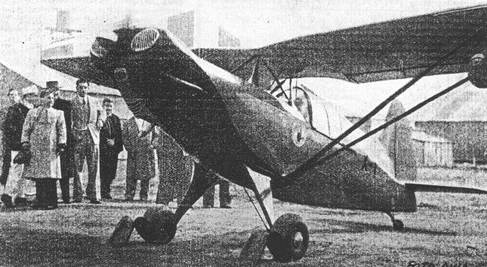
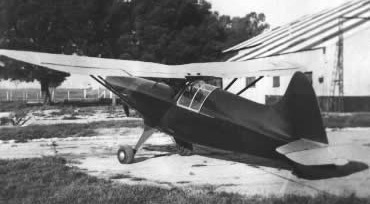
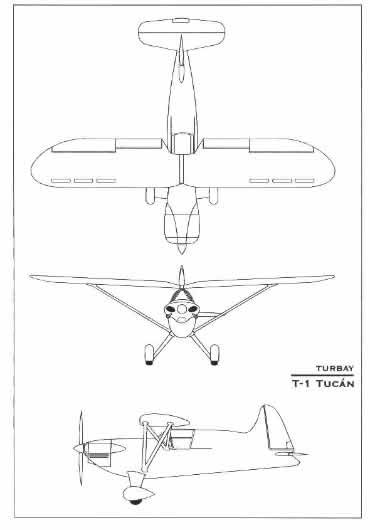
Designed by Alfredo Turbay and built by Sociedad Anonima Sfreddo & Paolini, the Tucán is a parasol-wing braced monoplane with a fixed cantilever type landing gear, tailwheel and powered by a 65 hp (48 kW) Continental A65 air-cooled piston engine. The design of the T-1 toucan started it in 1937, reaching its final form in 1939.
It had an enclosed cockpit just aft of the wing trailing-edge with a sliding canopy.
The first of January 1941 began with the construction of this prototype at the Technical Institute of the National University of Tucuman in the Popular Aviation Center founded by Los Tucanes Turbay himself and his colleagues a couple years earlier.
Construction was finished in April 1943 and between 2 and 5 February was statically tested and approved by the Directorate General of Civil Aviation granting the first experimental enrolment of registration, LV-X1.
The first flight was made on April 5, 1943 with an excellent performance, which made Turbay interested in taking it to Buenos Aires to get potential customers and try to manufacture in series. The plane arrived at Airfield San Fernando in Buenos Aires in May 1943 and on May 16 before national, military and aerospace Argentina and higher authorities. This made the Sfreddo and Paolini SA hire him as technical manager of the company. They planned to sell the aircraft at $10,000 National Currency each, which made it very accessible for the time. Turbay made some tweaks to the model and officially presented to the press and public at the airport on August 22 of that year.
Series production under license by Sfreddo and Paolini for the construction of 6 units were scheduled and minor modifications began with the works. The series aircraft would be equipped with the same engine as the prototype, the Continental A65 65 hp, but the Directorate General of Civil Aviation cancelled its commitment because of World War II for which production was suspended. Sfreddo & Paolini was seized and nationalized by the government.
While there were several attempts to build the plane in series, political and economic problems of the country prevented this. Plans to revive production in 1963 were thwarted. The prototype, once approved, was re-registered LV-NBE on September 13, 1944. On January 23, 1945 Turbay sold the aircraft to Bruno Zantini and to Orlando Harriet on September 25 of that year. On 22 November 1956 the record was transferred to Roberto Velazquez who completely destroyed it in an accident on April 18, 1957 in Bell Ville, province of Cordoba.
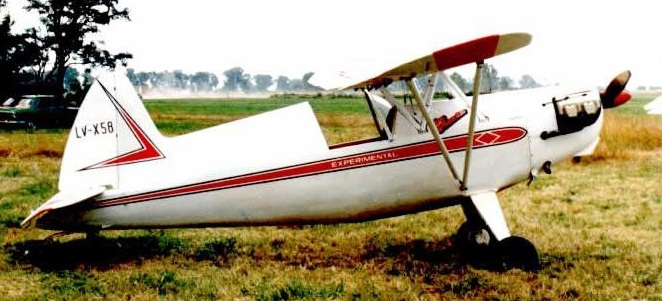
In 1975 Luis Fernandez finished building a second aircraft with planes bought in 1969 at the AVEX institution that Turbay. This aircraft was registered as LV-X58 and first flew on October 9, 1975.
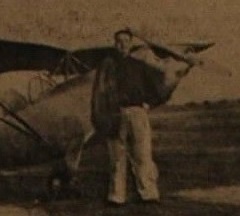
Turbay T-1 Toucan with Alfredo Turbay May 16, 1943
Alfredo Turbay was born in Monteros in the province of Tucuman Argentina on December 15, 1912, he grew up and studied there. He received his Civil Engineering from the National University of Tucuman in 1938 and expanded his knowledge of aeronautical distance learning courses L’Ecole d’Aéronautique of France and Cornell University in the US. He obtained the brevet of pilot in April 1937 and in March 1939 began his career as aircraft manufacturer together with other enthusiasts who built a Grunau 9 primary glider.
First design by Ing Alfredo Turbay was the T-1 Tucan parasol- wing lightplane, first flown April 1943. Six Tucans ordered from Sfreddo & Paolini were halted when the latter firm was seized and nationalized by the government and plans to revive production in 1963 were also thwarted. The T-2 five-seat twin-engined monoplane was destroyed by fire in early 1949 before it had flown; thus the next design to fly was the T-3A six-passenger light transport in December 1964. Turbay SA was formed in January 1961 to build the proposed T-3B production version and a lengthened fuselage development, theT-4, but no production was achieved.
The Tupolev-Myasishchec Type 31 was believed to be an interim bomber design built only in pre-production quantities and used to test the turboprop power plants later employed by the type 40 Bear. The type 31 Barge originally employed diesel engines believed to be 4300 hp M-224, but these were later replaced by four turbines of about 4500 shp, plus 1200 lb residual thrust.
Est. Wingspan: 185 ft Length: 145 ft Height: 38 ft Loaded weight: 210,000 lb Max speed: 380 mph Cruise: 340 mph Max range: 7500 mi


 All Aero