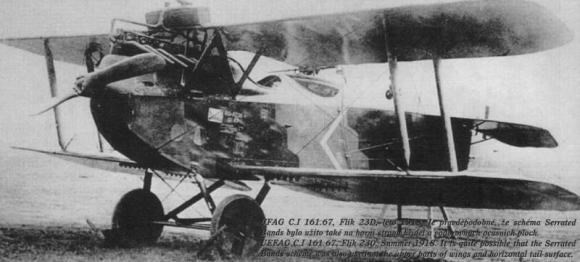
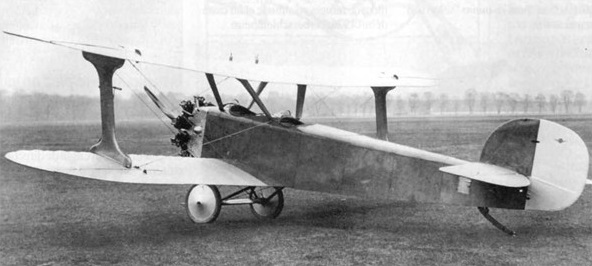
The UFAG C.I was a military reconnaissance aircraft produced in the Austro-Hungarian Empire during World War I, by the Ungarische Flugzeugfabrik Abteil Gesellschaft (UFAG). It was introduced in April 1918, and was widely used on the Italian Front in the final months of World War I.
The UFAG C.I incorporated the best features of the Brandenburg C.II(U) with single-bay wings and ‘I’ strut inter-plane bracing, which was replaced wing conventional steel-tube interplane struts in production aircraft. More manoeuvrable than the Phönix C.I, the C.I had good performance, but suffered from a few odd handling characteristics.
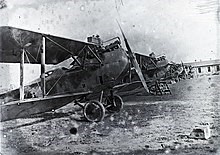
Ufag C.Is in service
Production of the C.I continued after the Armistice by MARE and was also built by the Neuschloss-Lichtig factory as the NL Sportplane.
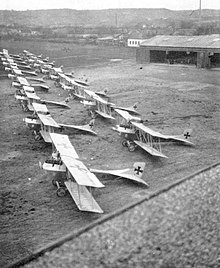
UFAG Brandenburg C.I aircraft in Albertfalva (Budapest) in 1916
The C.I was widely used by the KuKLFT on the Italian front by at least 30 Fliks. The C.I was also used post WWI by the Hungarian Red Airborne Corps as well as the clandestine Hungarian Legügyi Hivatal. Ex-military C.Is were also converted for civil use and as mailplanes.
Twenty UFAG C.I were captured from the Hungarian Soviet Republic in 1919 and used by the Romanian Air Corps.
Variants:
Ufag 161.01 First prototype 8.92 m (29.3 ft) span, 200 hp (150 kW) Hiero 6, ‘I’ type inter-plane struts.
Ufag 161.02 Second prototype, 230 hp (170 kW) Hiero 6, ‘I’ type inter-plane struts.
Ufag C.I (series 161.03 to 161.22) Production by Ufag, 9.12 m (29.9 ft) span, 230 hp (170 kW) Hiero 6, twin inter-plane struts.
Ufag C.I (series 161.31 to 161.250) Production by Ufag, 9.5 m (31 ft) span, 230 hp (170 kW) Hiero 6, twin inter-plane struts.
Ufag C.I(Ph) (series 123.01 to 123.40) Production by Phönix, 9.12 m (29.9 ft) span, 230 hp (170 kW) Hiero 6, twin inter-plane struts.
UFAG 60.01 an improved C.I which would evolve into the UFAG 60.03 / C.II.
Specifications:
C.I second series 161.23 – 161.250 Powerplant: 1 × Hiero 6, 170 kW (230 hp) Propeller: 2-bladed wooden fixed-pitch Upper wingspan: 9.5 m (31 ft 2 in) Lower wingspan: 9.4 m (30 ft 10 in) Wing area: 26.3 m2 (283 sq ft) Length: 7.41 m (24 ft 4 in) Height: 2.7 m (8 ft 10 in) Empty weight: 750 kg (1,653 lb) Gross weight: 1,150 kg (2,535 lb) Maximum speed: 190 km/h (120 mph, 100 kn) Range: 350 km (220 mi, 190 nmi) Endurance: 3 hours Service ceiling: 4,900 m (16,100 ft) Guns: 1 x 8 mm (0.315 in) Schwarzlose machine-gun forward-firing fixed machine guns; 1 x 8 mm (0.315 in) Schwarzlose machine-gun in trainable rear cockpit mounting Bombs: 12 x 12 kg (26 lb) bombs (161.131 onwards) Crew: 2
It was not until 1912 that the first Hungarian aircraft factory was born in Budapest, at the corner of Hungária körút and Váci út, with the cooperation of Ganz-Danubius, the Weiss Manfréd factory, the Hitelbank and the financial wizard Camilio Castiglioni, who had also helped BMW to prosper. The company was given the creative name of First Hungarian Airship and Aircraft Factory and, lacking its own types, started to produce biplane Lohner aircraft.
The company’s first manager was the twenty-four-year-old Viktor Wittmann, who in 1910, with a degree in mechanical engineering, set off for Reims, France, to study European aircraft manufacturing. The following year, he was already testing aircraft for the Monarchy’s air force at Aspern airbase in Austria. In May 1915, during a demonstration flight of one of the factory’s military aircraft, he lost control of the plane and crashed from an altitude of 30 to 40 metres.
However, the first and earliest site of the factory did not have an airport, so most of the aircraft parts had to be transported to Rákosmező, where the airplanes were assembled and tested.
In the light of this, and the increasing demand for aircraft, the company grew rapidly, outgrowing its available space. They found a new site in Albertfalva, on the outer section of Fehérvári út, where there was enough space not only for halls but also for an airport (which was actually just a flat field, as the runways were not paved at the time).
Hansa-Brandenburgische Flugzeug Werke then joined the company’s ownership, and from then the company began to produce aircraft under the names MARE (Magyar Repülőgépgyár Rt.) and UFAG (Ungarische Flugzeugfabrik Aktien Gesellschaft), including an increasing number of German-designed Hansa-Brandenburg C.I. aircraft, which accounted for a quarter of the Austro-Hungarian Empire’s First World War fleet, 1,258 of them.
These were still canvas-covered, wood-frame and plywood machines and were powered by 160, 200 and 230 hp Hiero engines manufactured by UFAG. They were armed with one or two Schwarzlose machine guns, redesigned for aircraft, with greatly increased rate of fire.
Uetz Flugzeugbau developed an improved version of the French Jodel D119 two-seat lightplane known as the Uetz U2V, first flown 1962. Series production began in 1964.
Switzerland This company developed an improved version of the French Jodel D119 two-seat lightplane known as the Uetz U2V, first flown 1962. Series production began in 1964. In that year a redesigned four-seater, the U4M Pelikan, also went into production.
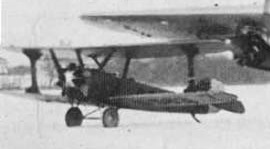
Udet left the company in 1925, after agreeing to production of a light training biplane, the Udet U-12 Flamingo, designed by Hans Herrmann, destined to become the company’s best-known aircraft.
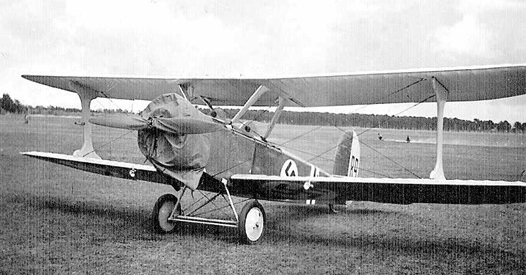
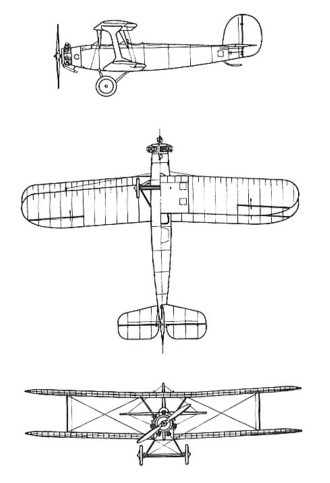
A two-seat open-cockpit biplane of wooden construction the U 12 was a conventional, single-bay biplane of wooden construction with the wings braced by large I-struts. The pilot and instructor or passenger sat in tandem.
U.12
First flown on April 7, 1925, it was demonstrated throughout the world by Udet. The U 12 proved extremely popular and sold well, due in no small part to Ernst Udet’s spectacular aerobatics routines while flying the aircraft. One particularly acclaimed part of his act included swooping down towards the airfield and picking up a handkerchief with the tip of one wing.
U-12 prototype
The popularity of this aircraft was insufficient to rescue Udet Flugzeugbau from its dire financial position and the company went out of business in 1925, but when the company’s assets were taken over by the state of Bavaria to form BFW in 1926, production of the U 12 soon resumed in earnest, as well as in Austria, Hungary and Latvia. BFW-built U 12s were exported to Austria, Hungary and Latvia, and later built under licence in these countries as well.
Austrian U-12o
It served in many roles, notably as a trainer with the German civil flying clubs and at clandestine Luftwaffe pilot training centres. Other operators were the Austrian Air Force (1927–1938), Hungarian Air Force, and Latvian Air Force.
In the summer of 1928 two German pilots from the Bayerische Flugzeugwerke demonstrated the U-12 Flamingo in Latvia. Originally the Latvian military was considering building Avro trainers, but the license fees being demanded were excessive and this idea was dropped. Building a locally designed trainer at A.S.Christine Backman seemed to be the next best solution, until the Udet Flamingo was seen on the demonstration flights, when it immediately became the trainer of choice, equipped with dual controls with the instructor sitting in the front and the student behind.
One aircraft was purchased by Latvia and then in the summer of 1929, A.S.Christine Backman obtains a contract to build 10 U-12bs and a complete set of plans is provided by BFW. While Latvian manufacturers had no difficulty with the wooden parts (Latvian pine and birch plywood were quite suitable) they initially had to buy some of the Duralumin parts from BFW. However, the aircraft completed by the Aviation Regiment Workshops had the parts produced locally. The Hugo Heine propellers, instruments and wheels were ordered directly from their German manufacturers. In the autumn of 1929 A.S.Christine Backman begins construction of the U-12 Flamingos at their new facility in Bisumuiza, a suburb of Riga.
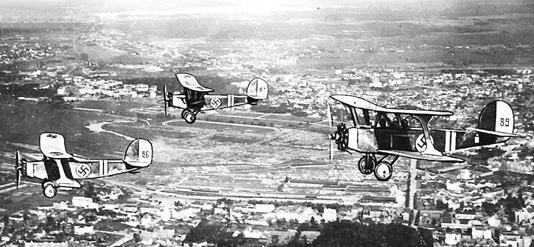
By the summer of 1930 the Flamingo aircraft are completed and delivered to the Military Aviation School. The Flamingo aircraft were flown for the first time by the Military on July 25, 1930. The pilots were the recent graduates of flight school – Jenkevics, Ozolins, Grave, Sapratnieks, Sleiters and Krastins. Some of the Latvian Flamingos were clear varnished, carrying a black number on their silver rudder, while others were dark green overall with a white outlined black number on the rudder.
Latvian U-12b
In 1936 two of the Flamingos are modified to accept a full blind-flying panel and fitted with a hood over the rear cockpit to make them suitable for instrument flight training and, in an effort to standardize aircraft types by code, the Flamingos as designated as type A-1.
As the plane was used for the training of young pilots in the training squadron (LR Air Force training aircraft had a special sign – two white stripes around the fuselage), there were many accidents. only one accident, 4 November 1935, led to death, when U-12b #95 collided with AA Bristol Buldog and broke apart killing Alexander Hvastkov, Lieutenant Janis Janis and Sergeant Putniņš Ravinsh.
In the late 30’s three were passed to flying clubs with Latvian designations YL-SBX, ABV, ABY. The last of the Flamingos were still flying in the spring of 1940, where they were being utilized as Aeroclub trainers and were training the 5th graduating class at Kalnciems (they had been gifts from the Aviation Division). After the Soviet occupation, all (or most) of the Flamingos were destroyed when the building in which they were stored caught fire and burned to the ground.
Gallery
Latvian built U-12 accidents –
76
August 4, 1930 – crashed (pilot: vltn. Lakstigala) April 30, 1931 – crashed (pilot: Goldbergs) June 16, 1931 – crashed (pilot: ltn. Peculis)
77
Experimentally fitted with the Czech Walter Mars 145-hp radial engine, but it was later replaced with the standard SH12. August 12, 1930 – crashed (flight instructor vltn.Trejs with student, Salmins)
86
Sept. 15, 1930 – crashed (pilot: Nikolajs Balodis)
87
June 2, 1931 – crashed (pilot: Greizis) August 31, 1931 – crashed (pilot: Bungss)
89
May 31, 1931 – flown by J.Indans in the Aviation Festival at Riga/Spilve. Dec. 29, 1931 – crashed (pilot: plkv. J.Indans, passenger vltn. Greizis)
95
1935 – the Aviation Division workshops builds an additional Flamingo, assigned the number 95. July 1, 1935 – #95 is test flown and approved by capt. A.Dzenitis. November 4, 1935 – midair collision with Bristol Bulldog #81. Three fatalities. This was the only fatality associated with the Flamingo.
Replica
No original aircraft are known to exist. An airworthy replica was kept at the Deutsches Museum, Munich, Germany, but crashed at the 2013 Tannkosh event. This example has a Sh 14 engine, a later, more powerful version of the Siemens-Halske engines fitted to original U 12s.
Germany U 12a: main production version with Siemens-Halske Sh 11 engine U 12W: float-equipped U 12a (Wasser—”water”) with Sh 12 engine U 12b: version strengthened for aerobatics and with improved wing profile U 12c: advanced trainer with reduced wing area U 12d: U 12b with Siemens-Halske Sh 12 engine U 12e: U 12c with Siemens-Halske Sh 12 engine
Austria 20 aircraft produced by Fliegerwerft Thalerhof U 12H: standard U 12a (Holz—”wood”) U 12S: U 12a with redesigned fuselage of fabric-covered steel tube construction (Stahl—”steel”). U 12Ö: alternative designation for U 12S (Österreich—”Austria”)
Hungary Forty aircraft produced by KRG and another 40 by Manfred Weiss Works. Some examples armed and used for fighter or bomber training Hungária I: similar to U 12a with N-type interplane struts Hungária II: similar to U 12a with N-type interplane struts Hungária III: similar to U 12a with N-type interplane struts, propeller spinner and Townend ring Hungária IV: similar to U 12a. Only Hungarian-built version with I-type interplane struts Hungária V: similar to U 12a with N-type interplane struts
Specifications:
Udet U-12 Flamingo Engine: Siemens Halske Sh 11 Propeller: 2.36 m Wingspan: 9.96 m Wingarea: 23.97 sq.m Length: 7.47 m Height: 2.80 Ailerons area: 2.48 sq.m Tailplane area: 1.80 sq.m Elevator area: 1.50 sq.m Fin area: 0.70 sq.m Rudder area: 1.00 sq.m Main track: 1.60 m Mainplane dihedral: 3° Mainplane sweepback: 3º Empty weight: 525 kg Flying weight: 800 kg Fuel capacity: 96 lt Wingload: 33.5 kg/sq.m Max speed: 140 km/h Cruising speed: 115 km/h Landing speed: 75 km/h Climb rate: 102 m/min Climb to 1000 m: 7 min. 15 sec Climb to 3000 m: 9 min Service ceiling: 3350 m
Udet U-12 Flamingo Engine: Siemens Halske Sh 5 Wingspan: 9.96 m Wingarea: 23.97 sq.m Length: 7.47 m Height: 2.80 Ailerons area: 2.48 sq.m Tailplane area: 1.80 sq.m Elevator area: 1.50 sq.m Fin area: 0.70 sq.m Rudder area: 1.00 sq.m Main track: 1.60 m Mainplane dihedral: 3° Mainplane sweepback: 3º Empty weight: 500 kg Flying weight: 775 kg Fuel capacity: 96 lt Max speed: 134 km/h Cruising speed: 110 km/h Landing speed: 75 km/h Service ceiling: 3000 m Range: 450 km
Udet U-12 Flamingo Engine: Siemens Halske Sh 12 Wingspan: 9.96 m Wingarea: 23.97 sq.m Length: 7.47 m Height: 2.80 Ailerons area: 2.48 sq.m Tailplane area: 1.80 sq.m Elevator area: 1.50 sq.m Fin area: 0.70 sq.m Rudder area: 1.00 sq.m Main track: 1.60 m Mainplane dihedral: 3° Mainplane sweepback: 3º Empty weight: 550 kg Flying weight: 800 kg Fuel capacity: 96 lt Max speed: 145 km/h Cruising speed: 115 km/h Landing speed: 75 km/h Time to 1000 m: 5 min. 57 sec Service ceiling: 3800 m Range: 450 km
Udet U 12 a Flamingo Engine: Siemens Halske Sh 11, 80 hp 60 kW Length: 24 ft 6 in / 7.4 m Height: 9 ft 2 in / 2.8 m Wingspan: 32 ft 8 in / 10.0 m Wing area: 258.3 sq.ft / 24.0 sq.m Max take-off weight: 1764.0 lb / 800.0 kg Weight empty: 1157 lb / 525.0 kg Max. payload: 176.4 lb / 80.0 kg Max. speed: 76 kts / 140 km/h / 87 mph Landing speed: 40 kts / 75 km/h Cruising speed: 62 kts / 115 km/h Initial climb rate: 450 ft/min / 2.3 m/s Service ceiling: 12,100 ft / 3700 m Wing load: 6.77 lb/sq.ft / 33.0 kg/sq.m Range: 243 nm / 450 km / 280 mi Fuel capacity: 12 gal / 45 lt Crew: 2
Hungária I Engine: WM built Sh 12 Span: 10.0 m Length: 7.4 m Wing area: 25.0 sq.m Wing loading: 33.7 kg/sq.m Empty weight: 590 kg Loaded weight: 840 kg Max. speed: 150 km/h Wing strut formation: N Armament: 2 x 8 mm Type 26/31 M Gebauer GKM machine guns or 10 – 20 kg bombs
Hungária II Engine: WM built Sh 12 Span: 10.3 m Length: 6.9 m Wing area: 26.0 sq.m Wing loading: 30.0 kg/sq.m Empty weight: 547 kg Loaded weight: 797 kg Max. speed: 140 km/h Wing strut formation: N Armament: 2 x 8 mm Type 26/31 M Gebauer GKM machine guns or 10 – 20 kg bombs
Hungária III Engine: WM built Sh 12 Span: 10.5 m Length: 7.7 m Wing area: 25.0 sq.m Wing loading: 35.0 kg/sq.m Empty weight: 595 kg Loaded weight: 845 kg Max. speed: 165 km/h Wing strut formation: N Armament: 2 x 8 mm Type 26/31 M Gebauer GKM machine guns or 10 – 20 kg bombs Equipment: prop.spinner, Townend-ring and modified landing-gear
Hungária IV Engine: WM built Sh 12 Span: 10.3 m Length: 6.9 m Wing area: 26.0 sq.m Wing loading: 32.0 kg/sq.m Empty weight: 582 kg Loaded weight: 817 kg Max. speed: 150 km/h Wing strut formation: I Armament: 2 x 8 mm Type 26/31 M Gebauer GKM machine guns or 10 – 20 kg bombs
Hungária V Engine: WM built Sh 12 Span: 10.3 m Length: 6.9 m Wing area: 26.0 sq.m Wing loading: 38.0 kg/sq.m Empty weight: 587 kg Loaded weight: 897 kg Max. speed: 140 km/h Wing strut formation: N Armament: 2 x 8 mm Type 26/31 M Gebauer GKM machine guns or 10 – 20 kg bombs
Kristina Bakmane / Arsenals Air Force workshops U-12 Engine: Siemens Sh12, 110 hp Wing Span: 10 m Length: 7.4 m Height: 2.8 m Max Speed: 145 km/hr Range: 450 km Maximum Ceiling: 3800 m Known Serial Numbers: 76, 77, 86, 87, 89, 95, 96.
#77) experimentally re-engined with 145hp Walter Mars
YL-ABX, YL-ABW and YL-ABY flown by Latvian Aeroclub flight school.
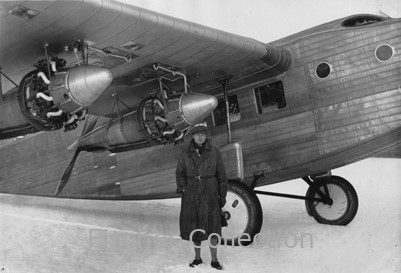
The U 11 (Werk.N. 243) was completed in December 1925, and was the largest aircraft produced by Udet Flugzeugbau, München-Ramersdorf, following an order by Deutscher Aero Loyd. It was an open-cockpit design with side-by-side seating for the two pilots. The navigator’s station was located in the very front of the aircraft, ahead of the pilots. The fuselage was constructed from Duralumin profiles and covered by Duralumin sheets. It could seat eight passengers and also contained a toilet and a luggage compartment.
The wings, featuring two main spars, were manufactured from wood, with fabric covering and a plywood-reinforced leading edge. The empennage consisted of Duralumin tubing and profiles, also covered with fabric. The landing gear was fitted with a then rather common rubber suspension system and 1100 by 220mm main wheels.
January 1926 at Oberschleissheim airfield north of Munich, with test pilot Harry Rother
First flown by Harry Rother on January 19, 1926, the U 11 was powered by four Siemens & Halske Sh 12 air-cooled radial engines with aerodynamic fairings, extended driveshafts (necessitated due to the pusher configuration), and two-blade propellers. The U 11 Kondor had a dangerously close clearance between the pusher propellers and rear passenger door, which caused one fatality.
The sole Udet U 11 Kondor [Condor] Grossverkehrsflugzeug [large airliner], Werknummer 243, was devoid of any markings; it would later be assigned D-828.
Rother’s test flights revealed significant design shortcomings. Tested by the DVL, the registration was approved on 8th of April 1926.
Bought by the Deutsche Aero-Lloyd AG and delivered to Deutsche Lufthansa (successor to Deutscher Aero Loyd) in 1926, but because of bad flying characteristics, DLH would not accept it. After negotiations the U.11 was sold to Deutsche Verkehrsfliegerschule [German air transport school] for 500 thousand RM.
The U 11 subsequently crashed during the delivery flight to Deutsche Verkehrsfliegerschule [German air transport school], for a total loss for DLH of 1 million RM.
The failure of the U 11 was among the reasons for the financial failure of Udet Flugzeugbau and its eventual acquisition by Bayerische Flugzeugwerke AG (BFW).
Engines: 4 × Siemens-Halske Sh 12, 75 kW (100 hp) Length: 16 m (52 ft 6 in) Upper wingspan: 22 m (72 ft 2 in) Wing area: 70 m2 (750 sq ft) Aspect ratio: 7 Height: 4 m (13 ft 1 in) Empty weight: 3,370 kg (7,430 lb) Gross weight: 4,572 kg (10,080 lb) Fuel capacity: 300 kg Maximum speed SL: 152 km/h (94 mph; 82 kn) Cruising speed SL: 135 km/h (84 mph; 73 kn) Service ceiling: 3,190 m (10,466 ft) Climb rate: 1.5 m/sec Time to 1000m: 11.33 min Time to 2000m: 28.25 m Time to 3000m: 68.79 min Practical range: 500 km Endurance 3.60 h Crew: 2 Capacity: 8